
· 5 min read
Liver Pirozhki, Explained for People Who Have Never Tried One
Liver pirozhki need no explanation for the people who order them, and quite a lot for everybody else. This one is for everybody else.
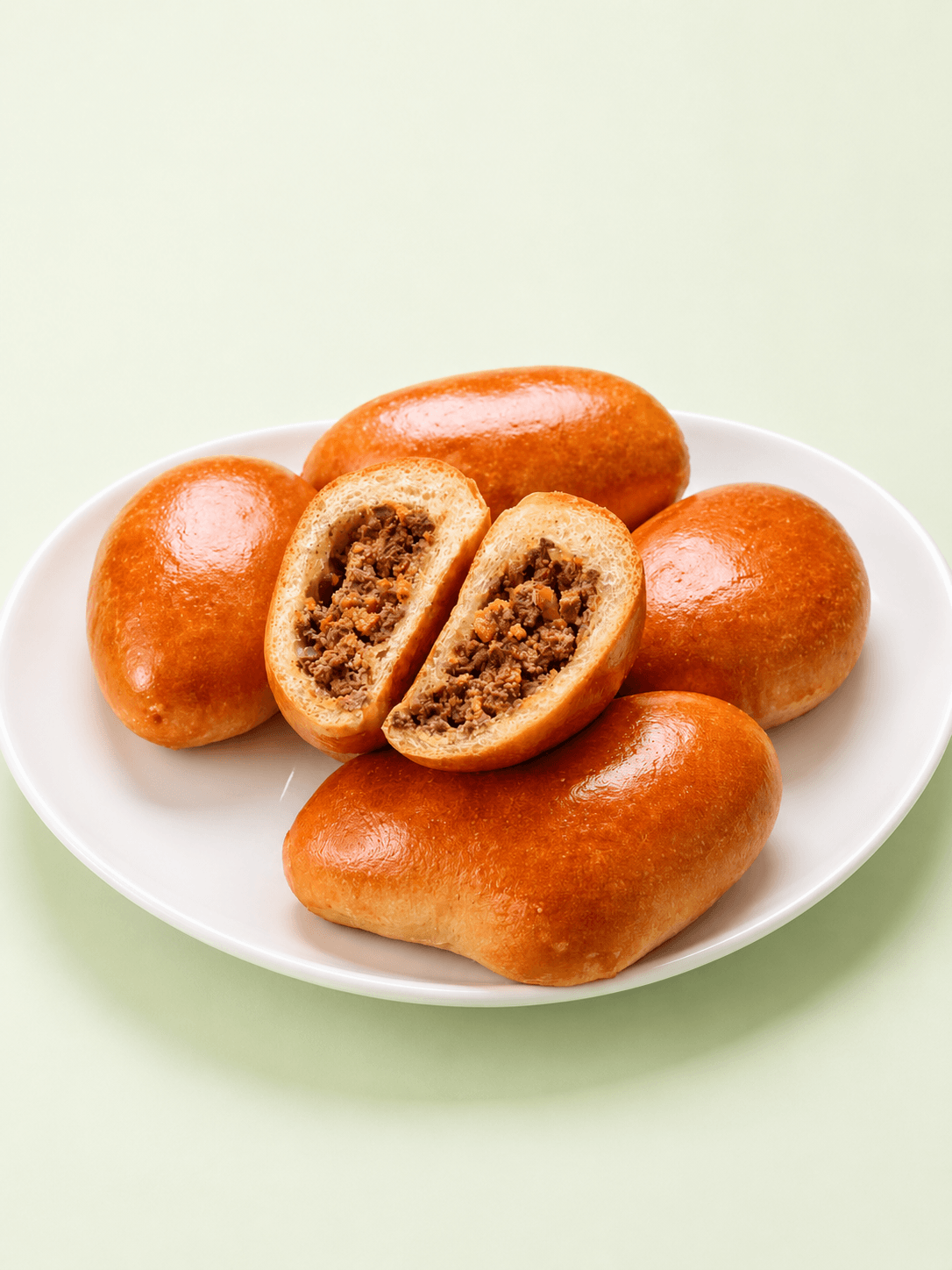
Our product page for the liver pirozhki says, more or less, that if you know, you have probably already added them to the basket. That is true. The people who order them tend to order them without reading anything, often in multiples, often with a short message saying they have not eaten one since they left home.
This article is for the other people: the partner, the friend, the colleague at an office lunch who is standing in front of a plate wondering what is inside.
What the filling is
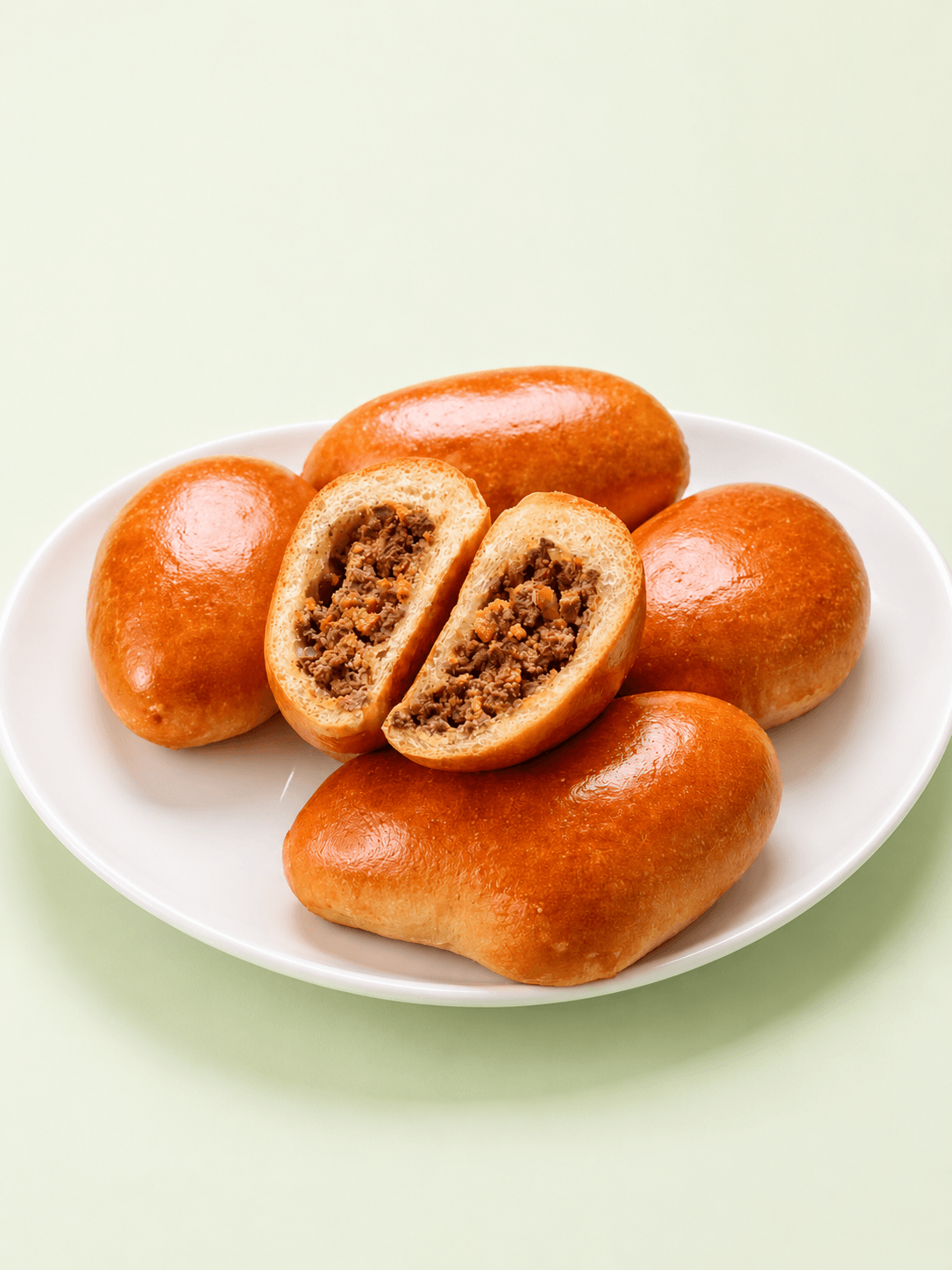
Liver cooked with onion, then minced or chopped fine and seasoned, sealed inside a soft enriched dough and baked. The onion is cooked down slowly until it is sweet, and it makes up a good part of the filling, which is why the result is softer and milder than people expect.
The texture is close to a coarse pâté. It is smooth, rich and slightly grainy, not chewy and not in pieces. Nobody biting into a liver pirozhok finds a slice of liver.
What it tastes like
Savoury, rich and iron edged, with the sweetness of the onion running through it. Think of a good chicken liver pâté on soft bread, then take away the butter and brandy and add more onion. It is the most strongly flavoured of the savoury fillings by some distance.
If you like pâté, you will very probably like these. If you dislike liver in every form, these will not change your mind, and we would not try to.
Who grew up on them
Pretty much everybody who grew up in the Soviet Union, in one form or another. Pirozhki with liver, or with a mixture of offal that went by the name liver, were sold hot from street stalls, station kiosks and canteens, often fried rather than baked, and they were cheap and filling. They were also made at home, where the filling was usually just liver and onion.
That gives them a double memory. For some people they are a grandmother's kitchen. For others they are a paper bag of hot fried pirozhki bought on the way home from school, eaten standing up, and slightly greasy. Both memories are fond ones.
Ours are the home version: baked rather than fried, with a filling that is properly liver and onion.
Liver in Eastern European cooking more widely
Liver was never a poor relation in the kitchens these pirozhki come from. Chicken liver fried with onion and sour cream is an everyday supper. Liver pancakes, small fritters of minced liver, are a family dish in Russia and Ukraine. The pechinkovyi tort in Ukraine and the pechyonochny tort in Russia is a savoury layered cake made from thin liver pancakes stacked with carrot, onion and mayonnaise, and it turns up at birthdays and New Year as reliably as any sweet one.
So for the people who grew up with it, a liver pirozhok is not a dare. It is one of several ordinary, much loved ways of eating something cheap and nourishing, and the liking for it tends to run in whole families rather than in individuals.
Why it divides people
Offal has been out of fashion in Britain for a couple of generations, and plenty of people simply never eat it. Liver in particular has a reputation built on school dinners, overcooked slices with grey gravy, which is a long way from what goes into a pirozhok.
The other reason is that liver is a strong flavour, and pirozhki are usually eaten casually, at a party or with soup. Somebody who picks one up expecting cabbage and finds liver is going to be surprised either way.
The answer is simply to label the plate.
Liver PiesLiver pirozhki. Boxes of 6, 12 or 18. A rich traditional filling in soft baked dough.from £27Order thisHow to serve them
Warm, always. A few minutes in a low oven brings the dough back and softens the filling. Cold liver pirozhki are dense and much less pleasant.
They are very good with a clear broth, which was the classic canteen pairing, or with borscht. On a party table they want something sharp nearby: pickled cucumbers, sauerkraut, a little mustard. A glass of something cold does no harm either.
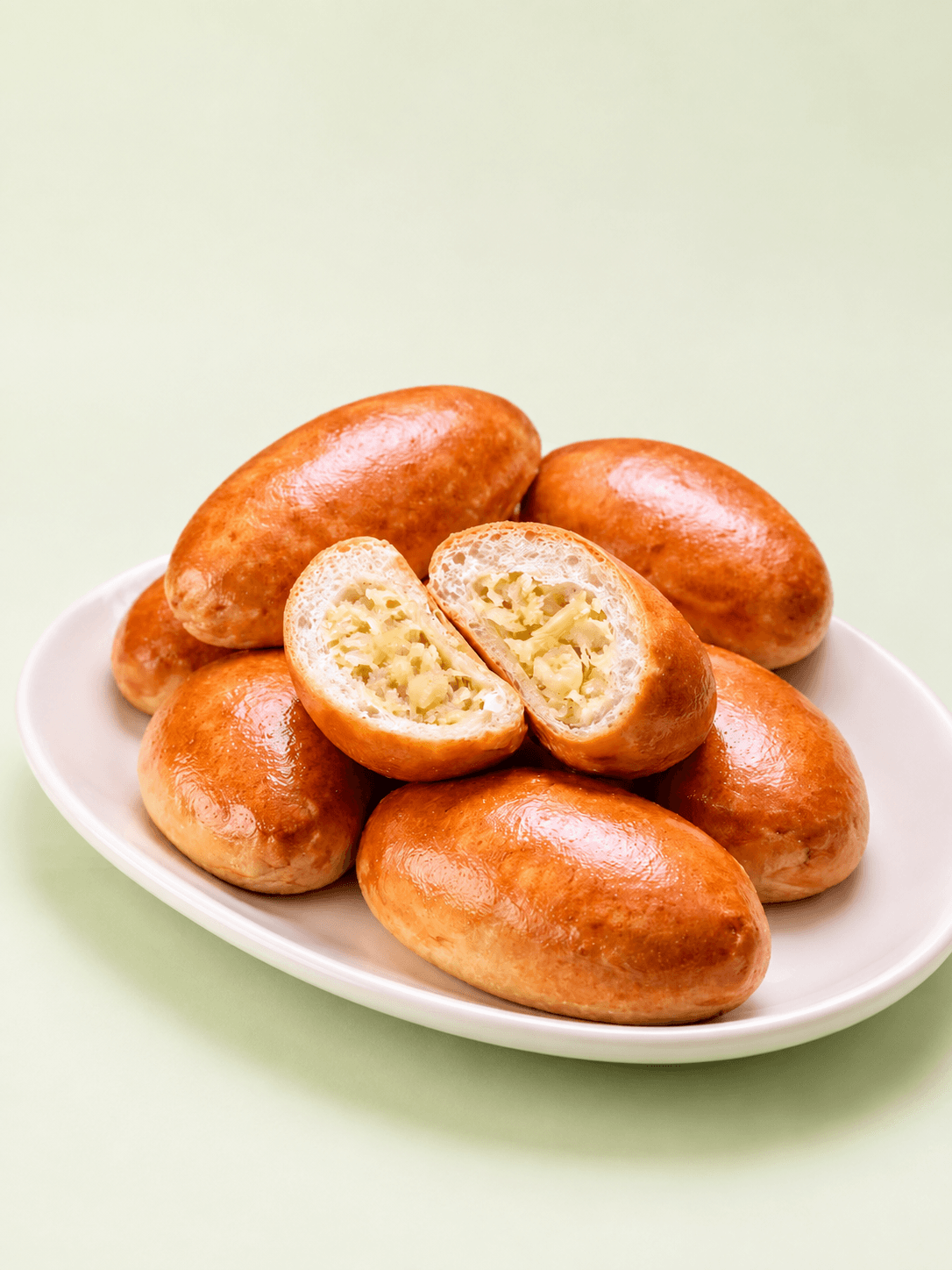
For a mixed group, put them out alongside a milder filling so nobody is cornered. The meat and cabbage pirozhki are the natural partner, because they appeal to people who like meat but are unsure about offal, and the cabbage and egg ones look after the vegetarians.
How many to order
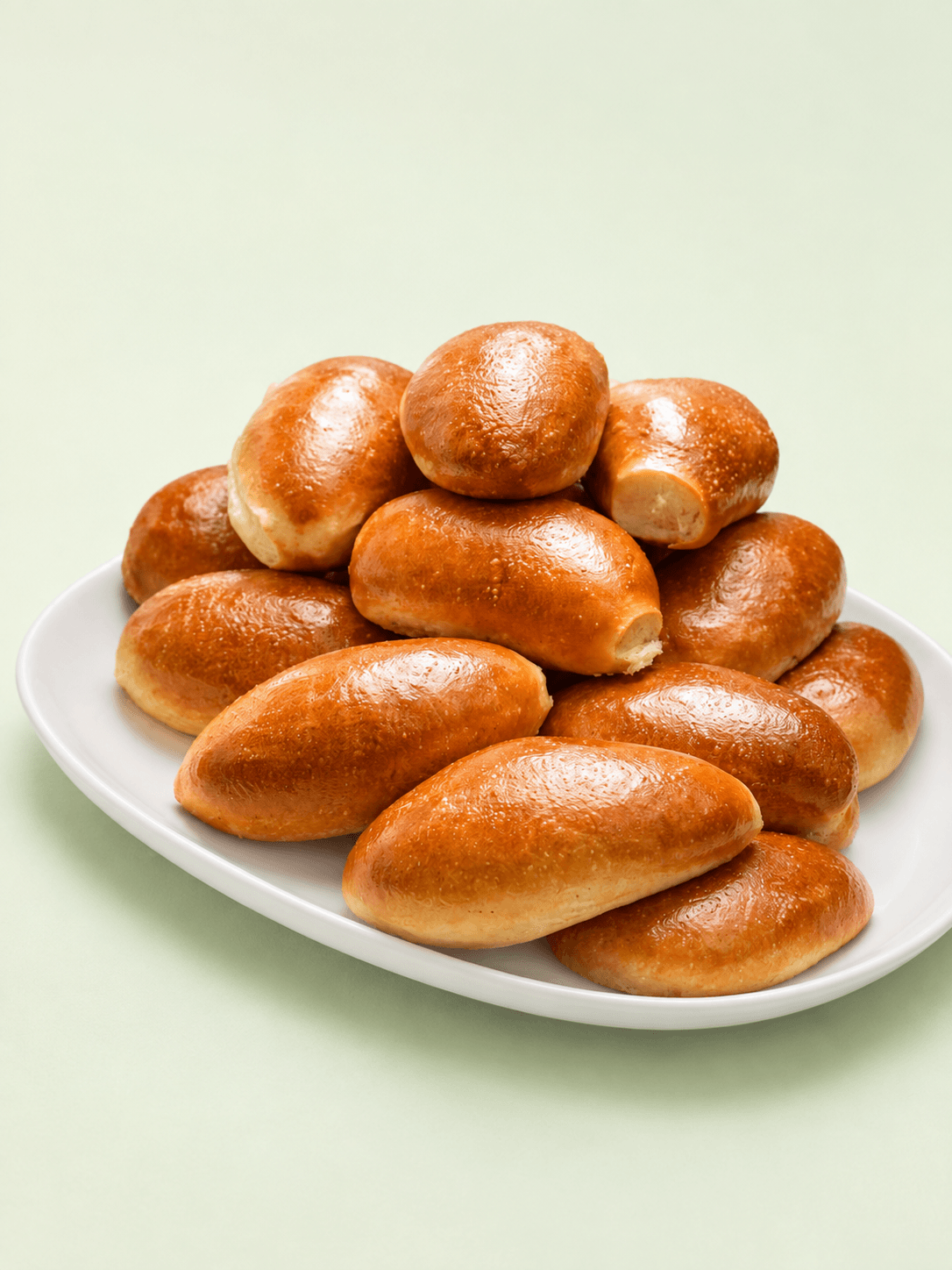
Six come to an order, at £27. As a guide, at a gathering where they sit among other food, one liver pirozhok each for the people who want them is usually enough. At lunch with soup, two each.
If you are ordering for a group that includes people who grew up with them, order more than you think. They go first.
A note on what is in them
Ours contain gluten, eggs and milk, the same as the other pirozhki, because the dough is enriched. The filling is not suitable for vegetarians, obviously, and it is not for anybody avoiding organ meat for reasons of health or pregnancy. If that applies, the mushroom or potato fillings are the alternatives.
Common questions
What do liver pirozhki taste like?
Rich and savoury, close to a coarse pâté, with sweetness from slow cooked onion. Milder than people expect, but the strongest of the savoury fillings.
Are they fried or baked?
Ours are baked, in the home style. The street pirozhki many people remember from Soviet stations and kiosks were usually fried.
What should I serve with them?
A clear broth or borscht, or pickles and sauerkraut on a party table.
How do I reheat them?
A few minutes in a low oven until warm through. Avoid the microwave, which toughens the dough.
How many come in an order?
Six, for £27.
Ordering in London
Liver pirozhki are made to order in Belgravia and delivered across London and Surrey. Forty eight hours notice, a £50 minimum order across the site, and delivery from £12 in central London, with other postcodes priced on the delivery page.
Order it for the date you need
Everything here is baked to order for your date.
48 hours notice, 72 for bread. Delivered across London and Surrey.