
· 5 min read
Braided Brioche, and the Plaited Loaves of Eastern Europe
A plaited loaf is one of the oldest festive breads in Europe. Ours is a buttery brioche with pearl sugar and poppy seed, and here is where it sits.
There is something about a plaited loaf that makes it feel like an occasion. A round loaf is bread. A braided one, glossy with egg and sitting on a board in the middle of the table, is a celebration, and it has been in one form or another across Central and Eastern Europe for centuries.
Our braided brioche belongs to that family, though it is not a copy of any one member of it. Here is where it sits.
Challah
The best known plaited loaf in Britain is the challah, the Jewish bread for the Sabbath and for festivals. It is an enriched dough, with eggs and often a little sugar, plaited and glazed with egg so the crust turns deep and shiny.
Traditionally challah is made without butter or milk, with oil instead, so that it can be eaten with a meal that includes meat under Jewish dietary law. That is the single biggest difference from a brioche, which is made with plenty of butter. Ours is a brioche, so it is not a challah, and we would not call it one.
Chałka and the Polish plait
In Poland the plaited sweet loaf is chałka, its name taken from challah, and it became part of ordinary Polish baking. A Polish chałka is usually sweeter than challah, often made with milk and butter, and very often finished with a crumble topping, the same kruszonka that goes on a jagodzianka.
It is a bread for breakfast and for Sunday, sliced thick and eaten with butter and jam, and it is one of the things Polish customers in London most often say they miss.
Kolach, kalach and korovai
Further east the plaited loaves become more ritual. In Ukraine the kolach, a braided ring of bread, is part of the Christmas Eve table, and three kolachi stacked with a candle in the middle is a traditional centrepiece. The korovai, a large decorated loaf, is baked for weddings.
In Russia the word kalach usually means something different: a white wheat loaf shaped like a padlock with a handle, sold historically in Moscow. The Russian festive plait is more often simply a sweet braided loaf, a sdobnaya kosa, made for holidays and Sunday tea.
None of these is quite what we bake. All of them are the reason a plaited sweet loaf looks right on a table in a Russian, Ukrainian or Polish home.
Our braided brioche
A large plait of rich, buttery brioche dough, proved slowly and plaited by hand. It is brushed with egg for a deep glossy crust and finished with pearl sugar and poppy seed. Each one weighs about 400 g.
The crumb is soft and feathery and pulls apart in strands. The pearl sugar stays crisp on top, which gives the crust a slight crunch, and the poppy seed adds a faint nuttiness and makes it look the part.
It is £24 for one or £42 for two, and it needs only twenty four hours notice, which makes it one of the easiest things on the menu to order at short notice.
 Braided BriocheA large plaited brioche, glossy with egg wash and topped with pearl sugar and poppy seed. Soft, buttery and made by hand.from £24Order this
What to do with it
Eat it the first day torn, with butter and jam, or with a cup of tea in the afternoon. This is what usually happens.
The second day, slice it and toast it lightly, which brings the butter back to the surface. Or make French toast: thick slices soaked in egg and milk and fried in butter, which is what a day old brioche was made for.
It is also very good beside a cheese board, oddly. Sweet bread with a sharp cheese is an old pairing and it works.
Serving it as a centrepiece
A plaited loaf earns its place in the middle of a table, so it is worth serving it that way. Put it whole on a wooden board with a bread knife beside it and let people cut their own. A dish of good salted butter and a jar of jam, cherry or blackcurrant for preference, is all it needs.
For a breakfast or a brunch with guests, two loaves look generous and go further than people expect, because a slice of brioche is filling. One loaf is right for four to six people with other food on the table. Two is right for eight to ten, and the leftovers make the next morning's French toast.
How long it keeps
It is best within two days. Keep it wrapped at room temperature rather than in the fridge, where bread goes stale faster. If you want to keep it longer, freeze it on the day it arrives, whole or sliced, and warm it through in the oven from frozen.
If you want a filled bun instead
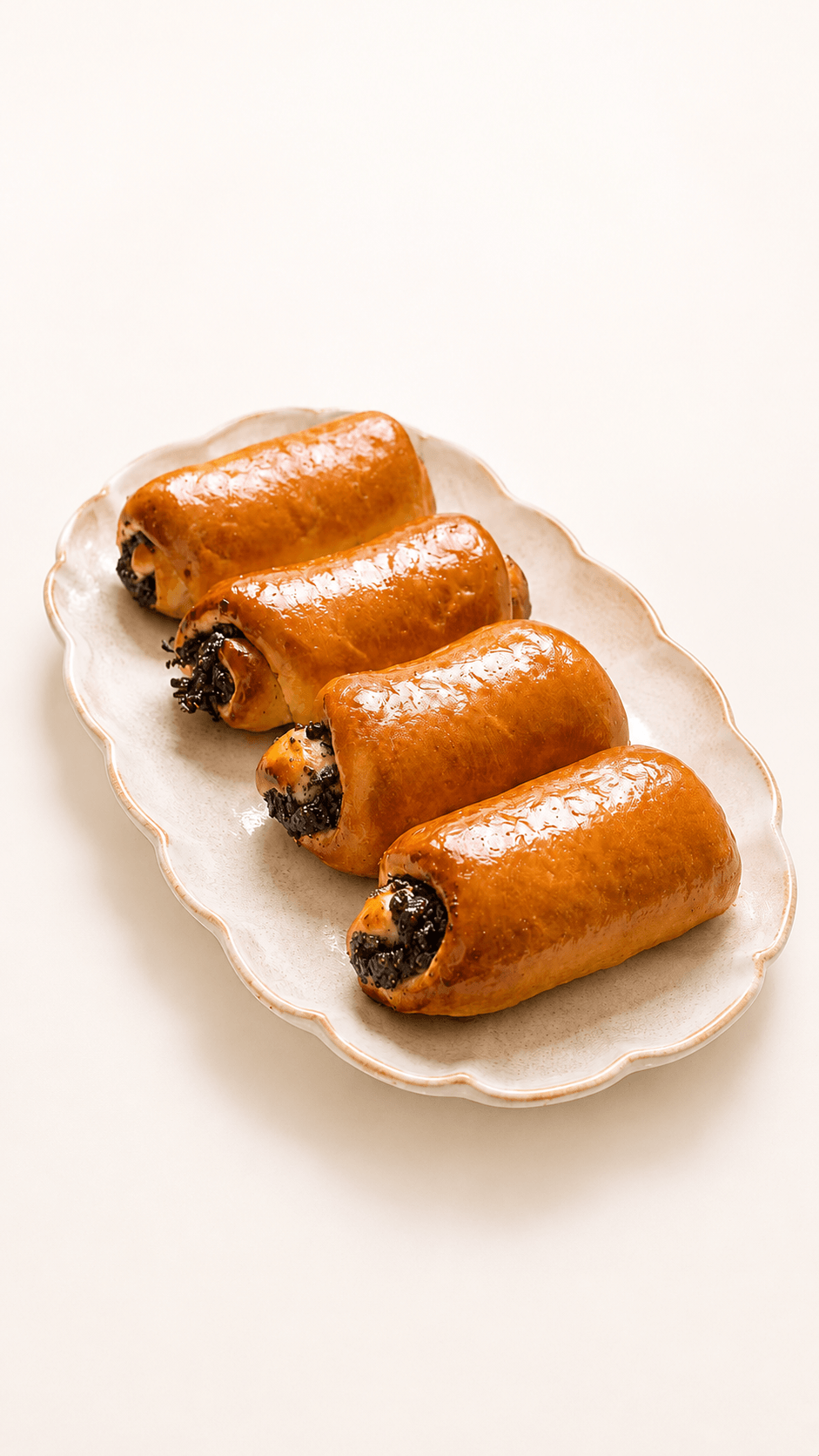
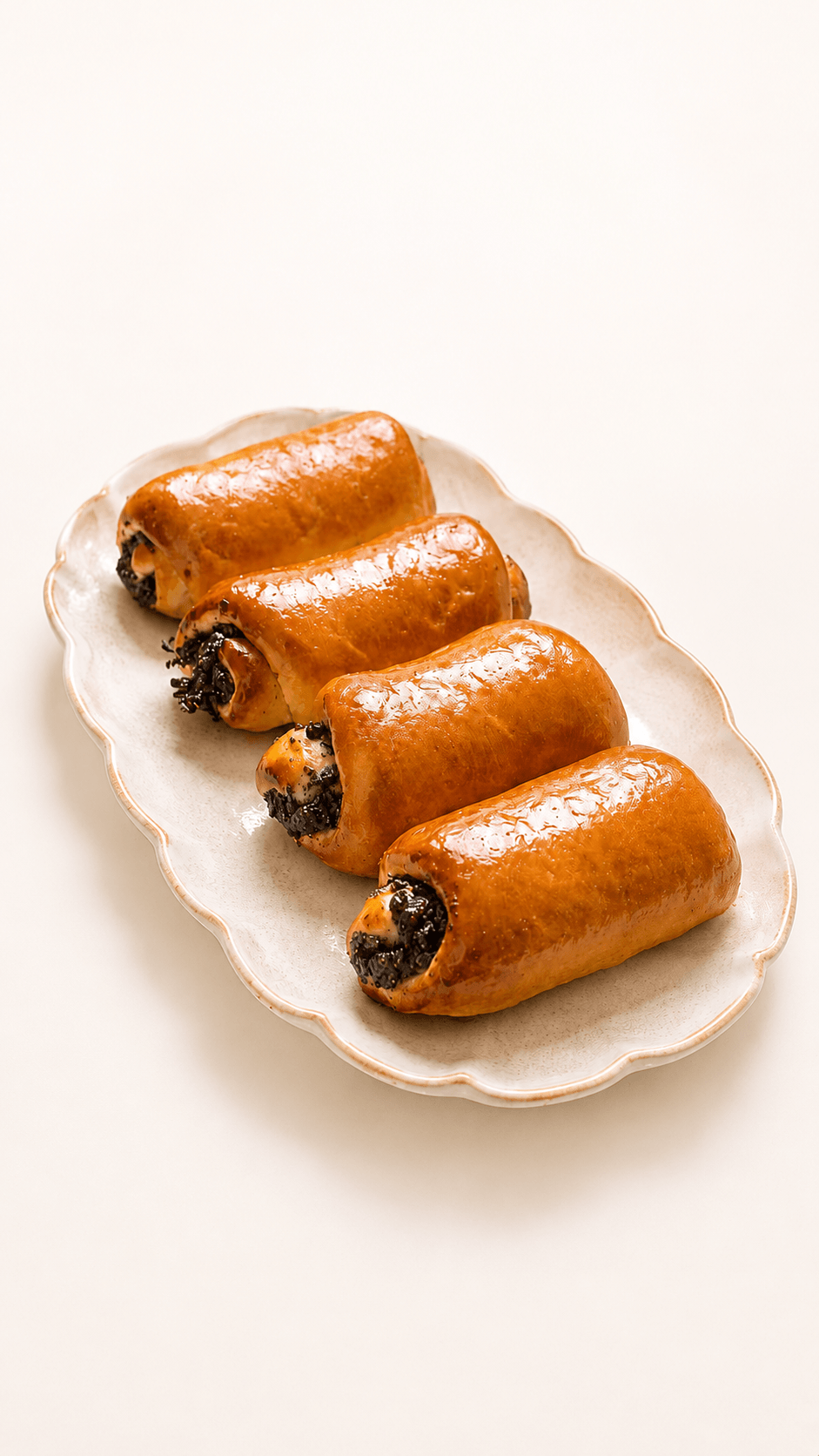
The brioche is plain inside. If what you remember is the poppy seed roll, the black spiral of filling, our poppy seed buns are closer. They come four to a box with a thick ground poppy seed filling, and they are the nearest thing on our menu to a makowiec or a makivnyk.

Common questions
Is braided brioche the same as challah?
No. Challah is traditionally made without butter or milk. Brioche is rich with butter, so ours is a brioche rather than a challah.
How big is the braided brioche?
About 400 g each. It is £24 for one or £42 for two.
How much notice do you need?
Twenty four hours, which is less than most of our menu.
How long does it keep?
Best within two days, wrapped at room temperature. It freezes well and can be warmed through in the oven.
What is the topping?
Pearl sugar and poppy seed over an egg glaze.
Ordering in London
The braided brioche is made to order in Belgravia and delivered across London and Surrey. Twenty four hours notice, a £50 minimum order across the site, and delivery from £12 in central London, with other postcodes priced on the delivery page.
Order it for the date you need
Everything here is baked to order for your date.
48 hours notice, 72 for bread. Delivered across London and Surrey.