
· 5 min read
How to Slice a Medovik or a Napoleon Cleanly
A layered cake is easy to ruin with a knife. Here is how to get clean slices from an 18 cm medovik or Napoleon, and how many to cut.
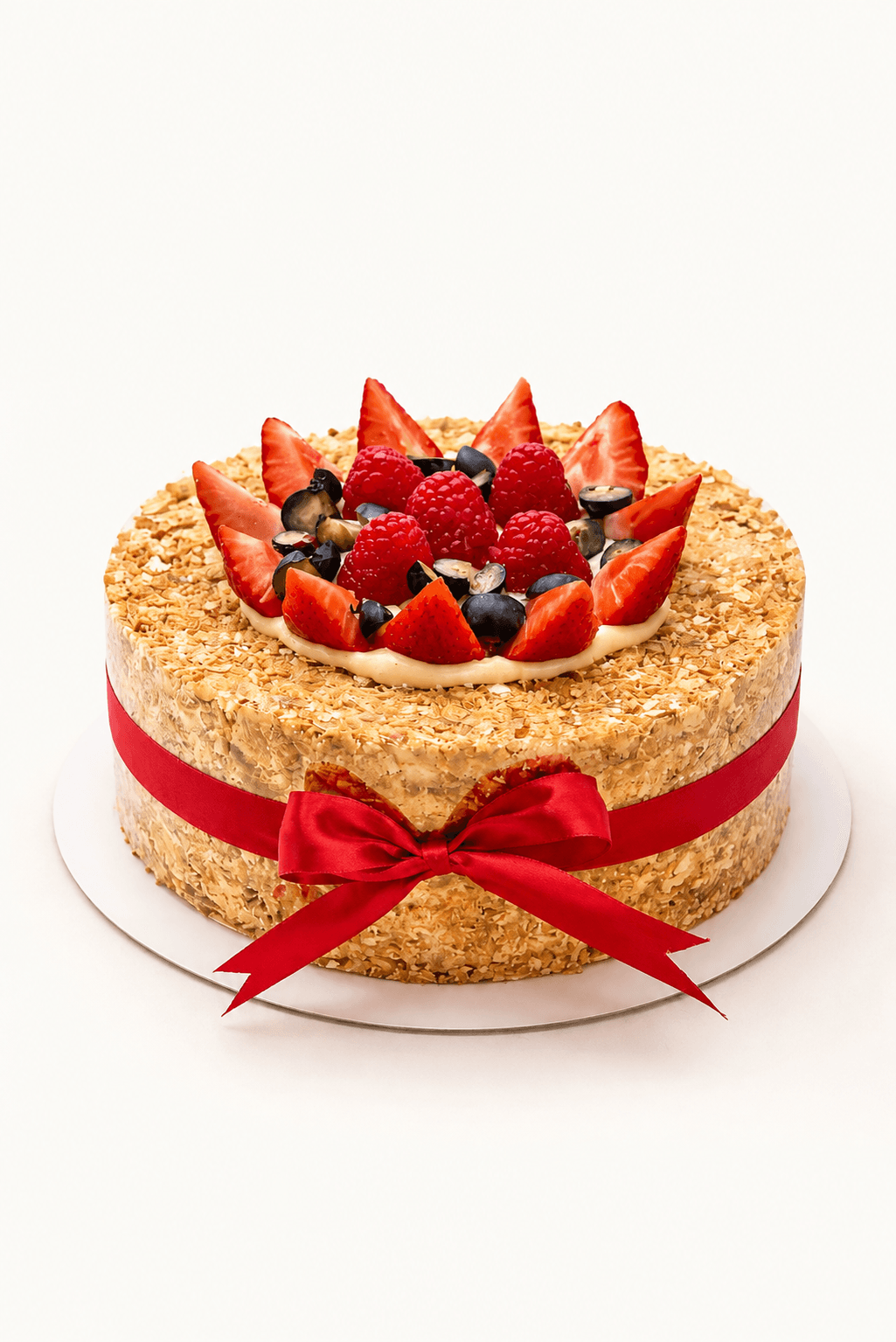
A good layered cake can be spoiled in the last minute of its life, between the fridge and the plate. The layers that took hours to build get squashed together, the cream squeezes out of the sides, and the first slice comes out as a sort of landslide.
It does not need to happen. Medovik and Napoleon cut very differently, and once you know why, both are easy.
The basic rule: cut cold, serve warmer
Both cakes are set in the fridge, and both are firmest straight out of it. That is the best time to cut them. The cream is set, the layers hold their place and the knife goes through cleanly.
But both taste better closer to room temperature, when the cream softens and the flavour opens up. So the answer is to cut first and wait second. Take the cake out of the fridge, slice it straight away, and then leave the slices, or the whole sliced cake, for thirty to forty minutes before serving.
If you are taking the cake to the table to cut in front of people, which is what most birthdays want, do the same but cut it as soon as it comes out, sing afterwards.
The knife
A long, thin, sharp knife. The longer the better: a blade that reaches all the way across the cake cuts in one movement and does not need to be dragged.
For the medovik, a plain straight blade is best. For the Napoleon, a serrated bread knife does better at the start, because the crumb on top and the pastry layers respond to a gentle sawing better than to pressure.
A cake slice or a flat spatula for lifting the pieces out is the other thing you need, and most kitchens have one somewhere.
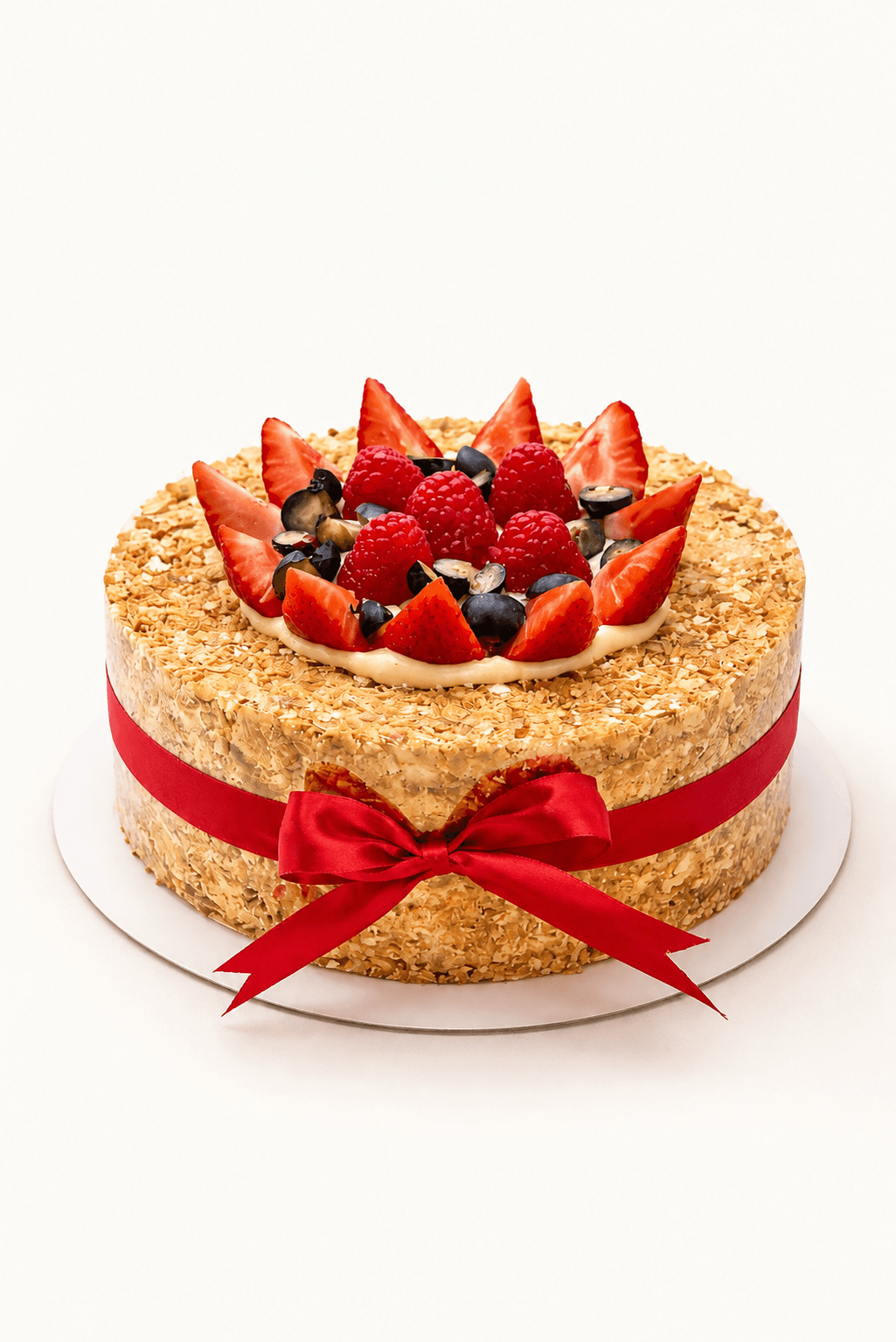
Cutting a medovik
Dip the knife in a jug of very hot water, wipe it dry, and cut straight down in one smooth movement, without sawing. Lift it out, wipe it clean, dip it again and make the next cut.
The hot water matters more than people think. A warm blade slips through the sour cream frosting rather than dragging it, which is what keeps the stripes of the layers sharp. The wiping matters as well. A knife with frosting on it carries that frosting into the next cut and smears it down the face of the slice.
A medovik is forgiving. Because the layers have softened into one another, it tends to cut evenly, and the main risk is simply dragging crumbs down the side.
Cutting a Napoleon
The Napoleon is more delicate. It is softer than a medovik and there is more cream in it, so pressure pushes the custard out and flattens the layers.
Start with the serrated knife and a light sawing motion to get through the crumb and the top layer. Once you are through, let the weight of the knife do most of the work and keep the movement small. Wipe between cuts.
Expect it to be less tidy than a medovik. A Napoleon slice is meant to look a little soft at the edges. If it comes out with perfectly clean lines it probably has not been rested enough.
Before you cut: the crumb
Both cakes are finished with crumbs, the trimmings of their own layers, and those crumbs travel. A little will have settled on the cake board and inside the box. Brush it off the board before you start, or it ends up on every plate. If you are serving at the table, a tray or a large plate under the board saves the tablecloth.
How many slices from an 18 cm cake
Our cakes are 18 cm and serve six to eight. That is a generous after dinner portion, and it is how most people cut.
For six, cut in half, then each half into three. For eight, cut into quarters and then each quarter in half. Eight slices from an 18 cm cake are about seven centimetres wide at the outside edge, which is a proper slice of a rich cake.
For more people, there is a trick borrowed from wedding cake cutting. Cut a smaller circle in the centre, about nine centimetres across, and then cut the outer ring into slices of about four centimetres. Cut the centre into four. That gives twelve smaller portions, which is about right when the cake follows a big meal or sits among other desserts.
Beyond twelve, you need a second cake. Two 18 cm cakes of different kinds, a medovik and a Napoleon, feed twelve to sixteen comfortably and give people a choice.
What to do with the end of the cake
Cover the cut face with cling film pressed against it and put it back in the fridge. The cut face is where it dries out. A medovik keeps well like this for a day or two. A Napoleon softens further and is best eaten within a day.
Common questions
Should I cut a medovik cold?
Yes. Cut it straight from the fridge, when it is firm, and then let the slices sit for thirty to forty minutes before serving.
What knife is best for a Napoleon cake?
A long serrated knife, used with a light sawing motion and very little pressure, wiped between cuts.
How many people does an 18 cm cake serve?
Six to eight generous slices. Cutting a centre circle first gives about twelve smaller portions.
Why does my Napoleon squash when I cut it?
Usually too much pressure, or cutting it after it has warmed up. Cut it cold, gently, with a serrated blade.
How do I store leftover cake?
Press cling film against the cut face and keep it in the fridge. Medovik keeps a day or two; Napoleon is best within a day.
Ordering in London
Both cakes are 18 cm and made to order in Belgravia: the honey cake from £76 with forty eight hours notice, the Napoleon at £86 with sixty. Delivered across London and Surrey with a £50 minimum order, and delivery from £12 in central London.
Order it for the date you need
Everything here is baked to order for your date.
48 hours notice, 72 for bread. Delivered across London and Surrey.