· 6 min read
The History of the Napoleon Cake
A French pastry, a Russian name, a story about an emperor that nobody can quite prove, and a Soviet kitchen where it was made for every New Year.
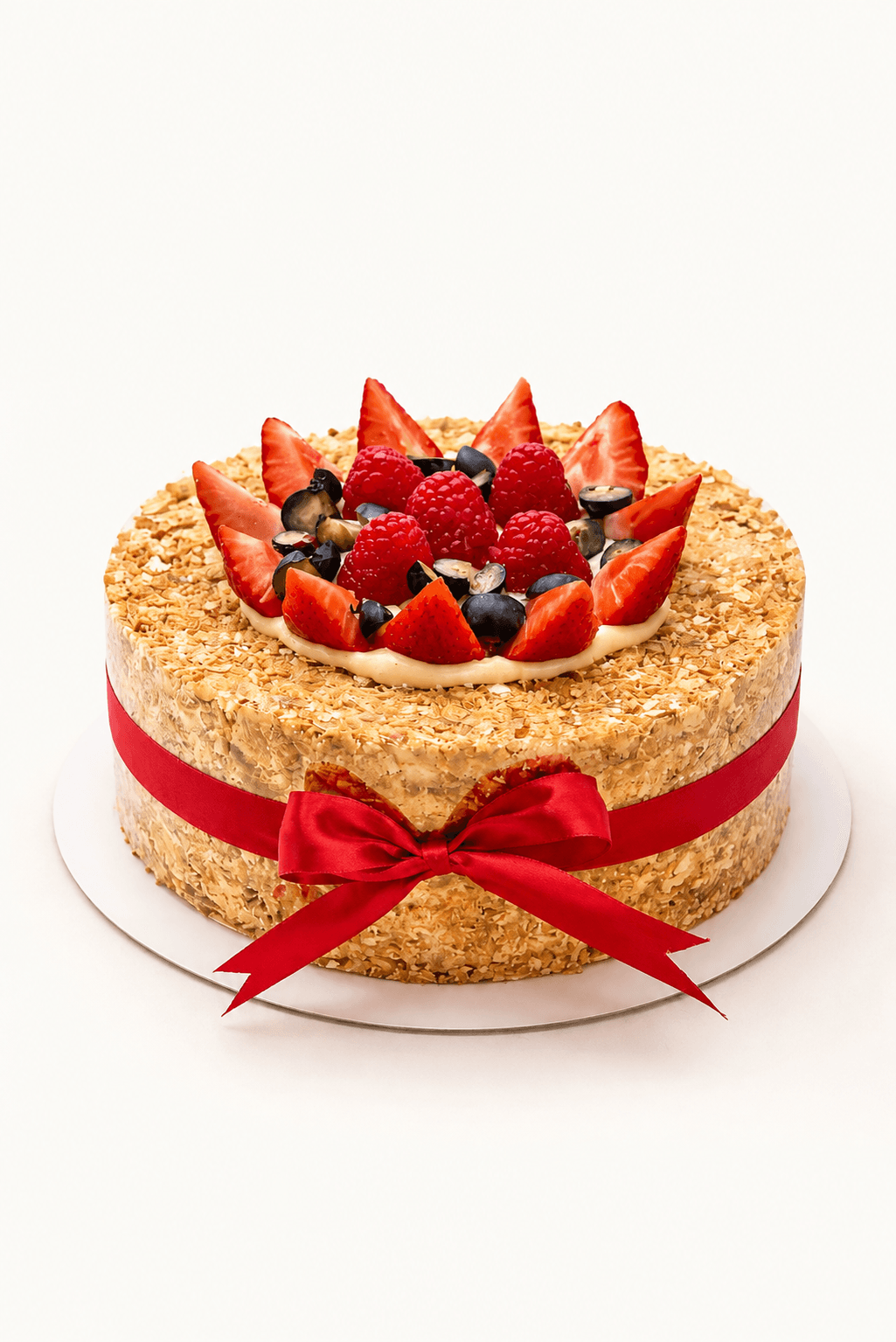
The Napoleon is one of the most loved cakes in the Russian speaking world and it was not invented there. Its ancestor is French, its name is disputed, its best known origin story is probably untrue, and its real history is in Soviet home kitchens, where it was made from whatever could be found and served at almost every New Year.
Here is what is known, what is usually said, and how to tell the two apart.
The French ancestor
Layered puff pastry with cream between the sheets is a French idea. The millefeuille, a thousand leaves, was part of Paris pastry making by the nineteenth century, and it is still made there in much the same form: three sheets of crisp pastry, crème pâtissière between them, and an iced or sugared top.
The essential feature of a French millefeuille is that it is crisp. It is assembled shortly before serving and eaten within the hour, before the pastry has a chance to soften. A millefeuille that has gone soft is a millefeuille that has failed.
That detail matters, because the Russian Napoleon does exactly the opposite.
Where the name comes from
In much of Europe and in the United States, a layered cream pastry has been called a napoleon for a long time. One common explanation is that the word is a corruption of napolitain, meaning in the style of Naples, rather than anything to do with the emperor. That explanation is plausible and also not proven.
In Russian the cake is Napoleon, Наполеон, and there the name is usually tied to a much more specific story.
The 1912 story
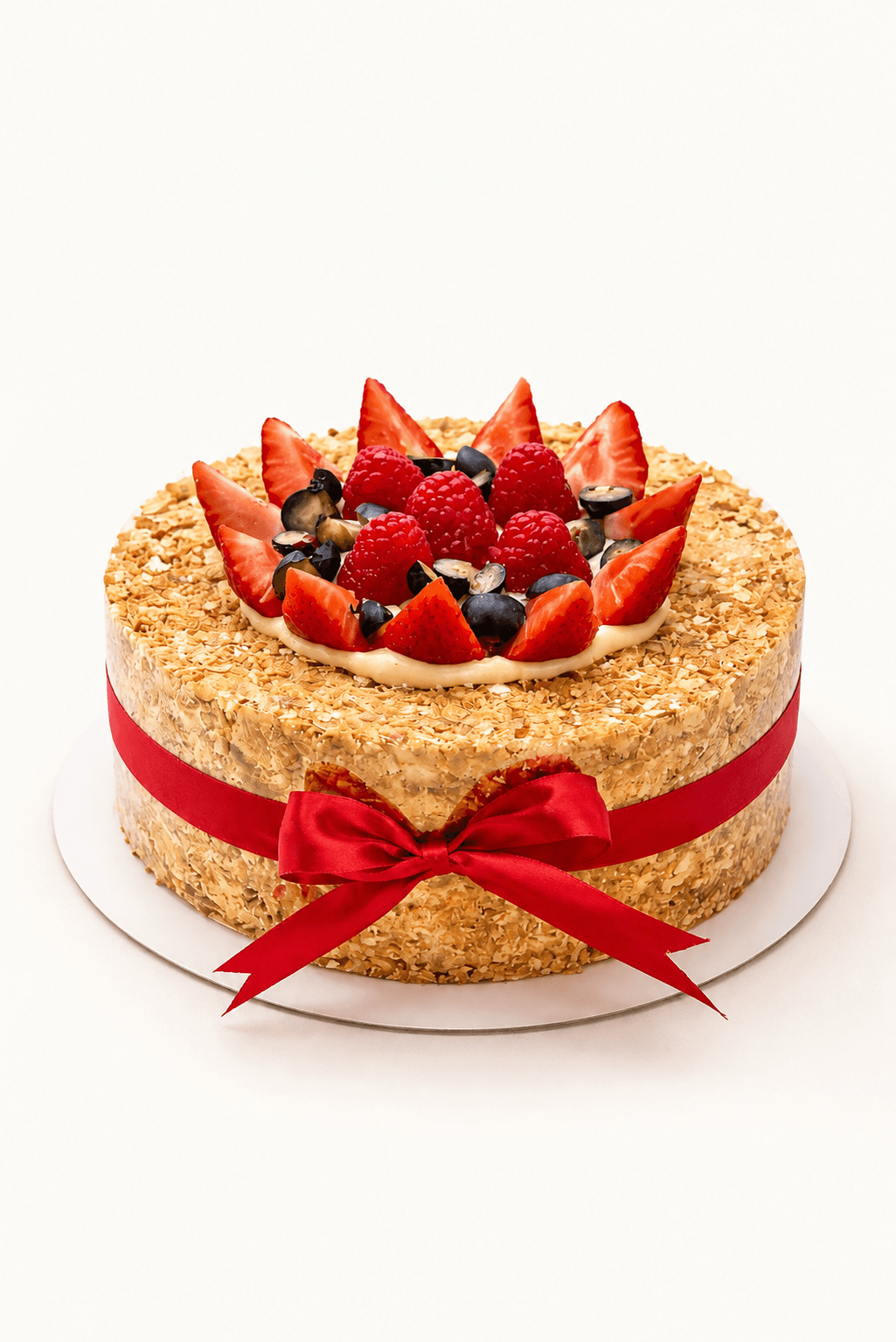
The usual story is this. In 1912 Russia marked a hundred years since Napoleon's army retreated from Moscow. Moscow confectioners, so it goes, made a pastry for the celebrations in the shape of a bicorne, the emperor's two cornered hat, built from layers of pastry and cream. The crumbs scattered over the top are said to represent the snow of the Russian winter that destroyed the Grande Armée.
It is a good story, and it is told in almost every article written about the cake, in Russian and in English. There is very little evidence for it. Layered pastry called Napoleon seems to have existed before 1912, and the triangular hat shaped pastry, if it was made, did not become the round cake we know.
So the honest version is that the centenary may have made the name popular in Russia, and the story of the hat and the snow is how people like to explain it. We tell it because everybody does, and because the crumbs do look like snow.
How it became a Soviet cake
The Napoleon that people remember was shaped by Soviet conditions rather than by a pastry chef.
Good butter and fine pastry were not always easy to find, and a home kitchen had no laminating machine. So families made their own pastry, often a quicker rough puff or a short pastry rolled very thin, baked it in sheets on the oven tray, and filled it with a custard cooked from milk, eggs, sugar and flour. Recipes passed from hand to hand and from one notebook to another. Every family's Napoleon was a little different and every family was certain theirs was correct.
It was made a day or two ahead, partly because there was no time on the day of a party, and the waiting turned out to be the point. The custard soaked into the pastry, the cake softened and settled, and it became the soft, creamy, yielding thing that Russian, Ukrainian and Belarusian people mean when they say Napoleon.
That is the real difference from the millefeuille. Not the number of layers, though there are more, and not the shape, though it is round. The Napoleon is meant to rest, and the resting is what people are remembering.
Napoleon Cake (18cm)Napoleon cake, 18 cm. Crisp puff pastry layers with vanilla custard cream, rested so the layers soften.£86Order thisWhy it belongs to New Year
In the Soviet Union, New Year rather than Christmas was the great family celebration, and the table was planned for weeks. The Napoleon suited it well. Its ingredients were ordinary, it could be made in advance, it fed a lot of people, and it was a showpiece without needing any decoration that was hard to buy.
Many people who grew up in that world still associate the cake with the smell of the kitchen on 30 and 31 December, the oven running for hours with sheet after sheet of pastry, and the cake sitting on a cold balcony overnight because the fridge was full of salads.
The Napoleon now
The cake has survived the end of the system that shaped it. It is still made at home across the region and by diaspora families everywhere, and it is still argued over: how many layers, which custard, whether the top should be crumbs or nothing.
Our version follows the Soviet home tradition rather than the French one. Sheets of puff pastry rolled thin and baked separately, vanilla custard cream between every layer, the trimmings crumbled over the top, and a long rest before it leaves the kitchen so it arrives soft.
Common questions
Is the Napoleon cake French or Russian?
Its ancestor, the millefeuille, is French. The tall, soft, rested cake known as Napoleon is the version that developed in Russia and the Soviet Union.
Was the Napoleon cake really made for the 1812 centenary?
That is the usual story, that Moscow confectioners made a hat shaped pastry in 1912. It is widely repeated and poorly documented, so it is best treated as a legend.
Why is a Napoleon covered in crumbs?
The crumbs are the trimmed edges of the pastry layers. The legend says they represent snow, but they are also simply the traditional way to finish the cake.
What is the difference between a Napoleon and a millefeuille?
A millefeuille is crisp and eaten within the hour. A Napoleon has more layers and is rested so the custard soaks into the pastry and the cake turns soft.
Why is it a New Year cake?
It was affordable, could be made days ahead and fed a crowd, which suited the Soviet New Year table.
Ordering in London
Our Napoleon is 18 cm, serves six to eight and is £86. It needs sixty hours notice, because the pastry and the rest both take time. Made to order in Belgravia and delivered across London and Surrey, with a £50 minimum order and delivery from £12 in central London.
Order it for the date you need
Everything here is baked to order for your date.
48 hours notice, 72 for bread. Delivered across London and Surrey.