
· 5 min read
Apple Hand Pies, and Why They Are Not a Slice of Pie
A hand pie is not a small pie. The pastry is different, the filling is different, and the reason for both is that nobody is giving you a plate.
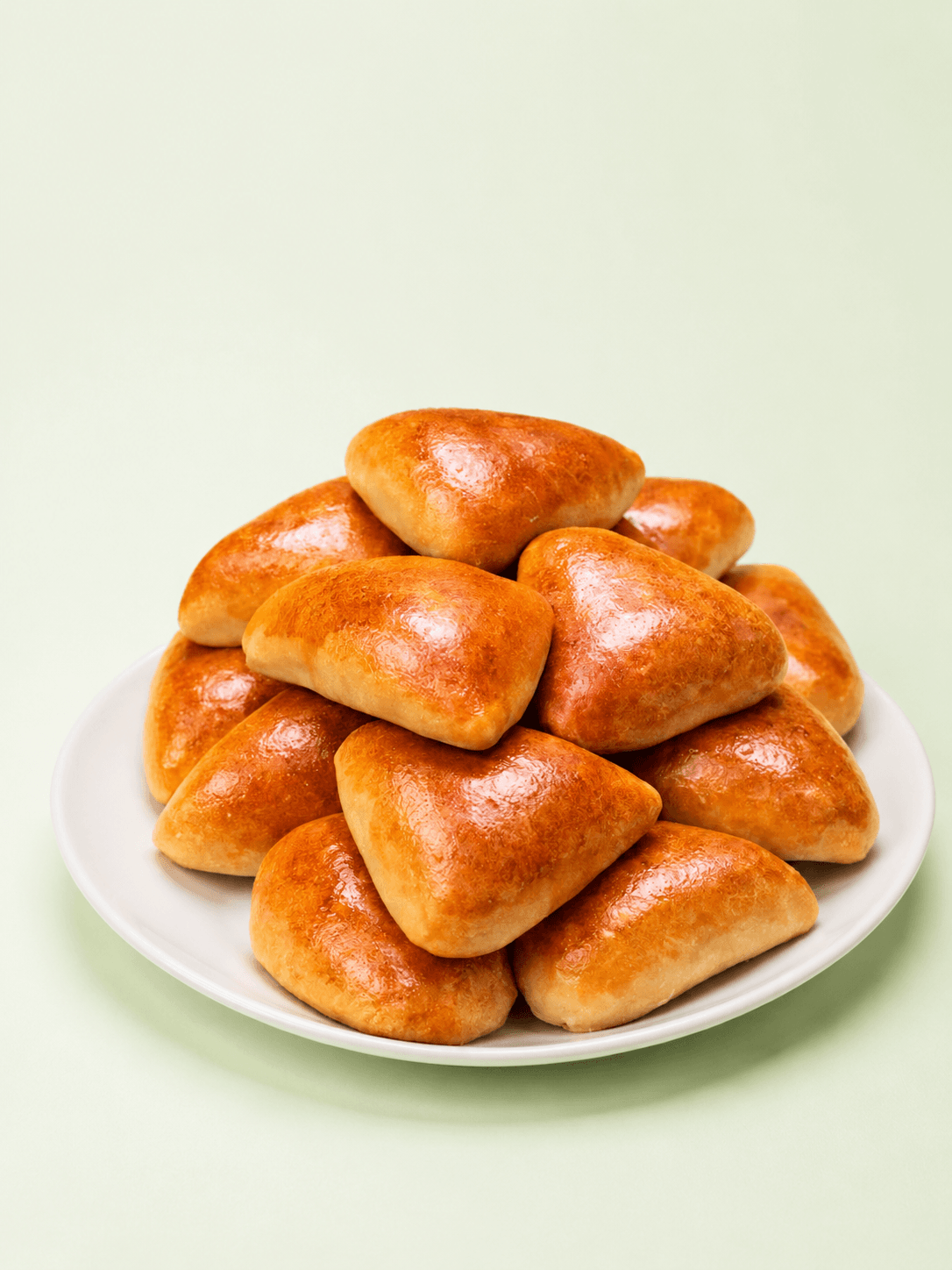
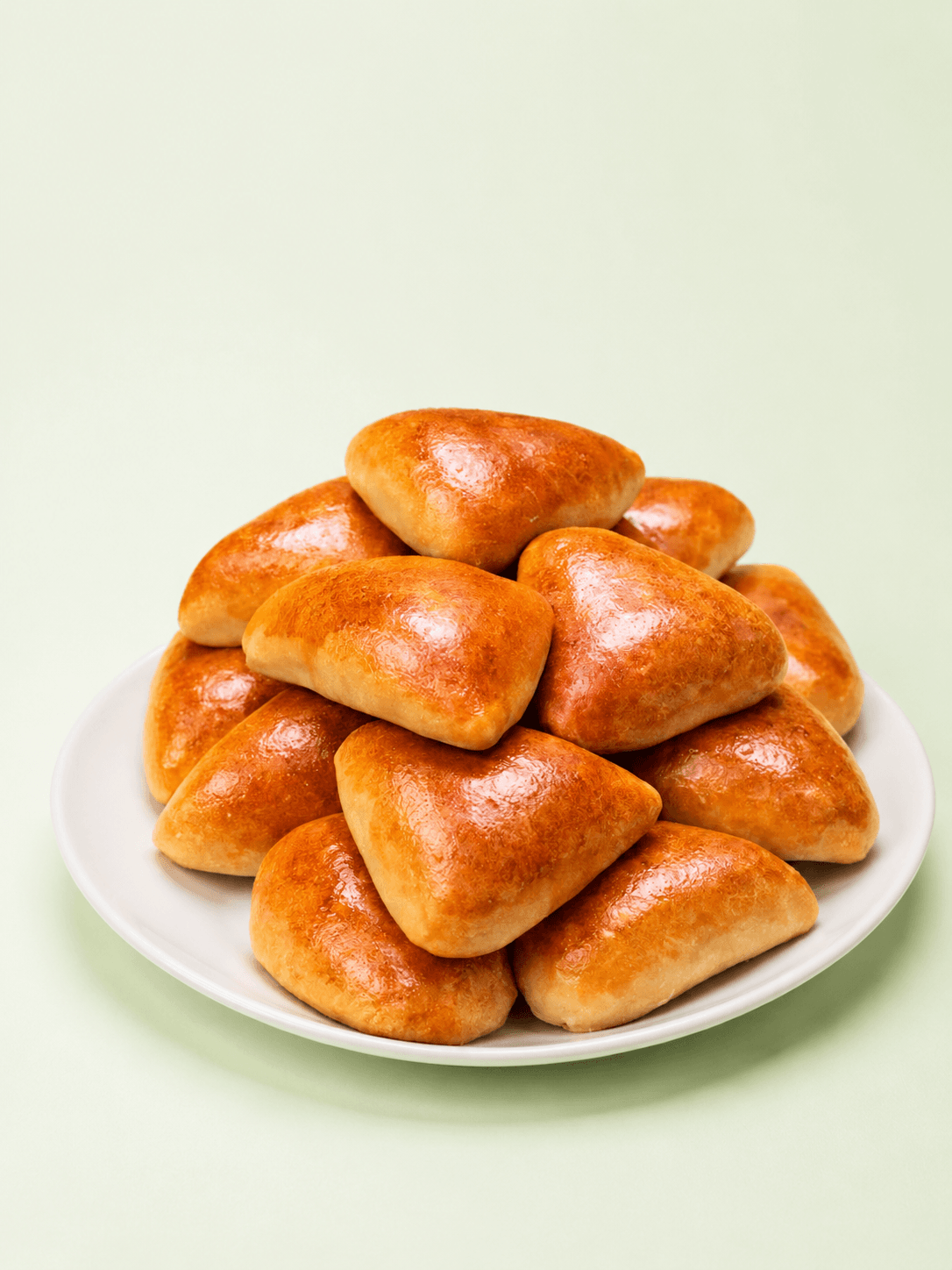
Somebody orders apple pie and expects a 20 cm dish with a lattice on top that gets cut into wedges and eaten with cream. What arrives is six soft parcels, each the size of a fist, with apple inside.
Both are apple pie. They are not versions of the same thing, and the differences are not about scale.
The plate is the design constraint
A slice of pie is eaten sitting down, from a plate, with a fork, probably with something poured over it. The pastry can be short and crumbly because a fork will hold it together. The filling can be loose, because a plate will catch what escapes.
A hand pie is eaten standing up, from a napkin, with one hand, possibly while walking. Every part of it has to be rethought for that.
The pastry has to hold. Not crumbly shortcrust, which would shed down your front, but a softer, more flexible dough that bends rather than breaks. In the Russian tradition this is usually an enriched yeasted dough, the same family as a pirozhok, which is why our apple ones sit with the savoury pirozhki on the site rather than with the tarts.
The filling has to stay put. That means the apple is cooked down and thickened before it goes in rather than going in raw with sugar and flour to set in the oven. A raw filling releases a great deal of liquid as it bakes, which is fine inside a deep dish with a lid, and disastrous inside a sealed parcel that has to be held.
And the seal has to survive. A crimped edge that opens in the oven turns into a leak, and a leak turns into a burnt caramel weld to the baking tray.
The apple
Cooking apples break down into purée. Eating apples hold their shape and can go watery and bland. A good hand pie filling uses something that softens without collapsing entirely, so there is still texture in the mouth, and it is cooked with enough sugar to taste and enough acid to stop it being flat.
Cinnamon is expected and easy to overdo. A hand pie filling with too much cinnamon tastes of nothing else, and given how small the portion is, that is the whole eating experience.
Ours is spiced gently and cooked down until it is tender rather than mushy.
Apple Pies – 6 PiecesApple hand pies, six pieces. Soft pastry with tender spiced apple.£22Order thisWhere this shape comes from
Every food culture with a working population has a version of this, because it solves the same problem: a hot meal you can carry.
The Cornish pasty. The empanada. The samsa. The Russian pirozhok. The Polish pierog, baked rather than boiled. All of them are a filling wrapped in a dough strong enough to be held, and in almost every case the sweet versions came after the savoury ones and borrowed the same construction.
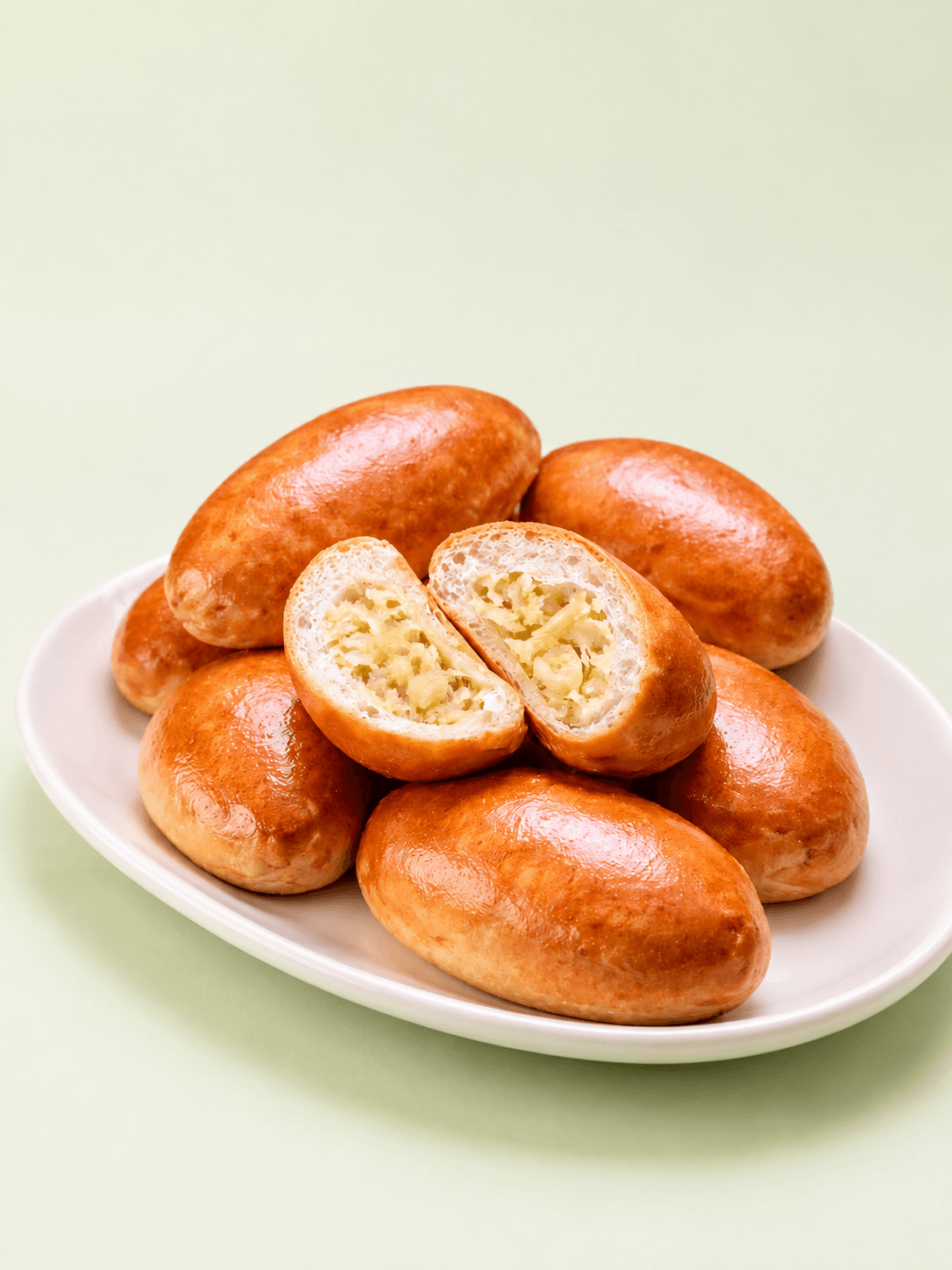
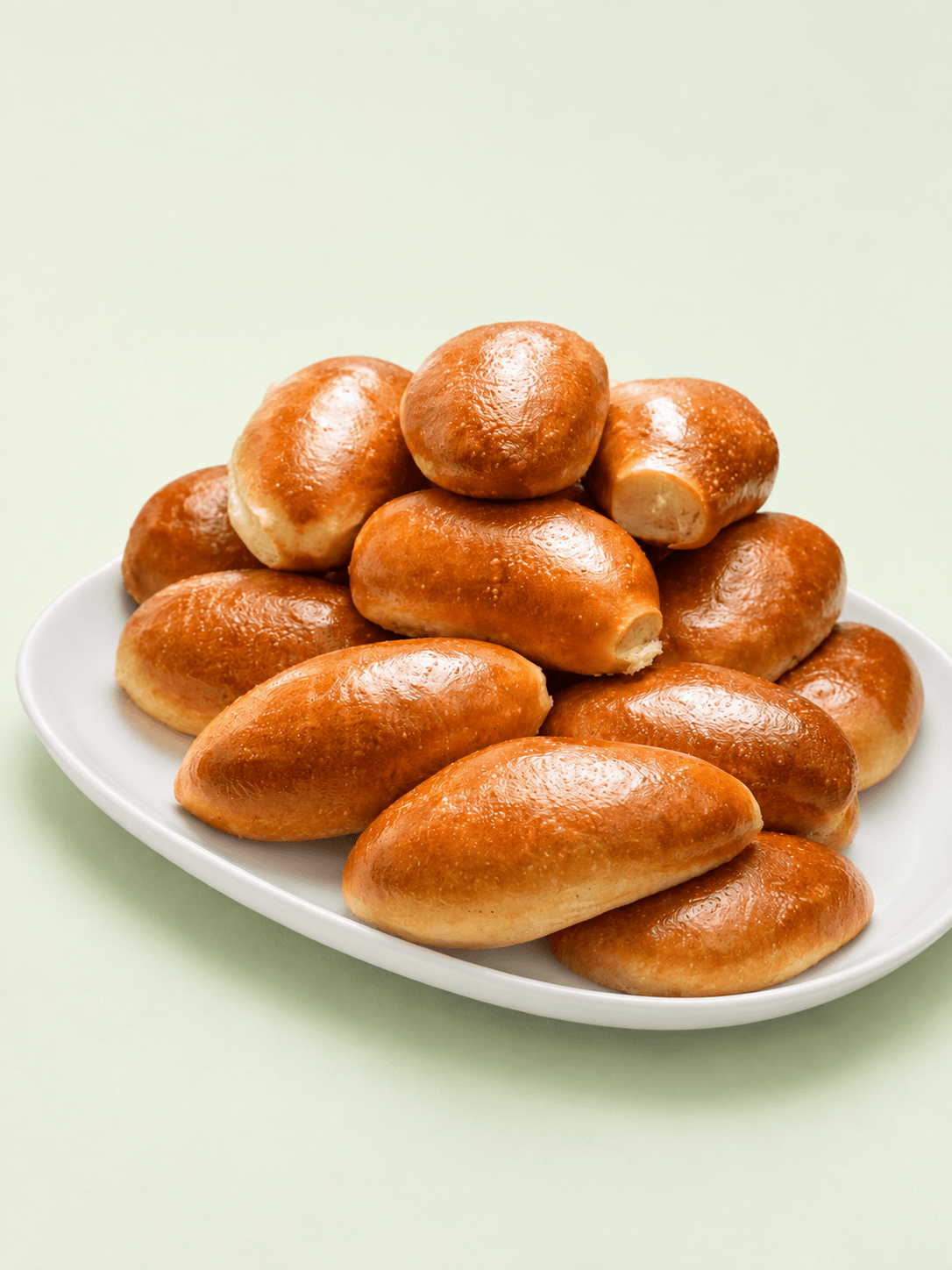
That is why our apple ones are the same shape and size as the cabbage and egg. They come from the same tray and the same tradition, and in a Russian household they would be on the same table, eaten in the same way, at the same time of day.
How to serve them
Warm, from the oven, 160 degrees for ten minutes. They are acceptable cold and much better warm.
They do not need cream, custard or ice cream, and adding those turns a hand pie into an awkward plated dessert that would have been better as a slice of something else. If you want the pudding, order a tart. If you want the thing you eat standing in a kitchen at eleven at night, this is it.
They are also the best sweet thing we make for a picnic, a lunchbox or a car journey, for the same reason they were invented.
What a supermarket hand pie is
The British supermarket equivalent is usually a shortcrust or puff pastry turnover, and the construction tells you a lot about what it is optimised for.
Puff pastry is the common choice because it can be made at industrial scale, it freezes and bakes from frozen, and it looks impressive. It is also brittle, which is why a supermarket turnover sheds pastry down your front and why it is usually sold in a cardboard sleeve.
The filling is set with starch to a firm gel so it does not move in transit or leak in the oven. That firmness is the reason it tastes of apple flavour rather than of apple: a gel holds flavour compounds back from the tongue in a way loose cooked fruit does not.
And the sugar content is high, because a long dated product needs it and because sweetness covers the flatness that comes with everything above.
A hand pie in an enriched yeasted dough with loose cooked apple inside is softer, less sweet, messier to make and considerably better, which is the entire reason the Eastern European version is built that way.
Common questions
How many come in a box?
Six.
Are these the same as a 20 cm apple pie?
No. These are individual hand pies in a soft dough, made to be eaten with one hand. They are not slices of a larger pie.
Are they sweet enough to be a dessert?
Yes, though they are less sweet than a British apple pie. They sit somewhere between a pastry and a pudding, which is where a pirozhok with a sweet filling is meant to sit.
What are the allergens?
Gluten, eggs and milk. No nuts.
How should I reheat them?
Oven, 160 degrees, about ten minutes, uncovered. Not a microwave, which makes the dough damp.
How long do they keep?
Three days in the fridge, and they freeze well. Reheat from frozen at 160 degrees for around twenty minutes.
Can children eat them?
They are one of the better things on our list for children: no nuts, mild spicing, and no plate or fork required.
Ordering in London
Made to order in Belgravia and delivered across London and Surrey. Forty eight hours notice, £12 delivery in central London and £15 elsewhere, £50 minimum order.
Order it for the date you need
Everything here is baked to order for your date.
48 hours notice, 72 for bread. Delivered across London and Surrey.