
· 6 min read
Handmade Chocolates and Truffles to Order in London
Two boxes on our list are not baking at all. They are there because a cake and a box of chocolates go together, and because most boxed chocolate is disappointing.
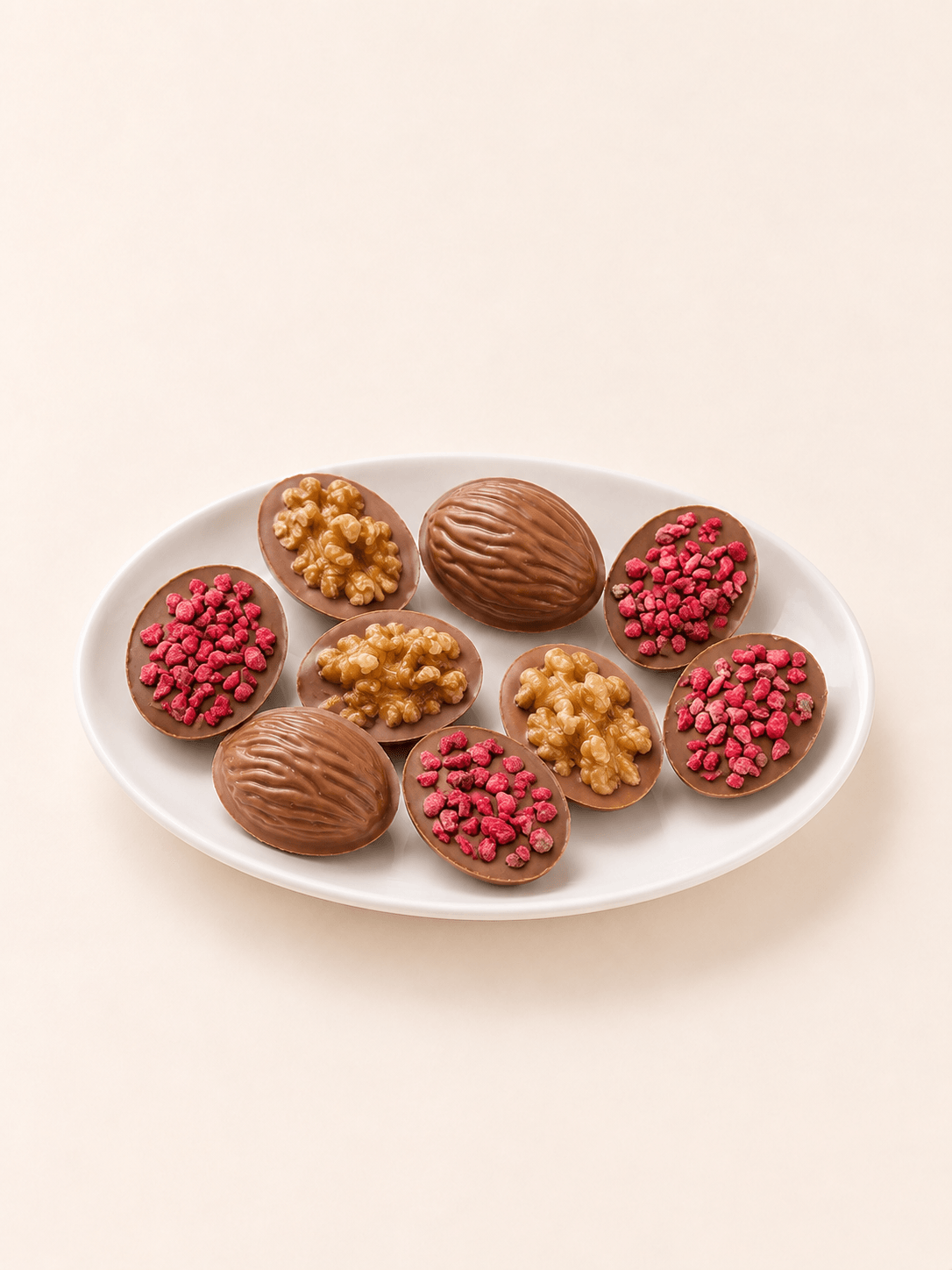
Two things on our list are not baked. A selection of ten handmade chocolates, and a box of dark chocolate orange truffles. They exist because they are what people add to a cake order, and because the gap between a good handmade chocolate and a supermarket box is larger than almost any other gap in food.
Here is what accounts for it.
Ganache, and why it goes wrong
A truffle is ganache: chocolate melted into warm cream, stirred until it emulsifies, cooled until it sets.
That word emulsifies is doing all the work. Chocolate is cocoa solids and cocoa butter. Cream is water, fat and protein. Fat and water do not combine willingly, and what you are doing when you make ganache is forcing them into a stable suspension where microscopic droplets of one sit inside the other.
Done properly, the result is glossy, smooth, and melts cleanly at body temperature. Done badly, the emulsion splits: the fat separates, the mixture goes grainy and dull, and the texture in the mouth is waxy. You cannot taste your way back from a split ganache and you cannot stir it back together by hand.
The variables are temperature, ratio and how you stir. There is no shortcut and no machine that removes the judgement.
Why a boxed chocolate is different
Most mass produced filled chocolates do not use a cream ganache at all, or use one with so much added fat and so little water that it is shelf stable for a year.
That is not fraud, it is engineering. A cream ganache has a life measured in weeks at best and days at its peak. To put chocolates in a box, ship them, warehouse them and sell them nine months later, the filling has to be changed into something that does not behave like cream.
What you lose is the melt. A real ganache collapses on the tongue at blood heat. A shelf stable one sits there and slowly gives way, which is why an expensive box of chocolates can still feel like eating a candle.
What we make
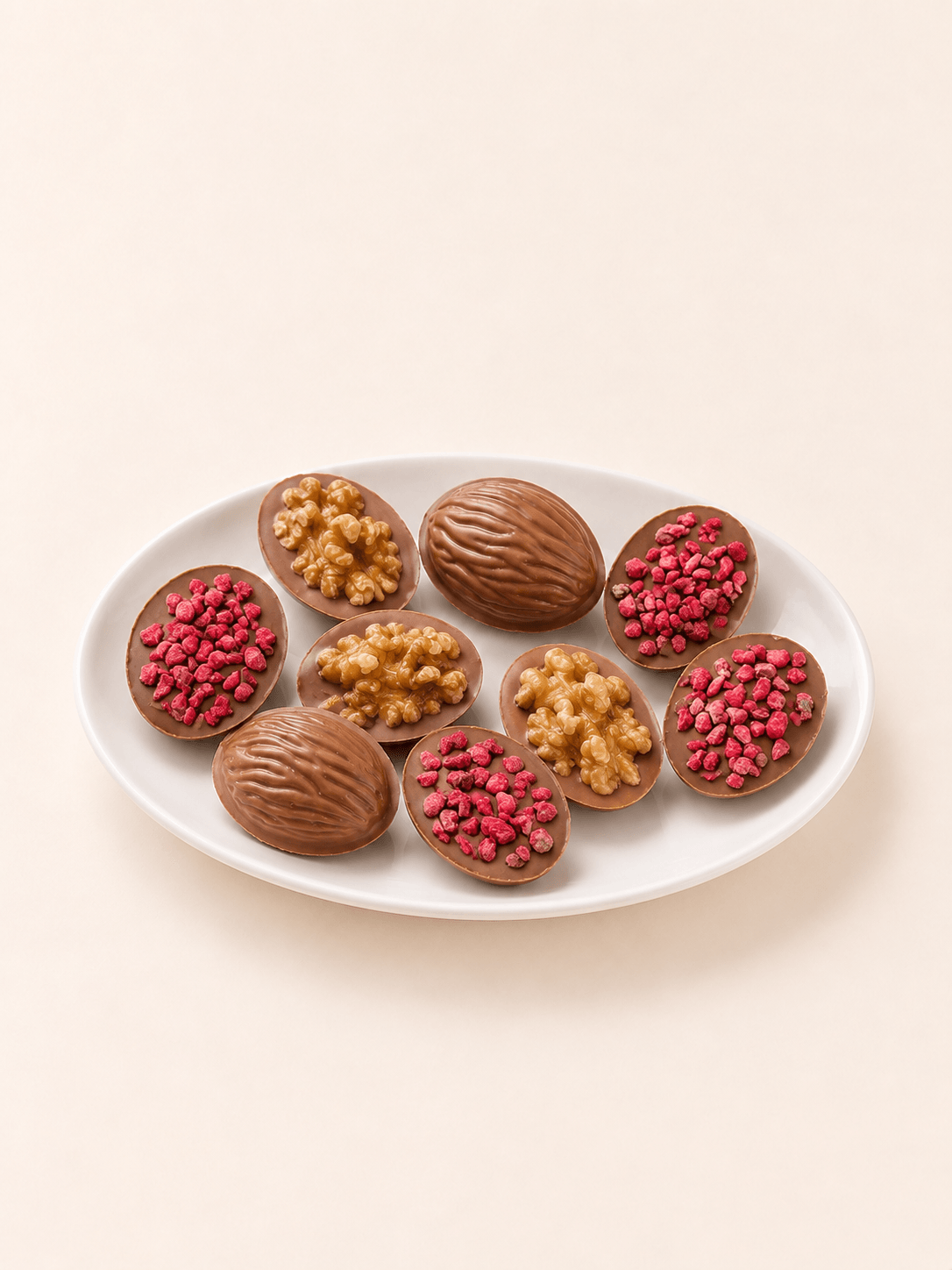
The selection is ten pieces, in one of two combinations: pistachio, raspberry and ginger, or cranberry, raisin and walnut. Both lean towards fruit and nut rather than towards more chocolate, which is deliberate, because a box of ten chocolates that are all rich is a box where people eat two.
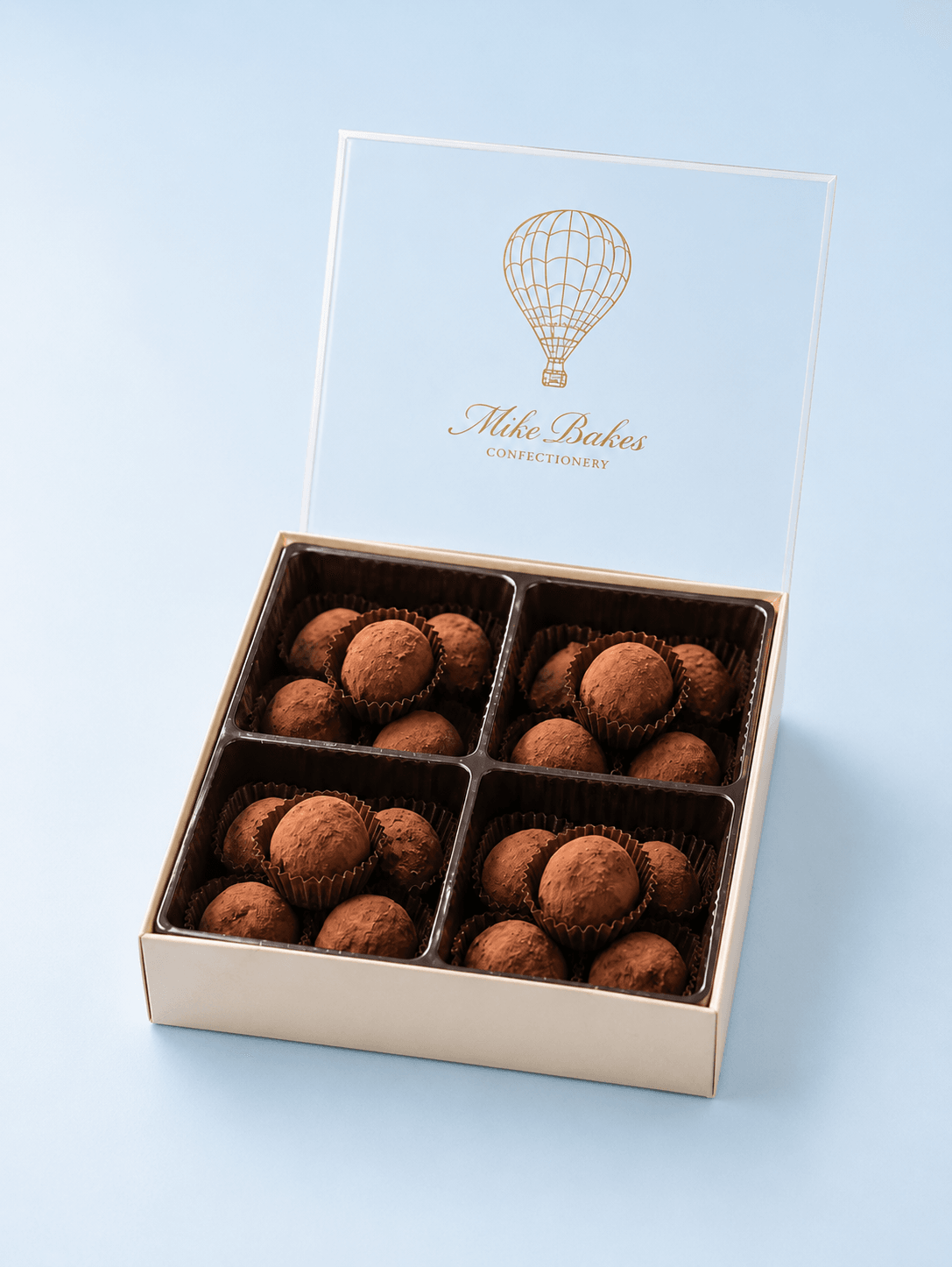
The truffles are dark chocolate and orange, with a soft ganache centre, twenty to a box. Orange against dark chocolate is an old pairing and a reliable one: the oil in orange peel is aromatic rather than sweet, and it lifts the bitterness rather than covering it.
What to do with them
The main use, and the reason they are on the site, is as the thing that goes beside a cake.
For a birthday delivery, a cake with a box of chocolates reads as considerably more thought than a cake alone, and costs less than moving up a cake size. For a corporate delivery, chocolates are what you send when you do not know the recipient well enough to know whether they eat cake.
They are also the sensible way to reach the £50 minimum order if what you actually wanted was one small box of something.
Keeping them
Cool, dry, dark, and not in the fridge.
A fridge does two bad things to chocolate. It is humid, and condensation on the surface dissolves sugar which then recrystallises as a white bloom. And it is cold enough to change how the cocoa butter is crystallised, which dulls the shine and affects the snap.
Sixteen to eighteen degrees is ideal, which in most British houses means a cupboard away from the oven. Eat them within a week or two. A handmade ganache does not have a long life and is not meant to.
And take them out of the box twenty minutes before serving if the room is cold, because a chocolate below fifteen degrees releases almost none of its aroma.
Reading a chocolate box label
Two things on a label tell you most of what a box of chocolates will be like.
The first is where vegetable fat appears. Real chocolate is cocoa butter, and cocoa butter is expensive. UK rules permit up to five per cent of certain other vegetable fats in something still called chocolate, and a great many boxed chocolates use that allowance. It affects the snap and it affects the melt, and once you have noticed it you cannot stop.
The second is the filling description. A ganache will say cream somewhere. A shelf stable filling will say things like vegetable fat, glucose syrup, sorbitol or humectant, all of which are there to stop water activity doing what water activity does. A chocolate that can sit in a shop for nine months has had the cream engineered out of it.
There is also a tell that needs no label. Press a chocolate gently and let it sit on the tongue without chewing. A real ganache goes in about ten seconds. A shelf stable filling takes considerably longer and leaves a coating behind.
Ours are made to order, which is to say they are made because you ordered them and not before.
Common questions
How many chocolates are in the selection?
Ten, in one of two flavour combinations chosen on the product page.
How many truffles are in a box?
Twenty.
Do they contain nuts?
The selection does. The orange truffles declare soya and milk. Both are made in a kitchen that handles nuts, so ask us if the allergy is serious.
Should I keep them in the fridge?
No. A cool dry cupboard, around sixteen to eighteen degrees. The fridge causes bloom and dulls both the shine and the flavour.
How long do they keep?
A week or two. A real cream ganache has a short life, which is the price of it tasting like one.
Can I order chocolates on their own?
There is a £50 minimum order across the basket, so a single box usually needs something with it. Most people add them to a cake.
Can they be sent as a gift with a message?
Yes. A greeting card is available at the checkout as an extra.
Ordering in London
Made to order in Belgravia, delivered across London and Surrey. Forty eight hours notice, £12 delivery in central London and £15 elsewhere, £50 minimum order.
Order it for the date you need
Everything here is baked to order for your date.
48 hours notice, 72 for bread. Delivered across London and Surrey.