
· 6 min read
Craquelin, and Why a Choux Bun Wears a Lid
The thin crackled disc on a modern choux bun is not decoration. It solves two problems that had been irritating pastry chefs for two hundred years.
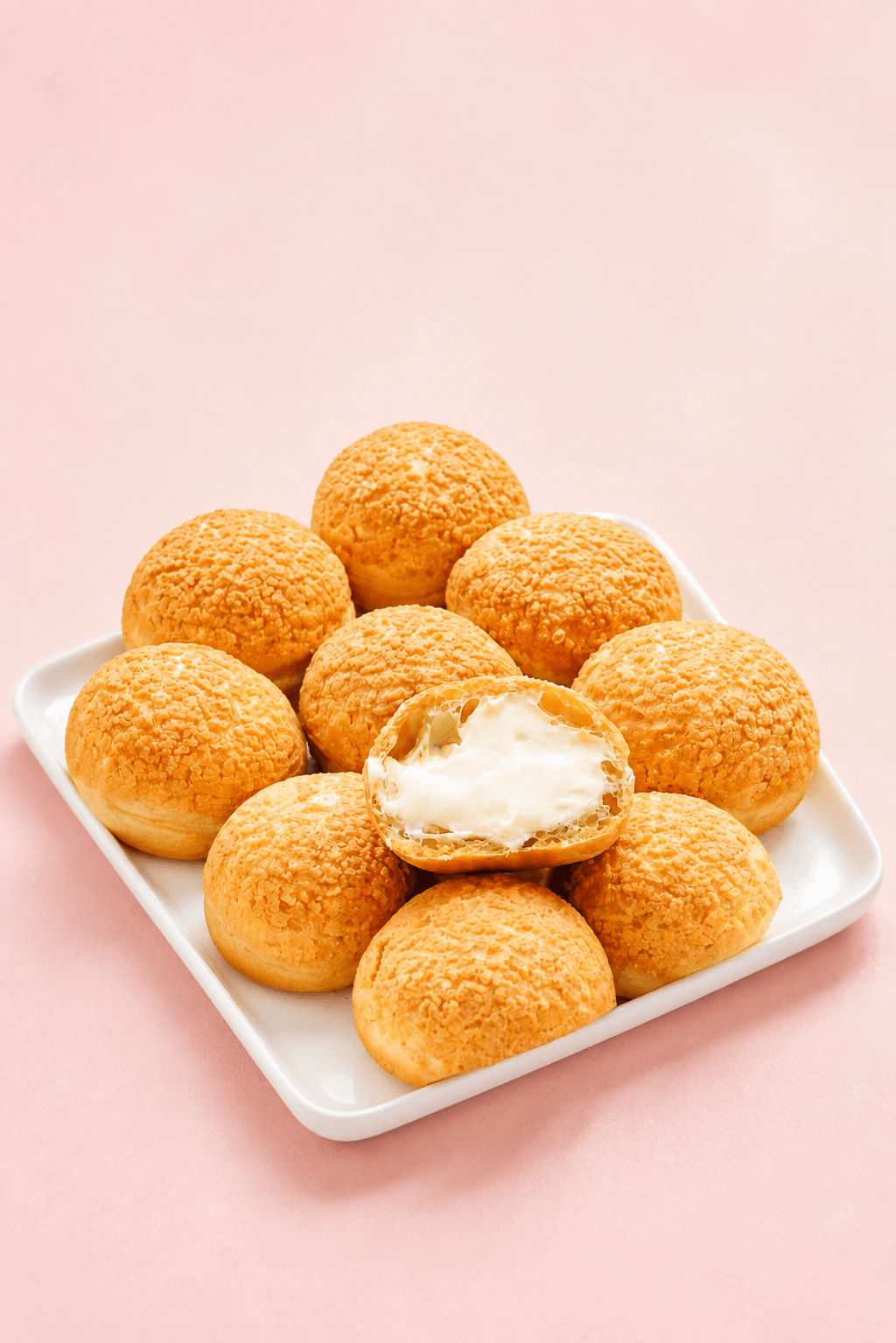
A traditional profiterole is a slightly irregular brown dome. A modern choux bun is a near perfect sphere wearing a thin crackled disc that looks like a cobblestone. The disc is craquelin, and it is one of the few genuine improvements modern patisserie has made to a very old recipe.
It is worth explaining what it does, because it looks like decoration and it is not.
How choux rises
Choux pastry contains no yeast, no baking powder and no chemical raising of any kind. It rises on steam alone, and the way it does so is unusual enough to be worth describing.
Flour is cooked into boiling water and butter until it forms a paste and the starch gelatinises. That paste is cooled slightly and then beaten with eggs, one at a time, until it is glossy and just slack enough to pipe.
In the oven, the water in the paste turns to steam. The gelatinised starch and the egg protein form a skin flexible enough to stretch as the steam expands, and the bun inflates like a balloon. Then, as the outside dries and sets, the structure locks and the inside is left hollow.
The whole thing depends on the bun staying sealed and flexible long enough to expand. Open the oven early, the steam escapes, the structure collapses, and you have a small sad disc. Every pastry student learns this the hard way.
The two problems craquelin solves
Problem one is shape. A piped choux bun does not inflate evenly. It expands more where the skin is thinnest and less where it is thick, so it goes up lopsided and cracks wherever it gives way. That is why classic profiteroles are all slightly different.
Problem two is texture, and it is worse. Choux is hollow and thin walled, and the moment cream goes into it, moisture starts moving outwards. A filled choux bun is crisp for an hour and soft after three.
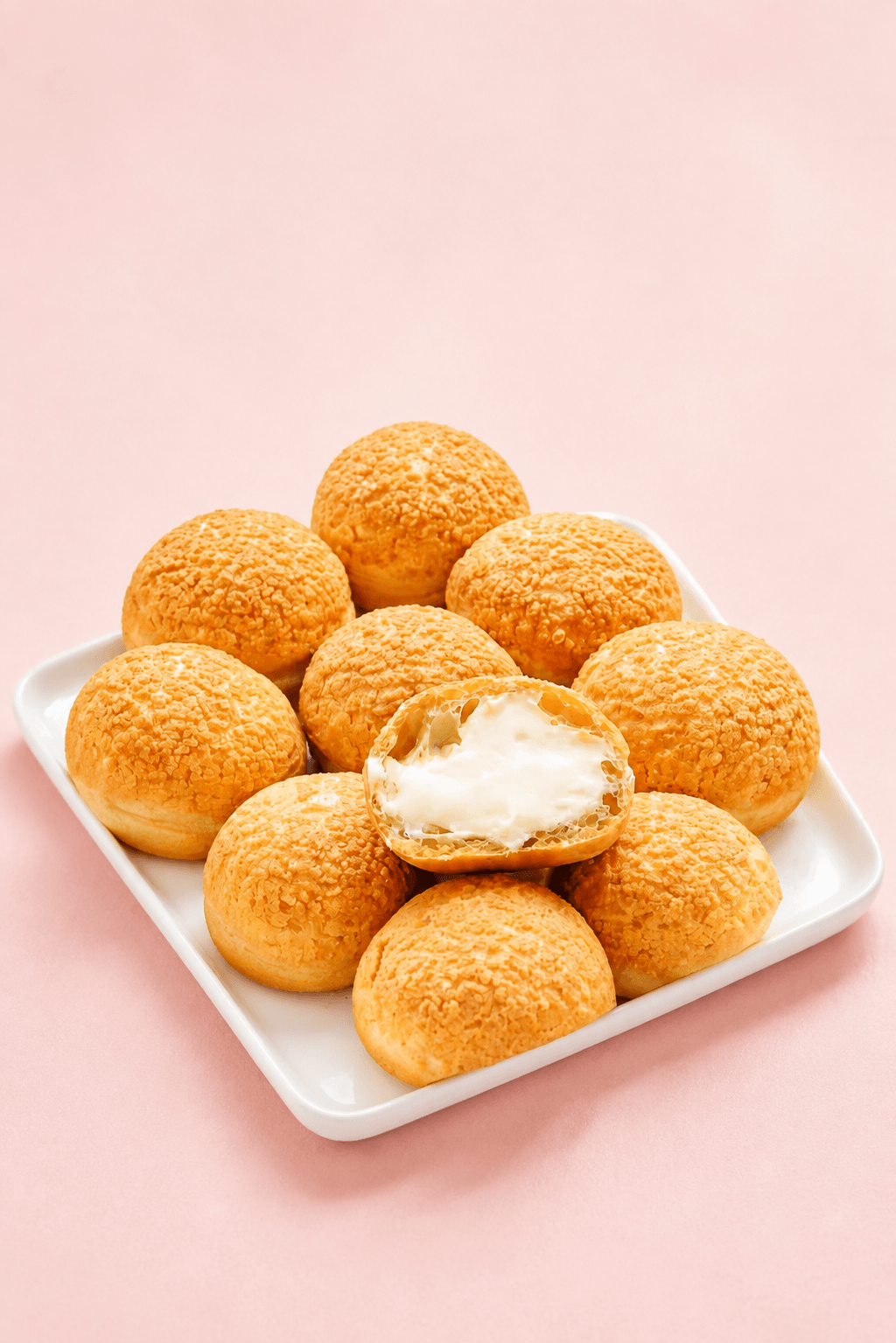
Craquelin, a simple paste of butter, sugar and flour rolled thin and frozen, then cut into discs and laid on each piped bun before baking, addresses both. It melts as the oven heats, spreads evenly over the rising bun, and acts as a light restraint that forces the expansion upward and outward evenly, giving a round bun. Then it sets into a thin sugary crust that is crisp, sweet, and far more resistant to moisture from inside than bare choux is.
What we put in ours
Madagascan vanilla, in a cream made properly rather than flavoured with essence.
Vanilla is the flavour that punishes shortcuts most obviously. There is nothing else in a vanilla choux to distract from it, so a synthetic note or a thin custard has nowhere to go. Real vanilla seed in a cooked cream, with the specks visible, tastes floral and slightly smoky and is worth the difference.
Madagascan Vanilla ChouxMadagascan vanilla choux buns. Crisp craquelin over choux pastry, filled with real vanilla cream.from £16Order thisThe Soviet choux ring
Our other choux item comes from an entirely different tradition and it is worth putting next to this one.
A choux ring, piped as a circle rather than a bun, split and filled with tvorog cream rather than a custard or a whipped cream. It is a Soviet bakery standard, and it exists because tvorog was abundant and cream was not.
The result is lighter, tangier and much less sweet than a French choux, and it is a pastry you can eat two of without effort. No craquelin, because that is a modern French addition that never reached a Soviet bakery, and the ring is the better for being plain.
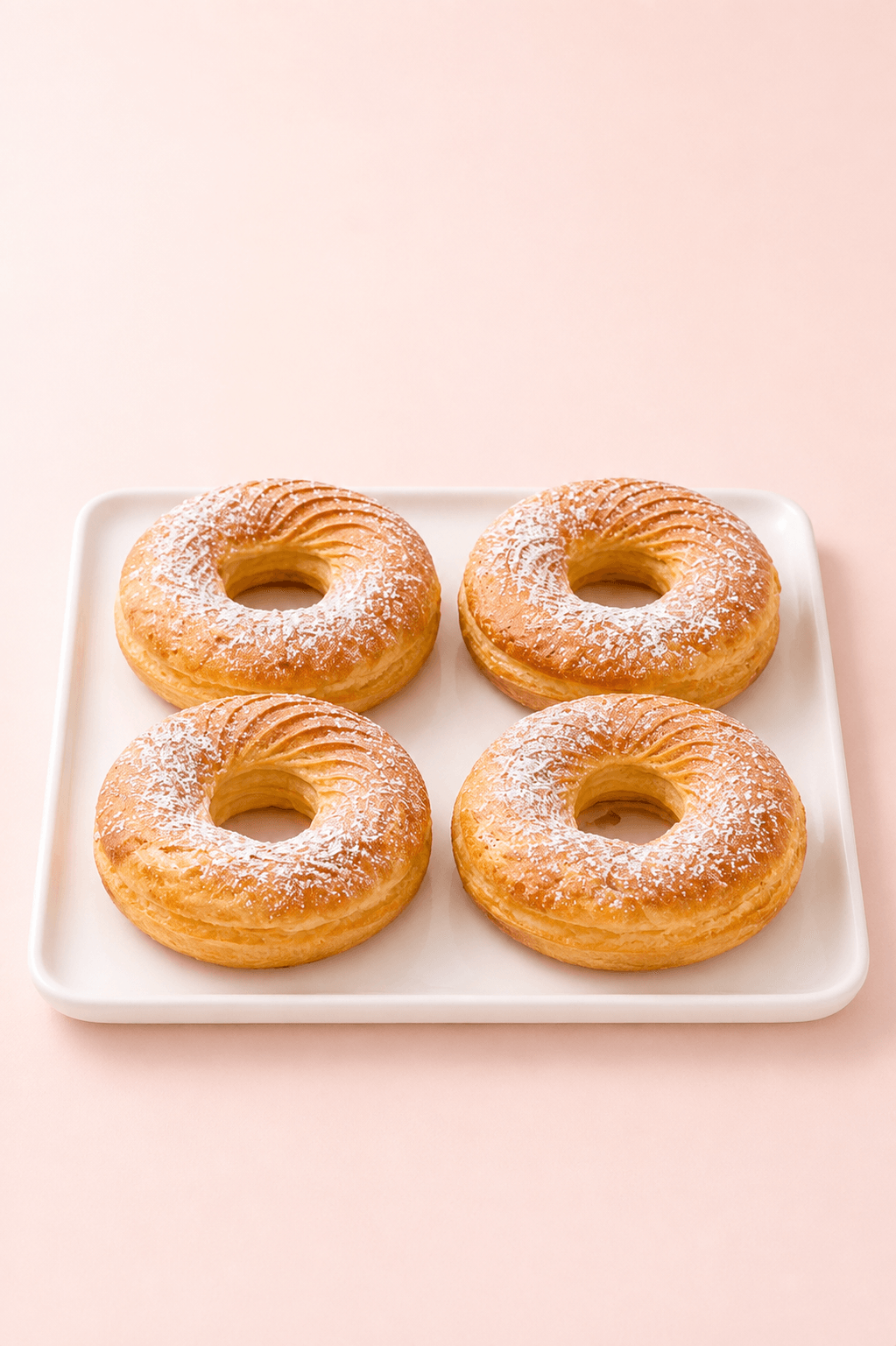 Choux Pastry Rings - 4 PiecesChoux pastry rings filled with smooth tvorog cream, four pieces. A Soviet bakery classic.£30Order this
How to keep them
Badly, is the honest answer. Filled choux is a pastry with a short window and there is no getting around it.
Eat them the day they arrive. Keep them in the fridge in their box until half an hour before, which firms the cream and slows the softening, and accept that by the following day the craquelin will have lost its snap.
This is why they are made to order rather than sitting on a shelf, and it is why a choux bun bought from a supermarket chiller has never once been crisp.
What a chiller cabinet choux has been through
A filled choux bun from a supermarket chiller has usually been baked, frozen, thawed, filled and packed, and each of those steps works against it.
Choux is a thin walled hollow structure, which is exactly the geometry that suffers most from freezing. Water in the wall expands into ice, the structure takes microscopic damage, and on thawing the wall is softer than it was.
Then it is filled, often with a stabilised cream that is designed to hold water rather than release it, which helps the shelf life and does nothing for the eating.
Then it is packed in a sealed box, which traps the moisture that the bun is giving off. A choux bun in a closed plastic container at four degrees is in a small humid room.
The result is the pastry equivalent of a damp paper bag, and it is why most people in Britain think they do not much like profiteroles.
Made to order, filled the same day and delivered in a box for your date, is the only route to a choux bun that is still crisp when you eat it, and even then the window is a day.
Common questions
What is craquelin made of?
Butter, sugar and flour, rolled thin, frozen and cut into discs that sit on the bun before baking. It melts, spreads and sets into the crackled crust.
Why is it there?
It makes the bun rise evenly into a round shape and it gives a crisp sugary top that resists moisture from the filling for longer than bare choux does.
How many choux come in a box?
Six, nine or twelve, chosen on the product page.
What are the allergens?
Gluten, eggs and milk in both the choux buns and the choux rings.
How long do they keep?
One day, honestly. Refrigerate them in the box and take them out half an hour before eating.
What is the difference between the choux buns and the choux rings?
The buns are French style with craquelin and vanilla cream. The rings are Soviet style, plain, and filled with tvorog cream, which is tangier and less sweet.
Ordering in London
Both are made to order in Belgravia and delivered across London and Surrey. Forty eight hours notice, £12 delivery in central London and £15 elsewhere, £50 minimum order.
Order it for the date you need
Everything here is baked to order for your date.
48 hours notice, 72 for bread. Delivered across London and Surrey.