
· 5 min read
What Makes a Good Cinnamon Roll
Almost everywhere sells them and most are dry by the time you get one. The faults are specific and they are all fixable.
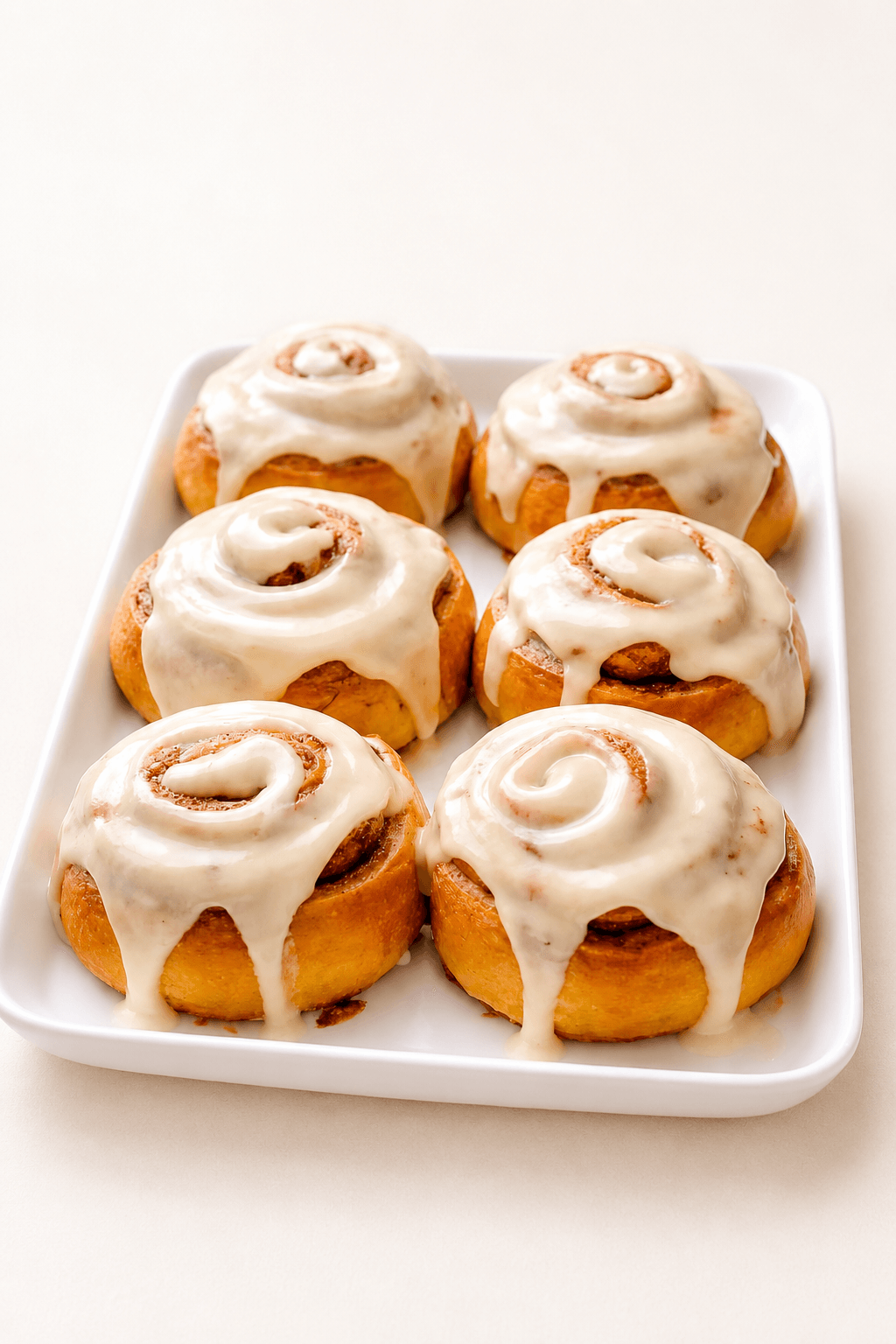
Cinnamon rolls are everywhere now. Every coffee shop has a tray of them under a dome, and most of them are disappointing in exactly the same way: dry, tight, sweet at the edges and dull in the middle.
None of that is inevitable. The faults come from four specific decisions, and knowing them makes it easy to tell whether a roll is going to be good before you buy it.
One: the dough has to be enriched, and slack
A cinnamon roll dough should have butter, egg and milk in it, and it should be softer and stickier than feels comfortable to handle.
A stiff dough is easier to roll and easier to cut. It also bakes tight, and a tight crumb goes dry within hours. The slack dough is harder work at every stage and it is what gives you a roll that is still soft the next morning.
Most commercial rolls are made from a firmer dough because it machines better. That single decision accounts for the majority of bad cinnamon rolls in Britain.
Two: the filling has to be a paste, not a dusting
Cinnamon and sugar scattered on rolled dough falls off during rolling, concentrates at the edges and leaves the middle bare.
Softened butter creamed with brown sugar and cinnamon into a spreadable paste behaves completely differently. It sticks to the dough, it stays evenly distributed through the spiral, and as it bakes it melts and caramelises in the layers rather than running out of the bottom.
The sugar should be brown rather than white. The molasses in it is doing real flavour work and it is also what makes the filling go sticky rather than crunchy.
Three: they have to be baked touching
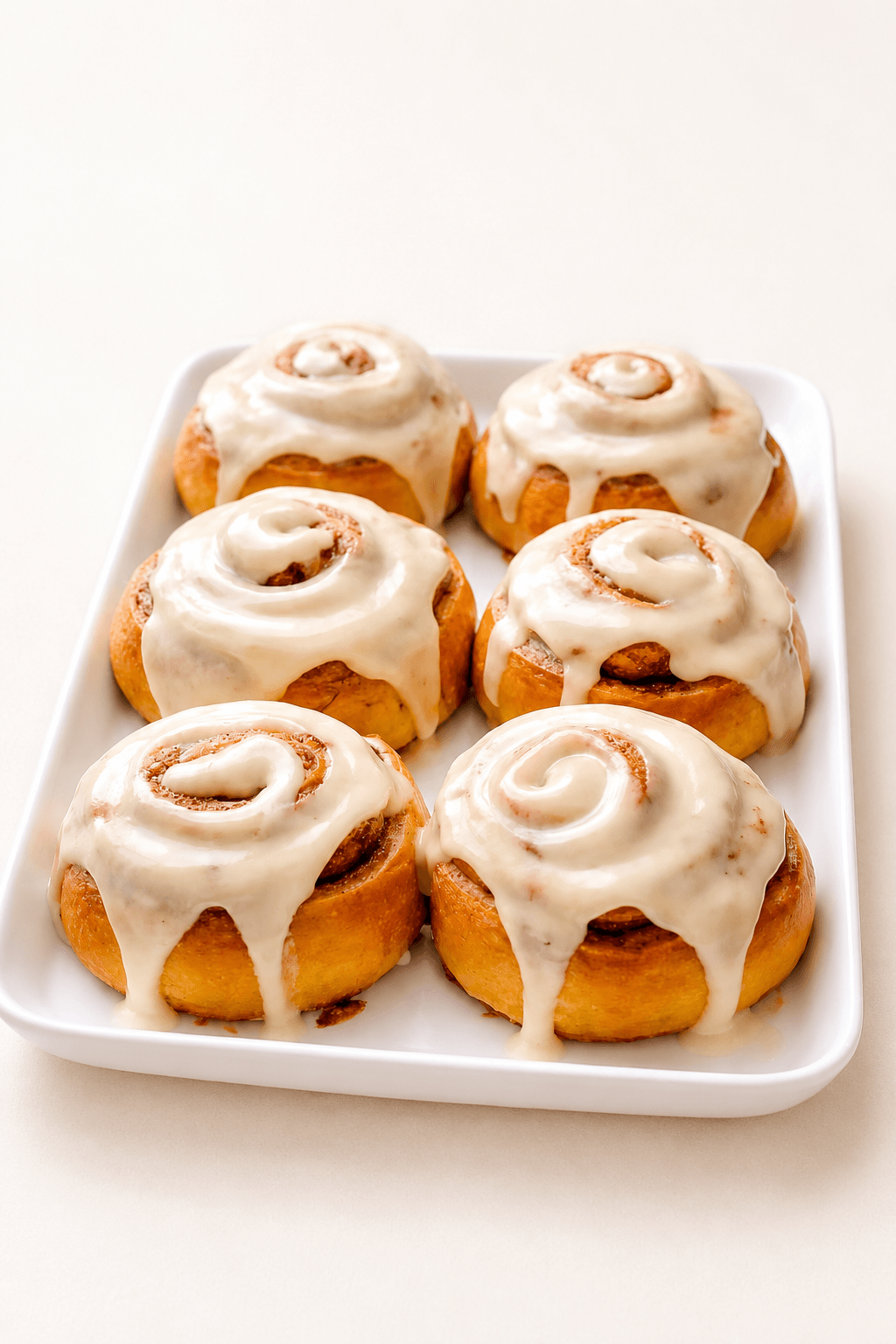
Rolls baked apart on a tray brown on all sides and dry out from every surface. Rolls baked in a tin, close enough to touch as they rise, protect one another.
What happens is that the sides stay pale and soft, the tops brown, and the bottoms caramelise in the sugar that has run out of them. You pull them apart rather than cutting them, and the torn edges are soft. That is the roll people remember.
It also means the middle of the tray is the best one, which is a fact every family that has bought a tray of these knows and quietly negotiates over.
Cinnamon Rolls - 6 PiecesCinnamon rolls, six to a box. Soft dough swirled with cinnamon sugar and topped with cream cheese frosting.£48Order thisFour: the frosting must be sharp
Cream cheese frosting is the right answer and icing sugar mixed with water is not.
The roll underneath is sweet. Cinnamon is sweet in effect if not in fact. A sweet glaze on top gives you nothing but more of the same, and by the third bite the whole thing has gone flat.
Proper cream cheese frosting is tangy and salty as well as sweet, and it is soft enough to sink into the warm roll rather than sitting on it as a lid. Ours is on the sharp side deliberately, for the same reason our carrot cake frosting is.
The middle question
There is a long running disagreement about whether the centre of a cinnamon roll should be slightly underbaked and doughy or cooked through like the rest.
The Scandinavian tradition, where these come from, generally bakes through. The American tradition, which gave us the frosting, prefers the soft centre. Both camps are certain.
Ours are baked through, with a soft rather than gooey middle, on the grounds that a roll has to survive a journey across London and arrive as something you can pick up. A deliberately underbaked centre does not travel.
For a morning
Six to a box, and the honest count is one each with coffee, or one and a half if it is breakfast rather than a break.
Warm them. Ten minutes at 150 degrees, or two minutes in a warm oven if they are already at room temperature. A cold cinnamon roll from a fridge is a much worse thing than a warm one and the difference costs you nothing.
For a morning spread, they go alongside syrniki and blini rather than against them, and that combination is what most of our weekend breakfast orders look like.
Why the chain versions are dry
The cinnamon rolls sold in coffee chains are made centrally, delivered several times a week, and displayed at room temperature under a dome. Every one of those steps costs moisture.
A roll is mostly crumb and crumb stales through starch retrogradation, which is a real chemical process rather than simple drying out. The starch that gelatinised in the oven slowly recrystallises as the bread cools and ages, pushing water out of the structure. It happens fastest between about zero and eight degrees, which is exactly fridge temperature, and slowly at room temperature.
That is why a chain roll made yesterday is noticeably tighter than one made this morning, and why refrigerating a cinnamon roll is the worst thing you can do to it.
Warming reverses it temporarily. Heat above about sixty degrees re gelatinises the starch and the roll goes soft again, which is why a two day old roll warmed in an oven is transformed and the same roll cold is not.
So: buy them fresh, keep them at room temperature, warm them before eating. All three matter and the third one is free.
Common questions
How many come in a box?
Six.
What are the allergens?
Gluten, eggs and milk. No nuts.
Should I warm them?
Yes. Ten minutes at 150 degrees, or a couple of minutes if they are already at room temperature. They are noticeably better warm.
How long do they keep?
Two days, and they are best on the first. Keep them covered at room temperature rather than in the fridge, which dries them out.
Can I get them without frosting?
Message us before ordering. The frosting is part of how the recipe is balanced, so we would talk you through what changes.
Can I freeze them?
Yes. Freeze them unfrosted if you can, and warm from frozen at 150 degrees for about twenty minutes.
Ordering in London
Baked to order in Belgravia and delivered across London and Surrey. Forty eight hours notice, £12 delivery in central London, £15 elsewhere, and a £50 minimum order.
Order it for the date you need
Everything here is baked to order for your date.
48 hours notice, 72 for bread. Delivered across London and Surrey.