
· 7 min read
Basque Burnt Cheesecake in London: Why It Is Meant to Look Like That
People who have not met one before assume it has gone wrong. The scorched top is the recipe, and taking it away would leave a worse cake.
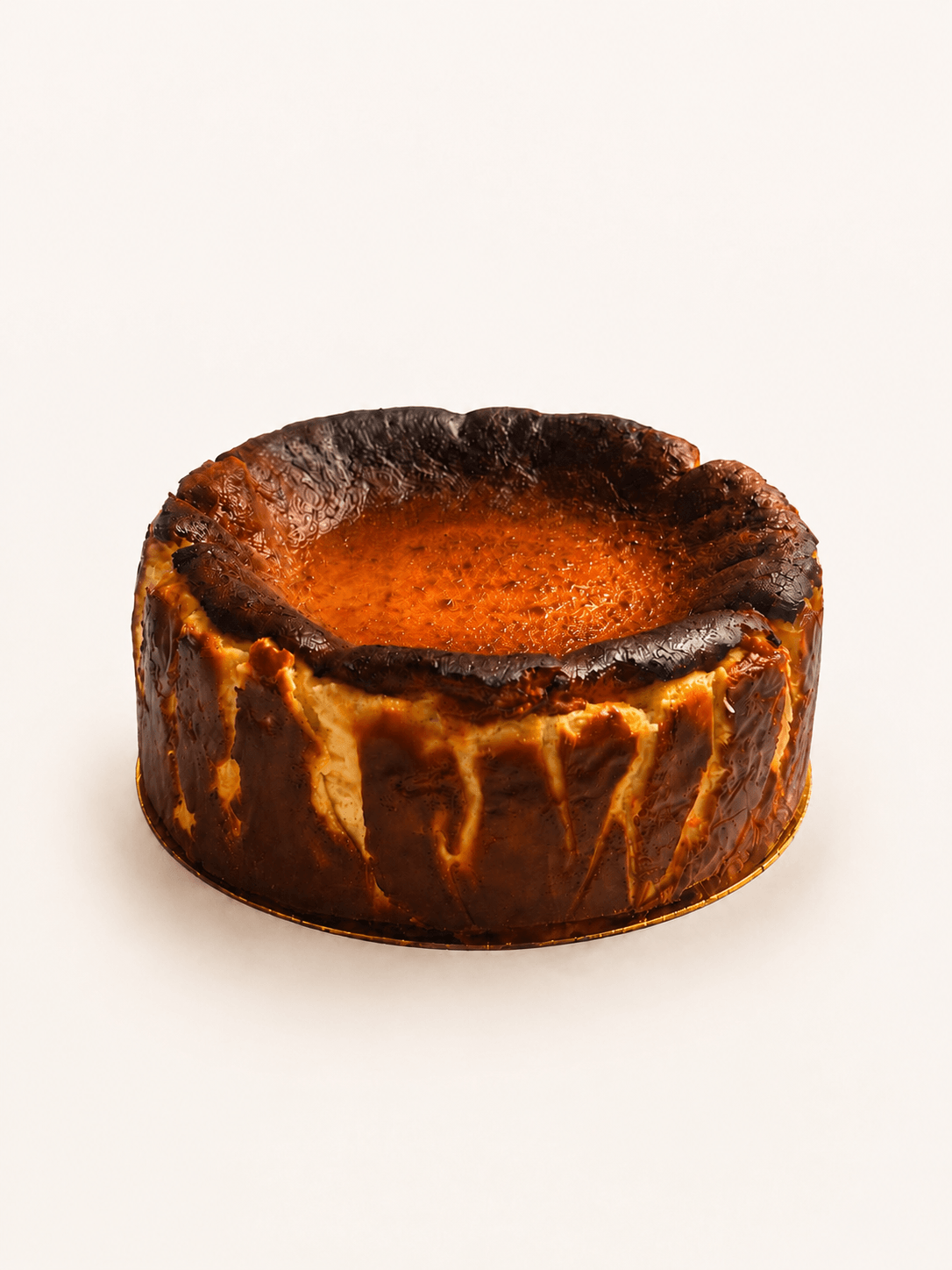
A Basque cheesecake arrives looking like an accident. The top is dark brown going on black in places, the sides have collapsed inwards, the surface has cracked and sunk, and the whole thing sits lower than it should. The first time somebody sees one on a table they usually ask, quietly, whether it is meant to be like that.
It is. Every one of those things is the recipe working. A pale, smooth, evenly risen Basque cheesecake is the failure.
Where it comes from
La Viña, a bar in San Sebastián, has been making it since the late 1980s. It was never a patisserie item and it was never meant to travel. It was a bar dessert, cut thick, served on a plain plate with nothing on it, and for about twenty five years it stayed a local thing that people who had been to San Sebastián told other people about.
Then it went around the world in roughly eighteen months, somewhere around 2019, and now every second cafe in London has a version. Some of them are very good. A lot of them are a New York cheesecake baked slightly too long, which is a different thing entirely.
What makes it not a New York cheesecake
Four differences, and they compound.
There is no base. No biscuit, no pastry, nothing. The mixture goes straight into a tin lined with baking paper that is deliberately crumpled and left standing well above the rim, and the paper is what gives the finished cake its rough folded sides.
There is far more cream. A New York cheesecake is mostly cream cheese with a little dairy to loosen it. This is closer to half and half, and the extra cream is why the centre stays loose rather than setting firm.
There is very little flour. Just enough to hold the structure together, often a single spoonful, sometimes none at all. Nothing thickens it except the eggs.
And it is baked hot and fast, around 220 degrees, rather than low and slow in a water bath. The water bath exists to stop a cheesecake colouring and cracking. This recipe wants both.
What the burning actually does
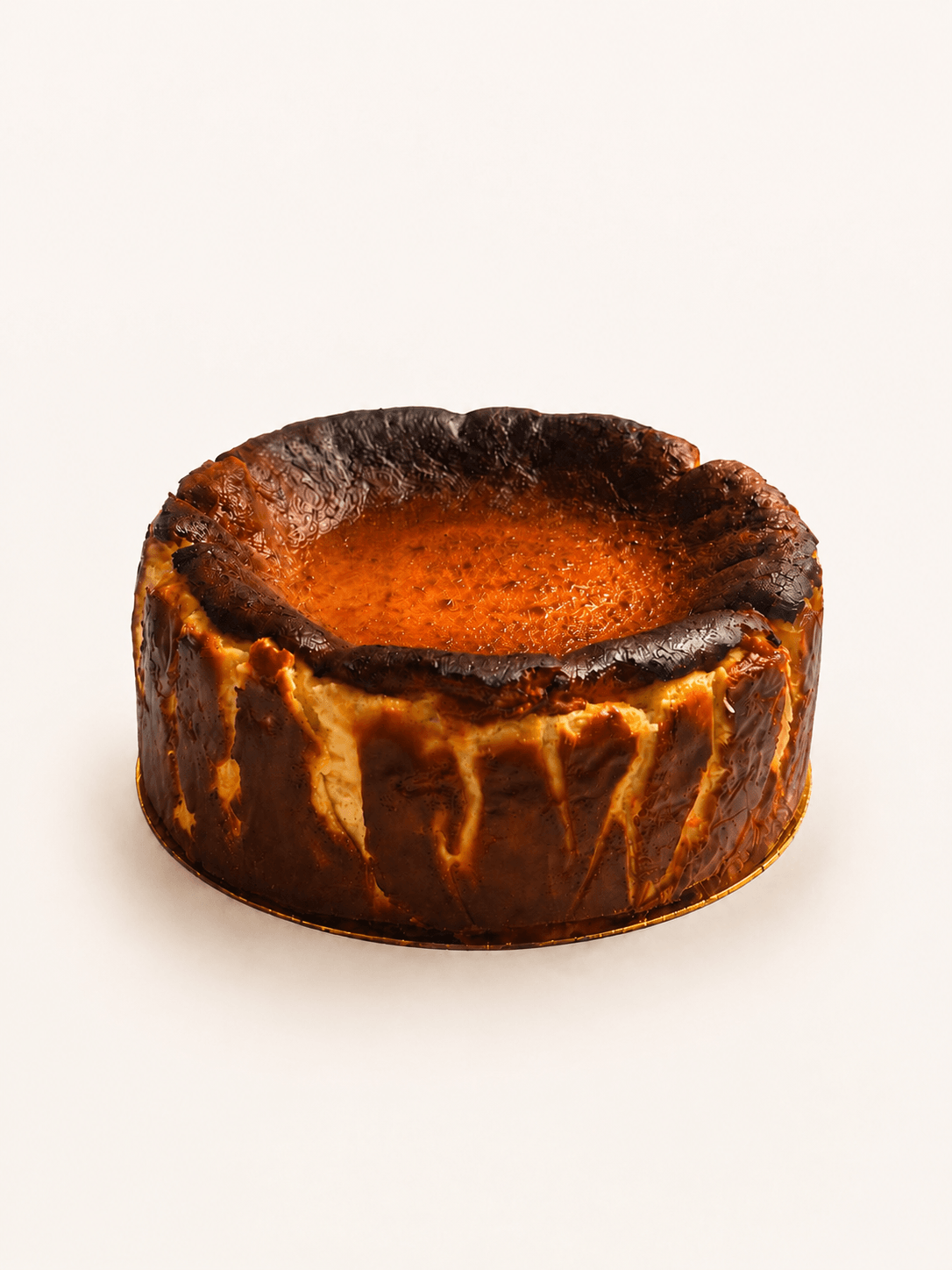
The dark surface is not a garnish and it is not char in the sense of something spoiled. It is caramelised sugar and browned milk protein, the same reaction that makes the crust of a loaf taste different from the crumb.
What it gives the cake is bitterness, and this cake needs bitterness badly. Cream cheese, cream, sugar and eggs is a combination with no edges at all. Baked pale it tastes rich and slightly flat. Baked until the top is properly dark, the first thing your tongue meets is a burnt caramel note, and everything underneath reads as sweeter and more complex by contrast.
The sinking is the second consequence of the same choice. The hot oven makes the cake rise fast and high, then it falls as it cools because there is not enough flour or starch to hold the lift. That fall is what makes the middle dense and creamy instead of aerated.
Vanilla Basque Burnt Cheesecake – 18 cmVanilla Basque burnt cheesecake, 18 cm. Crustless, caramelised on top and molten in the middle.£66Order thisThe centre question
How loose the middle should be is the one genuine argument about this cake.
At La Viña it is very loose, almost pourable at the centre, and a slice will not stand up on the plate. Plenty of bakeries in London firm it up considerably, partly because a cake that slumps is difficult to deliver and partly because British customers are more suspicious of underset egg than Spanish ones.
Ours is made to be soft in the middle and set enough to cut. It should hold a wedge shape on a plate and then relax slightly over a couple of minutes. If you like it looser, take it out of the fridge a full hour before serving rather than thirty minutes, and it will go a long way in that direction.
How to serve it
Plain, at room temperature, in thick wedges. It does not need cream, fruit, sauce or a dusting of anything.
The two things worth having beside it are a small glass of something sweet and cold, which is how it is eaten in San Sebastián, or an espresso. It is very good indeed with a sharp fruit on the side if you must, though the cake is really built to be the whole of the course.
Cut it with a hot dry knife, wiped between slices, or the first slice will take the second one with it.
Where it sits in our range
It is the simplest thing we make and one of the most reliably ordered. It suits people who find layered cakes too sweet, it works at the end of a heavy meal where a cream cake would be too much, and it is the cake most often ordered by somebody who says the table cannot agree on anything.
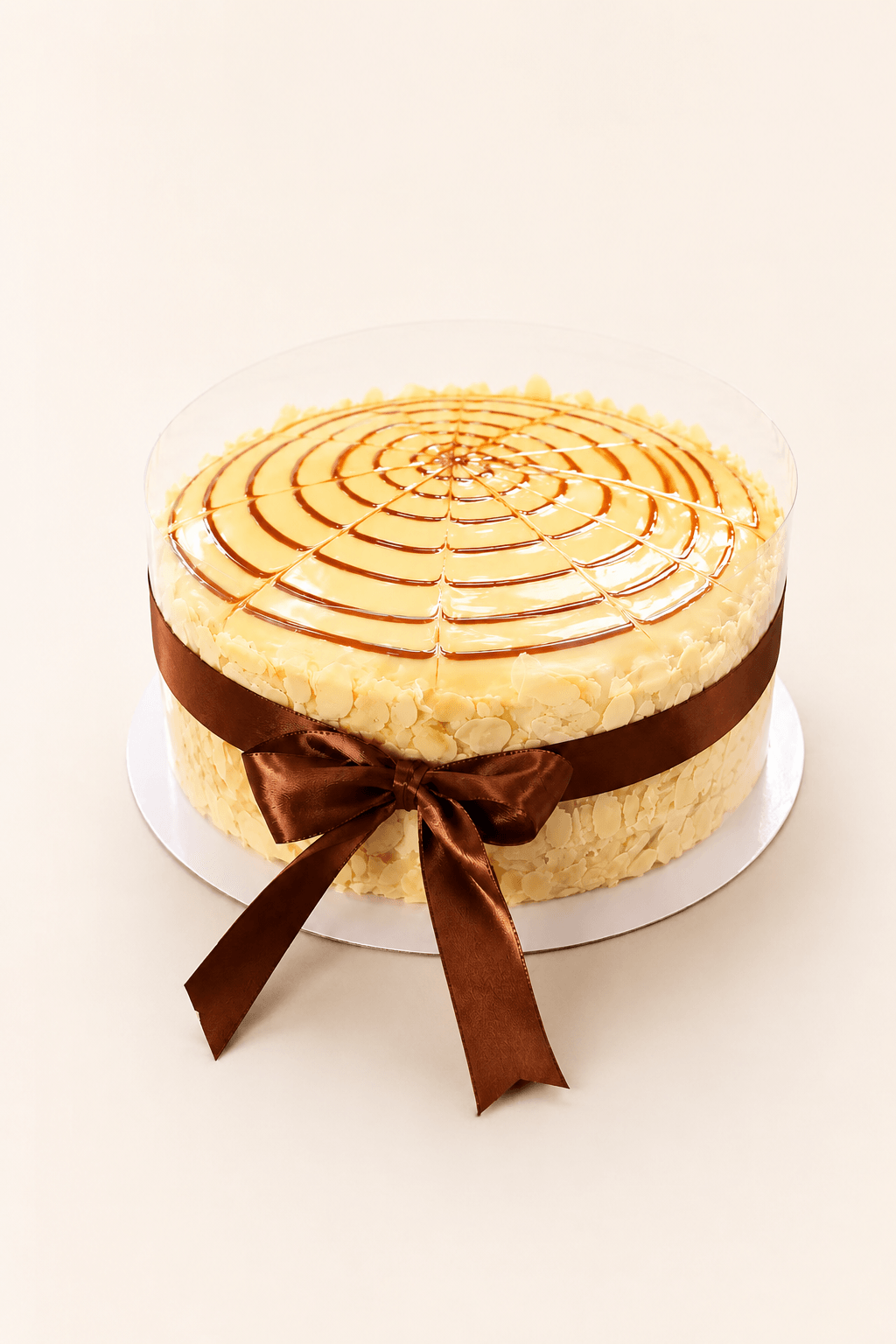
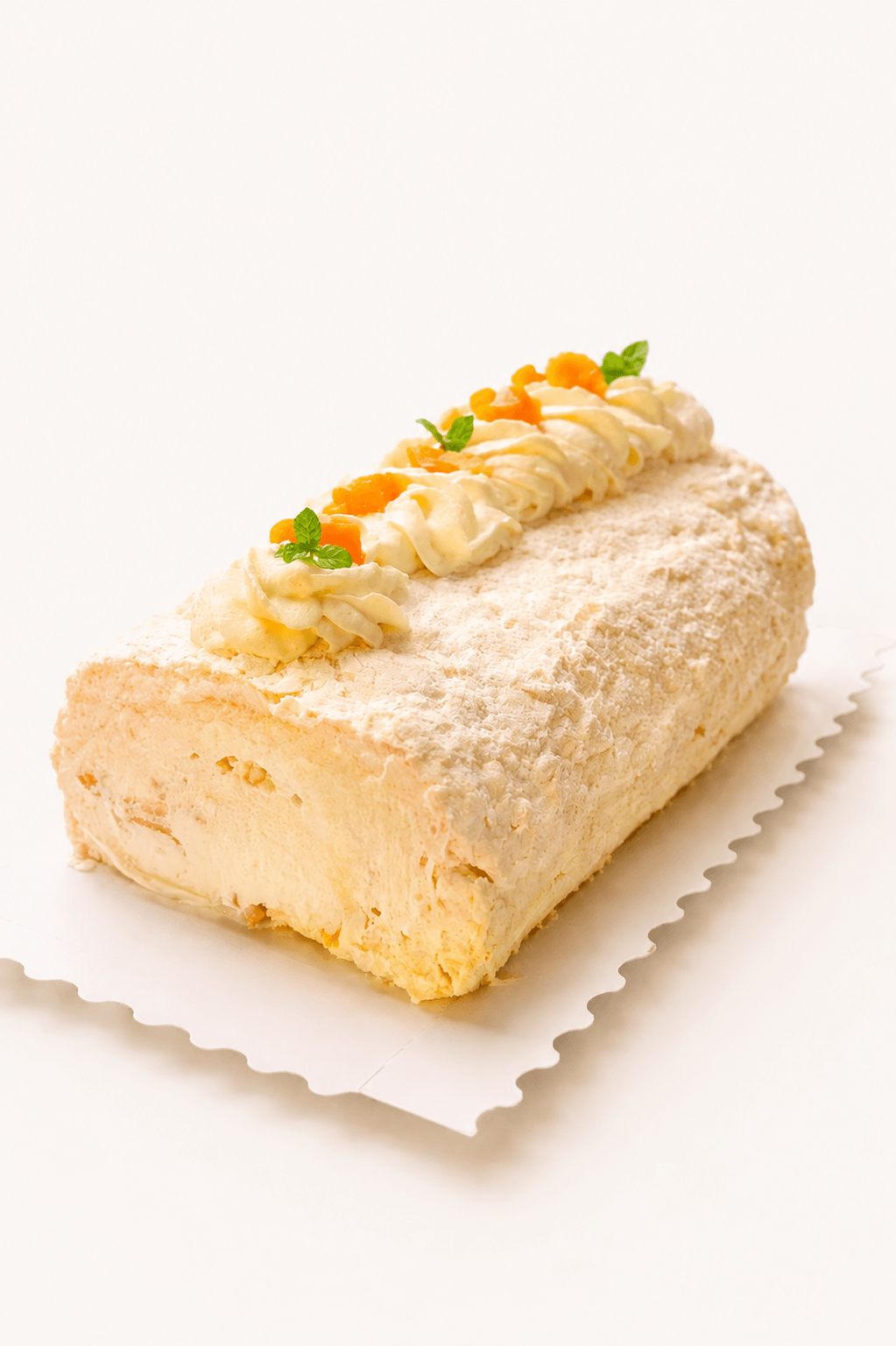
It is not gluten free, though it contains very little flour. If that matters, the Esterházy is the cake to look at, and the pavlova when it is on.
How London versions differ from each other
This cake has spread so fast that no standard has settled, and two Basque cheesecakes in London can be wildly different things.
The main variable is how far the bake goes. A short bake gives a pale gold top, a set middle and something closer to a crustless New York cheesecake. A full bake gives the dark top, the collapse and the loose centre. Both get sold under the same name.
The second variable is the cream ratio. More cream cheese and less double cream makes a firmer, tangier cake that slices neatly and photographs well. More cream makes it looser and richer. Cafes that sell by the slice from a display tend towards the firmer version for the obvious reason.
The third is size and depth. A tall cake bakes differently from a shallow one, and a lot of what gets sold as Basque is baked shallow so the middle sets in the time the top takes to colour.
Ours is baked dark, in an 18 cm tin, with the centre deliberately soft. If a pale, firm, sliceable cheesecake is what you actually want, say so before ordering and we will tell you honestly that this is not it.
Common questions
Is the burnt top actually burnt?
It is caramelised rather than carbonised. The sugars and milk proteins on the surface brown deeply in a hot oven, which gives a bitter note against a very rich cake. If it tastes acrid rather than bitter, it has gone too far, and that is a fault.
Does it contain a base or crust?
No. It is crustless by design and baked in crumpled paper, which is where the rough folded sides come from.
Is it gluten free?
No. There is a small amount of wheat flour in it. The quantity is low but it is not suitable for a coeliac.
How should I store it and how long does it keep?
Fridge, covered, three days. Take it out at least thirty minutes before serving, and an hour if you want the centre properly soft. It is not a cake to eat cold.
How many people does an 18 cm one serve?
Ten to twelve, though it is rich enough that eight generous slices is a more honest answer for most tables.
Can it be made without vanilla, or with something added?
Ours is vanilla and deliberately plain. For anything different, message us before ordering rather than after.
Ordering one in London
Baked to order in Belgravia and delivered across London and Surrey. Forty eight hours notice, £12 delivery in central London postcodes and £15 elsewhere, £50 minimum order. Choose your date at the checkout and it is baked for that day.
Order it for the date you need
Everything here is baked to order for your date.
48 hours notice, 72 for bread. Delivered across London and Surrey.