· 5 min read
The History of Medovik, the Russian Honey Cake
There is a famous story about an empress, a young chef and a cake made of honey. It may even be partly true. Here is what we know about medovik.
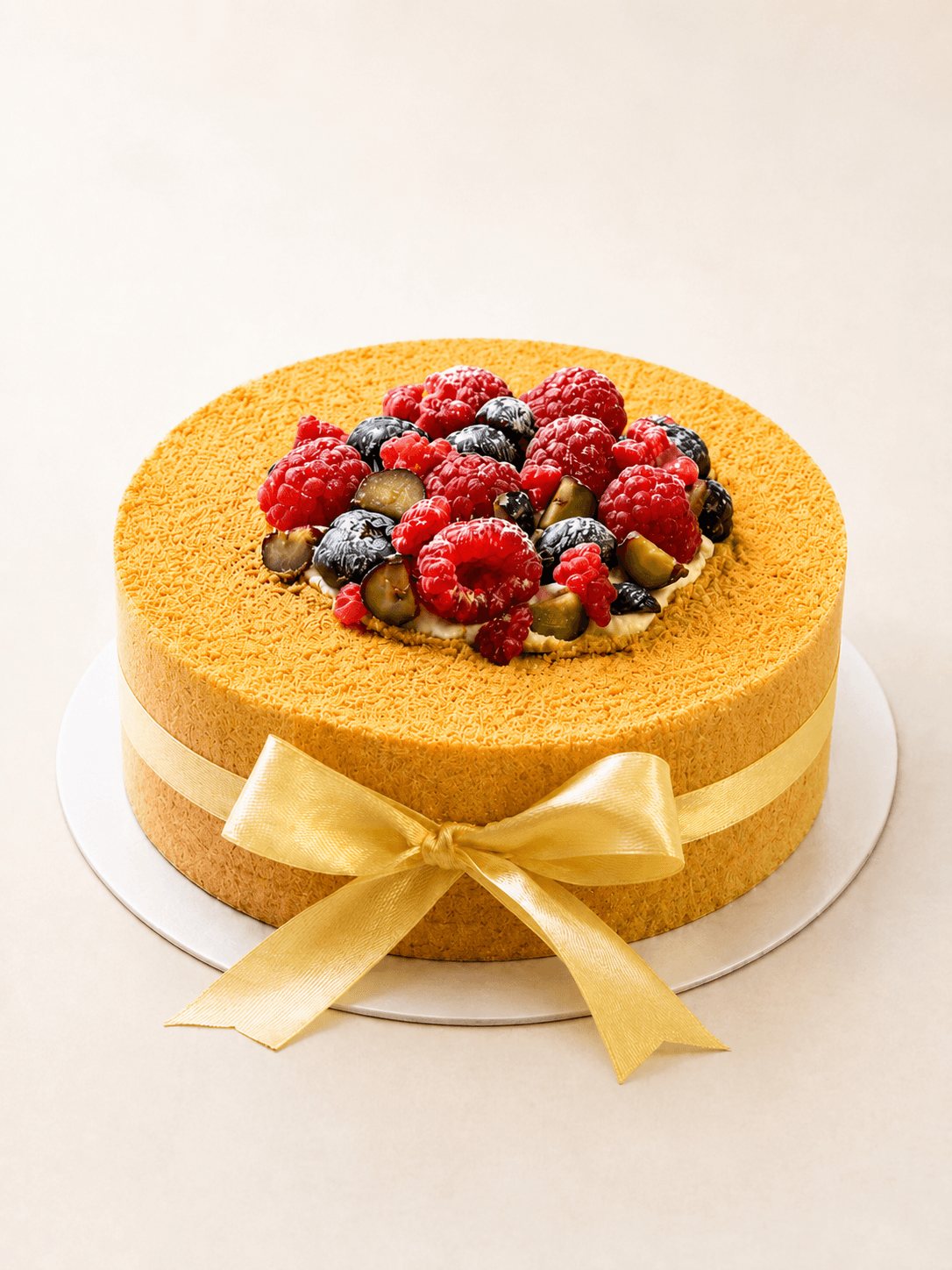
Medovik is one of those cakes that seems to have always existed. Ask somebody from Moscow, Kyiv or Minsk where it comes from and they will usually say from their grandmother, which is a perfectly good answer. The written history is thinner and more interesting, and it begins, as so many Russian food stories do, with a story about a palace.
Honey before medovik
Honey was central to Russian and Ukrainian cooking long before sugar was cheap. Honey breads and spiced honey cakes, the pryaniki, were baked for centuries, sold at fairs and given as gifts. Honey drinks were common, and honey went into porridges, sweets and festive breads.
So a cake made of honey was not a new idea. What is particular about medovik is the method: thin sheets of honey dough baked separately, stacked with cream and left to rest. That is a nineteenth century idea, and it belongs to the world of the imperial kitchen rather than the village.
The empress who did not like honey
The usual story goes like this. In the early nineteenth century, during the reign of Alexander I, the empress Elizabeth Alexeievna was known to dislike honey. A young chef newly arrived at court, not knowing this, made a layered cake of honey sheets and sour cream. The empress loved it, asked what it was, and was surprised to be told it was honey. The cake became a favourite at court.
It is a charming story and it is told everywhere. It is also very hard to verify, and food historians have not found much evidence for it in the records of the period. Like many stories about famous dishes, it may be a later invention attached to a real cake, or a small true event that grew in the telling.
What it does capture correctly is the reason the cake works: the honey in a medovik does not taste much like honey. It is cooked into the dough until it caramelises, and what comes through is toffee and burnt sugar. Somebody who dislikes honey from a jar might well enjoy a slice without guessing.
The Ryzhik name
In some families and some old recipe books the cake is called Ryzhik rather than medovik. Ryzhik means a ginger haired person, a redhead, and it is also the name of a well loved orange mushroom.
There are two explanations. One ties it to the colour of the cake, which is a reddish gold. The other ties it to the same court story, saying the chef himself had red hair. The first is easy to believe. The second is a good addition to a story that was already good.
Today medovik is the usual name, and Ryzhik survives as a slightly old fashioned alternative that some people use with real affection.
The Soviet honey cake
Whatever its court origins, medovik became what it is in Soviet kitchens. It needed only flour, eggs, honey, sugar, butter and sour cream, all things that could be found, and no special equipment beyond an oven tray and a rolling pin. It could be made a day ahead, it fed a crowd, and it improved with waiting.
Recipes spread from notebook to notebook and family to family. Some used sour cream, some boiled condensed milk, some a mixture. Some families added nuts, others prunes or a layer of jam. The cake travelled from Russia to Ukraine, Belarus, the Baltic states, the Caucasus and Central Asia, and in each place it was adopted as something local.
In Ukraine it is often called medovyk, and it sits alongside the medivnyk, a different thing: a spiced honey loaf cake, not layered, baked for celebrations. The two are related by honey and not much else, and people who know both will tell you so.
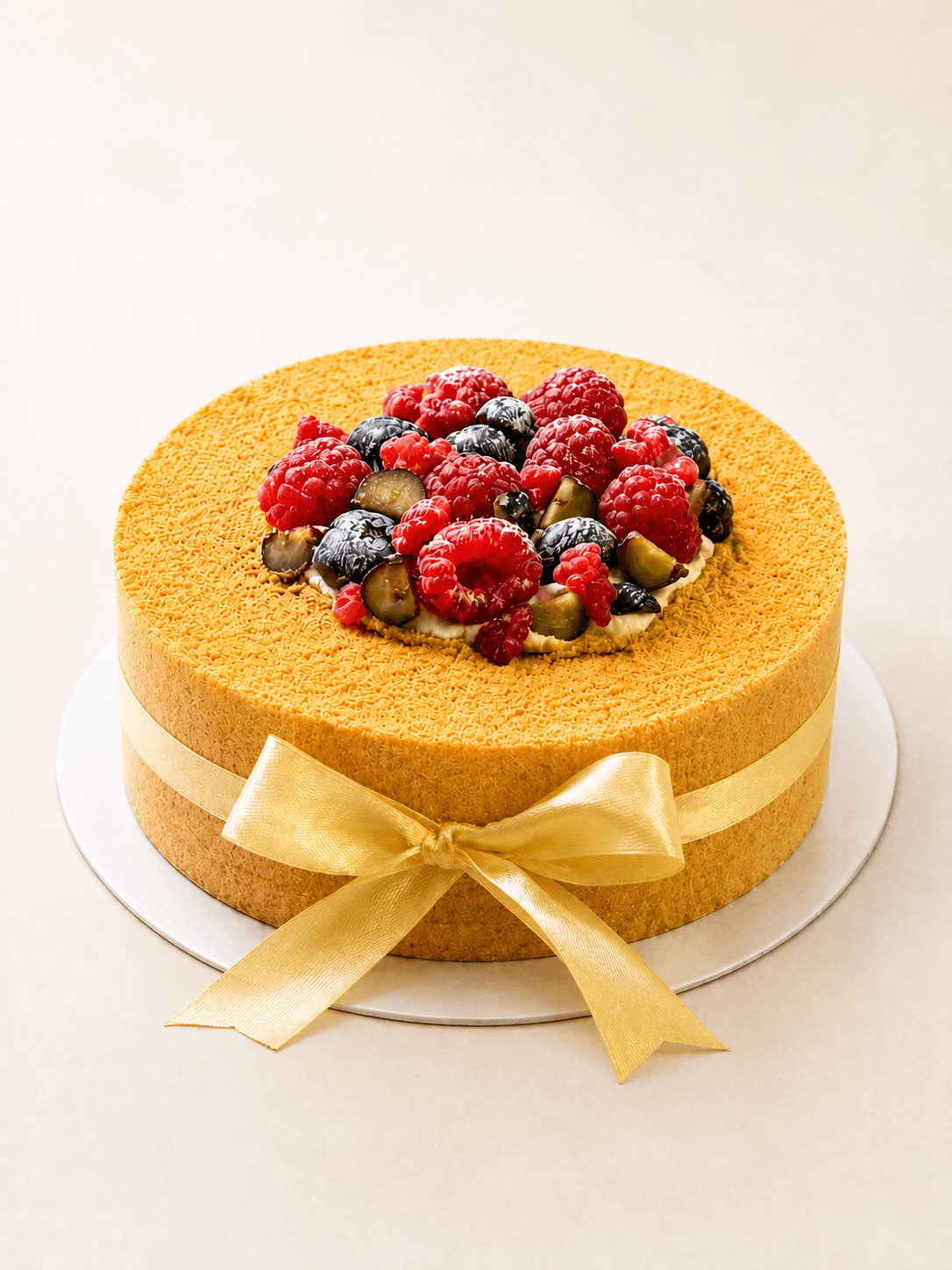
Honey CakeRussian honey cake, medovik, 18 cm. Thin honey layers, light sour cream frosting, rested overnight.from £76Order thisMedovik abroad
When people left the Soviet Union, in the 1970s and again in the 1990s, medovik went with them. It is now made in diaspora kitchens and bakeries in London, Berlin, Tel Aviv and New York, and in many of those places it has crossed over to people with no family connection to it at all.
Part of the reason is that it is easy to like. It is not too sweet, not heavy, and it does not need explaining once somebody has tasted it. Part of it is that it photographs well when cut, with its fine stripes of layers, which has done it no harm at all in the last decade.
Our version
We make medovik in the classic way: honey warmed into the dough, thin layers baked one at a time and trimmed, a light sour cream frosting between each one, the trimmings crumbled over the outside, and a night in the fridge before it leaves the kitchen. We do not add nuts or fruit inside, because the plain version is the one most people are looking for.
It is the cake we are asked for more than any other, and it is usually ordered by people who already know exactly what they want it to taste like.
Common questions
Where does medovik come from?
The layered honey cake as we know it is usually traced to nineteenth century Russia. It became widespread in Soviet home cooking and is now eaten across the former Soviet Union and its diaspora.
Is the story about the empress true?
It is the usual story and it is repeated widely, but there is little evidence for it. It is best enjoyed as a legend.
Why is it sometimes called Ryzhik?
Ryzhik means redhead. It is usually explained by the reddish gold colour of the cake, and sometimes by the court chef in the legend.
Is medovik Russian or Ukrainian?
Its documented origin is Russian, but it has been baked in Ukraine and across the region for generations and belongs to all of those kitchens now.
What is the difference between medovik and medivnyk?
Medovik is a layered cake with cream. Medivnyk is a Ukrainian spiced honey loaf cake, not layered.
Ordering in London
Our honey cake is 18 cm and serves six to eight. It is £76 plain, £77 with flowers, £78 with a chocolate message and £84 with berries. Made to order in Belgravia and delivered across London and Surrey with forty eight hours notice, a £50 minimum order and delivery from £12 in central London.
Order it for the date you need
Everything here is baked to order for your date.
48 hours notice, 72 for bread. Delivered across London and Surrey.