
· 6 min read
Bilberries and Blueberries: the Fruit Inside a Jagodzianka
A jagodzianka bleeds purple because the wild bilberry is purple all the way through. Here is how that berry differs from the punnet blueberry, and what the difference does to a bun.
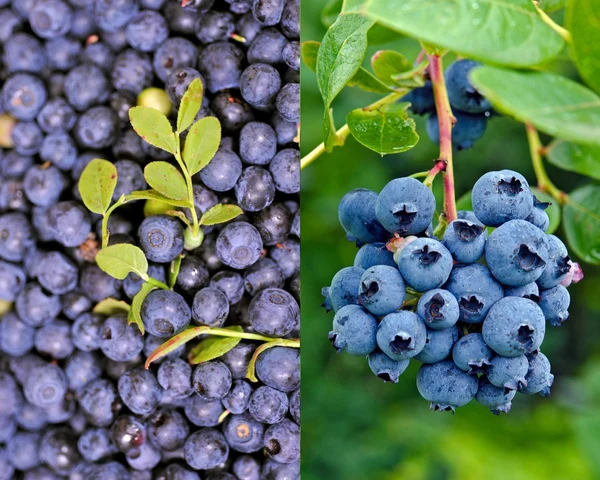
Cut a jagodzianka made in Poland in August and the crumb around the filling is stained purple. Cut a blueberry bun made in London in February and the crumb is pale yellow with dark fruit sitting in it. Nothing has gone wrong in the second bun. The two buns simply contain two different berries, and the difference is worth knowing if you care about what you are eating or intend to bake it yourself.
Two berries, one English word
The Polish word is jagody, and the fruit in a jagodzianka is czarna jagoda, the bilberry, Vaccinium myrtillus. It grows wild in forest and on moorland across northern and eastern Europe. Britain has it too. In England it is the bilberry, in Wales the whinberry or wimberry, in Scotland the blaeberry. Same plant, same season, three names and a few dozen local variants.
The berry sold in punnets in every British supermarket is a different species: the northern highbush blueberry, Vaccinium corymbosum, native to North America and bred for the trade since the early twentieth century. It is a fine fruit. It is not the same fruit.
The differences are easy to see once you have both in front of you. A bilberry is small, roughly the size of a peppercorn to a pea, with a dull matte bloom and a shallow crown at the top. A cultivated blueberry is two or three times the size, rounder, firmer, with a waxy pale blue skin. Cut them in half. The blueberry is greenish white inside with dark skin around it, which is why blueberry muffins have dark specks in a yellow crumb. The bilberry is purple through the middle, seeds and all. The anthocyanins are in the flesh, not only in the skin.
That single fact explains almost everything about a proper jagodzianka. The purple in the crumb is the fruit itself, released as the berries burst in the oven and soaked into the dough around the filling. It cannot be faked with a punnet blueberry, and a bakery that tells you otherwise is either using frozen wild fruit and not saying so, or adding colour.
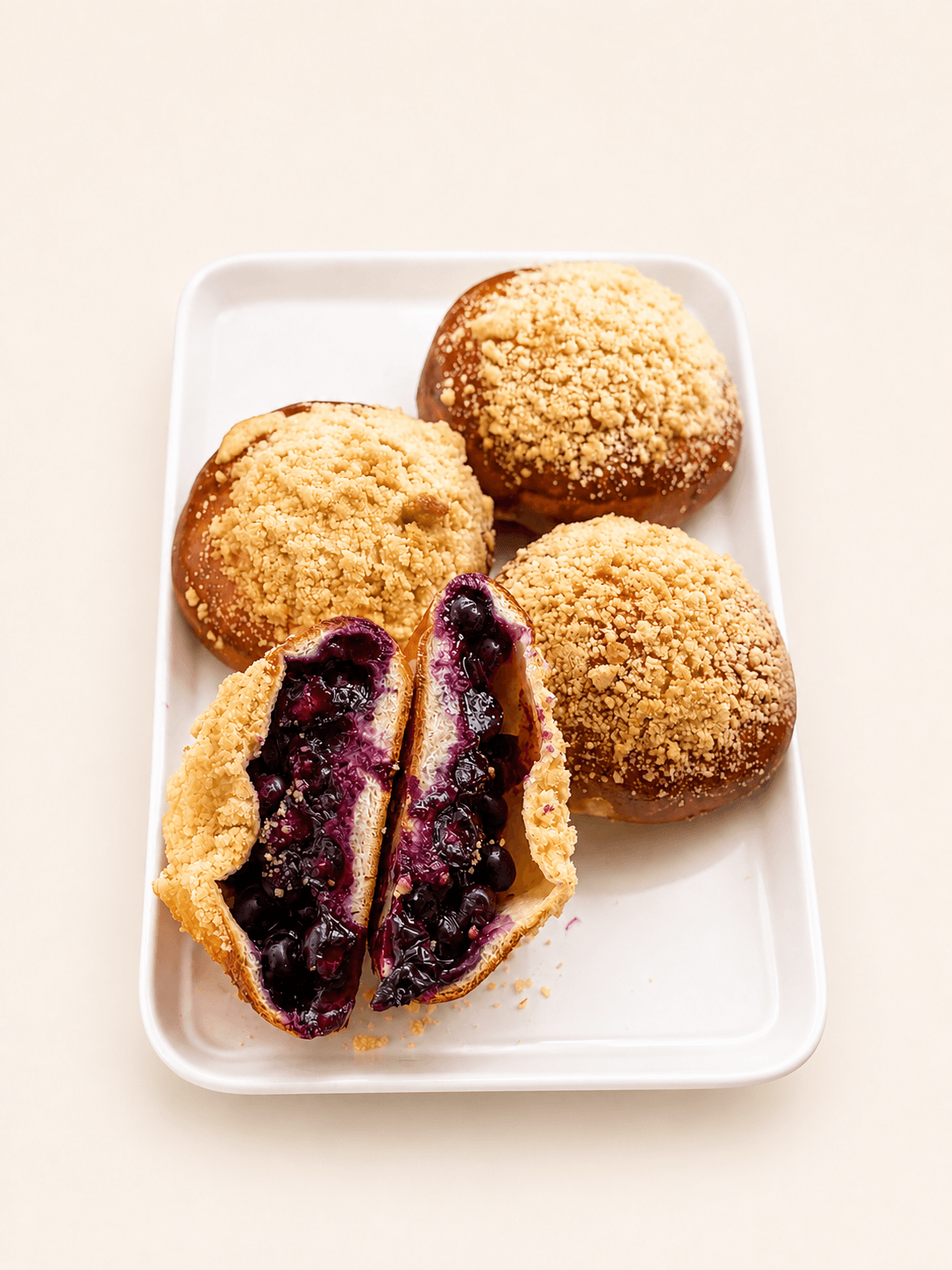 Blueberry Streusel Buns (Jagodzianki)Jagodzianki, Polish blueberry buns, four to a box. Soft enriched dough, blueberry filling, buttery streusel.£42Order this
What the fruit does to a bun
A baker meets these two berries as two different problems.
Bilberries carry more juice relative to their size and their skins are thinner, so they collapse early in the bake. Dough that has been sealed neatly will still weep at the seam. The filling wants a thickener, whether that is a spoon of semolina, potato starch, cornflour or breadcrumbs scattered under the fruit, and every Polish household has a preference. Without it the juice runs out of the bun and welds it to the tray.
Bilberries are also sharper. The acidity is what people miss when they eat a cultivated substitute, and it is why a jagodzianka takes more sugar than the fruit alone would suggest. The sweetness is not there to make the bun sweet. It is there to hold up against the fruit so that neither wins. Get it wrong in the other direction and you have jam in a bread roll.
The cultivated blueberry behaves better and tastes milder. It holds its shape, it releases less liquid, it is sweeter and rounder and less interesting. It will not stain the crumb. Practically, it means a filling that needs less thickening and less sugar, and a bun that looks tidier and tastes gentler. Whether that is a loss depends entirely on what you grew up eating.
The crumble topping matters in both cases. Kruszonka, the Polish streusel of flour, butter and sugar rubbed to a rough crumb, is not decoration. It sits over the seal, catches the juice that pushes up through the dough and crisps against it. On our buns the streusel goes on thick for exactly that reason: it is the part that turns golden and the part that soaks up what the fruit gives off.
Why the wild berry never became a crop
Britain has eaten bilberries for centuries. Bilberry pies, bilberry tarts and wimberry pies are old northern and Welsh baking, and the fruit ripens on moorland through July and August. It never became a commercial crop here, or anywhere else in Europe, for a simple mechanical reason. The bushes are low, ankle to knee height, the berries hang singly or in pairs rather than in clusters, and a picker works bent over for hours to fill a small pail. Highbush blueberries were bred to grow at chest height in rows so that a person can stand up and pick with both hands, or a machine can shake the bush. That is the whole story of why one is in every supermarket and the other is not.
It also explains the Polish season. Jagodzianki appear in July and August because that is when the pickers come out of the forest, and Poles are correct that a jagodzianka sold in November is something else with a similar shape. In season the competition between bakeries is real, with magazines running annual rankings of the best in Warsaw and Kraków. The glass of kefir or maślanka alongside is not sentimental either. Sour milk against sweet dough and sharp fruit is a good pairing.
What we bake, and what we call it
Our Blueberry Streusel Buns are £36 for a box of four, made to order with 24 hours' notice. The dough is enriched: eggs, sugar, salt, yeast, flour and milk, proved slowly so the crumb tears into strands rather than crumbling. The fruit goes in whole and the streusel goes over the top. They contain eggs and milk, and the kitchen also handles sulphites, lupin and molluscs. In Russian they are булочки с черникой и штрейзелем.
We call them blueberry buns and not jagodzianki, and that is deliberate. Wild bilberries cannot be bought fresh in London in any quantity a bakery can rely on, week after week, for a bun baked to a customer's chosen date. Naming a bun after a berry it does not contain would be a small lie repeated four times a box. What we make is the Polish bun in form and method, with the fruit that is actually available, and it is honestly good on those terms: soft, juicy, buttery on top, sweet without being sugary. It is not the thing you ate at a stall in Zakopane in August, and no bakery in this country can hand you that outside a few weeks a year.
If you want the real fruit at home, the practical route is frozen forest berries rather than fresh. Bilberries bruise almost as soon as they are picked and travel badly, which is why the fresh ones stay close to the forest. Frozen, they go into dough still frozen, tossed with starch, which slows the bleed just enough to get the bun sealed and into the oven.
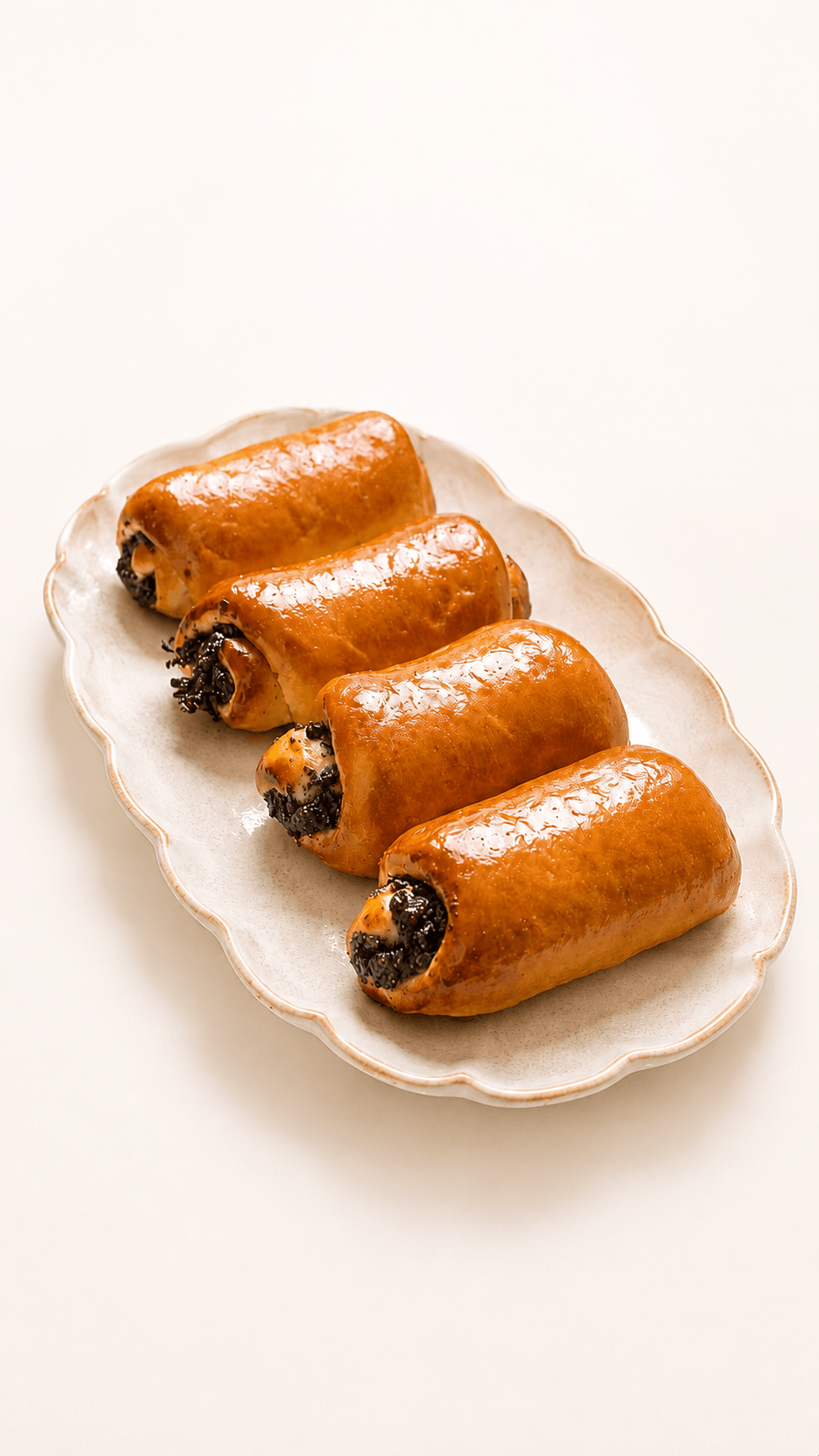
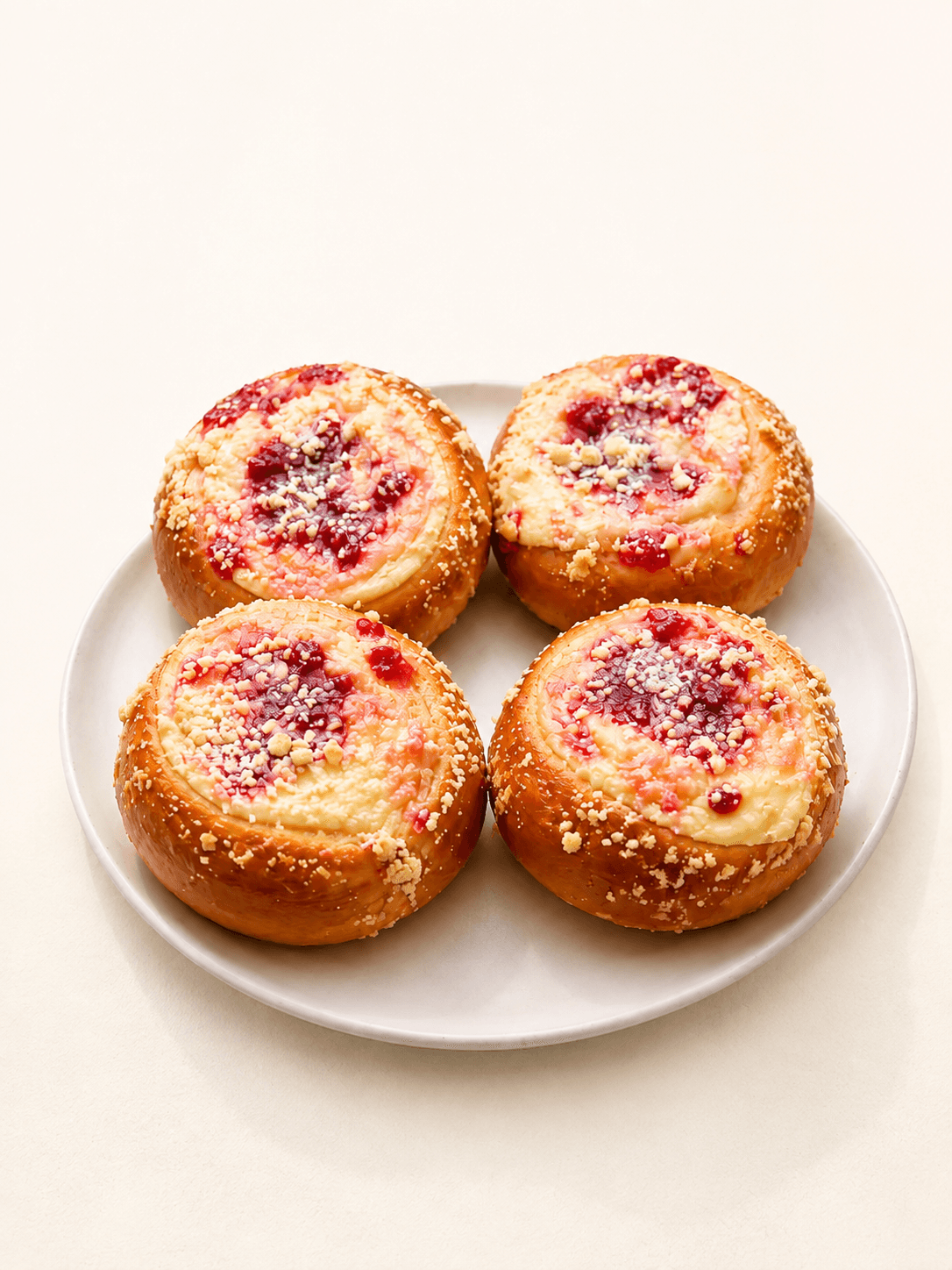
The rest of the bun shelf sits at our buns and babka section: Poppy Seed Buns at £30 for four, Strawberry Vatrushki and Airy Cinnamon Buns at £32, Cinnamon Rolls at £44 for six. Those need 48 hours rather than 24, since the doughs are proved on different schedules.
One practical note on eating them. Blueberry streusel buns are best within a few hours of the bake, still slightly warm, when the streusel is crisp and the fruit is loose. Next day, split them and put them cut side down in a dry pan for a minute. Do not microwave them: the streusel goes soft and the whole point of the topping is lost. Order for the morning you want them, and keep the kefir cold.
Order it for the date you need
Everything here is baked to order for your date.
48 hours notice, 72 for bread. Delivered across London and Surrey.