
· 5 min read
Honey Cake in London: A Guide to Medovik
Medovik is the cake we are asked for more than anything else. Here is where it came from, how it is built, and what separates a good one from a disappointing one.
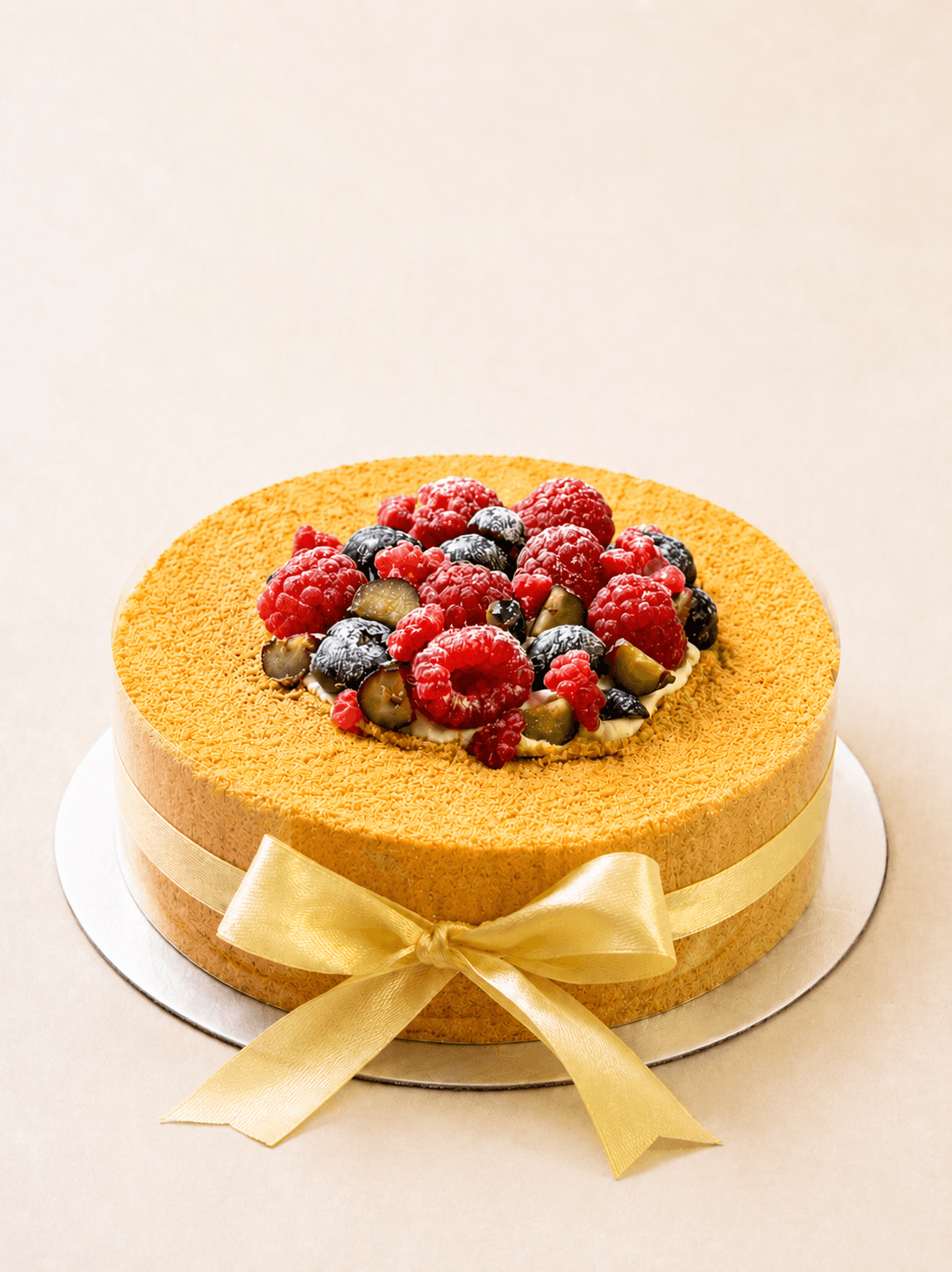
Medovik is the cake most people mean when they say honey cake, and in the last few years it has gone from something you could only find in a Russian grocery to something that turns up in cafés across London. That is good news, mostly. It also means a lot of cakes are now sold as medovik that are not really medovik at all.
This is what it is, how it is made, and what to look for.
The story, and what is true in it
The usual telling goes like this. In the early nineteenth century, the wife of Tsar Alexander I let it be known that she could not stand honey. A new young cook in the palace kitchen either had not heard or had forgotten, and made her a honey cake. He waited to be thrown out. She asked for another slice.
It is a good story and it may even be roughly true, though nobody has ever produced a document proving it. What is certain is that the cake was well established in Russian and Ukrainian home baking by the late nineteenth century, and that it became a fixture of Soviet home kitchens because it is made from things that were reliably available. Honey, flour, eggs, soda, butter and soured cream. Nothing needing a shop that might be empty.
It spread with the people who made it. There is now a version in almost every country that received Soviet emigration, and the Ukrainian, Russian, Polish and Baltic versions differ in small ways that the people who make them consider very large.
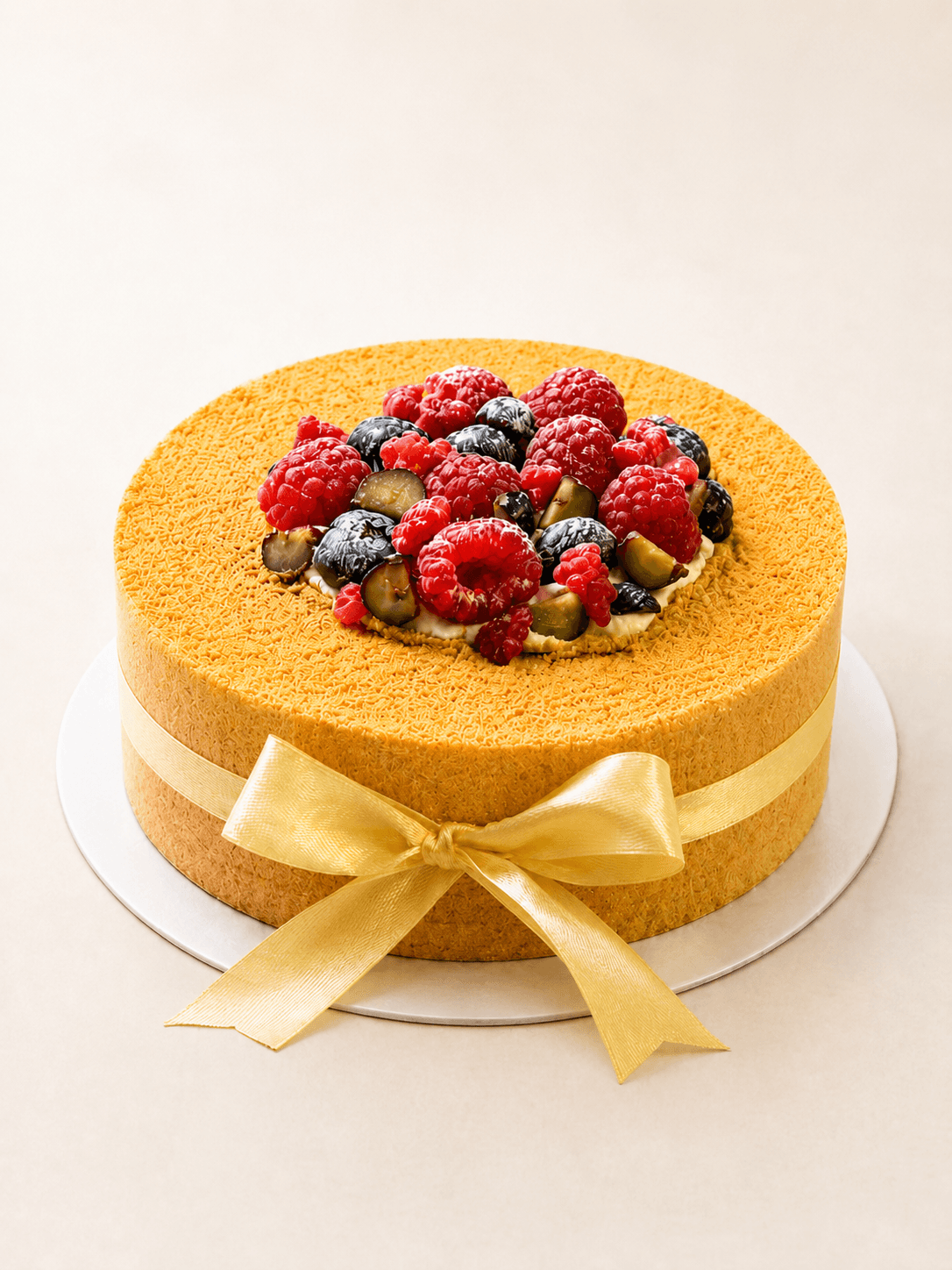 Honey CakeRussian honey cake, medovik, 18 cm. Thin honey layers, light sour cream frosting, rested overnight.from £72Order this
How the layers are actually made
This is where medovik separates itself from other layer cakes, and it is the part most people are surprised by.
The dough is cooked before it is baked. Honey, sugar and butter are melted together over heat, bicarbonate of soda goes in, and the mixture foams up and turns several shades darker. That colour change is the honey caramelising, and it is where the deep, almost toffee flavour comes from. Cake made with raw honey stirred into batter tastes of honey. Cake made this way tastes of something rounder and darker that people struggle to name.
Flour and egg go in off the heat, and the result is a soft, sticky dough that is very difficult to handle. It is divided into portions, each rolled thin, and each baked separately for a few minutes. Ours makes eight.
Rolling is the slow part. The dough sticks, tears and fights back, and it has to be rolled thin enough that the finished cake has real layers rather than sponge with lines in it. Each disc is trimmed to size while still warm, because once it cools it snaps. The trimmings are kept, crushed, and used to coat the outside of the cake, which is why a proper medovik has a soft crumb finish rather than smooth icing.
The cream, and why it should be sharp
The filling is soured cream, and the temptation is to sweeten it. Resist that.
The honey layers are already sweet, and they get sweeter as they soften. If the cream is sweet too, the finished cake is one flat note and you cannot eat more than a few forkfuls. A properly sharp soured cream filling does the opposite. It cuts through, and it makes the honey read as warm and caramelised rather than as sugar.
This is the single most common failure in a shop bought medovik. Sweet layers, sweet cream, nothing pulling against anything. It tastes fine for two bites and cloying by the fifth.
Some versions use a cooked custard base, some use condensed milk, some fold whipped cream into the soured cream to lighten it. All of these are legitimate. What matters is that something in the filling is sour.
The overnight rest
Assembled, a medovik is a stack of firm biscuit discs with cream between them. You could not sell it and you would not enjoy eating it.
Over the next twelve to twenty four hours in the fridge, the moisture in the cream moves into the layers. They soften, the boundaries between layer and filling blur, and the whole thing becomes one texture. This is not optional and it cannot be hurried by any means we know of.
It is also the reason we ask for 48 hours notice. One day to bake and assemble, one night to rest, and the cake goes out the following morning. Anyone offering you a medovik in two hours is selling you one that was made days ago, which is fine, or one that has not rested, which is not.
How to judge one
Cut a slice and look at the side.
You should be able to count the layers. If you cannot see distinct lines, the dough was rolled too thick or the cake has been left far too long and gone to sludge. Eight to twelve layers in an 18 cm cake is normal.
The colour should be a deep amber brown, not pale gold. Pale layers mean the honey was not cooked properly and the flavour will be thin.
The texture should yield to a fork without resistance and without falling apart. If you have to saw at it, it has not rested. If it collapses into a puddle, it has rested too long or the cream was too loose.
And the finish. A traditional medovik is coated in its own crumbs. Smooth fondant or piped buttercream on the outside is a sign that somebody is making a generic layer cake and calling it medovik.

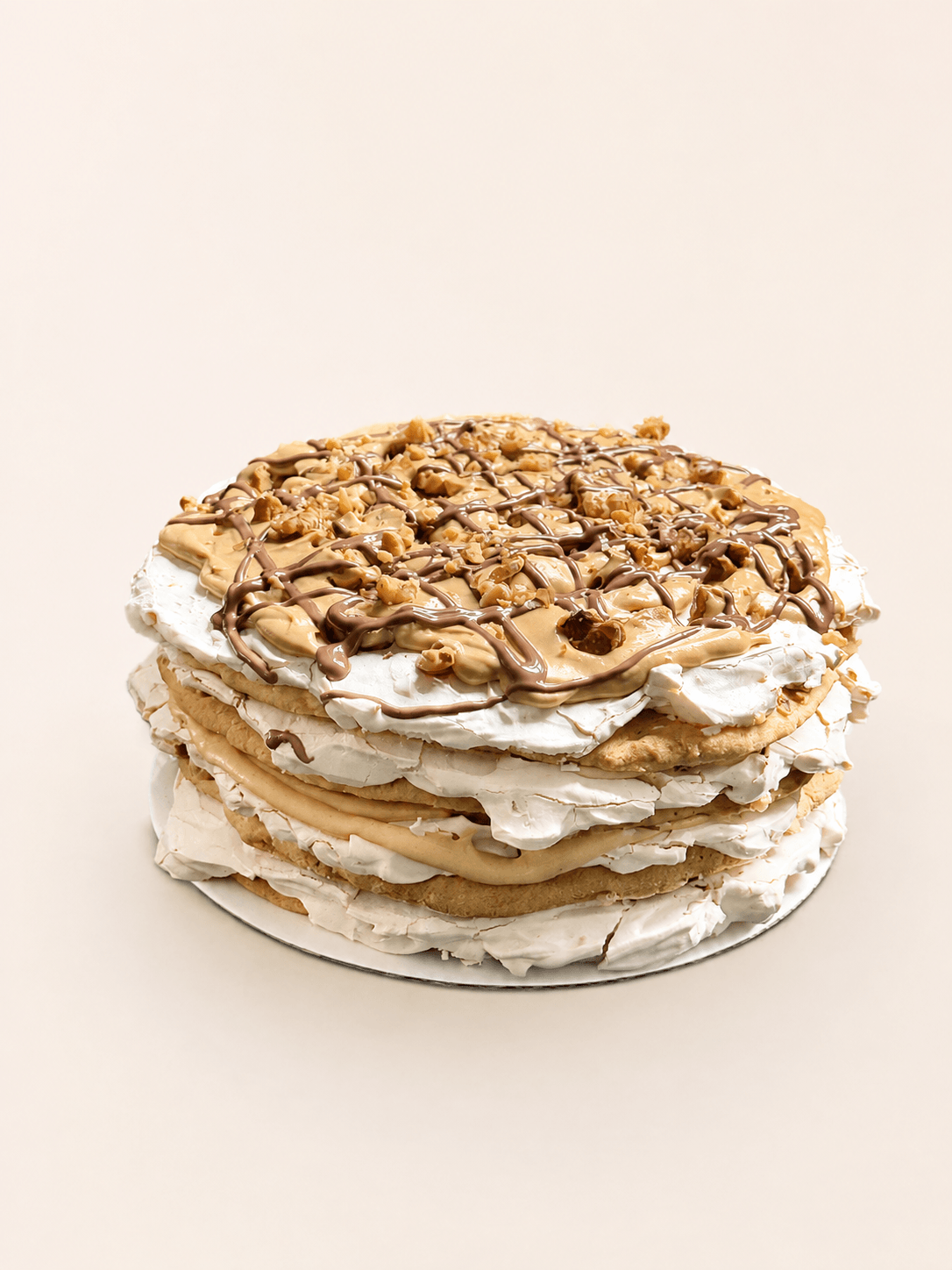
Ours
Eight layers, soured cream kept deliberately sharp, rested overnight, finished in crumbs from the trimmings. It is 18 cm, cuts into ten to twelve, and costs £68.
It contains gluten, eggs and milk. We bake it in Belgravia and deliver across London and Surrey, £12 within SW3 and £15 elsewhere, with a £50 minimum order.
If you have never had one, this is the cake we would start you on. If you grew up with one, order it and tell us how it compares to the one you remember. People do, at length, and we would not have it any other way.
Order it for the date you need
Everything here is baked to order for your date.
48 hours notice, 72 for bread. Delivered across London and Surrey.