
· 7 min read
How to Store and Warm Blueberry Buns
The fridge stales a bun faster than the kitchen counter, a paper bag beats a plastic box, and ten minutes in a moderate oven undoes most of a day's ageing. Practical keeping and warming notes for enriched buns.
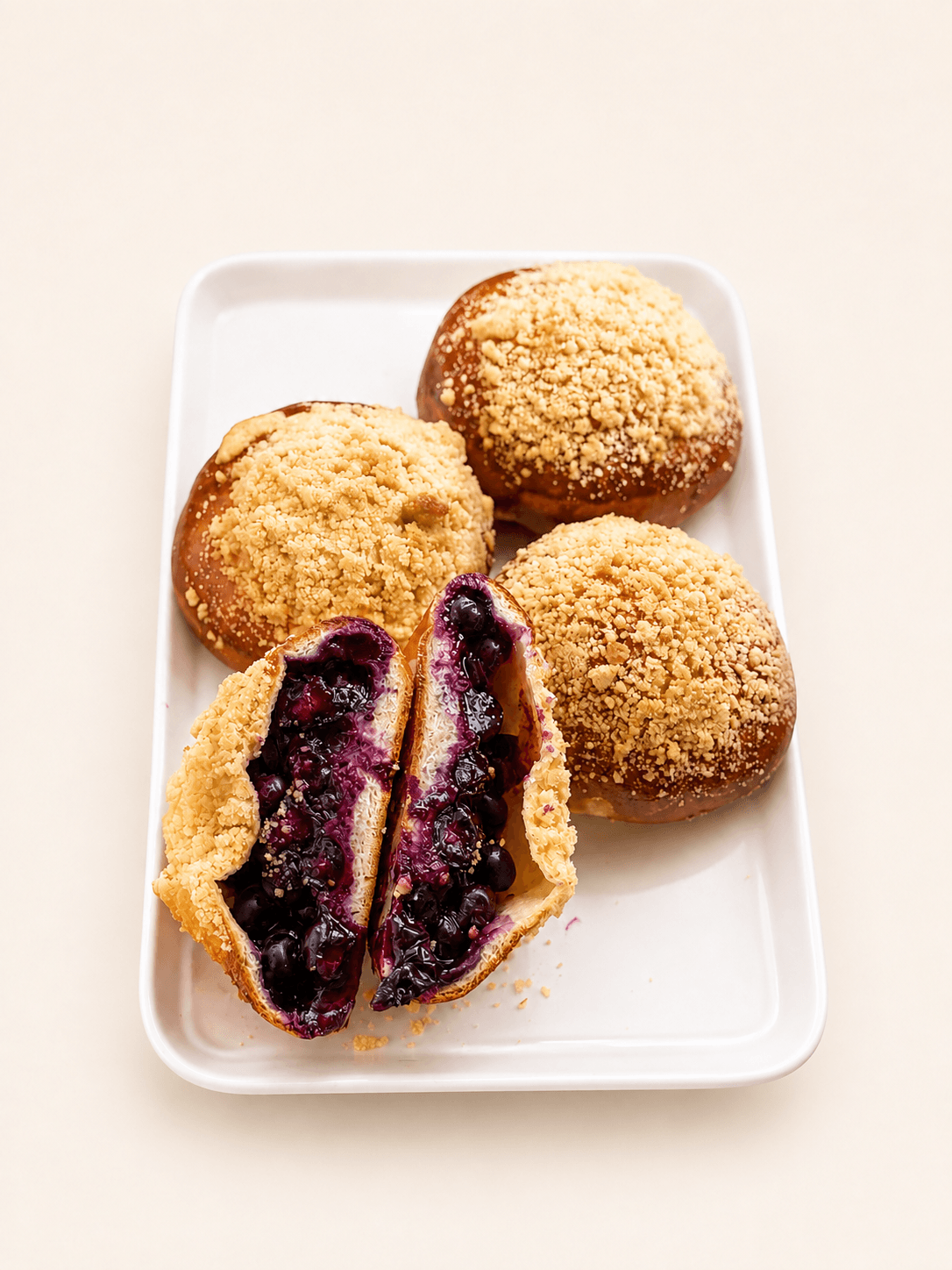
An enriched yeast bun is a short lived thing. It is at its best a couple of hours out of the oven, when the crumb still has some warmth in it and the streusel has set but not softened. After that the clock starts. Nothing about that is a fault in the baking; it is what happens to bread made with flour, milk, eggs, sugar and yeast and nothing else to hold it together. The useful question is not how to stop it, because you cannot, but how to slow it down and how to reverse most of it for ten minutes when you want to eat.
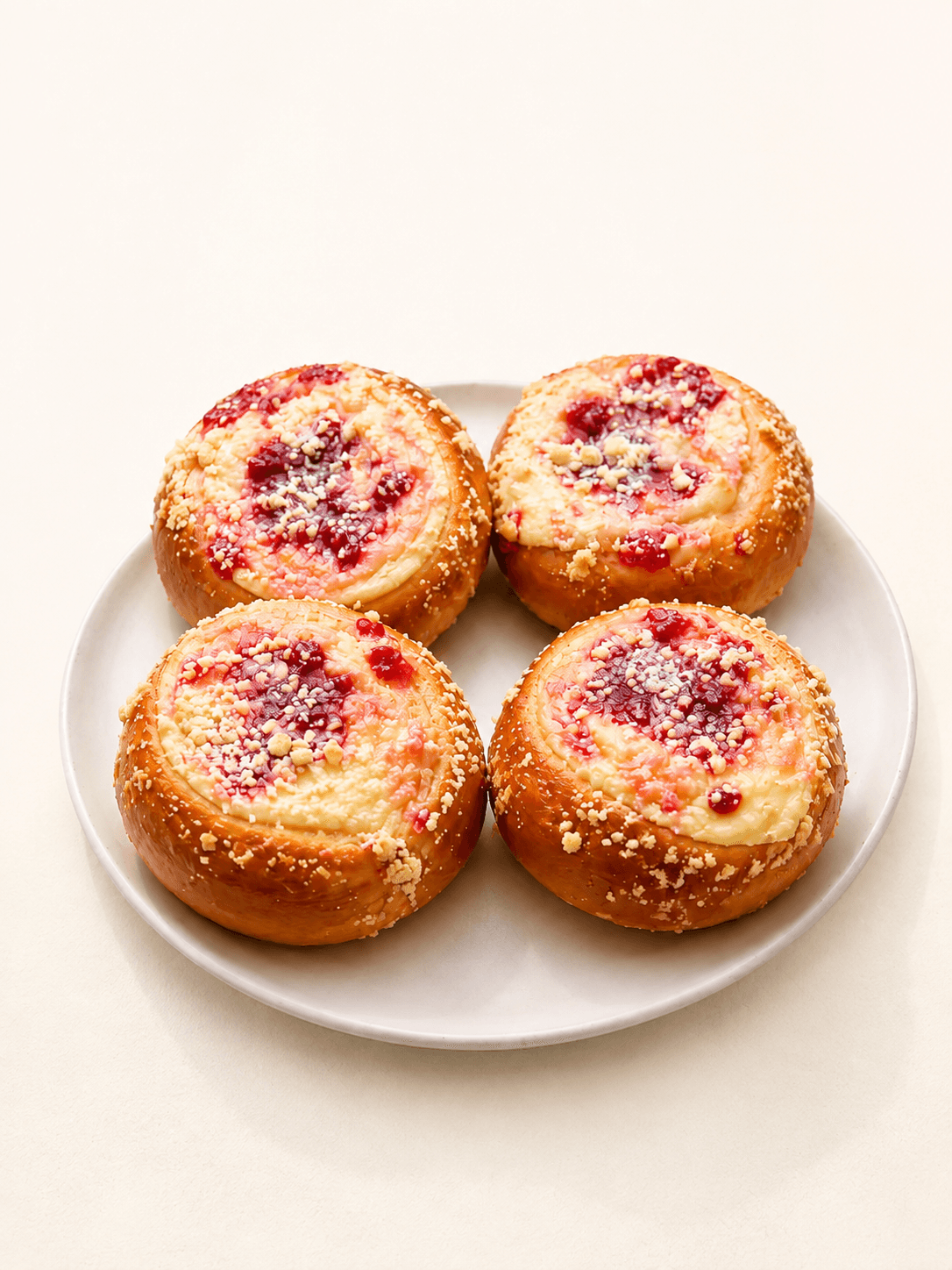
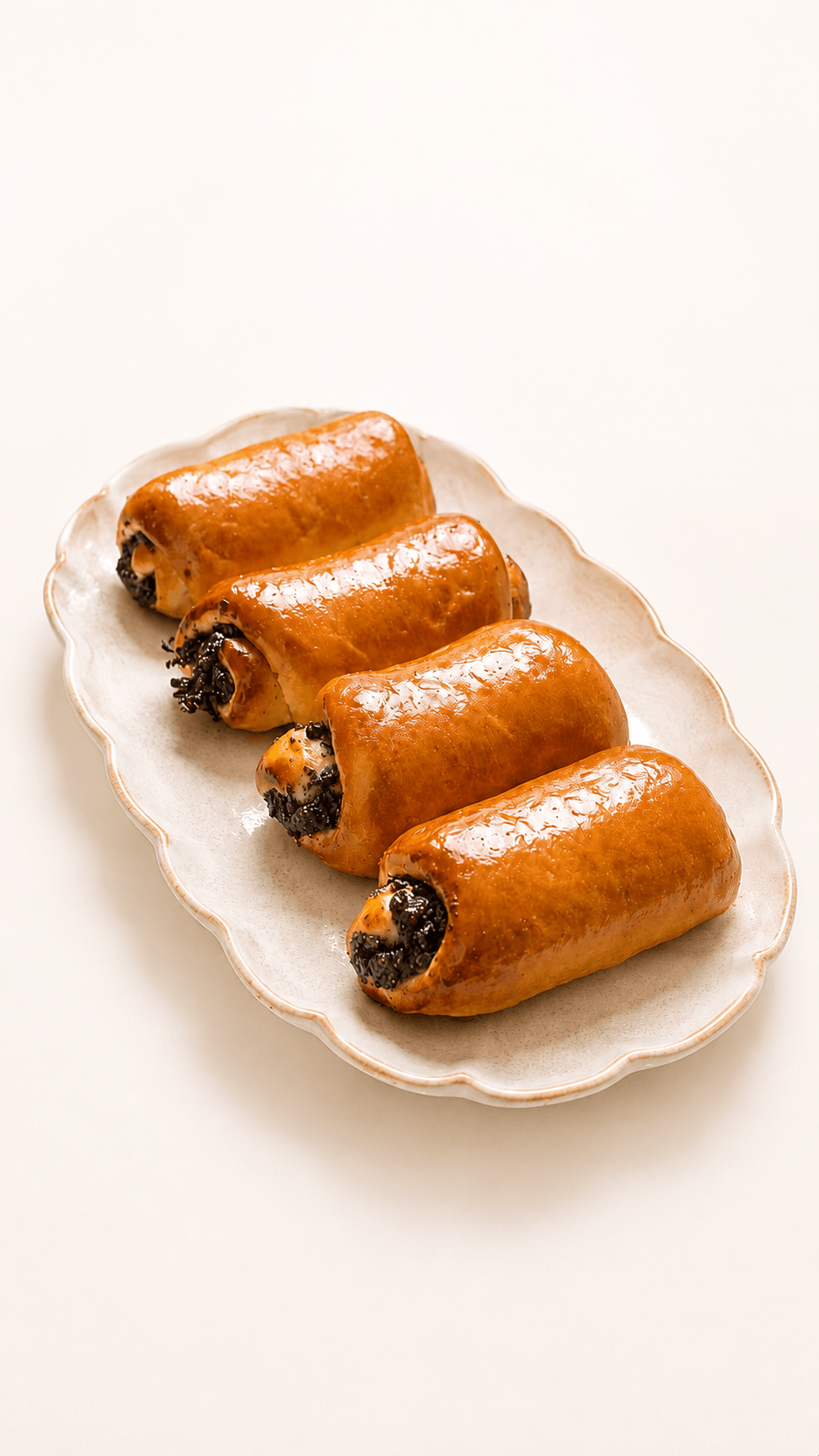
This is about our Blueberry Streusel Buns, four to a box at £36, but it applies to any soft bun of the same family: cinnamon buns, plyushki, vatrushki, poppy seed buns. If you want the history of the Polish original, the bilberry it is built on and why July and August matter, that is set out in full in what jagodzianki are and there is no point repeating it here.
What actually happens to a bun on day two
Staling is not drying out. A bun sealed in a bag with no moisture loss at all still goes firm and crumbly, because the starch in the crumb recrystallises as it cools and keeps recrystallising for days. The technical name is retrogradation, and the Wikipedia entry on staling covers the chemistry better than a bakery journal needs to. Two things follow from it, and they are the whole of this article.
The first is that retrogradation runs fastest at fridge temperature, roughly 0 to 5°C. A bun in the fridge stales several times quicker than the same bun on the counter. It will feel cold and firm and taste flat, and people read that as freshness because it is cold. It is not.
The second is that the process is largely reversible with heat. Warm the crumb through to about 60°C and the crystallised starch relaxes again. A day old bun that has been kept at room temperature and then warmed properly is close to a fresh one. This is why toast exists.
So: room temperature, not the fridge. Cool, dark, out of direct sun, in a bread bin or a cupboard. A kitchen at 20°C is fine. A conservatory in August is not, because the butter in the streusel will sweat and the fruit will start to work.
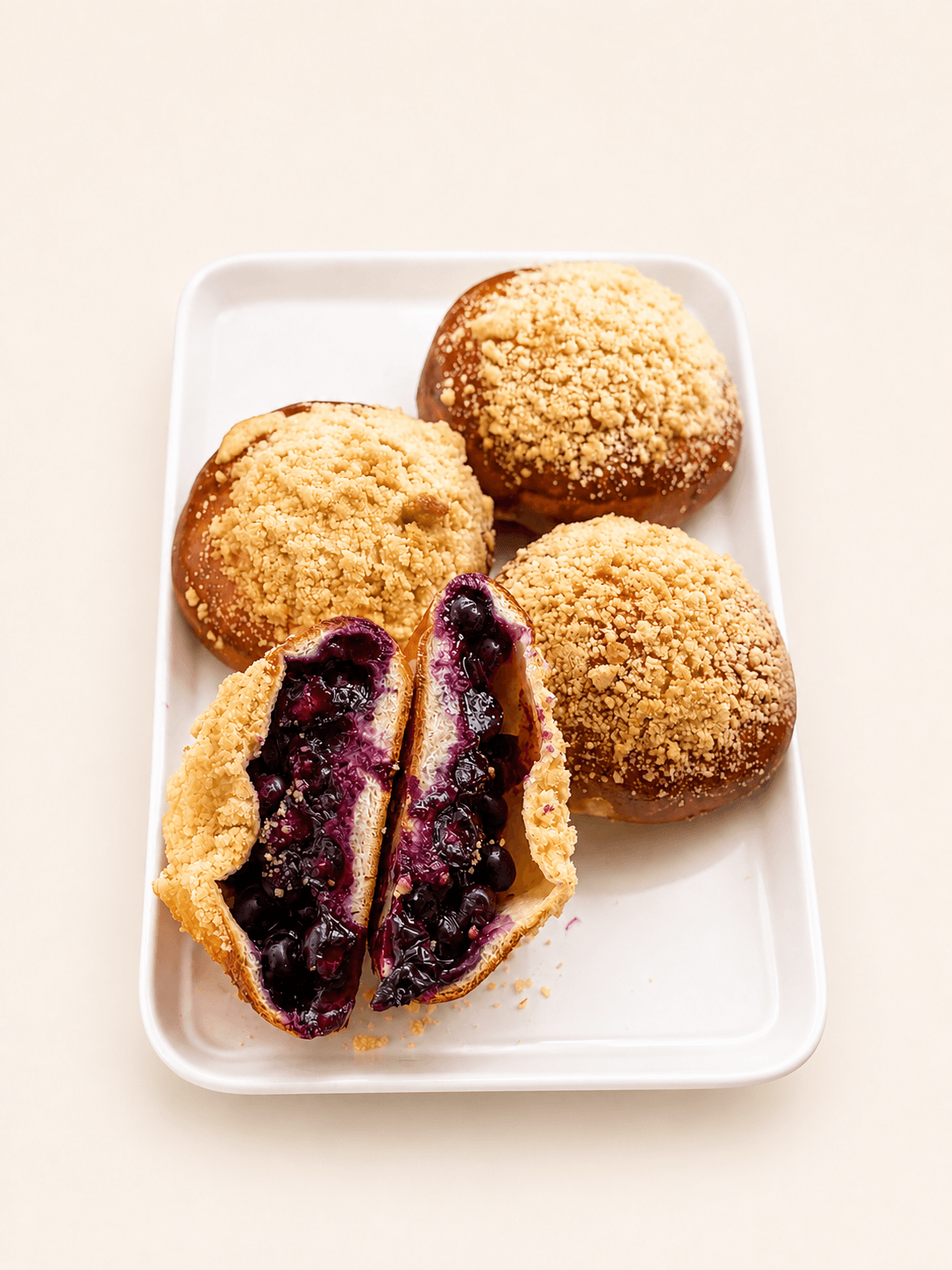 Blueberry Streusel Buns (Jagodzianki)Jagodzianki, Polish blueberry buns, four to a box. Soft enriched dough, blueberry filling, buttery streusel.£42Order this
Paper bag, not plastic box
The packaging problem is that a bun wants two contradictory things. The crumb wants to hold its moisture. The streusel wants to stay dry. Seal the box and the moisture that leaves the crumb has nowhere to go, so it condenses on the crumble and turns it to paste, and the base goes damp where it sits. Leave it open to the air and the crumb dries at the edges.
A paper bag is the honest compromise. It slows evaporation enough to keep the crumb soft overnight and it breathes enough that the topping stays crisp. A clean tea towel over a plate does the same job. If you only have a plastic box, leave the lid resting on rather than clipped down, and take the buns out of the box the moment you get them home from a delivery rather than letting them sit in a sealed container all afternoon.
Do not wrap a bun in cling film at room temperature. It is the fastest way to a wet streusel and a slightly sour smell by morning.
Freezing, and thawing without ruining the base
Freezing is genuinely good for enriched dough, better than any other form of keeping, because it stops retrogradation almost dead rather than slowing it. The rule is to freeze early. A bun frozen on the day it was baked comes back tasting like a day one bun. A bun frozen on day three comes back tasting like a day three bun, because the freezer preserves the state you put in, it does not improve it.
Wrap each bun separately in baking parchment or foil, then put them all in a freezer bag and press the air out. Individual wrapping matters more than people expect: it stops the blueberry juice on one bun gluing itself to the streusel of the next, and it means you can take out one rather than four. Label with the date. I would eat them within a month. Longer than that and the butter in the crumb starts to taste of the freezer.
Thaw at room temperature, in the wrapping, for two to three hours, standing on a rack rather than flat on a plate so the base does not sit in its own condensation. Do not thaw in the fridge; you are putting the bun back through the exact temperature band that stales it. If you are in a hurry, go straight from frozen into the oven and add five minutes to the timing below.
Ten minutes in a moderate oven
This is the part that matters. Heat the oven to 160°C fan, 180°C conventional, gas mark 4. Put the buns on a tray, uncovered, and give them eight to ten minutes. From frozen, twelve to fifteen. You are warming them through, not baking them again, so if the streusel is starting to colour further you have gone too far.
A few details that make the difference. Do not cover them with foil unless the topping is already dark, because the trapped steam softens the crumble. If the crumb has dried at the cut edges, flick a few drops of water onto the tray, not onto the buns, and the steam will handle it. Let them stand for five minutes after they come out. Straight from the oven the fruit filling is hot enough to burn and the crumb has not resettled; five minutes on a rack fixes both.
An air fryer works at 150°C for five or six minutes, watched closely, because the fan is fierce and streusel is mostly sugar and butter. A toaster does not work and never will.
Fifteen seconds in a microwave, and why not
A microwave heats the water inside the crumb directly and turns it to steam faster than the structure can cope with. For about twenty seconds the bun is soft and wonderful. Then it cools, the gelatinised starch sets hard, and you have something with the texture of a rubber ball that no amount of further heating will rescue. It also does nothing at all for the streusel, which comes out limp and slightly greasy.
If a microwave is the only option, use eight seconds at half power and eat it standing up, immediately. Otherwise wait for the oven.
How long ours keep
We bake to order for the date you choose, so the box that arrives was made that morning and has not sat anywhere. Eat them the day they come if you can. Kept at room temperature in paper, they are still very good on day two with ten minutes in the oven. Day three is a bun for breakfast with coffee rather than a bun to serve to guests. Beyond that, freeze on day one instead.
They contain eggs and milk, and the kitchen also handles sulphites, lupin and molluscs. They need 24 hours' notice, which is less than the 48 hours most of our cakes take, and they travel well: delivery across London and Surrey is arranged for the date you pick. The rest of the buns and babka section keeps and warms on the same principles, with one exception worth knowing: anything finished with a cream cheese glaze should be warmed gently at 140°C, or the glaze slides off the top and onto the tray.
If you are buying for a Sunday breakfast, order for Saturday delivery, leave them in the paper bag on the counter overnight, and give them nine minutes at 160°C fan while the kettle boils. That is as close to the morning they were baked as anyone gets. A glass of kefir alongside is how they are eaten in Poland, and it is a better match than coffee.
Order it for the date you need
Everything here is baked to order for your date.
48 hours notice, 72 for bread. Delivered across London and Surrey.