
· 8 min read
What Are Jagodzianki? Polish Blueberry Buns, Explained
Sweet yeast dough, a handful of wild bilberries and a crumble lid. What a jagodzianka actually is, why Poles argue about the season, and how our blueberry streusel buns compare.
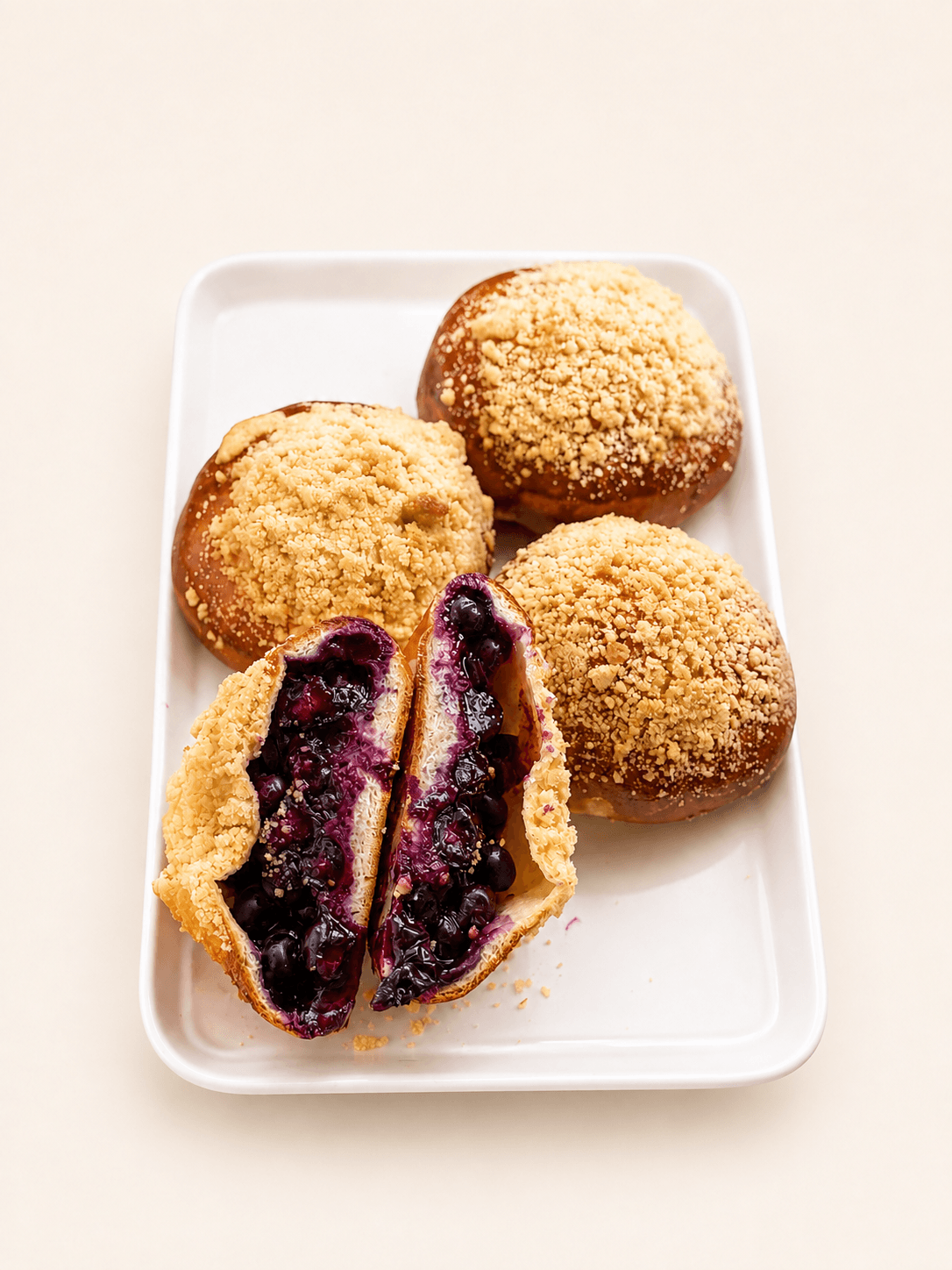
A jagodzianka is a sweet yeast bun filled with wild bilberries and topped with crumble. That is the short answer. The longer answer is where the interesting part sits, because almost everything sold in Britain under the name "blueberry bun" differs from a Polish one in at least two respects: the berry inside it, and whether that berry ever saw a saucepan.
The dough is enriched: flour, milk, eggs, butter, sugar, yeast, a little salt. It is soft, slightly sweet, closer to brioche than to a bread roll but lighter than either. A handful of raw berries goes in, the dough is sealed around them, and a rubble of butter, flour and sugar called kruszonka goes on top. It bakes for twenty minutes or so. The berries burst inside and their juice soaks into the crumb, which is why a proper one is purple in the middle and why anyone who eats one standing up gets it on their shirt.
The berry the bun is named after
The name comes from jagody. In Polish that word does a lot of work: it can mean berries in general, but on a bakery sign in July it means one berry, czarna jagoda, the black berry of the forest. That is the bilberry, Vaccinium myrtillus, and it is not the same plant as the cultivated highbush blueberry sold in plastic punnets.
The difference is easy to see if you cut one open. A cultivated blueberry is pale green or white inside with a blue skin. A bilberry is purple the whole way through. It is smaller, roughly the size of a peppercorn, and it grows one or two to a stem on a low shrub rather than in clusters on a bush that reaches your chest. It tastes sharper, more acidic, with a resinous note behind the sweetness that the cultivated berry does not have. And it stains everything: hands, teeth, tea towels, the crumb of a bun.
That staining is the point. When a Pole says a jagodzianka should bleed, they mean the fruit should be raw when it goes in, so the juice runs into the dough during baking. Jam is a different food. A bun filled with blueberry compote or pie filling is perfectly pleasant and it is not what is being described.
The same berry grows wild in Britain and always has. It is bilberry in most of England, whinberry or wimberry in the Welsh borders and Wales, blaeberry in Scotland. It ripens on acid moorland and in old woodland through July and August, the same weeks as in Poland, and it has been baked into bilberry pies and tarts here for centuries, particularly in Yorkshire, Derbyshire and Lancashire. It never became a commercial crop for one dull reason: the bushes sit at ankle height and the berries come off one at a time. A skilled picker fills a punnet slowly. Nobody has worked out how to make that pay at supermarket prices, so the fruit stays where it grows.
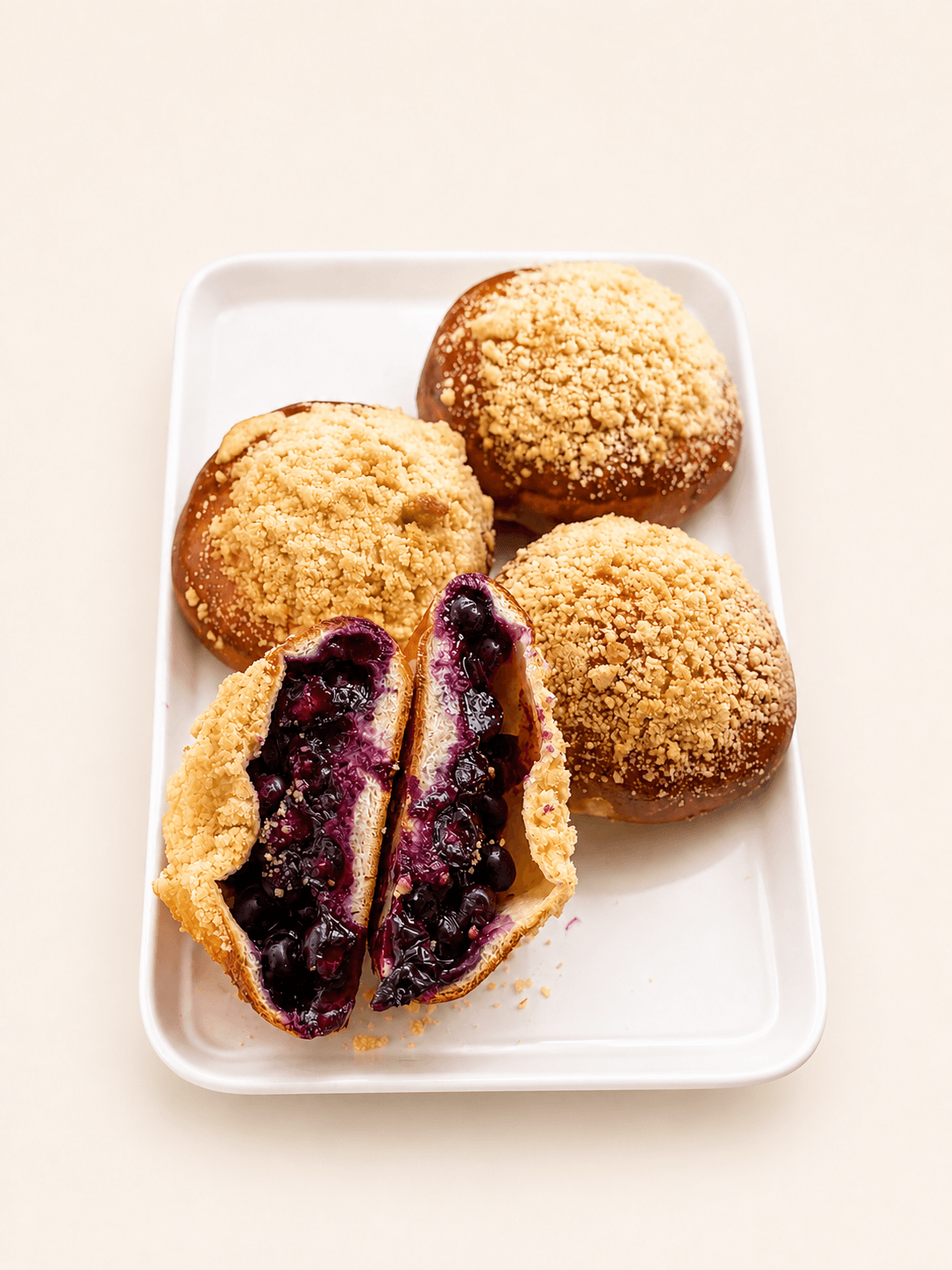 Blueberry Streusel Buns (Jagodzianki)Jagodzianki, Polish blueberry buns, four to a box. Soft enriched dough, blueberry filling, buttery streusel.£42Order this
What goes into a jagodzianka, and what does not
There is no single authorised recipe, but the arguments in Polish kitchens fall along predictable lines.
The dough should be enriched but not heavy. Too much butter and it turns cakey and the base goes greasy where the juice collects. Most home recipes use whole milk, two or three eggs and a slow first rise, sometimes overnight in the fridge, which builds flavour and makes the dough easier to shape.
The berries go in raw, usually tossed with a spoonful of sugar and sometimes a little potato flour or semolina to hold the juice. Purists skip the thickener and accept the leak. Some add lemon zest. Very few add cinnamon, which belongs to apple.
Kruszonka is the crumble lid: cold butter rubbed into flour and sugar until it clumps. It is the same idea as German streusel and the two words are used interchangeably by bakers who work in both traditions. It does two jobs. It adds crunch against a soft bun, and it forms a lid that keeps the top from drying out while the fruit steams underneath.
What does not belong: icing, glaze, cream cheese frosting, a swirl. A jagodzianka is a round bun with a crumble top and a purple centre. Anything more decorated is a different pastry wearing the name.
The traditional accompaniment is a glass of kefir or maślanka, which is buttermilk. The sourness cuts the sugar in a way tea does not. If you have only ever had these with coffee, try the kefir once.
July, August, and why the season is defended
In Poland the buns appear when the forests are picked, which is July and August. Outside those weeks most bakeries simply do not make them. The ones that do are making something with frozen or imported fruit, and they will be told so.
During the season it becomes a competition. Bakeries in Warsaw and Kraków put them in the window and food magazines run annual rankings, sending writers around the city to eat a dozen a day and score them on the ratio of fruit to dough, on whether the base has gone soggy, on how far the purple reaches. People queue. A bakery that sells out by ten in the morning treats it as a result.
It is a good example of a food that is protected by scarcity rather than by rules. Nobody has registered the name. The season does the work. Two months a year, the fruit is available and cheap enough to be generous with, and the rest of the year the honest answer is to bake something else.
What separates a real one from a supermarket blueberry bun
Four things, in order of how much they matter.
- The fruit. Wild bilberries, raw, versus cultivated blueberries or, worse, a piped blueberry filling made largely of apple purée and colouring.
- The quantity. A good jagodzianka is uncomfortably full. The dough is a wrapper, not the main event.
- The dough. Genuinely enriched and proved slowly, not a sweetened bread dough pushed through in ninety minutes.
- The top. Kruszonka made with real butter, in pieces large enough to give texture, rather than a dusting of sugar.
A supermarket blueberry muffin, for the avoidance of doubt, is a different food entirely: chemically raised, cakey, and sweet all the way through. It is not competing with this.
How ours are made, and what we call them
We make Blueberry Streusel Buns, four to a box, £36, with 24 hours' notice. Soft enriched dough made with flour, milk, eggs, sugar, salt and yeast, blueberries inside, buttery streusel baked golden on top. In Russian they are булочки с черникой и штрейзелем, and a good number of our regulars order them under that name.
We do not call them jagodzianki, and the reason is the berry. We use cultivated blueberries, because that is what is reliably available in London through the year. They are larger, sweeter and less acidic than forest bilberries, and they do not stain the crumb the same violent purple. What you get is a softer, rounder, sweeter bun than the Polish original. That is an honest description rather than an apology: it is very good, and it is not the same thing. If you grew up on the real ones in July, you will notice the difference in the first bite. If you have never had either, start here and then go to Poland in August.
Everything is baked to order for the date you choose. Nothing sits on a shelf overnight, which matters more with an enriched bun than with almost anything else we make: these are at their best within a few hours of coming out of the oven, good the next day if kept in a paper bag rather than plastic, and past their best on day three. Warm them for four or five minutes in a low oven, never a microwave, which turns the streusel to paste.
They contain eggs and milk. The kitchen also handles sulphites, lupin and molluscs.
Ordering blueberry buns in London
We are a small kitchen in Belgravia, by appointment, not a walk in counter, and we deliver across London and Surrey. Buns need 24 hours, cakes need 48. Four blueberry streusel buns at £36 works for a breakfast for four or a mid morning table for two with something left over.
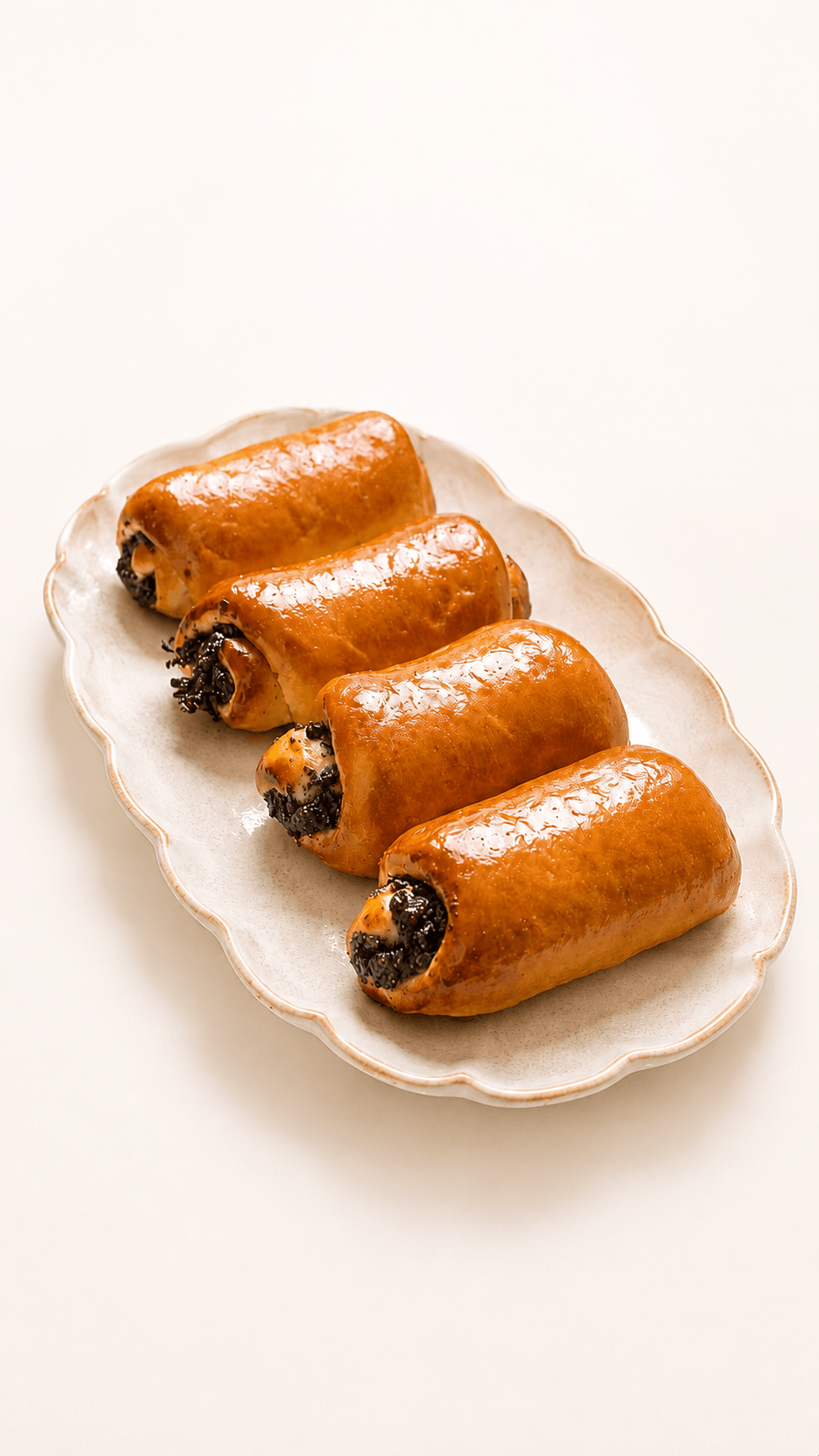
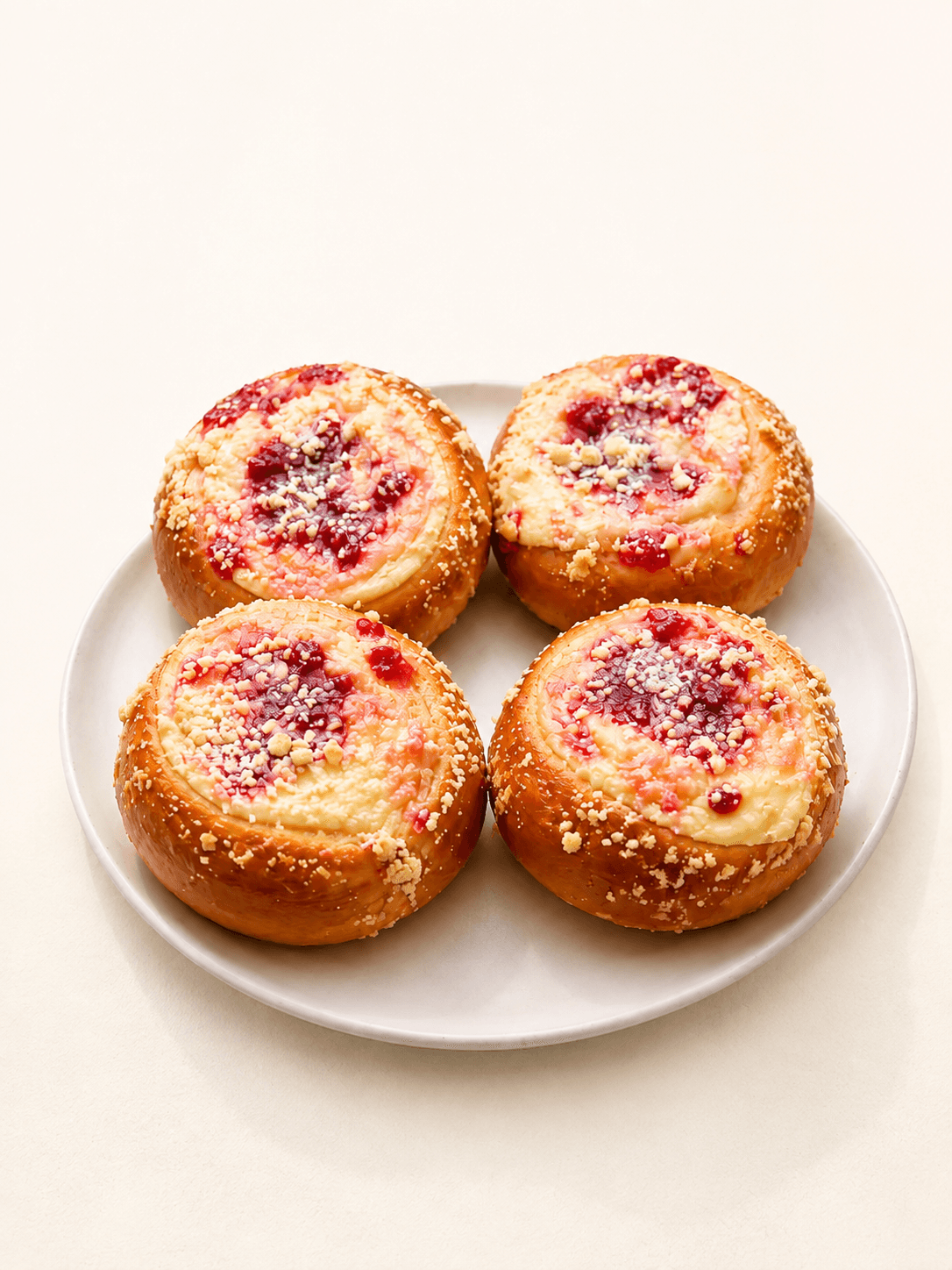
If you are ordering for a group, the rest of the buns and babka section sits alongside them: Poppy Seed Buns at £30 for four, Strawberry Vatrushki at £32, Airy Cinnamon Buns at £32, Cinnamon Rolls at £44 for six. A box of blueberry and a box of poppy seed on the same table covers most preferences, and the two look right next to each other. Larger orders and everything else we bake are on the full collection.
One practical note on timing. Wednesday is our bread day, when sourdough, rye and Japanese milk loaf go out to Virginia Water, Weybridge, Ascot, Sunningdale, Sunninghill, Egham and Englefield Green on the weekly bread round. If you are in one of those areas, ordering buns for a Wednesday means everything arrives together the same afternoon.
To order, email info@mikebakes.uk or call +44 7922 122149 with the date you want them, and give us the full 24 hours. If you want them for a Saturday breakfast, that means telling us by Friday morning at the latest.
Order it for the date you need
Everything here is baked to order for your date.
48 hours notice, 72 for bread. Delivered across London and Surrey.