
· 6 min read
Blueberry Buns and the British Bilberry
Britain grows the same berry a Polish jagodzianka is built on. It ripens on the moors in July and August, it has three names, and it never made it into a supermarket punnet. Here is why, and how it connects to a box of blueberry buns in London.
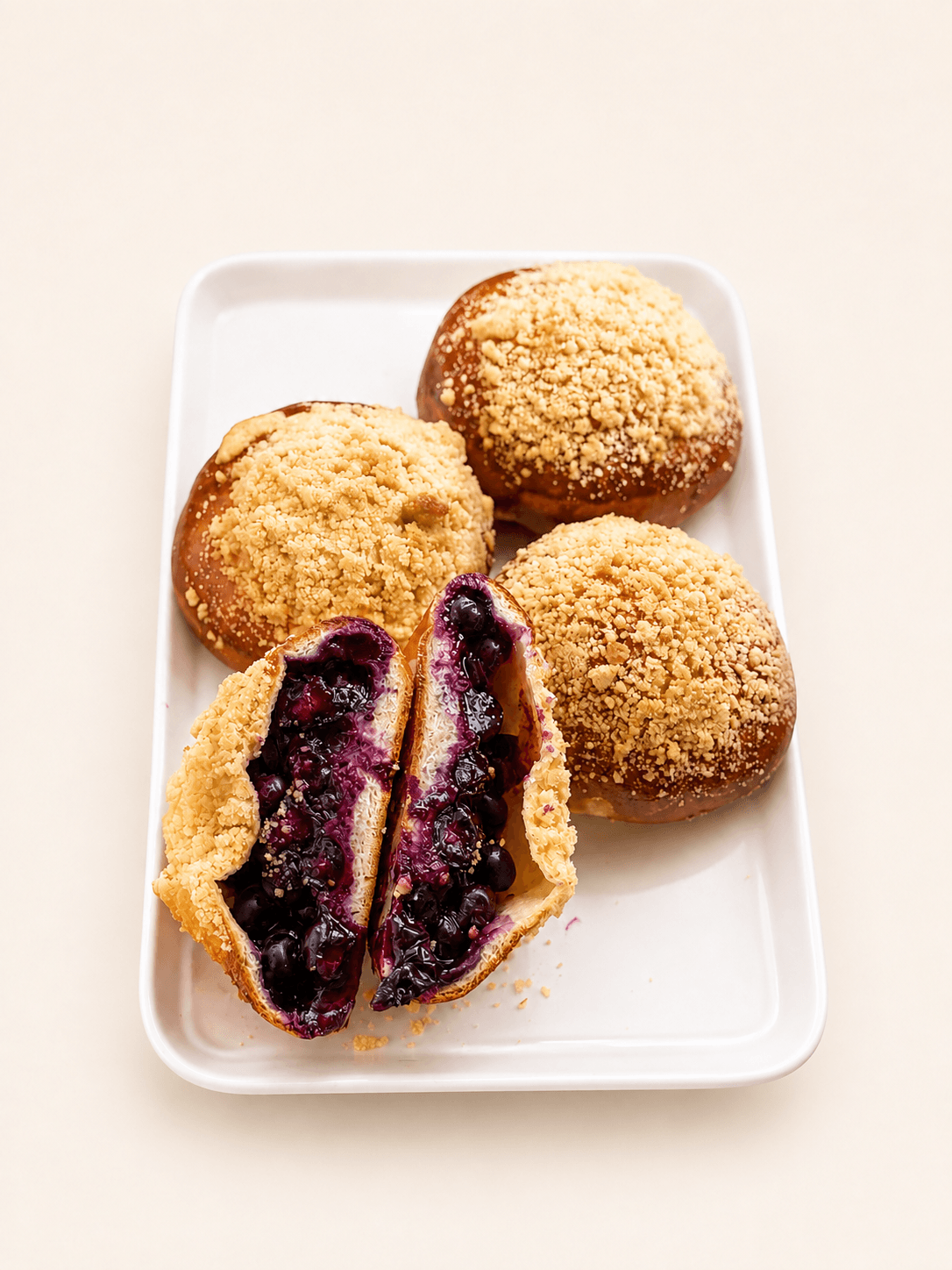
The berry inside a Polish jagodzianka grows wild in Britain. It always has. It ripens on moorland in July and August, it has a different name in each country of these islands, and until blueberries started arriving in punnets it was the berry people here baked with. Most Londoners have never eaten one. That is a supply problem, not a taste problem.
Bilberry, whinberry, blaeberry: one berry, three names
In England it is the bilberry. In Wales it is the whinberry, or wimberry. In Scotland it is the blaeberry. The plant is Vaccinium myrtillus, the same species Poles call czarna jagoda and the reason a jagodzianka is called a jagodzianka at all.
It is not the blueberry you buy in a plastic punnet. The bilberry is smaller, darker and purple the whole way through. Cut a cultivated blueberry in half and the flesh is pale green. Cut a bilberry and there is no pale part. The flavour is sharper, with an edge behind the sweetness, and the juice stains everything it touches: fingers, tea towels, the crumb of whatever it is baked into. When a jagodzianka has purple bleeding into the dough around the filling, that is the fruit, not a colouring.
The bushes grow low, ankle height, spreading through heather on acid soil across the moors and hills. The fruit ripens in July and August. That is the whole season, in Poland and in Britain alike, and it is why the arguments about jagodzianki in Warsaw and the arguments about bilberry pie in Yorkshire are both arguments that happen in high summer and then stop.
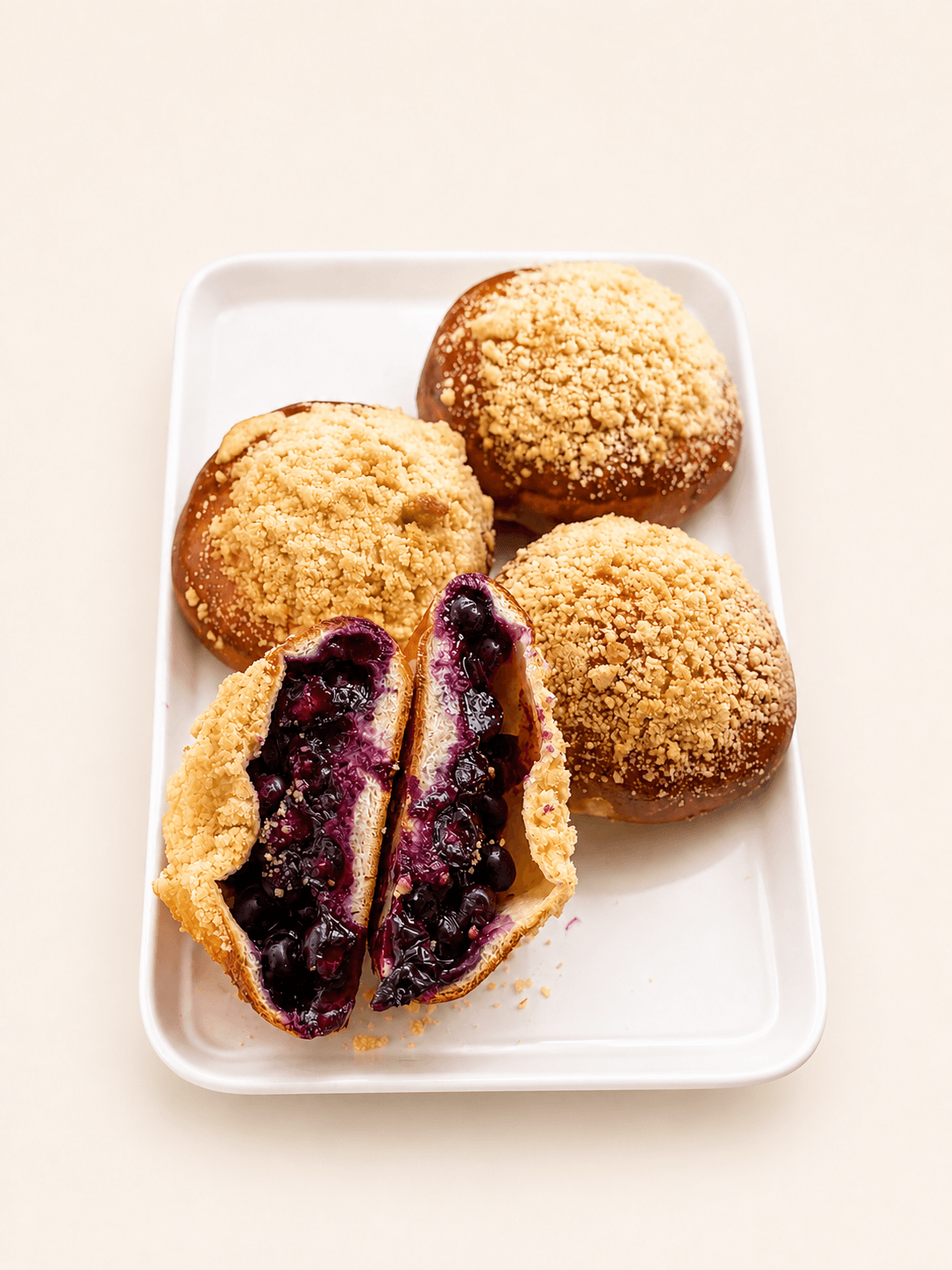 Blueberry Streusel Buns (Jagodzianki)Jagodzianki, Polish blueberry buns, four to a box. Soft enriched dough, blueberry filling, buttery streusel.£42Order this
Why the bilberry never became a supermarket fruit
The answer is picking speed. A bilberry bush is not a bush you stand next to. It is a mat of low growth that you crouch or kneel to reach, and the berries hang singly rather than in clusters. A good picker on a good patch fills a container slowly, and slowly is the word that decides whether a fruit becomes a crop. Wild bilberry picking has always been paid for in patience, which is why in Poland it was traditionally forest work done by families, and why in Britain it dwindled to a thing people did for their own kitchens.
The cultivated highbush blueberry solved every one of those problems. It grows tall enough to pick standing up, it ripens in clusters, the skin is firm, and the fruit survives being boxed, chilled and driven several hundred miles. It also has less flavour. That is the trade the market made, and it is not a mysterious one. Nobody built a supply chain around a sharp little berry that bruises, stains and takes an hour to gather a punnet of.
So the bilberry stayed local and stayed domestic. It survived in recipes rather than in shops: bilberry tarts and pies in the north of England, whinberry tarts in Wales, blaeberry puddings in Scotland. British berries in general have this pattern. The ones that ship became crops and the ones that do not stayed in the hedgerow, on the moor and in the memory of anyone who picked them as a child.
A Yorkshire bilberry pie and a Polish bun are the same idea
Put the two side by side and they are answers to the same question. You have a small, sharp, juicy berry. It is available for perhaps six weeks. It falls apart under heat and the juice runs. What do you wrap around it?
Britain answered with pastry: a lidded pie or an open tart, sugar to take the edge off, the crust doing the work of holding the juice. Poland answered with enriched yeast dough and a crumble lid, the Polish blueberry bun explained in full here, where soft dough absorbs the juice from below and the kruszonka catches it from above. Different technique, same reasoning. Both are seasonal, both are eaten within a day or two of baking, and both go dark purple inside in a way that no cultivated blueberry can match.
The difference is that Poland kept its version as a national event and Britain quietly let its version go. Bilberry pie is still made in the Pennines and the Welsh hills in August by people who know where the patches are, but it never became a thing you can buy in a city in summer. Jagodzianki did. Every July, Polish bakeries compete over them and food magazines print rankings. That is a cultural choice, not a horticultural one. The berry was always here.
What is in our blueberry buns, and what is not
Ours are Blueberry Streusel Buns, four to a box, £36, made to order with 24 hours' notice. Soft enriched dough, a blueberry filling, a buttery streusel crust baked golden on top. The dough is eggs, sugar, salt, yeast, flour and milk. They contain eggs and milk, and the kitchen also handles sulphites, lupin and molluscs. In Russian they are булочки с черникой и штрейзелем.
They are made with cultivated blueberries, which are larger, sweeter and milder than the forest bilberry a Polish jagodzianka is built on. That is worth saying plainly rather than leaving people to find out on the first bite. If you grew up on jagodzianki picked from a forest in Podlasie, the fruit in these buns will read as rounder and gentler, and the crumb will not go the deep bruised purple you remember. The bun is good. It is a different fruit inside it, and pretending otherwise would be a small dishonesty repeated four times a box.
What the buns do keep is the structure, which is most of what makes the thing work: dough soft enough to tear rather than cut, enough filling that it is a fruit bun rather than a sweet roll with a hint of something, and a streusel lid with enough butter in it to stay crisp on the day it is baked. Eat them the day they arrive. They are best a few hours out of the oven, slightly warm, with strong tea. In Poland the accompaniment is kefir or maślanka, and that sharpness against sweet dough is a genuinely good pairing whatever the berry.

If you want the real berry, you have to go and get it
There is no shortcut here and there is no point pretending there is. Bilberries are not sold in London in any reliable way, and the only certain method is to be on a moor in the second half of July with a container and no urgent plans. Look for low growth under and among heather, on high ground, on acid soil. The fruit sits singly under the leaves. Expect to spend an hour for enough to fill a tart. Expect purple hands for two days.
Anyone who does that and then makes a bilberry pie has made something a Polish baker would recognise instantly, and something a Yorkshire grandmother would too. It is one recipe with two accents.
For the rest of the year, and for anyone who would rather not kneel in heather, the buns are baked to order for the date you choose, along with everything else in the full collection. Four buns, £36, 24 hours' notice, delivered across London and Surrey. Order two boxes if there are more than three of you: eight buns disappear faster than anyone plans for.
Order it for the date you need
Everything here is baked to order for your date.
48 hours notice, 72 for bread. Delivered across London and Surrey.