
· 7 min read
Ordering Jagodzianki for Offices and Parties
Boxes of four, a meeting of eight, a party of twenty: how many blueberry buns a room actually eats, why they survive three hours on a table better than a cream cake, and how to order enough with 24 hours' notice.
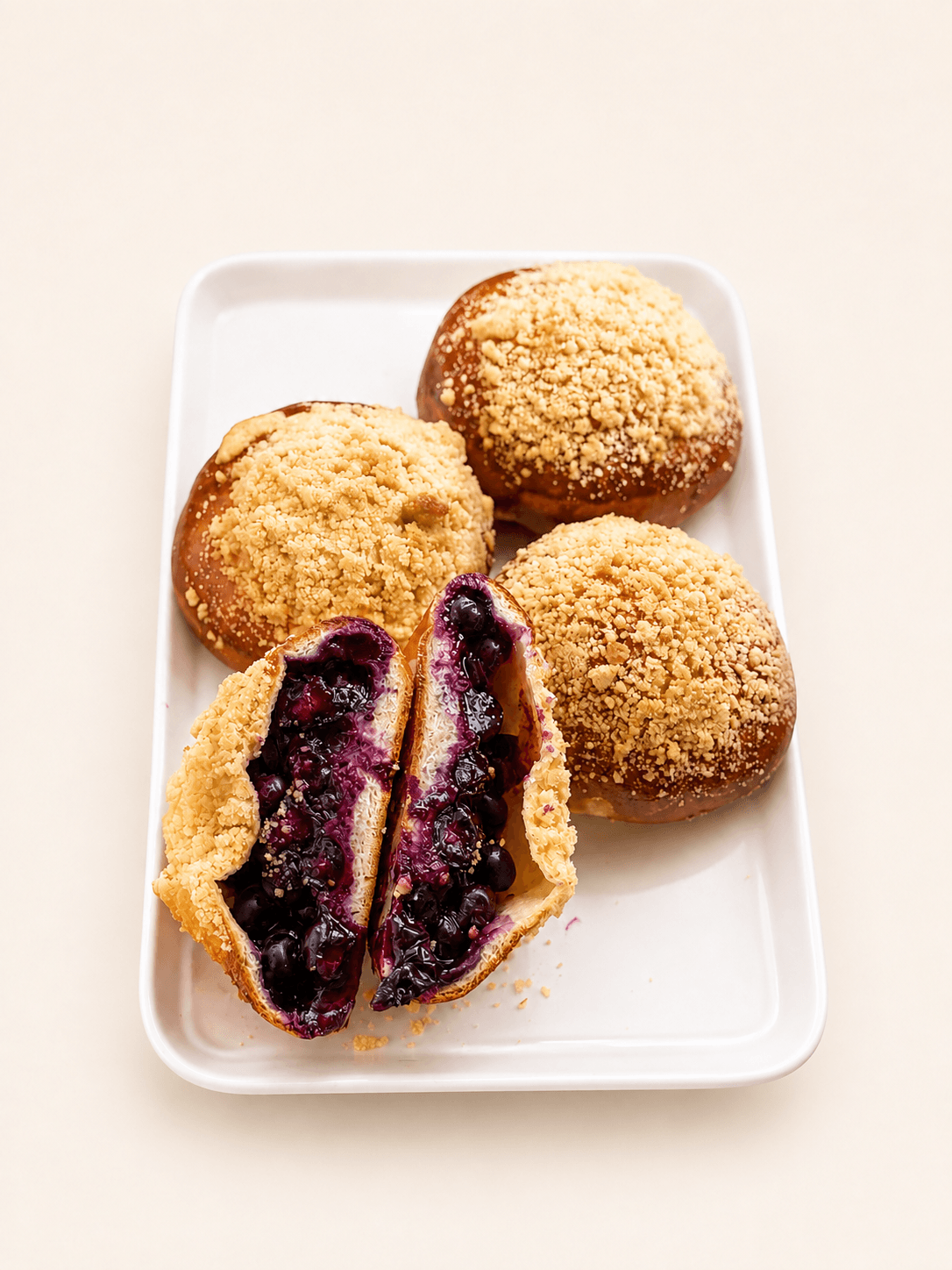
Feeding a room is an arithmetic problem before it is a baking one. The question is not which pastry is nicest. It is how many people will actually take one, what happens to the food between eleven and two, and who is going to carry plates. Blueberry buns answer those questions better than most sweet things, which is why they turn up so often in orders for offices, christenings, launches and long meetings.
A jagodzianka is the Polish summer bun: enriched yeast dough around blueberries under a crumble topping called kruszonka, and the whole history of it, the bilberry and the July season, is set out at what jagodzianki are. Ours are Blueberry Streusel Buns, four to a box at £36, made with cultivated blueberries, which are larger, sweeter and milder than the forest bilberry a Polish jagodzianka is built on. We say that rather than borrowing the name without qualification.
Why a bun is easier than a cake at a standing event
A cake needs six things at the venue: a fridge or a cool corner, a flat surface, a long knife, a jug of hot water and a cloth, plates, forks. It also needs a person. Somebody has to stand there for ten minutes cutting eighteen centimetres into twelve or sixteen slices while the room waits, and that person is usually the one who organised the event and wanted to talk to people.
A bun needs a board or a tray and a stack of napkins. Guests take one with one hand and keep their glass in the other. Nobody queues. Nobody asks how big a slice they are allowed. The portion size is decided at the bakery, not by whoever is holding the knife, so twenty people get twenty equal portions.
There is a trade off and it is worth being honest about it. A cake is an event. It arrives, it gets photographed, people gather round it. Buns do not do that. If the point of the gathering is a birthday, a retirement or a wedding anniversary, you want a cake in the room, and for anything over about twenty five people that means large format, which is what big cakes are for. For everything else, a coffee morning, a board meeting, a leaving do, a Sunday with cousins arriving at different times, buns are the practical choice.
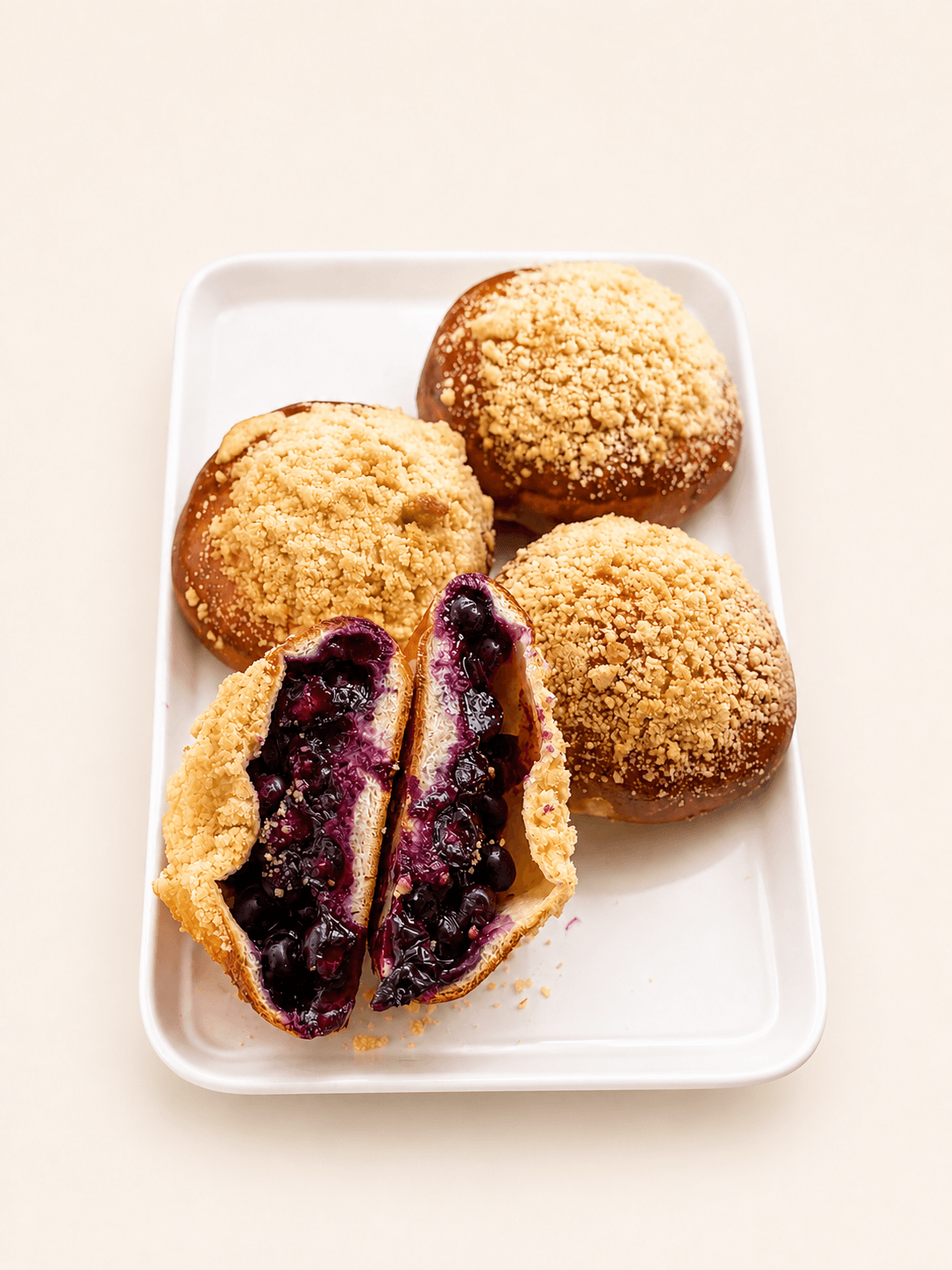 Blueberry Streusel Buns (Jagodzianki)Jagodzianki, Polish blueberry buns, four to a box. Soft enriched dough, blueberry filling, buttery streusel.£42Order this
How many people actually eat
The honest number is lower than the headcount. Two rules cover almost every order we take.
If the buns are the only sweet thing and there is coffee, count one per person and add two. In a room of ten, eight will take one and one or two will come back. That is three boxes for ten people, which gives twelve buns and a spare pair for the person who arrives late.
If there is other food, sandwiches, a savoury spread, anything with a plate involved, count roughly two buns for every three people. A jagodzianka is not a petit four. It is a proper bun and it fills a person up. At an event with lunch already served, half the room will not take one at all and a quarter will take half of one.
Halving is the lever to pull if you are unsure. A serrated knife through the middle of a bun, done just before service, turns four portions into eight without anything falling apart. Cut them on a board and lay them cut side up so the blueberry shows. For a dessert table with four or five other items, halves are the right size and nobody feels short changed.
Numbers for eight, for twenty, and for the awkward sizes
A meeting of eight, mid morning, coffee on the table and nothing else: two boxes. Eight buns, one each, none left over. If the meeting runs to lunch and you want something on the table afterwards, three boxes.
A party of twenty standing up, buns as the sweet element alongside savoury food: three boxes, cut into halves, gives twenty four portions and covers the room. If the buns are the main thing on offer and people will eat properly, five boxes, twenty buns, one each.
A family gathering of twelve with cakes already ordered: two boxes is plenty. Buns are the thing people eat at four o'clock when the cake was at two.
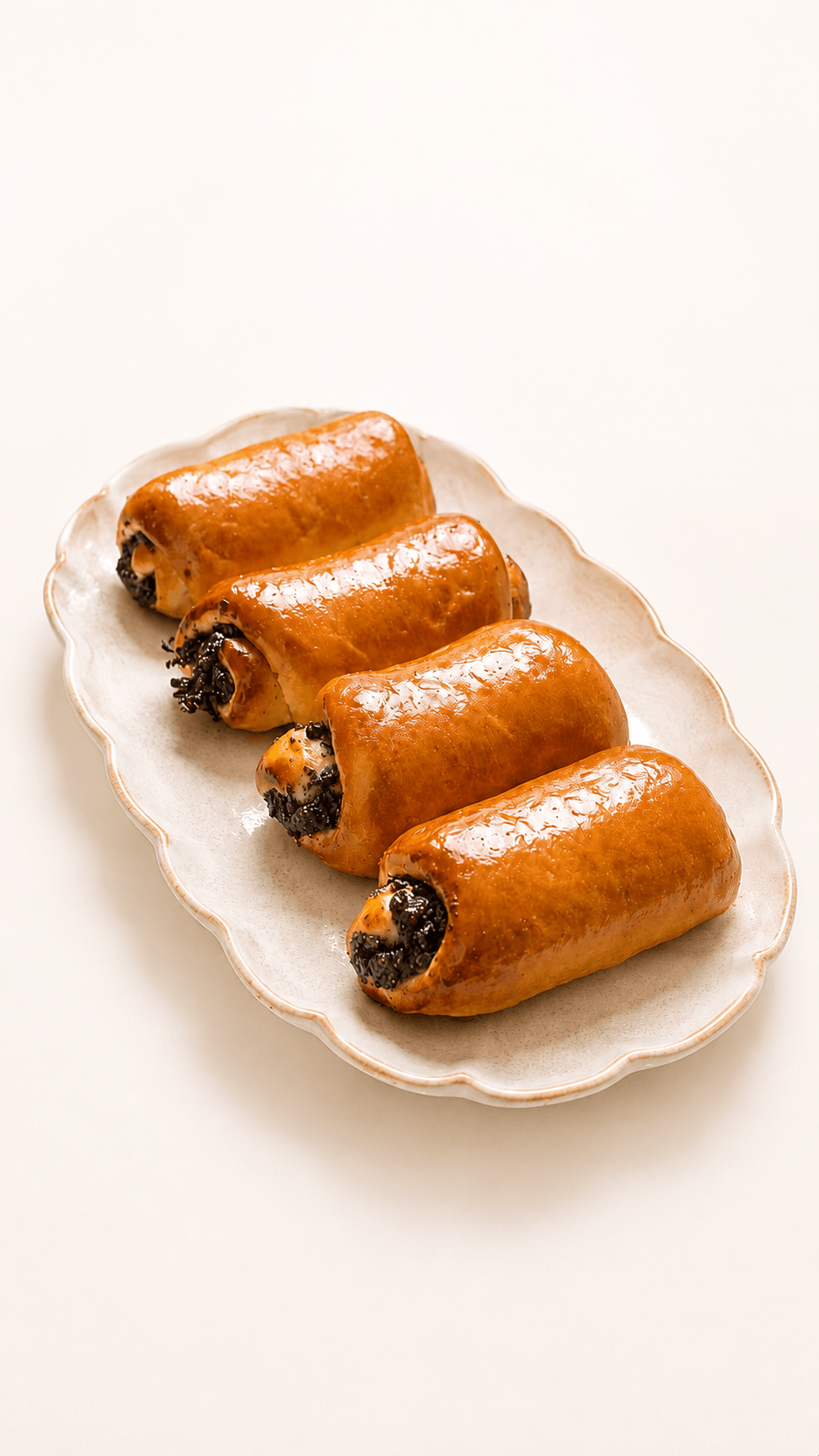
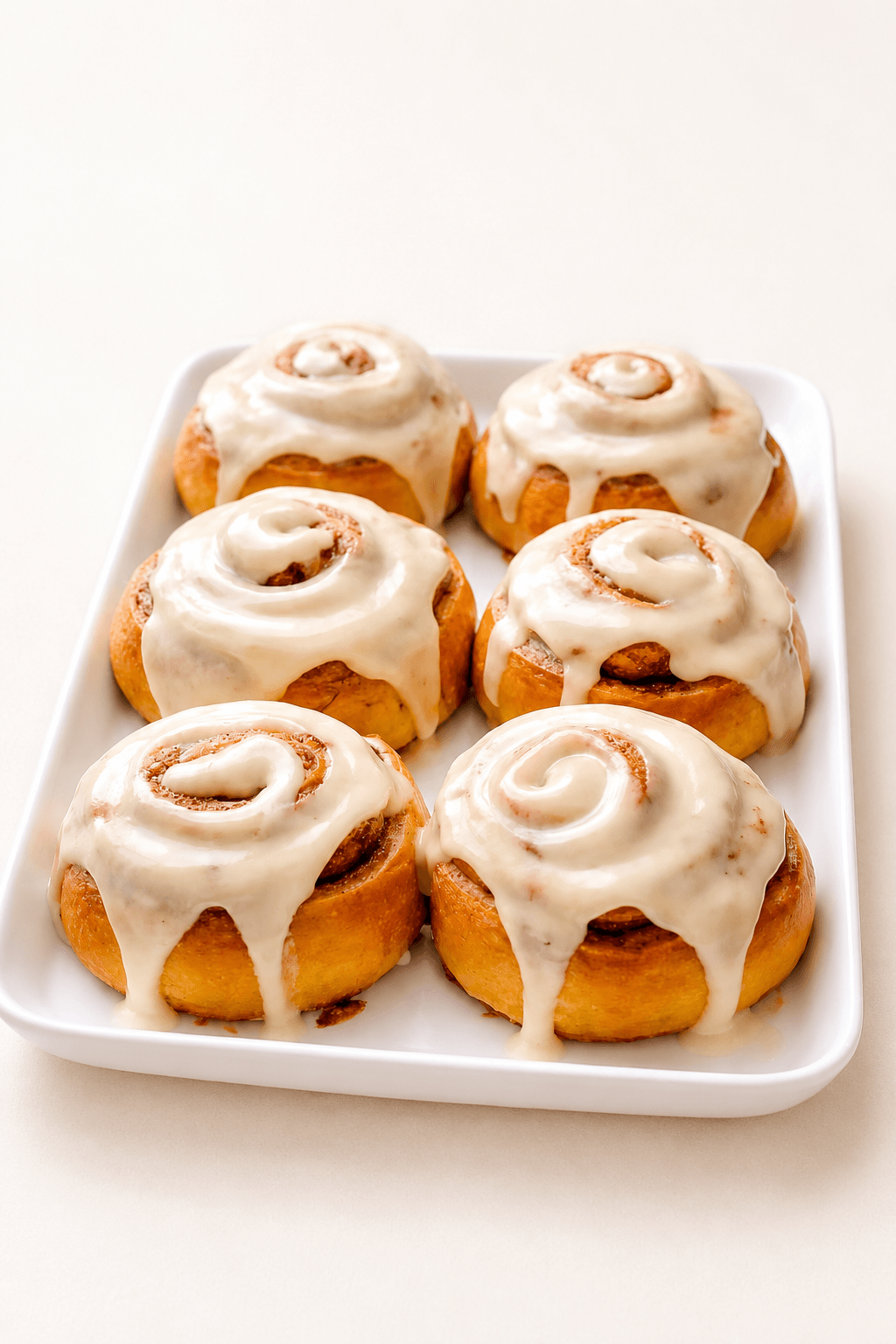
For an office of forty, seven boxes of buns is the working figure when there is other catering, and ten when there is not. Beyond that, split the sweet offering rather than ordering a wall of the same bun. A mixed order reads better on a table and gives people a choice: Airy Cinnamon Buns at £32, Poppy Seed Buns at £30 for four, Cinnamon Rolls at £44 for six. For savoury alongside, pirozhki come six to a box, potato and onion or cabbage and egg at £22, meat and cabbage or mushroom at £27.
How they behave on a table for three hours
This is where the bun earns its place. A streusel bun sitting at room temperature for three hours is still good. The crumb dries very slightly at the cut edge and the streusel stays crisp. There is no cream to weep, no glaze to slide, no chilled filling coming up to room temperature and softening. In a meeting room in July with the sun on the window, a cream cake is past its best in ninety minutes. Buns are not.
What they do produce is crumb. Kruszonka is butter, flour and sugar baked to a sandy crust, and some of it will end up on the table. Serve them on a tray with a lip, or a board with a napkin under it, and the cleaning up is one shake into a bin.
Blueberry stains. The filling is dark and it goes through the crumb, which is what it is supposed to do. On a white tablecloth a dropped bun leaves a mark that will not come out easily. Dark boards, greaseproof paper or the box they arrive in all solve this. The purple in the crumb of a good bun comes from the fruit, and in Poland the deepest colour comes from the wild bilberry rather than the cultivated berry.
If they are going out early and being eaten at eleven, they do not need warming. If they have been in the fridge overnight, ten minutes at 150C brings them back and makes the streusel crisp again. Do not microwave them in the box.
Ordering in bulk, and the 24 hours that governs it
Buns need 24 hours' notice. Everything is baked to order for the date chosen, so an order placed on Tuesday morning arrives Wednesday. There is no shelf and nothing sitting in a case, which is the reason the notice exists.
The part people get wrong is the mixed order. Cakes and most other items need 48 hours, and bread needs 72. The longest lead time in the basket governs the whole delivery. If you want buns and a cake on the same table, order 48 hours out. If you want a loaf with it, 72. For a Monday event that means placing the order on Friday, since the kitchen works Monday to Saturday by appointment.
Large quantities are worth a conversation rather than a checkout. Anything above about eight boxes, or anything with a fixed arrival window, is better arranged by email to info@mikebakes.uk or by phone on +44 7922 122149. Tell us the arrival time you need, not the time the event starts, and whether there is a loading restriction or a reception desk that will take the boxes.
Delivery covers London and Surrey and the areas and costs are set out at delivery. Central London offices are straightforward from the Belgravia kitchen. For Surrey, note that Wednesday is the day the bread round runs to Virginia Water, Weybridge, Ascot, Sunningdale, Sunninghill, Egham and Englefield Green, delivered the same afternoon it is baked.
If you are ordering for the first time and have no idea of the appetite in your particular office, start with three boxes for a room of ten and see what comes back. Nobody has ever complained about two spare buns at four in the afternoon.
Order it for the date you need
Everything here is baked to order for your date.
48 hours notice, 72 for bread. Delivered across London and Surrey.