
· 5 min read
Kartoshka: the Chocolate Potato Cake, Explained
There is no potato in it. There is no baking in it either. Kartoshka is the cleverest thing the Soviet confectionery industry ever did with leftovers.
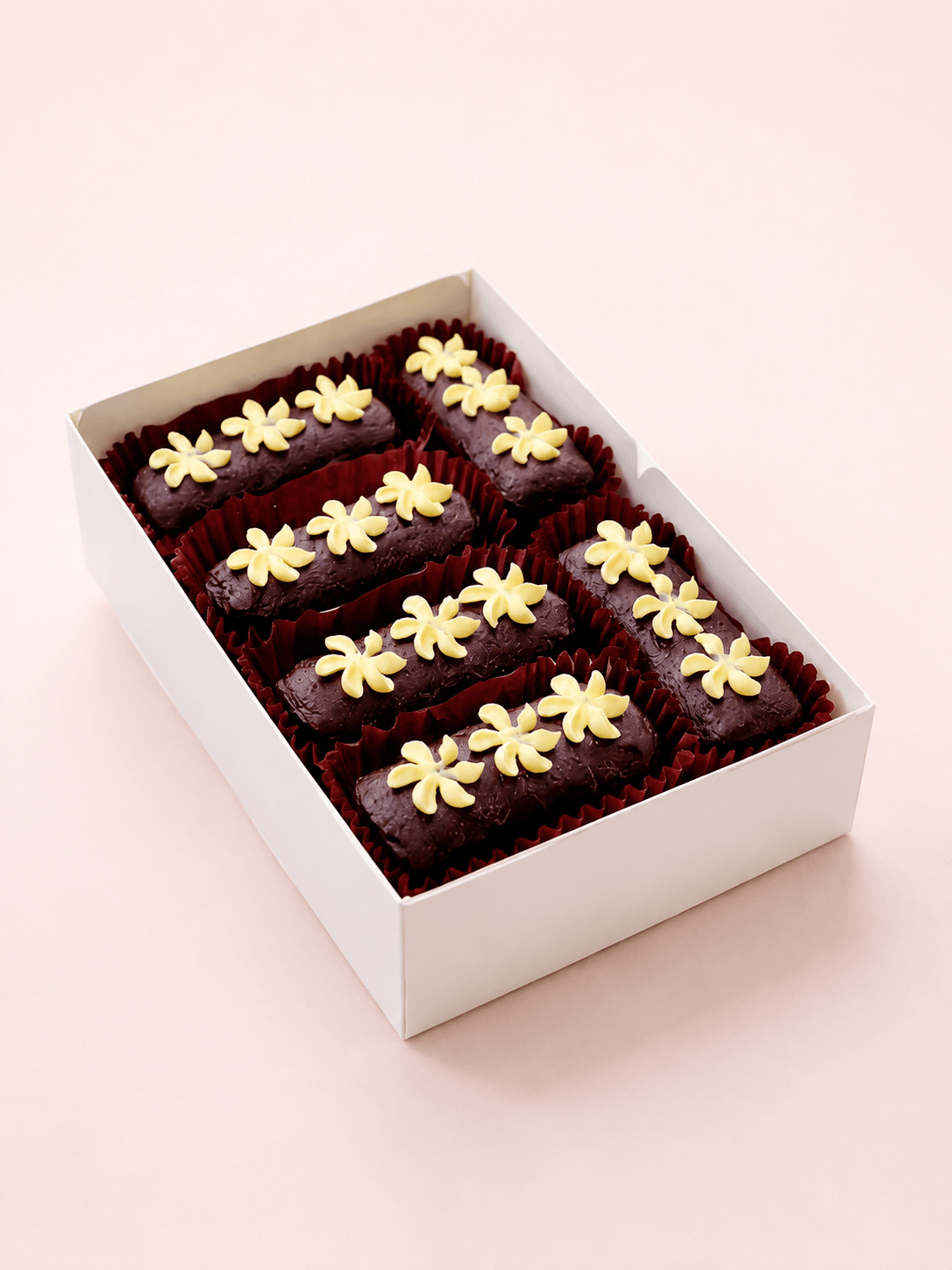
Kartoshka means potato, and there is no potato in it. The name describes what it looks like: a small brown oval, dusted with cocoa so it comes out matte and slightly dusty, sometimes with little sprouts of white buttercream piped into it as a joke about eyes.
What it actually is, is leftover cake. That is not a criticism. It is the origin of the recipe and the reason it exists, and understanding that explains why it tastes the way it does.
Where it came from
Every bakery generates offcuts. Sponge trimmed from the sides of a cake, biscuits broken in handling, the ends of a loaf of cake nobody will buy. In a state run system with production targets and a genuine horror of waste, throwing that away was not an option.
So it was dried, ground, worked together with butter, cocoa, sugar and a splash of something to bind it, rolled into ovals and dusted. It required no oven, no additional flour, and no new ingredients beyond what was already in the kitchen, and it sold for very little.
That it became one of the most loved sweets in the Soviet Union rather than a shameful by product is a piece of good luck. It happens to be delicious.
What is in ours
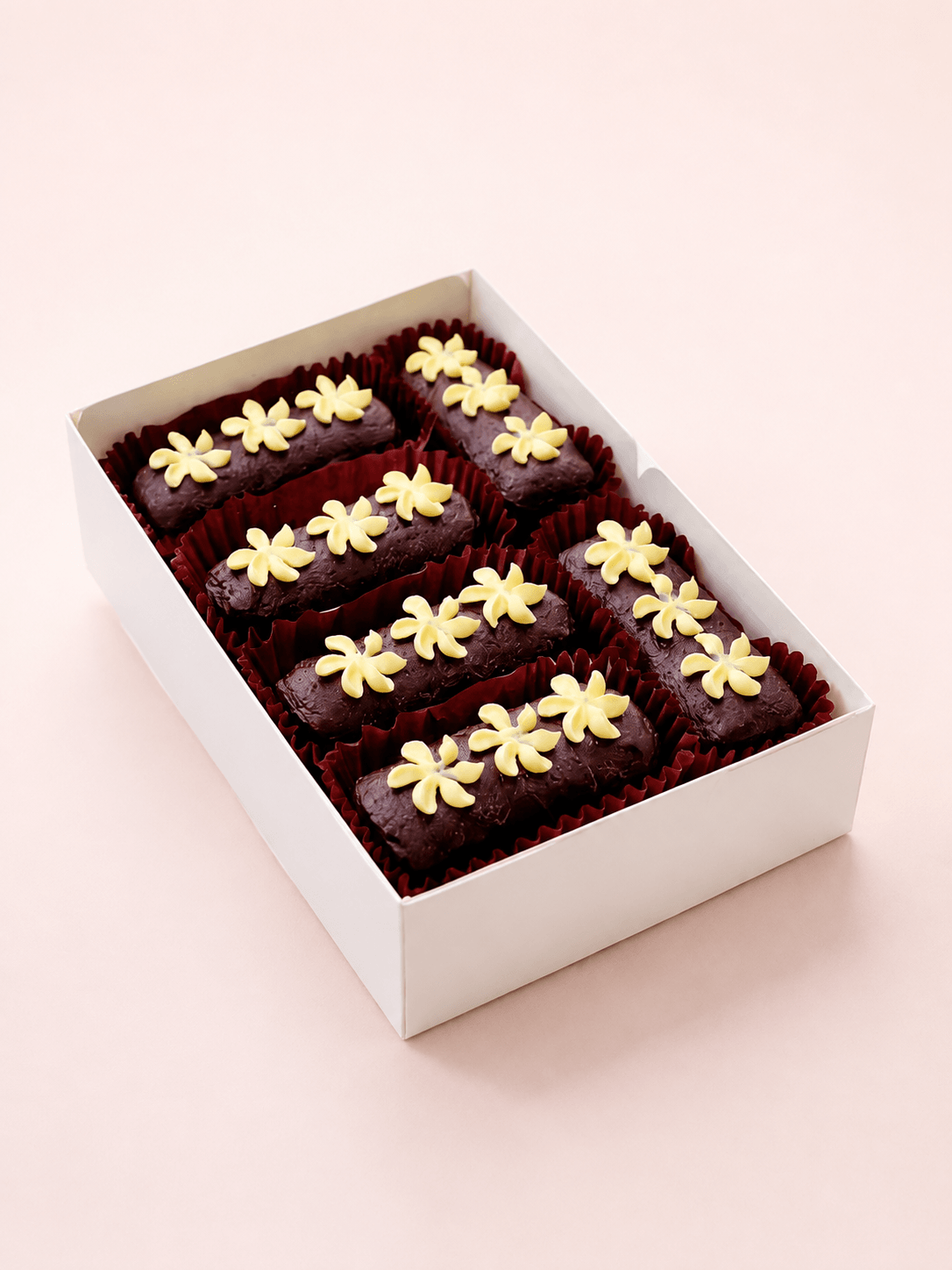
Cake crumb, butter, cocoa, sugar, condensed milk, and nuts. No baking at any stage after the crumb itself.
The texture is the whole thing. It should be dense and slightly damp, fudgy rather than crumbly, and it should hold together when you bite it rather than falling apart into dust. Getting there depends on the ratio of butter to crumb and on the crumb being fine and even, which means the sponge has to be dried properly before it is ground.
Too little butter gives something dry and sandy. Too much and you have a chocolate truffle, which is a nice thing to have but not this. Kartoshka sits between a cake and a confection and it should not resolve into either.
Kartoshka Dessert - 6 PiecesKartoshka, the no bake chocolate potato cakes, six pieces. Cake crumb, butter and cocoa.£28Order thisThe alcohol question
A lot of traditional recipes include a spoonful of cognac or rum. It does two things: it loosens the mixture so it works together more easily, and it gives a background warmth that stops the cocoa reading as flat.
Ours does not contain alcohol, which means it is safe for children, for anybody avoiding it, and for a table where you do not want to have that conversation. The depth comes from the condensed milk and the nuts instead.
Why it suits a London order
Practical reasons, mostly.
It does not need refrigeration in the way a cream pastry does, which makes it useful for an office or a picnic or anywhere without a fridge.
It keeps well, several days in a box, and it does not deteriorate visibly the way a filled pastry does.
It is eaten with fingers. No plates, no forks, no cutting.
And it is the single most recognisable Soviet sweet to anybody who grew up with one, which makes it the thing to put in a gift box for a homesick friend. That is what most of ours go out as.
Making it at home
This is the one Soviet recipe genuinely worth attempting in a British kitchen, because the equipment problem does not exist.
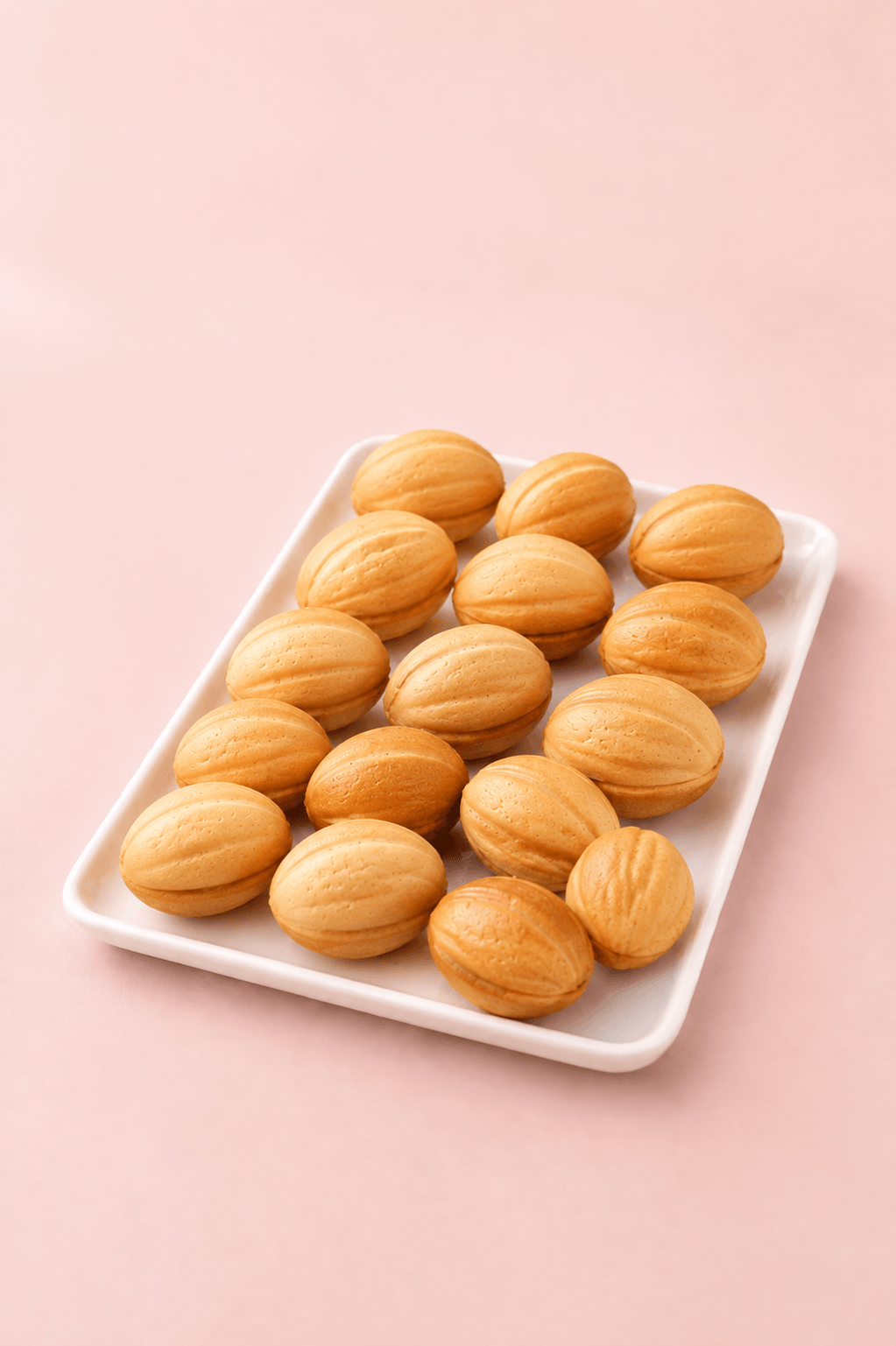
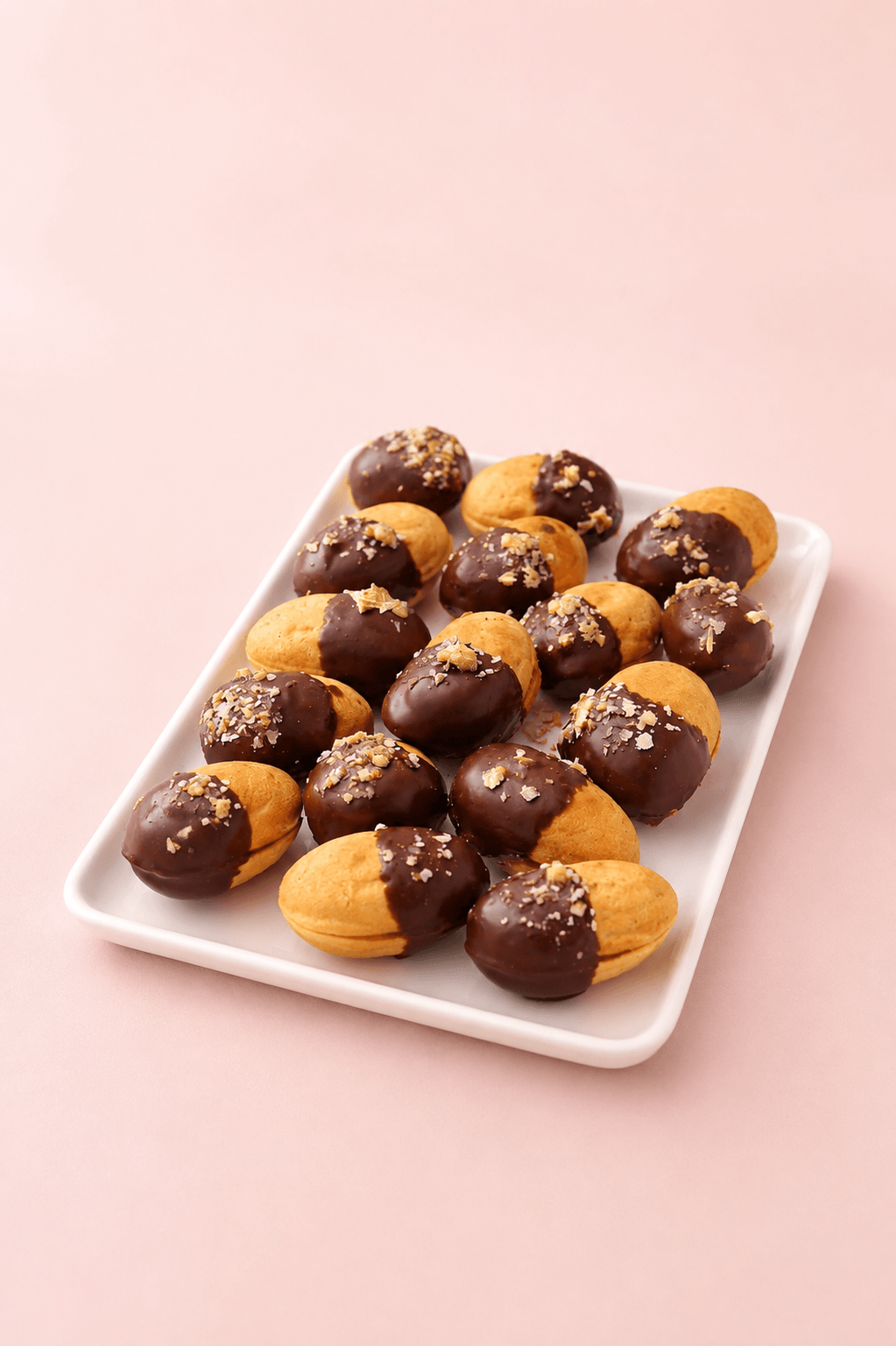
Take a plain sponge, a Madeira loaf, or even good shortbread. Dry it in a low oven until it is completely crisp, then blitz or crush it to a fine crumb. Work in soft butter, cocoa, a little sugar and enough condensed milk to bring it together into a stiff paste. Chill for an hour, roll into ovals, dust in cocoa, chill again.
The two things people get wrong are not drying the crumb enough, which leaves it gummy, and making the mixture too wet, which means it will not hold a shape. If in doubt, add less liquid than you think and work it longer.
The shop version, and why it differs
Kartoshka is sold in most Eastern European grocers in London, usually individually wrapped, and it is one of the most common Soviet sweets to find here.
The commercial version is built from a purpose made biscuit crumb rather than from cake offcuts, which sounds like an upgrade and is not. Cake crumb carries fat, sugar and egg from the sponge it came from, and it contributes flavour. Plain biscuit crumb is more neutral and needs more cocoa and more sugar to compensate, which is why shop kartoshka tends to taste flatter and sweeter.
Most also use a vegetable fat rather than butter, which changes the melt considerably. Butter releases on the tongue at body temperature. A hard vegetable fat does not, and a kartoshka made with it stays slightly waxy no matter how long it sits out.
The nut content is usually lower or absent, which removes the one textural interruption in what is otherwise a smooth dense sweet.
Ours is made from cake crumb with butter and nuts, which is the original construction rather than the industrial one, and it is why it eats softer and tastes less sweet than the wrapped version.
Common questions
Does kartoshka contain potato?
No. The name comes from the shape and the dusty brown appearance. There is no potato in the recipe at all.
Is it baked?
Not after the crumb stage. The sponge that becomes the crumb was baked, but the sweet itself is assembled cold and set in the fridge.
Does it contain alcohol?
Ours does not. Many traditional versions include cognac or rum.
Does it contain nuts?
Yes. It also contains gluten, eggs, soya and milk.
How many pieces come in a box?
Six.
How should I store them?
In a box in the fridge, and take them out fifteen or twenty minutes before eating so the butter softens. They keep for several days and they travel well.
Ordering in London
Made to order in Belgravia, delivered across London and Surrey. Forty eight hours notice, £12 delivery within central London and £15 elsewhere, £50 minimum order.
Order it for the date you need
Everything here is baked to order for your date.
48 hours notice, 72 for bread. Delivered across London and Surrey.