· 5 min read
Large Celebration Cakes for Events
A big cake is not a small cake made bigger. Some recipes scale beautifully, some collapse, and the portion maths surprises almost everyone.
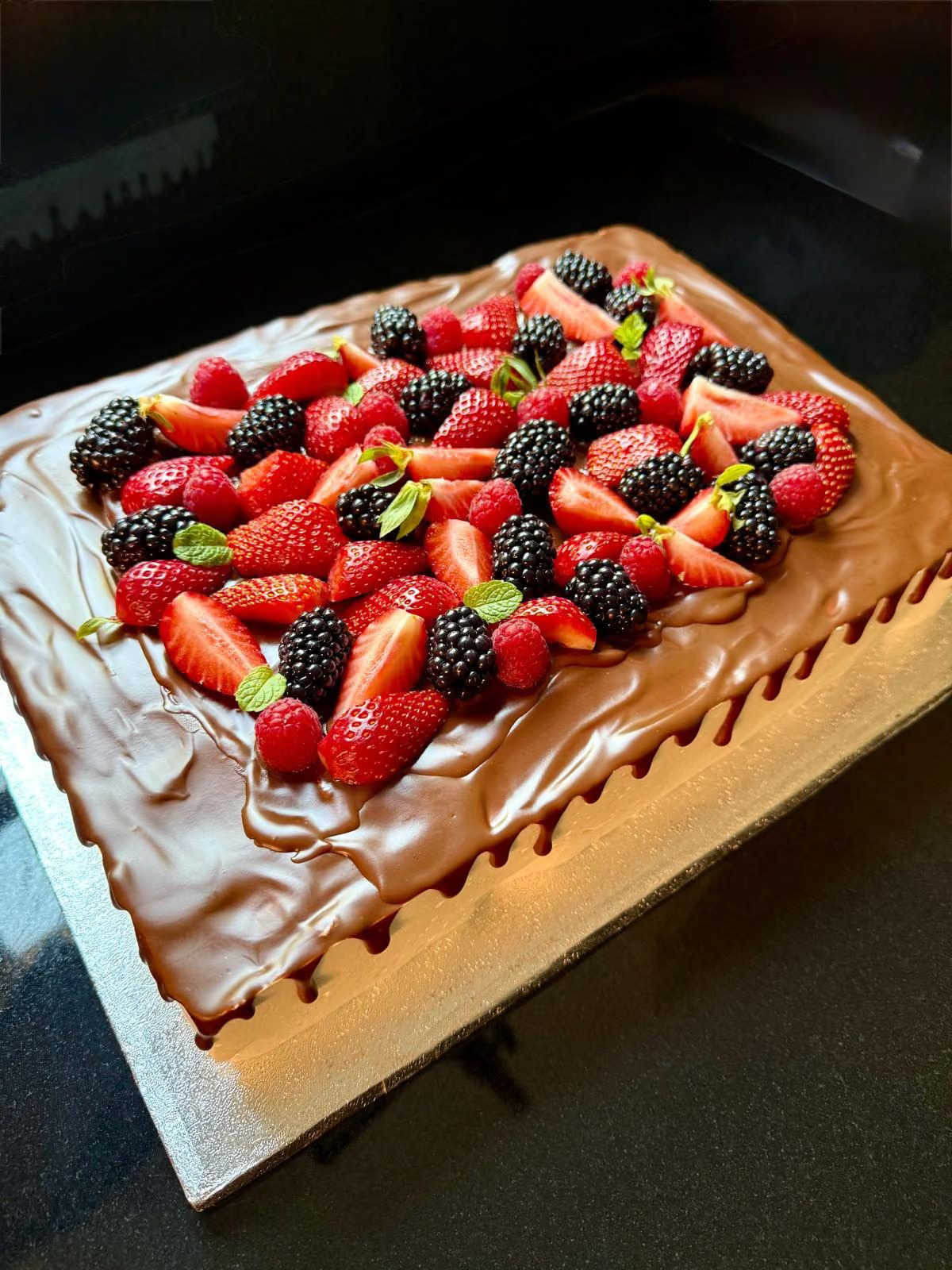
The request usually arrives in the same form. We need a cake for eighty people, can you just make the honey cake bigger.
Sometimes yes. Sometimes the honest answer is that making it bigger would make it worse, and there is a better way to feed eighty people. Which of those applies depends on the cake, and it is worth understanding why.
What changes when a cake gets bigger
A cake is a structure holding itself up while wet, and every centimetre of extra width makes that harder.
Heat is the first problem. An 18 cm cake bakes through evenly. A 30 cm cake of the same depth has to sit in the oven long enough for the middle to set, by which time the outer few centimetres have gone dry. The fixes are lower temperatures for longer, insulating the tin, or baking shallower layers and stacking more of them.
Weight is the second. Everything above the bottom layer presses down on it. At 18 cm that pressure is trivial. At 30 cm, with the extra height a large cake usually wants, a soft filling squeezes outwards and the cake slumps over a few hours. This is why large cakes use firmer fillings, or internal supports, or both.
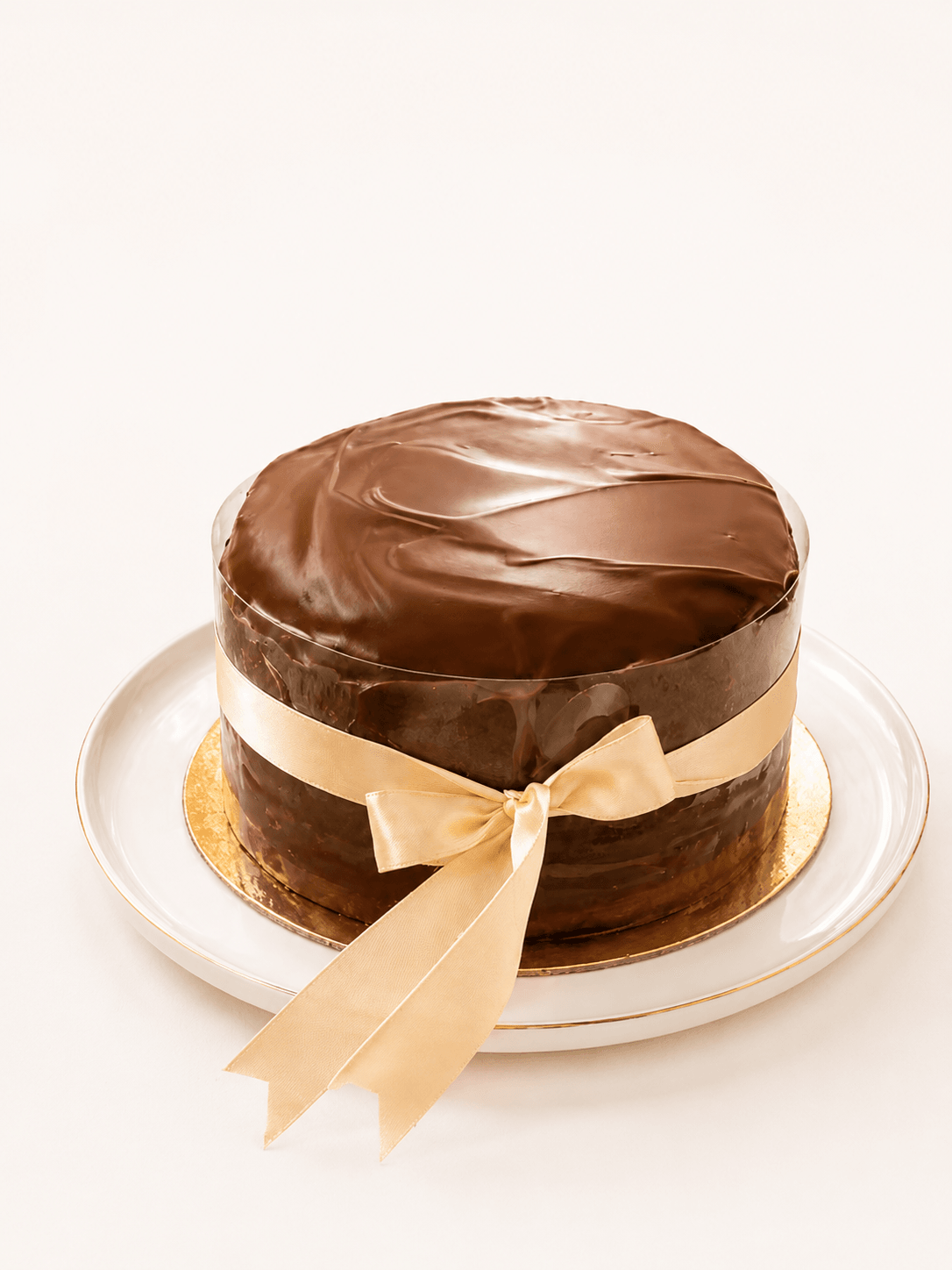
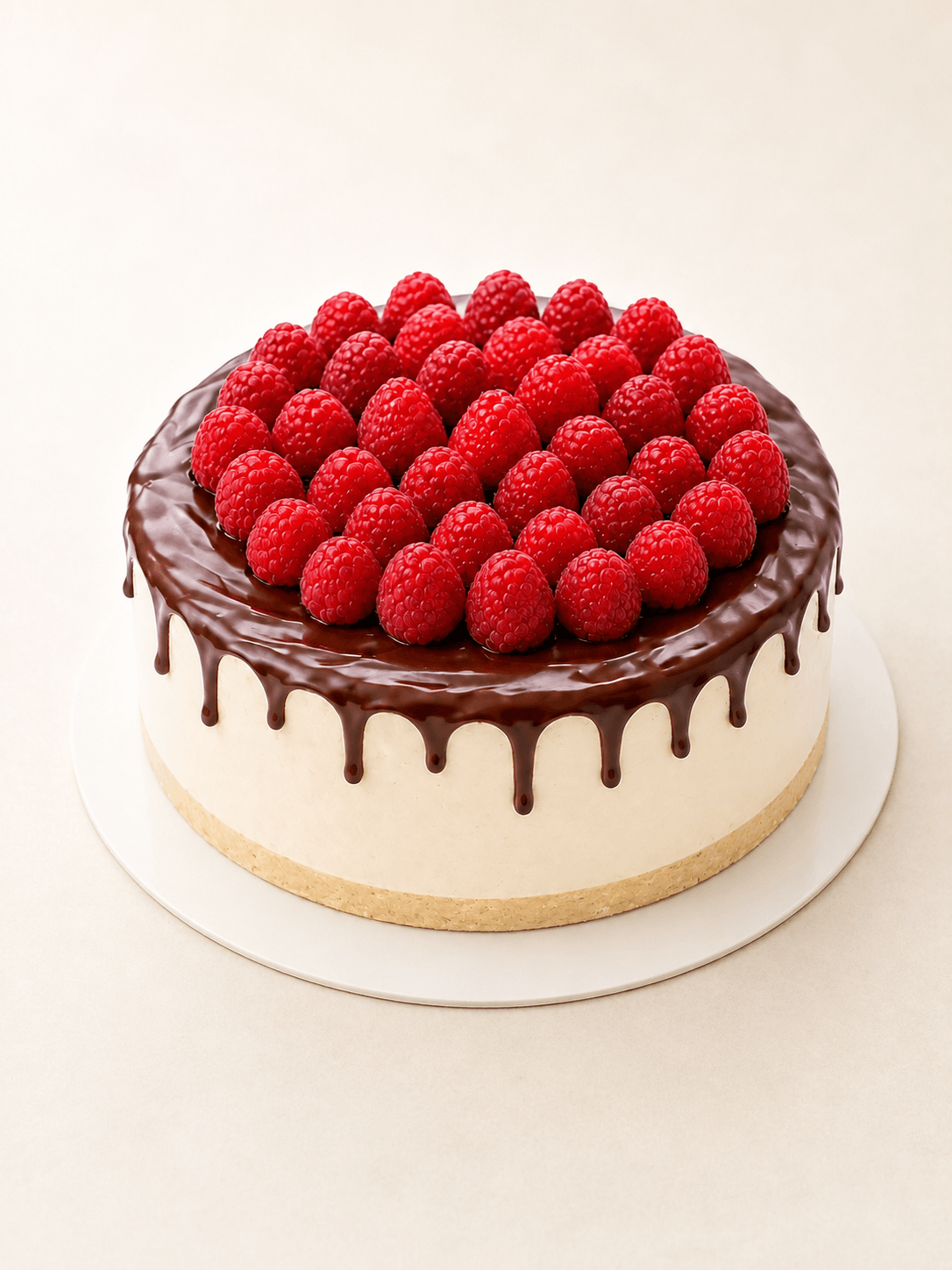 Bird's Milk CakeBird’s Milk cake, ptichye moloko, 18 cm. Airy soufflé over sponge under dark Belgian chocolate.from £78Order this
Which of ours scale and which do not
Medovik scales very well. It is eight thin firm layers with cream between them, and that construction is inherently stable. Make each layer wider and nothing about the physics changes. It also improves after a night, which is exactly what you want for an event cake that has to be finished in advance.
Napoleon scales well for the same reason. Many thin layers, firm assembly, rested overnight.
Esterházy and Kyiv scale well. Baked meringue discs are rigid, so they hold whatever you put on them, and buttercream is stable at room temperature for hours.
Prague scales adequately. The soaked sponge is soft, so a very large one needs care, but it holds.
Pavlova does not scale. A large meringue shell cracks under its own weight and the whole thing is assembled at the last minute anyway. For a big event, individual pavlovas are the answer rather than one enormous one.
Bird's Milk does not scale past a point. The set soufflé layer is what makes the cake and it will not hold its own weight across a wide span.
The strawberry cream cake does not scale. Whipped cream and fresh fruit at volume, standing on a table for two hours, is not a cake you want photographs of.
The portion maths
This is where most people are wrong, in both directions.
Our standard cakes are 18 cm and give ten to twelve dessert portions, meaning a proper slice on a plate with a fork.
Event portions are smaller. A finger portion at a standing reception is roughly half a dessert slice, so the same 18 cm cake covers twenty people. Wedding portions, cut at about 2.5 cm square, are smaller again.
Going up in size gains more than the numbers suggest, because area grows with the square of the diameter. A 25 cm cake is not slightly bigger than an 18 cm one, it is nearly twice the cake. A 30 cm is nearly three times.
So for eighty guests at a reception where cake is one of several things, one large cake genuinely does the job. For eighty guests where cake is dessert and everyone gets a plated slice, you are looking at a tiered cake or several cakes.
When two cakes beat one
Often, and for reasons that have nothing to do with baking.
Two cakes give people a choice, and the choice is visible, which makes a table look more generous than one larger cake at the same total cost. They solve the dietary problem without a separate plate, because one of the two can be the Esterházy and nobody has to be told which is which. They let you pair a rich cake with a light one, which matters when you do not know whether people will be eating this after a meal or instead of one. And they reduce the risk of a single point of failure at an event where one cake has to be perfect.
The usual pairing we suggest is a medovik and a Prague. One unusual, one familiar, one lighter, one chocolate.
Practical arrangements
Large cakes are not on the website and cannot be ordered through the checkout. Send us a message with the date, the venue, the number of people and how the cake is being served, and we will come back with what we would suggest and what it costs.
Give us more notice than for a standard order. Two weeks is a reasonable minimum and more is better, particularly in December and through the summer wedding season.
Think about who receives it. A large cake needs a table already in place, somewhere cool, and a person who knows it is arriving. Tiered cakes are assembled on site, so there needs to be access and a little time.
And ask the venue two questions early. Do they charge a cutting fee, and will their kitchen store a cake before service. Both answers have been known to change the plan.
Two questions we always ask
How is it being cut, and by whom. A large cake needs a long sharp knife, a jug of hot water and somebody willing to be decisive. Venues usually handle this and sometimes assume you are handling it, and the gap between those two assumptions is discovered at exactly the wrong moment.
And what happens to the leftovers. There are almost always leftovers with a large cake, and unless somebody has decided in advance where they go, they end up in a bin bag at midnight. Ask the venue for boxes when you book, not on the night.
For anything under about twenty five people, none of this applies. Order an 18 cm cake from the website with 48 hours notice and it will be delivered across London and Surrey at £12 within SW3 or £15 elsewhere.
Order it for the date you need
Everything here is baked to order for your date.
48 hours notice, 72 for bread. Delivered across London and Surrey.