
· 6 min read
Meringue Cakes in London: Pavlova, Kyiv, Esterházy and the Roll
Four of our cakes are built on whipped egg white and sugar, and they have almost nothing else in common. Here is how to tell which one you actually want.
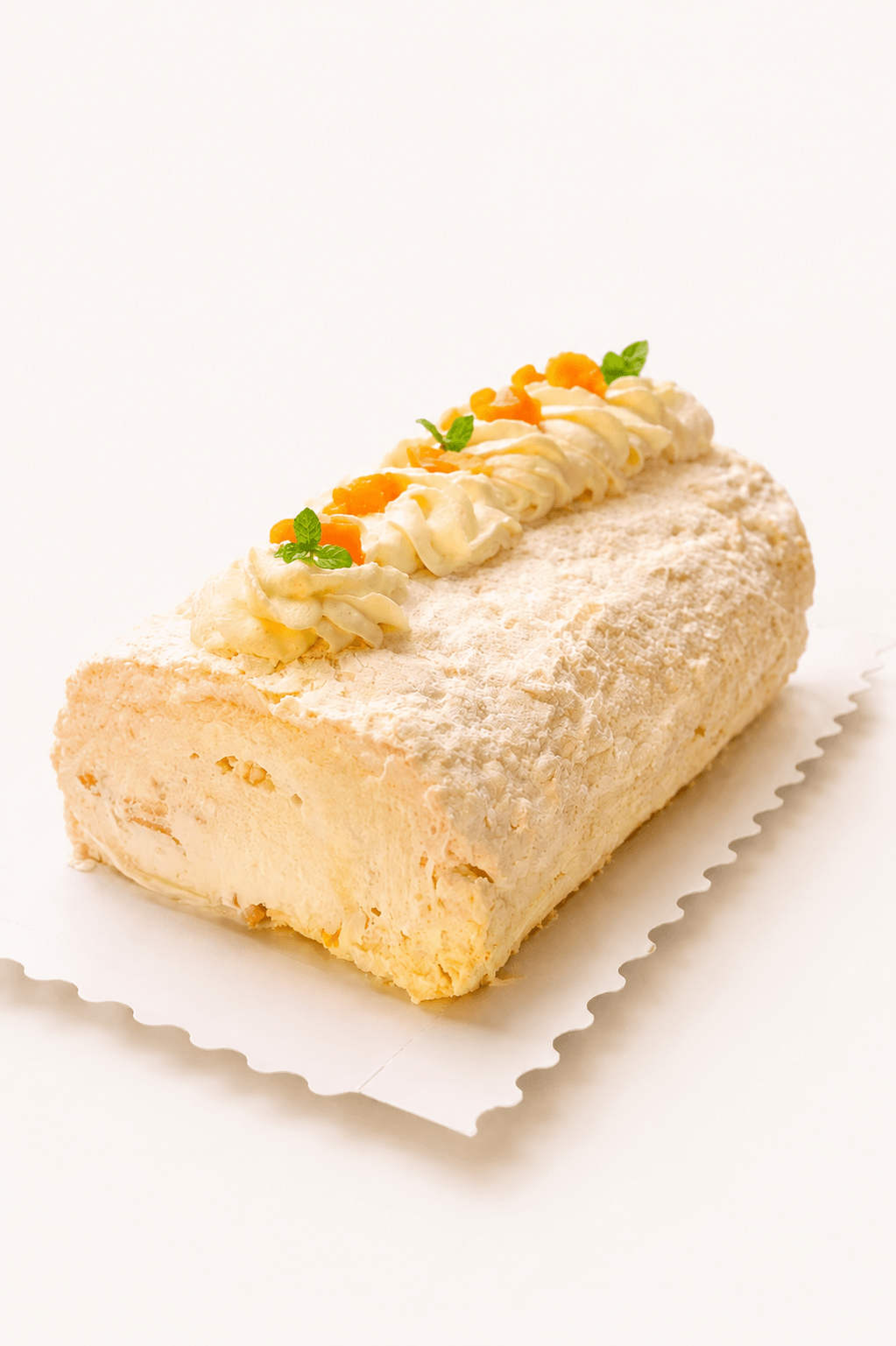
Egg white and sugar is two ingredients. What you can do with them is not two things, and the four cakes in our range built on meringue could not be mistaken for one another on a plate.
If you have looked at the list and could not tell why one is £60 and another is £102, or why one is gluten free and the next is not, this is the article that sorts it out.
The three kinds of meringue
Almost every meringue in the world is one of three.
French meringue is raw white whipped with sugar. It is the simplest, the least stable, and it has to go into the oven promptly. Dried slowly it gives a crisp shell with a soft interior, which is what a pavlova is.
Swiss meringue is white and sugar warmed together over water until the sugar dissolves, then whipped. It is denser, glossier and much more stable, and it holds a shape for piping and torching.
Italian meringue is whipped white with boiling sugar syrup poured into it. It is the most stable of the three and effectively cooked, which is why it is what you find in a lemon meringue tart and in the creams of several Italian cakes.
Which one a baker chooses decides almost everything about the finished cake.
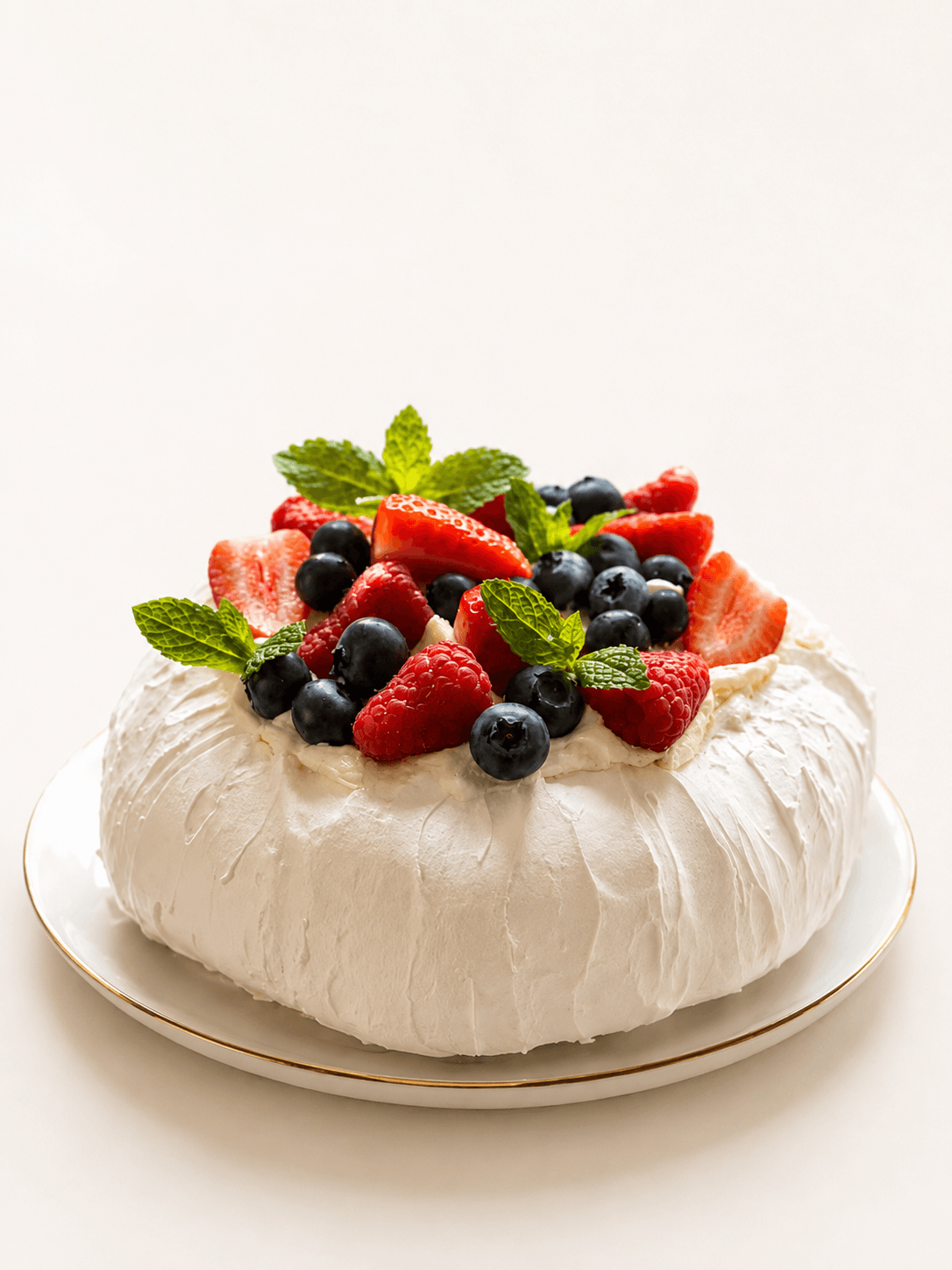
Pavlova: the crisp shell
A pavlova is French meringue dried low and long, so that a crust forms on the outside while the inside stays soft and faintly chewy, somewhere between marshmallow and foam. It is then covered in whipped cream and fruit and eaten within hours, because cream against meringue is a clock.
The argument about whether it is Australian or from New Zealand has been going since the 1920s and is not going to be settled here. What matters for ordering is the timing. A pavlova is not a cake you make on Tuesday for Thursday, which is why it moves in and out of availability on the site with the fruit rather than sitting there all year.
Kyiv cake: meringue with nuts through it
The Kyiv cake takes the same idea and makes it structural. Whipped white, sugar, chopped hazelnuts and a little flour, spread into discs and dried until crisp, then layered with a heavy Charlotte buttercream.
The nuts are what let a meringue disc survive being sandwiched with butter. Left plain it would either dissolve or shatter. Broken up with nuts it goes soft at the edges and stays crisp in the middle, which is the texture people remember from childhood and try to describe unsuccessfully.
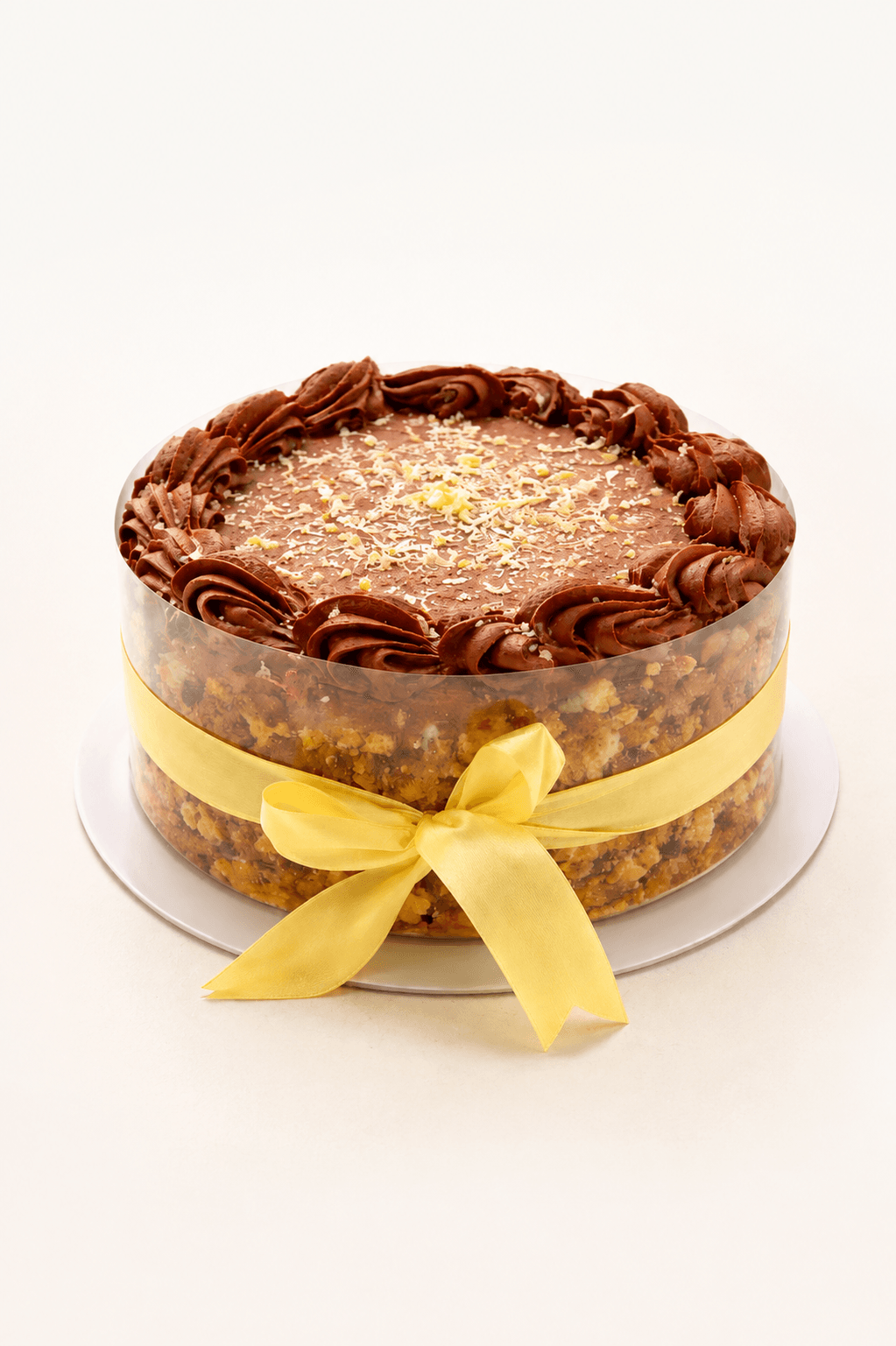 Kyiv Cake (18 cm)Kyiv cake, also spelled Kiev cake. Hazelnut meringue layers, buttercream and chocolate, 18 cm.£84Order this
Esterházy: meringue instead of flour
Esterházy takes the nut meringue idea and removes the flour entirely. Five thin layers of almond meringue, buttercream between them, and the feathered white and chocolate pattern on top that every Esterházy in the world wears.
Because there is no flour, it is gluten free without being a gluten free version of anything, which is a real distinction. It was not adapted. It was built this way in Budapest in the nineteenth century, and the coeliac who orders it is getting the original recipe rather than a compromise.
It is the one we point people to when somebody at the table cannot eat wheat, and it is the only cake on the list where that is true without qualification.
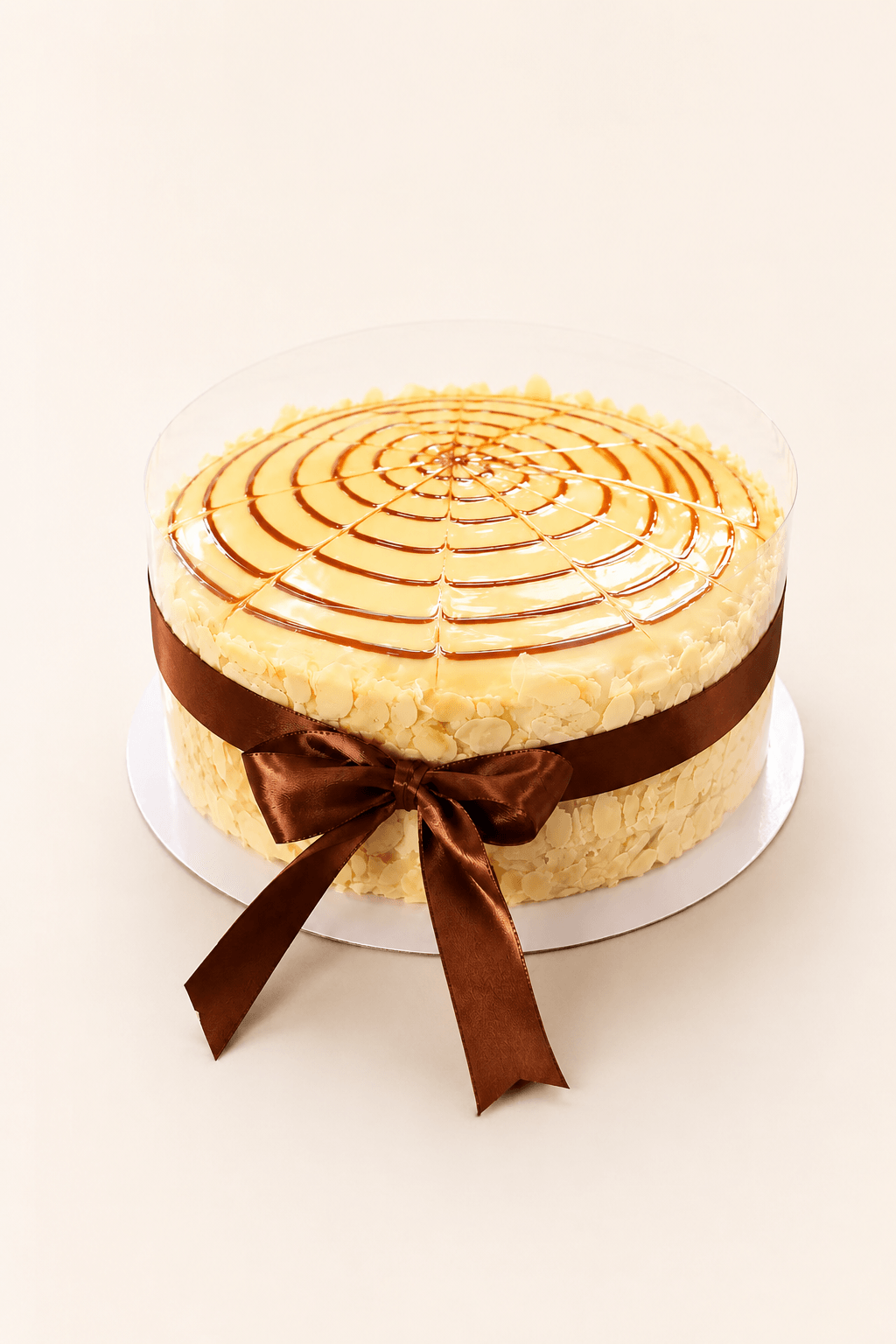 Esterházy CakeEsterházy cake, 18 cm and gluten free. Almond meringue layers with buttercream and the traditional feathered icing.£76Order this
The meringue roll and the vanilla meringue cake
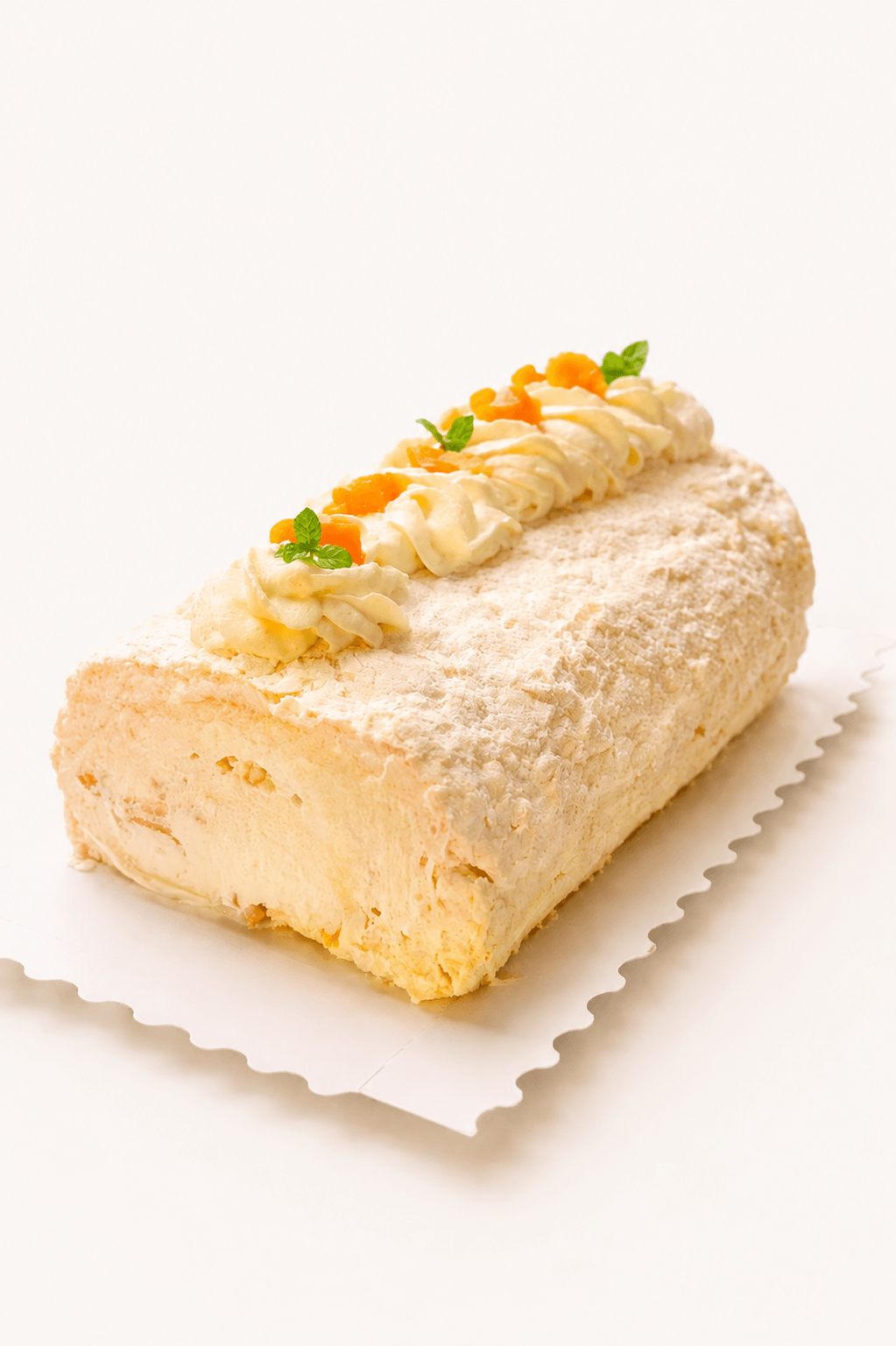
The meringue roll is the outlier. Chocolate meringue baked as a sheet rather than as discs, still flexible when it comes out of the oven, spread with cream and fresh berries and rolled by hand while it is warm enough to bend. It cracks along the top as it rolls, and those cracks are the sign it was rolled rather than assembled.
The vanilla meringue cake, which we also call the Cipriani, is the most labour intensive thing we make and the most expensive cake on the list. Delicate sponge, meringue and a silky cream built in fine layers, worked in the Italian style. The price is not a positioning decision. It is hours.
How to choose
If somebody at the table cannot eat gluten, order the Esterházy.
If you want the crunch of childhood and the table can eat nuts, order the Kyiv cake.
If you want something light after a heavy meal and you want fruit in it, the meringue roll, or the pavlova when it is available.
If the occasion is the point and you want the most refined thing we can put on a table, the vanilla meringue cake.
What meringue cakes need from you
Two things, and they are not negotiable.
Keep them cold and boxed until an hour or so before, but do not leave them uncovered in the fridge. Meringue takes on moisture from the air and goes from crisp to tacky faster than you would believe.
And cut them with a serrated knife, gently, sawing rather than pressing. Pressing down on a meringue layer with a straight blade shatters it and pushes the cream out of the sides.
Why meringue cakes are rarely sold ready made
Look at the display in almost any London cake shop and you will find sponge, cheesecake, tarts, brownies, and very little meringue. There is a reason, and it is humidity.
Meringue is hygroscopic, which means it pulls water out of the air. A meringue disc left uncovered in a normal kitchen goes from crisp to tacky in hours and from tacky to soft overnight, and a chilled display cabinet is a humid environment by design.
That gives a shop two bad options. Keep meringue cakes sealed, which means not displaying them, or accept that the ones at the front of the case are deteriorating while they sit there.
The trade solves this by not stocking them, or by stocking versions built so the meringue is protected by cream on every surface, which changes the eating.
Made to order sidesteps the problem entirely. A meringue cake assembled for your date has spent its life in a box, and the crispness you are paying for is still in it when it arrives. It is also why we are strict about telling you to keep them covered and to eat them within a day or two.
Common questions
Which of your meringue cakes is gluten free?
Esterházy, which is made with almond meringue and no flour at all. The pavlova is also flourless. The Kyiv cake, the meringue roll and the vanilla meringue cake all contain some wheat.
Which contain nuts?
Kyiv, which is built on hazelnut meringue, and Esterházy, which is built on almond. The meringue roll and the vanilla meringue cake do not.
How long will a meringue cake keep?
Less time than a layer cake. Two days is the honest answer for the Kyiv and the Esterházy, and a pavlova or a meringue roll wants to be eaten the day it arrives or the day after.
Why is the vanilla meringue cake so much more expensive?
Hours of work, and a high proportion of them at a stage where there is no way to speed anything up. It is the most demanding thing in the range to make.
Can I order one for the same day?
No. Everything needs 48 hours, and meringue in particular needs its drying time.
Ordering in London
All of these are baked to order in Belgravia and delivered across London and Surrey. £12 in central London, £15 elsewhere, £50 minimum order, 48 hours notice.
Order it for the date you need
Everything here is baked to order for your date.
48 hours notice, 72 for bread. Delivered across London and Surrey.