
· 5 min read
Tarts and Tartlets for Delivery
A tart and a cake do different jobs at a table. The difference is mostly about how they get served and who has to do the serving.
A tart is not simply a flatter cake. It behaves differently on a table, it gets served differently, and it suits a different kind of evening. The choice between them is less about flavour than most people assume.
What a tart does that a cake does not
It is shallow, so a portion is smaller. A slice of tart is a modest thing next to a slice of layer cake, which makes it right at the end of a meal where a full slice of cake would be too much.
The base is crisp, which changes the eating. A layer cake is soft all the way through. A tart has a short pastry base that gives resistance under a soft filling, and that contrast is much of the pleasure.
It looks finished. A cake is finished by whoever cuts it, and it can be cut badly. A tart arrives looking exactly as it will look on the table, and the top surface is the whole design.
It is usually sharper. Most tarts are built around fruit or curd rather than cream and sponge, so they read as fresher and less sweet.
It does not keep as well. A crisp base under a wet filling is a race, and it is being lost from the moment the tart is assembled.
What we make
Lemon meringue tart, 18 cm, £40. Sweet pastry baked blind, sharp lemon curd, meringue piped over and torched so the peaks catch. The curd is deliberately sour, because once meringue is on top there is nothing else to balance it. This is the best thing on our list for after a rich dinner.
Lemon tartlets, six pieces, £30. The same curd and the same torched meringue in individual cases.
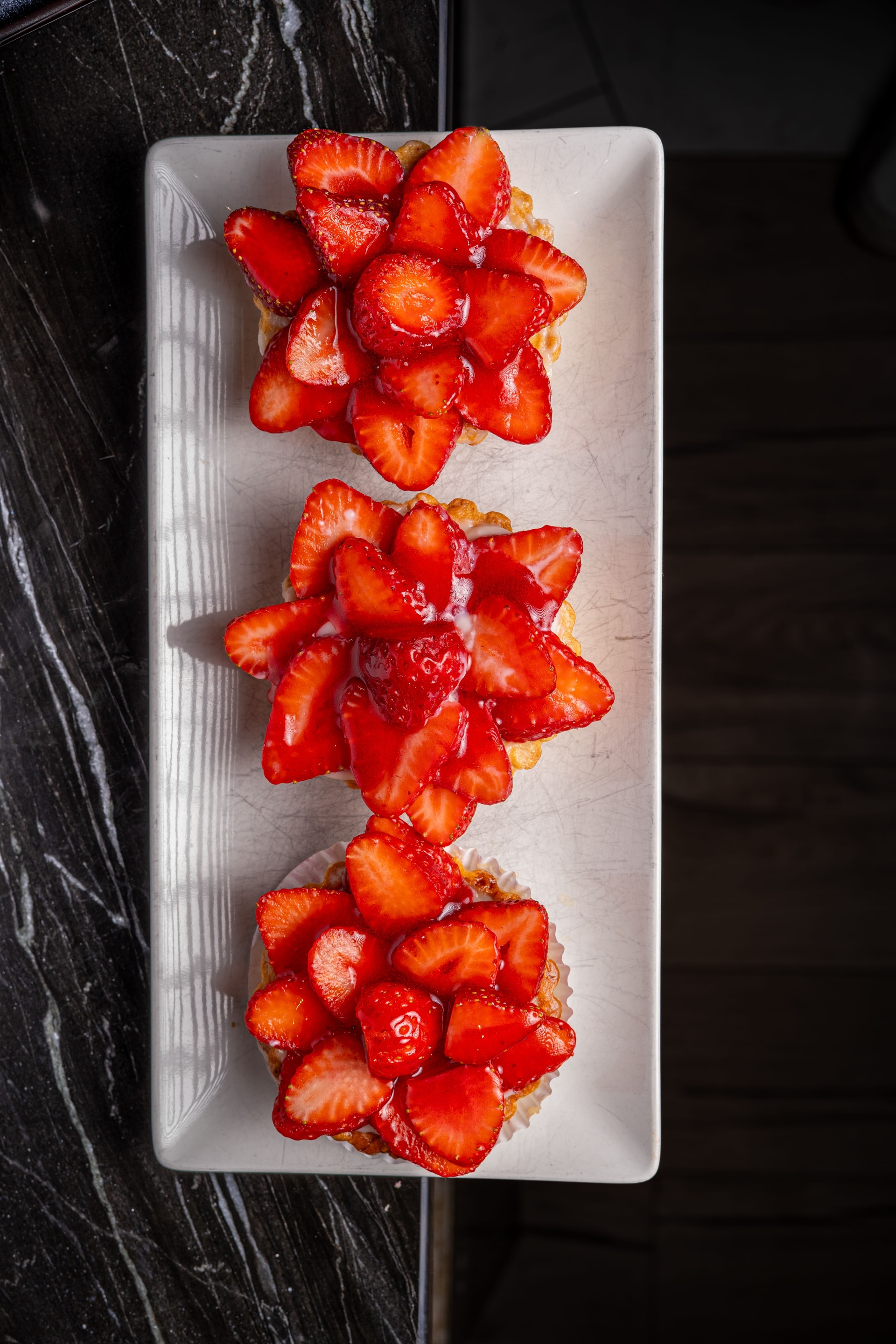
Strawberry tart, £51. Sweet pastry, cream, fresh strawberries over the top. Made only while the fruit is worth eating, which means it disappears from the site for part of the year rather than being made with whatever is available.
Alongside them there are things that sit close to the tart family without quite being tarts. The tvorog and apricot pie at £40 is 25 cm, which makes it one of the largest things we make and the best value on the site for feeding a crowd. It uses fresh curd cheese, so it is lighter and tangier than a cheesecake. The apple pie at £40 is 20 cm with a flaky crust and cinnamon spiced fruit. The gluten free peach pie at £46 is made without added sugar or lactose either.
Whole or individual
This is the decision people get wrong, and it has nothing to do with taste.
Choose individual tartlets when nobody is going to serve. At a standing party, a buffet, an office table or a dessert table, a whole tart needs a person with a knife who is willing to be the first to cut into it. In practice that person cuts four slices badly and the rest sits there looking damaged. Six tartlets need nobody.
Choose individual when portions matter. Everybody gets the same amount with the same quantity of meringue on it, and no one has to judge how much to take. At a dinner where you are plating dessert, this saves a small amount of stress at exactly the point in the evening when you have least attention to spare.
Choose a whole tart when it is the centrepiece. A tart brought to a table whole and cut in front of people is an event. Six tartlets on a plate are lovely and they are not a moment.
Choose a whole tart when there are more than eight people. Six tartlets do not stretch, and ordering two boxes to feed ten costs more than one tart that feeds ten.
Getting a tart to a table intact
Tarts travel less happily than cakes, and there are a few things worth knowing.
Keep it flat and keep it cold. A tart on a slope in a warm car is a tart with the filling at one end.
Take it out of the fridge twenty minutes before serving, and no longer. Cold mutes the lemon badly, and warm makes a curd loosen.
Cut with a sharp knife, pressed straight down through the pastry rather than sawed. Sawing drags the base and the slice arrives in two pieces with the filling between them.
Wipe the blade between slices if it is the lemon meringue, or the meringue smears across the next cut and it stops looking like anything.
Serve it the day it arrives. This is the main practical difference from a cake. The meringue on the lemon tart begins to weep after about a day, and the pastry under any of them softens overnight. They are still perfectly edible on day two and they are not what they were.
When to choose a cake instead
If you need it to last several days, choose a cake. Napoleon and Prague both hold for three days without deteriorating and a tart will not.
If it is a birthday with candles, choose a cake. Candles in a tart look like a mistake.
If you are feeding more than about fourteen people from one item, choose a cake. Tarts do not scale as gracefully.
If it is going to sit on a table for an entire afternoon, choose a cake, and choose a firm one.
Ordering
Everything needs 48 hours notice, and for tarts we would suggest ordering for the day you plan to serve them rather than the day before, which is the reverse of our usual advice.
Delivery is £12 within SW3 and £15 across the rest of London and Surrey, covering all London postcodes and much of Surrey, Kent and the Home Counties. There is a £50 minimum order, so a box of tartlets usually travels with something else.
Seasonal items come off the site when the fruit stops being good. If the strawberry tart is not listed, that is the reason, and it will return.
Order it for the date you need
Everything here is baked to order for your date.
48 hours notice, 72 for bread. Delivered across London and Surrey.