
· 7 min read
Where to Buy Jagodzianki in London
Three ways to get Polish blueberry buns in London, what each one costs you, and how to tell a bun filled with fruit from one filled with jam before you hand over the money.
There are three realistic ways to get jagodzianki in London: a Polish deli, a bakery that makes them as a summer sideline, or ordering them baked to order for a date you choose. Each one gives you something and takes something away. This is a guide to which is which, written by someone who bakes the third kind and is happy to tell you when the first is the better answer.
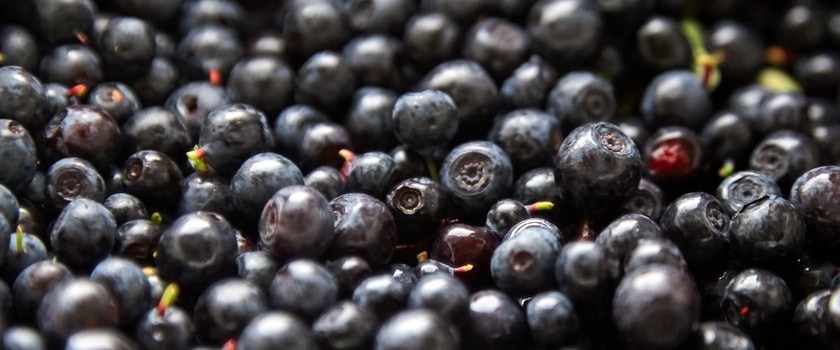
First, the thing that decides everything else. A jagodzianka is a sweet enriched yeast bun wrapped around wild blueberries, usually under a crumble topping called kruszonka. The name comes from jagody, and specifically czarna jagoda, the bilberry, Vaccinium myrtillus. That is not the cultivated highbush blueberry sold in plastic punnets. Bilberries are smaller, darker, purple all the way through instead of pale green inside, and much sharper. They stain. The purple bleeding into the crumb of a proper jagodzianka is the fruit doing that, not colouring.
They are picked in Polish forests in July and August, and that is when the buns are made. Poles will tell you, correctly, that a jagodzianka sold in February is not the real thing. Bakeries in Poland compete over them in season and magazines publish annual rankings. So the honest first answer to where to buy them in London is: in the last week of June, watch for signs going up in Polish shops, and buy in July.
Polish delis, and where the shops actually are
A Polish grocer is the cheapest route by a wide margin and, in the right week, the most authentic. The buns usually come in from a supplier bakery, arrive in the morning, and sit in a basket or a plastic tray by the till. In season some shops sell out by lunchtime.
Where to look. West London has the largest concentration: Ealing has been the centre of Polish London since the 1940s, and Acton, Hammersmith and Chiswick all carry it on. King Street in Hammersmith has the Polish Social and Cultural Centre, which has a shop and a restaurant attached and is a sensible starting point if you have never bought Polish food in London before. South London has clusters around Balham, Streatham and Tooting. East and north east, look at Leyton, Walthamstow, Edmonton and Enfield. Beyond the boundary, Slough and Reading have large Polish populations and the shops that go with them.
What you give up is control. You cannot order twelve for Saturday morning. You cannot ask for less sugar in the crumb. You are buying what arrived that day, and if the delivery was Tuesday and it is now Thursday, an enriched dough bun is past its best. Buy on the day they arrive and ask the person behind the counter which day that is. They will know.
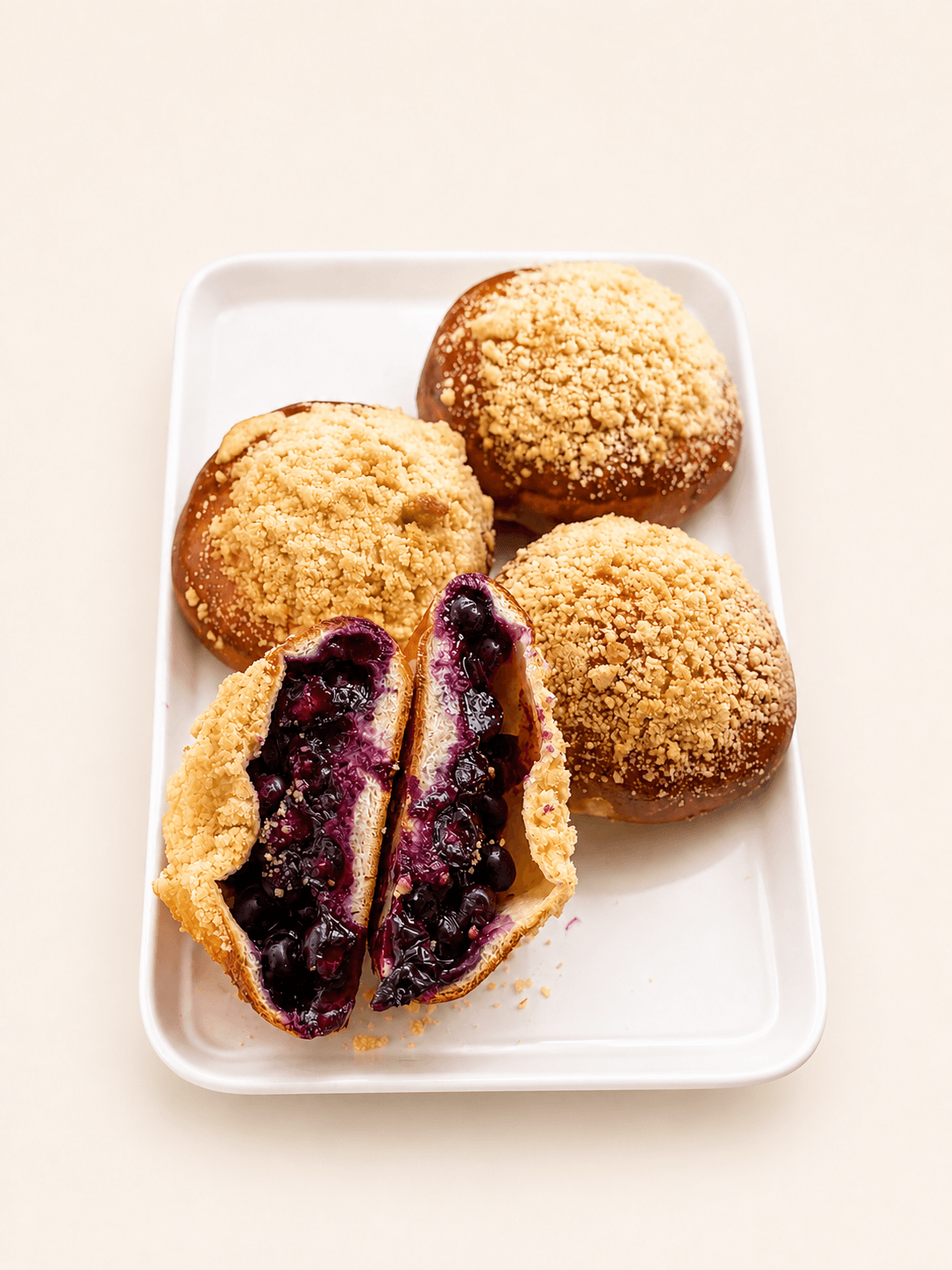 Blueberry Streusel Buns (Jagodzianki)Jagodzianki, Polish blueberry buns, four to a box. Soft enriched dough, blueberry filling, buttery streusel.£42Order this
The jam problem, and how to tell before you pay
Here is the part most guides leave out. A large share of the blueberry buns sold in London, including some sold in Polish shops, are filled with jam or a bake stable fruit filling rather than whole berries. There are ordinary commercial reasons for this. Frozen bilberries are expensive and hard to source in quantity. Whole fruit releases water in the oven, splits the dough and leaks out of the base. Jam behaves. It holds its shape, it costs less, and it will still be recognisably purple on Thursday.
A jam bun is not a scandal. It is simply a different thing, and it should cost less than one filled with fruit. The problem is only that it is rarely labelled as such.
How to check before you buy:
- Look at the base. Whole fruit weeps. A bun made with real berries usually has a faint purple bruise where the fruit has touched the dough, and sometimes a small sticky patch on the paper underneath. A jam bun tends to have a clean, dry bottom.
- Look at the crumb through the split, if there is one. Berries leave discrete dark shapes with skins. Jam leaves an even, glossy, uniform mass.
- Feel the weight. A bun filled with fruit is noticeably heavier than one of the same size filled with jam or, worse, mostly dough.
- Ask. In a Polish shop, ask whether it is z jagodami or z dżemem. The question is understood immediately and answered honestly in my experience.
A related tell is the crumble. Proper kruszonka is made from butter, flour and sugar rubbed together into uneven lumps, some the size of a pea. If the topping is a fine, even sand that never varies from bun to bun, it came out of a bag.
Bakeries that make them for a few weeks a year
The second route is a bakery that adds them to the counter in July. This can be very good. It can also be a blueberry muffin in bun form. The variables are the dough and the fruit, in that order. Enriched dough with eggs, butter and milk, proved properly and not rushed, gives you a bun that pulls apart in strands and stays soft the next morning. Dough pushed through in three hours gives you something dry by teatime.
The cost of this route is timing. You are buying whatever is on the shelf at the hour you walk in, which is fine for one bun with coffee and no use at all if you need a dozen for a christening on Sunday. Shelf stock also means the bun was baked to survive a day of sitting out, and that changes the recipe: more sugar in the dough, firmer filling, heavier glaze.
Baked to order, and what we make
The third route is ordering. Our Blueberry Streusel Buns come four to a box at £36, and we need 24 hours' notice. They are made from eggs, sugar, salt, yeast, flour and milk, filled with blueberries and finished with a buttery streusel crust, which is kruszonka under its German name. They contain eggs and milk, and the kitchen also handles sulphites, lupin and molluscs. In Russian they are булочки с черникой и штрейзелем.
I will be straight about what they are and are not. We use blueberries, not forest picked bilberries, because bilberries are not a commercial crop in Britain. The bushes are low and the picking is too slow to pay, which is why Britain has bilberry pies in Yorkshire and Wales and no bilberry industry. The same berry grows here on moorland in July and August, called whinberry or wimberry in Wales and blaeberry in Scotland, and it is worth eating if you are ever on a moor at the right time with an afternoon spare. Our buns are made in the jagodzianka tradition with the fruit that can actually be bought. They are not sold as the Polish original, and anyone who grew up on the real thing will taste the difference in sharpness straight away.
What ordering buys you is timing and freshness. Nothing is baked until there is an order for it, and the buns go out on the day they come out of the oven. If you want them warm on a Sunday morning for eight people, that is two boxes ordered by Saturday morning. They keep well until the following day in a paper bag, not plastic, and a few seconds in a warm oven brings them back. Serve them the Polish way, with a glass of cold kefir or maślanka. The sharp dairy against the sweet crumb is the whole point of the pairing.
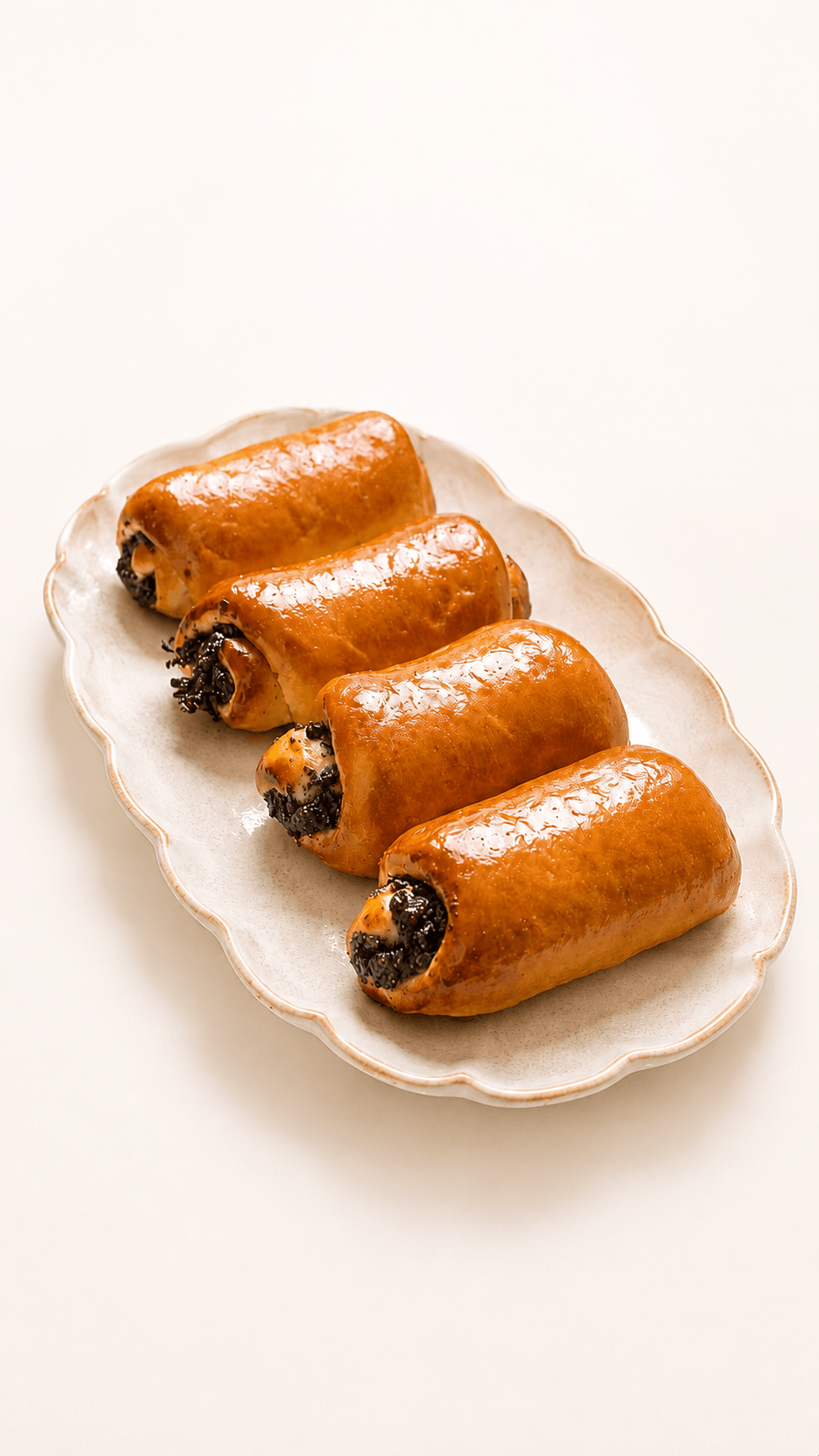
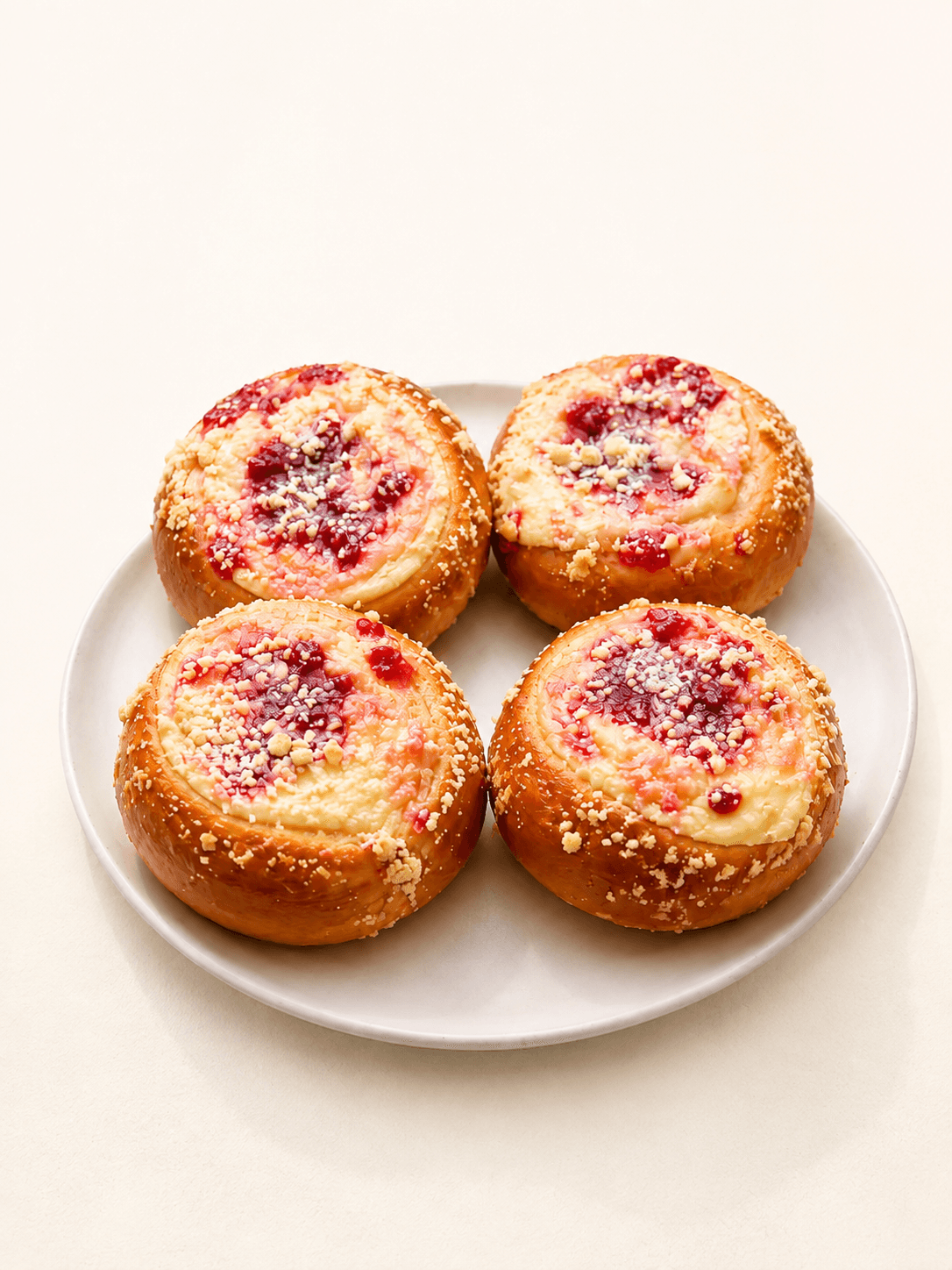
Delivery covers London and Surrey, with areas and costs set out on the delivery page. If you are adding to an order, the buns sit alongside the rest of the yeasted things in the collection on our cakes page, including poppy seed buns, strawberry vatrushki and cinnamon rolls, all under the buns section at /cakes?category=buns. Note the lead times differ: the blueberry buns need 24 hours, most cakes need 48.
So, the short version. In July, walk into a Polish shop in Ealing or Balham in the morning and buy jagodzianki made with forest fruit, which is the version to eat if you can get it. The rest of the year, or when you need a set number on a set day, order. Ours are £36 for four with a day's notice, by email to info@mikebakes.uk or by phone on +44 7922 122149, Monday to Saturday.
Order it for the date you need
Everything here is baked to order for your date.
48 hours notice, 72 for bread. Delivered across London and Surrey.