
· 6 min read
Classic Russian Desserts You Can Find in London
Most of these were invented in state factories and restaurants between the 1950s and the 1970s, which is a stranger origin story than most cakes have.
Most famous desserts come from somewhere specific and vague at the same time. A region, a tradition, a family recipe passed down.
The classic Russian desserts are unusual because a good number of them have a documented inventor, a date and an address. They were developed in state confectionery factories and restaurant kitchens between the 1950s and the 1970s, often with a specific brief, and in some cases they were patented.
That is a strange origin story for a cake, and it is why these particular desserts are so uniform across an enormous geography. Everybody from Tallinn to Vladivostok ate the same Bird's Milk, because it came from the same recipe.
Ptichye Moloko, Bird's Milk
The clearest case. It was developed at the Praga restaurant in Moscow in 1978 by a team under Vladimir Guralnik, and it received a patent, which almost no cake ever has.
The name comes from a Russian expression. Bird's milk meant something so rare and desirable it could not exist, and the phrase was used for anything unobtainable.
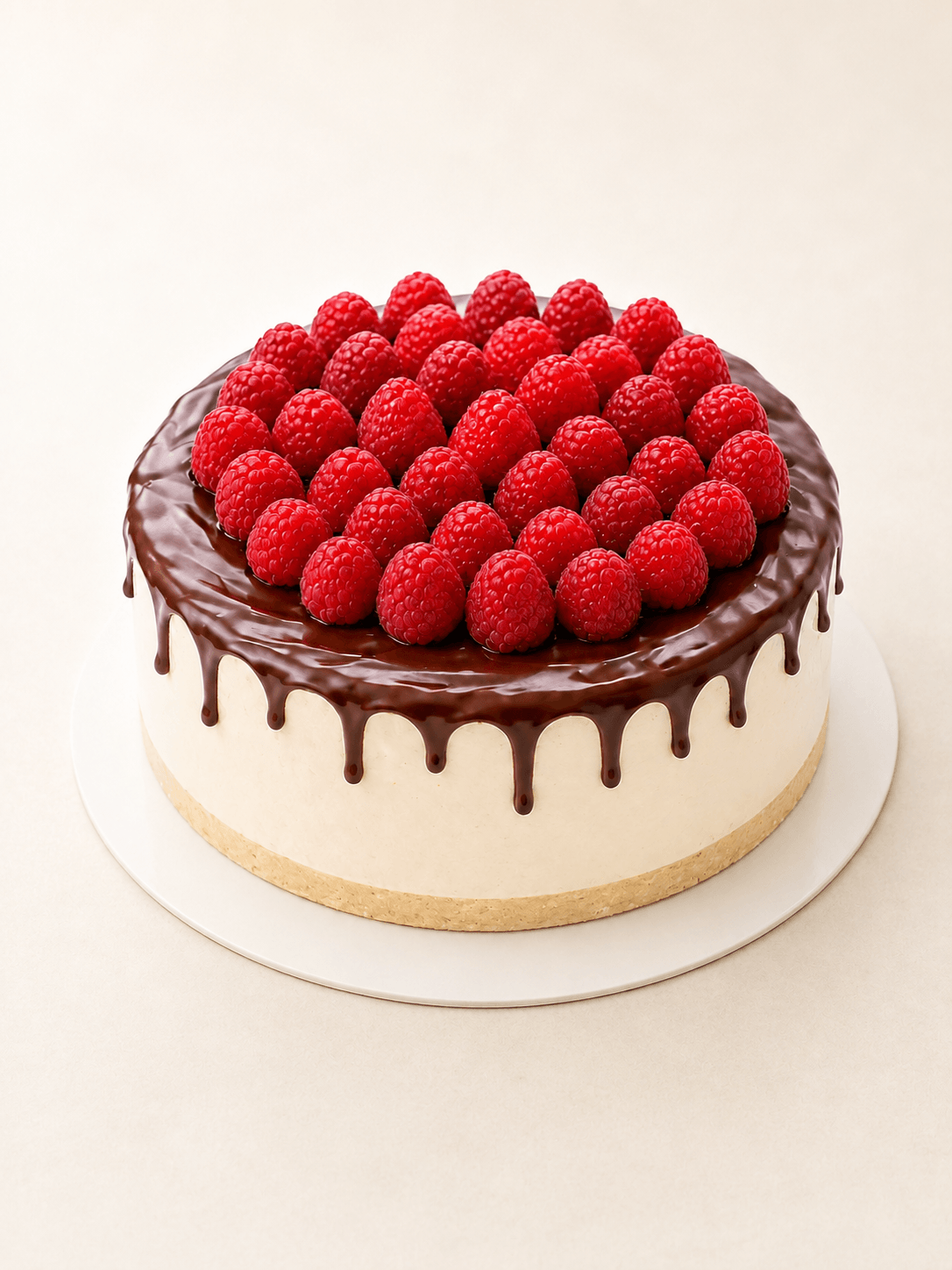
The cake is a thin sponge base carrying a thick set soufflé layer, poured over with dark chocolate that sets into a shell. The soufflé is the achievement. It is stabilised with agar rather than gelatine, which is what allows it to be set firm and still eat lightly, and getting it right at scale was reportedly the difficult part.
Queues for it at the Praga ran around the building. People bought them as gifts, and being able to produce one at a table meant something.
Ours is 18 cm at £78, with fresh berries alongside the chocolate.
Kyiv cake
Created in 1956 at the Karl Marx confectionery factory in Kyiv, and the story attached to it is that it began as an accident. A batch of egg whites was left out overnight, somebody decided to bake them rather than waste them, and the resulting meringue turned out to be the basis of something.
Whether or not that is true, the cake became Ukraine's most recognisable dessert. Two hazelnut meringue discs, baked slowly until dry, sandwiched with buttercream.
For decades it was the standard thing to carry home from Kyiv, and boxes of it travelled in hand luggage across the Soviet Union because you genuinely could not get it elsewhere.
18 cm, £80.
Prague cake
Also from the Praga restaurant in Moscow, and also credited to Guralnik, in the 1970s.
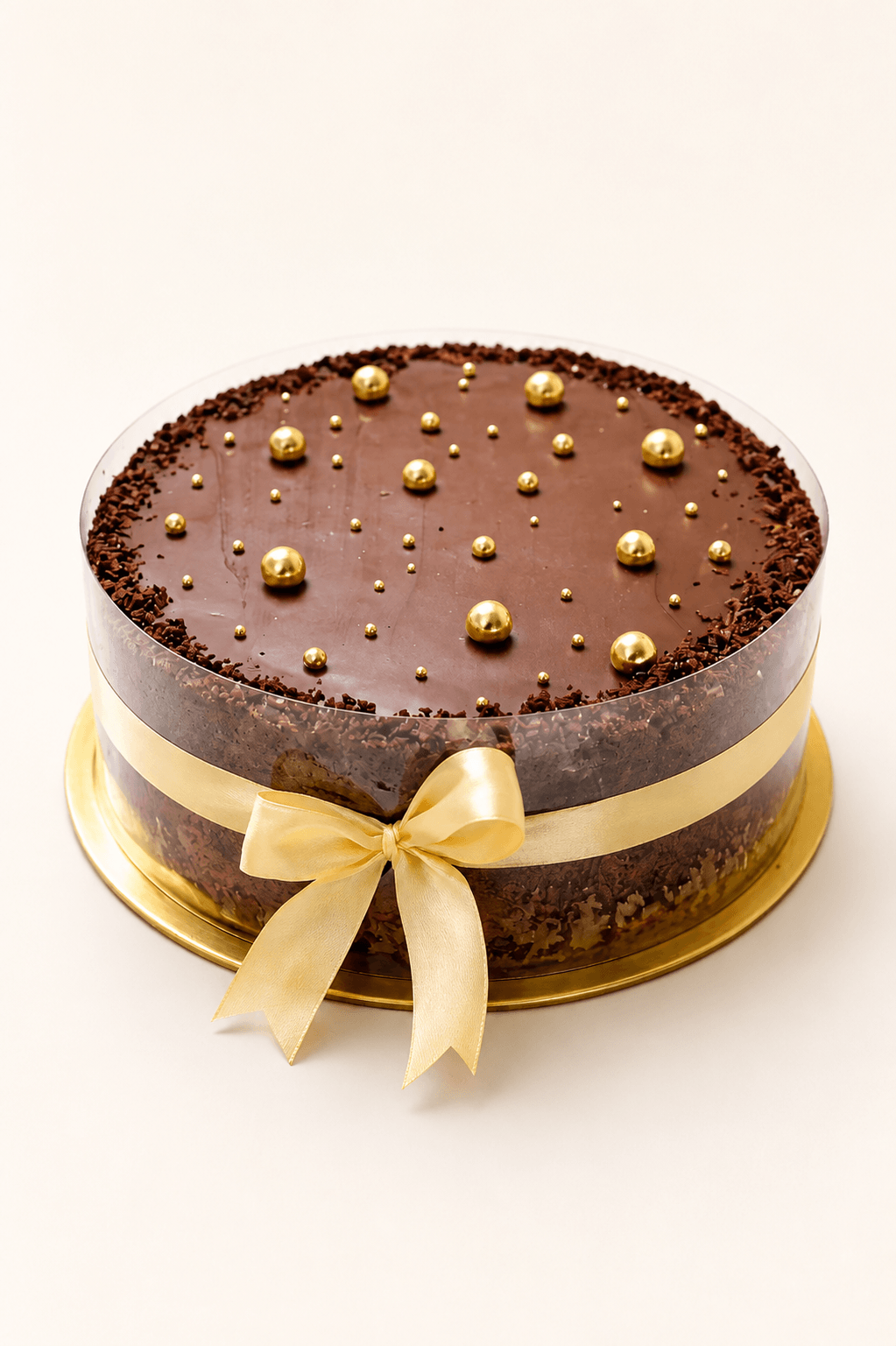
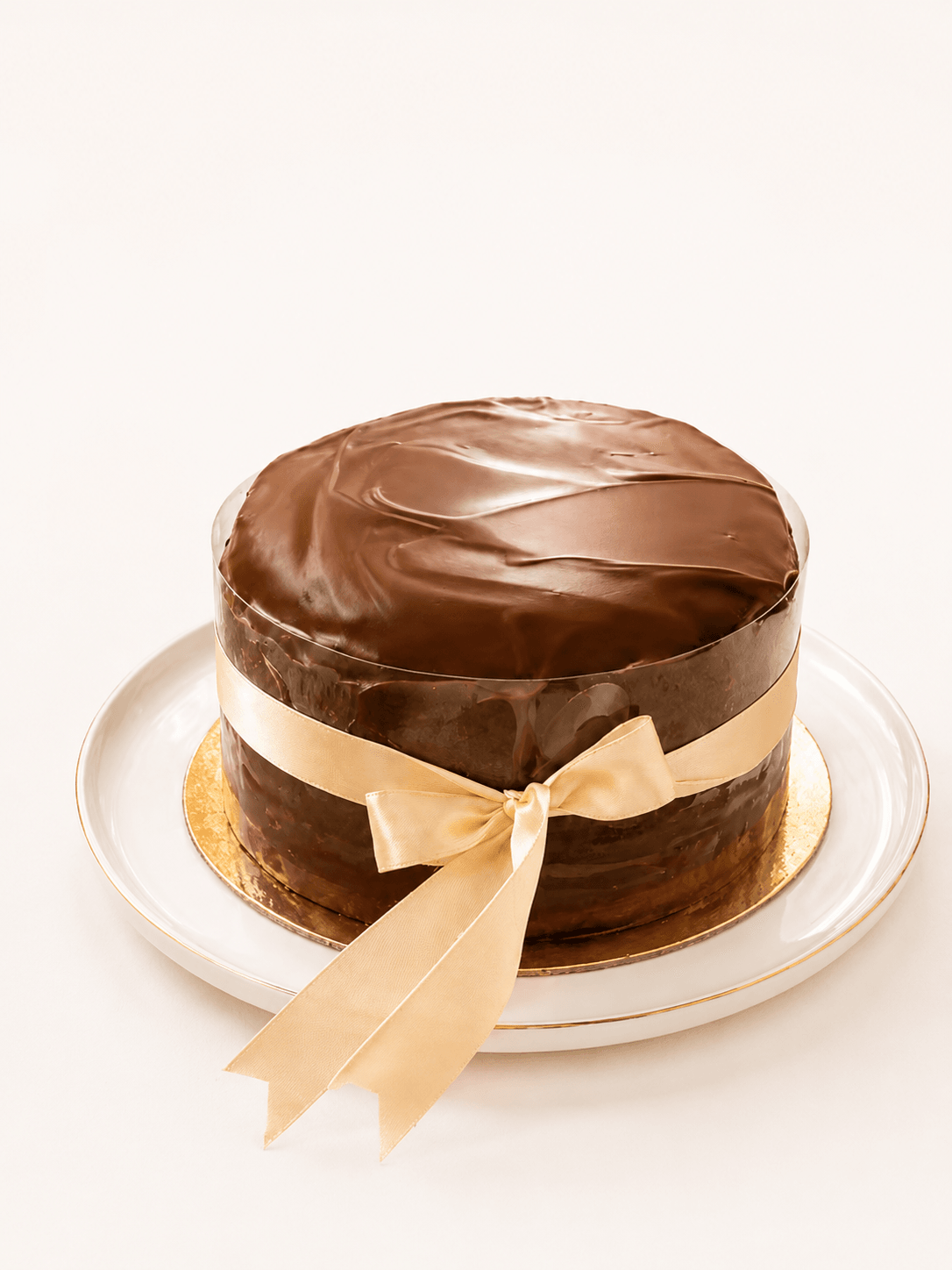
It was loosely modelled on Sachertorte, which Guralnik is said to have studied on a trip to Czechoslovakia, and it then went in its own direction. Three layers of cocoa sponge soaked in syrup, chocolate cream between, apricot jam under a poured chocolate glaze.
Despite the name it is a Moscow cake through and through. Ask for a Prague cake in Prague and you will get a confused answer.
18 cm, £75.
Charodeyka
The Enchantress, from the 1970s, and the one that was genuinely everywhere.
Airy sponge, soft custard cream, chocolate glaze. There is nothing clever in it, and it was a shop cake rather than a home cake, which is exactly why people are fond of it. It was what you bought on the way somewhere.
At £50 it is the least expensive cake we make, which feels appropriate.
Kartoshka
Older than the others and the least glamorous, which is the point.
Cake crumb, butter, cocoa and condensed milk worked into a paste, rolled into small ovals and dusted in cocoa to look like potatoes. No baking at all.
It began as a way of using yesterday's sponge, which is why every bakery made them and why they carry a faint air of thrift. Dense, very sweet, very rich. Six for £24.
Oreshki
Not a factory invention. These are home baking, and almost every household across the Soviet Union had the hinged iron press that makes them.
Shortbread shells shaped like walnut halves, filled with boiled condensed milk and joined into whole walnuts. The press makes two at a time, so twenty finished oreshki is forty pressings, one pair after another.
Of everything we make, these are the ones that get the strongest reaction from people who grew up with them. Twenty for £40, and there is a chocolate filled version at the same price.
Medovik
Much older than the rest, and the one with a proper legend attached. It is said to have been made for the wife of Alexander I in the early nineteenth century by a cook who did not know she disliked honey, and to have won her over on the first slice.
It became a Soviet home baking staple for practical reasons. Honey, flour, eggs, soda, butter and soured cream were all reliably available when a great many things were not.
Eight thin layers, soured cream kept sharp, rested overnight. 18 cm, £68.
Why they are hard to find here
London has Russian and Ukrainian delis, and a few of them carry one or two of these, usually made off site and often not very well.
The reason is that none of them suit a shop counter. Medovik and Napoleon need an overnight rest before they are worth selling. Bird's Milk needs its soufflé set properly and does not hold indefinitely. Oreshki are impossibly slow for what they sell for. A bakery deciding what to put in a window will not choose any of this.
We bake to order rather than to a display case, which is the only reason we can carry all of them at once.
The ones people ask for that we do not make
Worth saying plainly, because we are asked regularly.
We do not make Napoleon in the crisp French style, only the soft Eastern European one. We do not make tort Smetannik, the soured cream layer cake, though it comes up often and may one day. We do not make paskha or kulich outside Easter. And we do not make anything dairy free, because almost every dessert on this page is built on soured cream, buttercream or condensed milk, and a version without them would not be the thing you were asking for.
If there is something specific you grew up with and cannot find anywhere, send us a message describing it. Several things on our list are there because somebody asked.
Ordering
Everything needs 48 hours notice. Cakes are 18 cm and serve ten to twelve. Delivery is £12 within SW3 and £15 across the rest of London and Surrey, with a £50 minimum on orders.
If you are ordering for somebody who grew up with these, ask them which one their family had. The answer is usually specific, and getting it right lands very differently from getting it merely close.
Order it for the date you need
Everything here is baked to order for your date.
48 hours notice, 72 for bread. Delivered across London and Surrey.