
· 5 min read
Bread, and Why We Only Bake It on Wednesdays
Bread is the only thing we make on a fixed day, and the reason is that good bread and a day of cakes cannot share an oven or a schedule.
We bake bread on Wednesdays. Not on Tuesdays, not to order on a day that happens to suit, and not more often when demand goes up. Wednesdays.
This annoys a reasonable number of people and it is worth explaining, because the reason is not stubbornness.
Why one day
A sourdough loaf worth eating takes the better part of two days. The starter has to be fed and brought to peak activity, which is roughly twelve hours of watching something that cannot be hurried. The dough is mixed, rested, folded at intervals over several hours, shaped, and then given a long cold proof overnight. Only then does it bake.
None of that fits around a day of cakes. A medovik needs the oven at one temperature for short bursts, bread needs it very hot with steam, and the two want the bench space and the attention at the same time.
Trying to do both on the same day produces worse bread and worse cake. So bread gets a day, and everything else gets the rest of the week.
The fixed day also means the starter is on a predictable rhythm. A starter fed on an irregular schedule is a less reliable starter, and a less reliable starter makes less consistent bread.
What that means for ordering
Bread needs 72 hours notice rather than 48, and it can only be delivered on a Wednesday.
In practice that means choosing a Wednesday delivery date at least three days from when you order. Order on a Saturday and Wednesday works. Order on a Monday and you are looking at the following Wednesday.
The loaf that arrives came out of the oven that morning.
The three loaves
All three are £15.
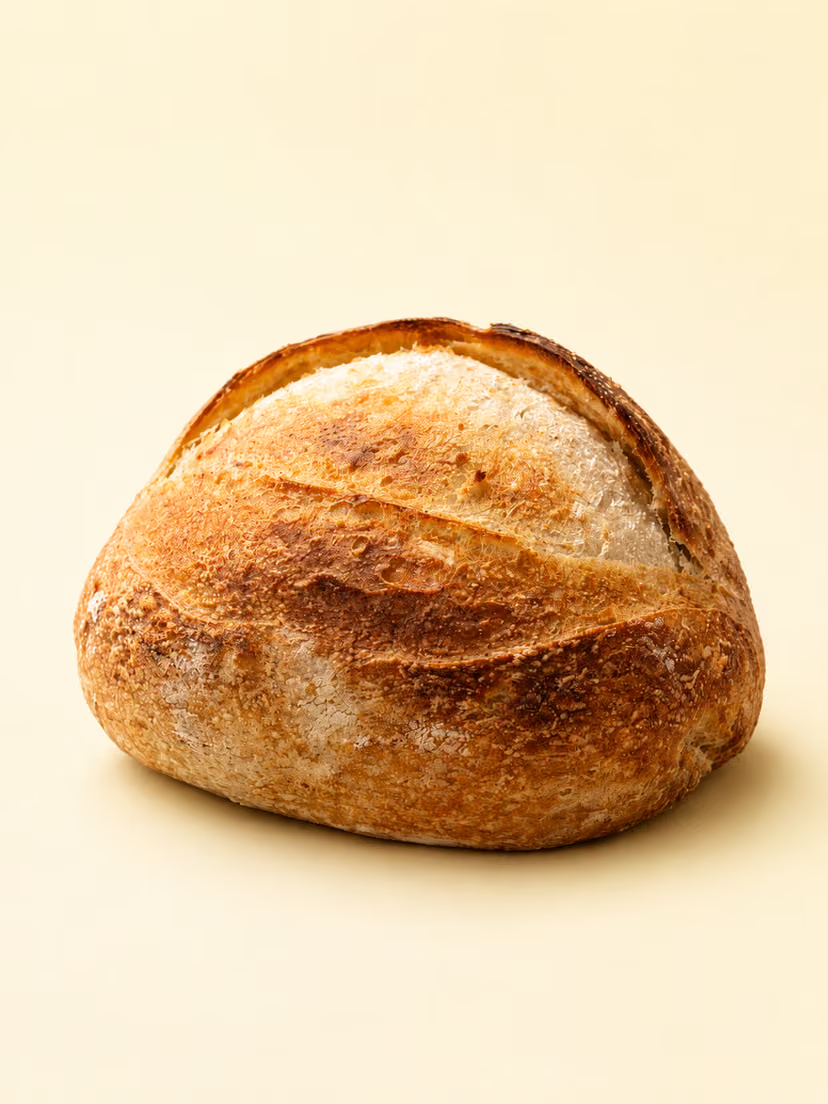
Sourdough. Our starter has been going for years and the dough is left overnight in the cold, which is what produces the open crumb and the mild sourness that a fast bread never develops. The crust is baked dark, deliberately. A pale crust means an underbaked loaf, and most of the flavour in a good sourdough is in the crust.
It is the loaf for toast, for a sandwich that has to hold something wet, and for eating with soup. It contains gluten only.
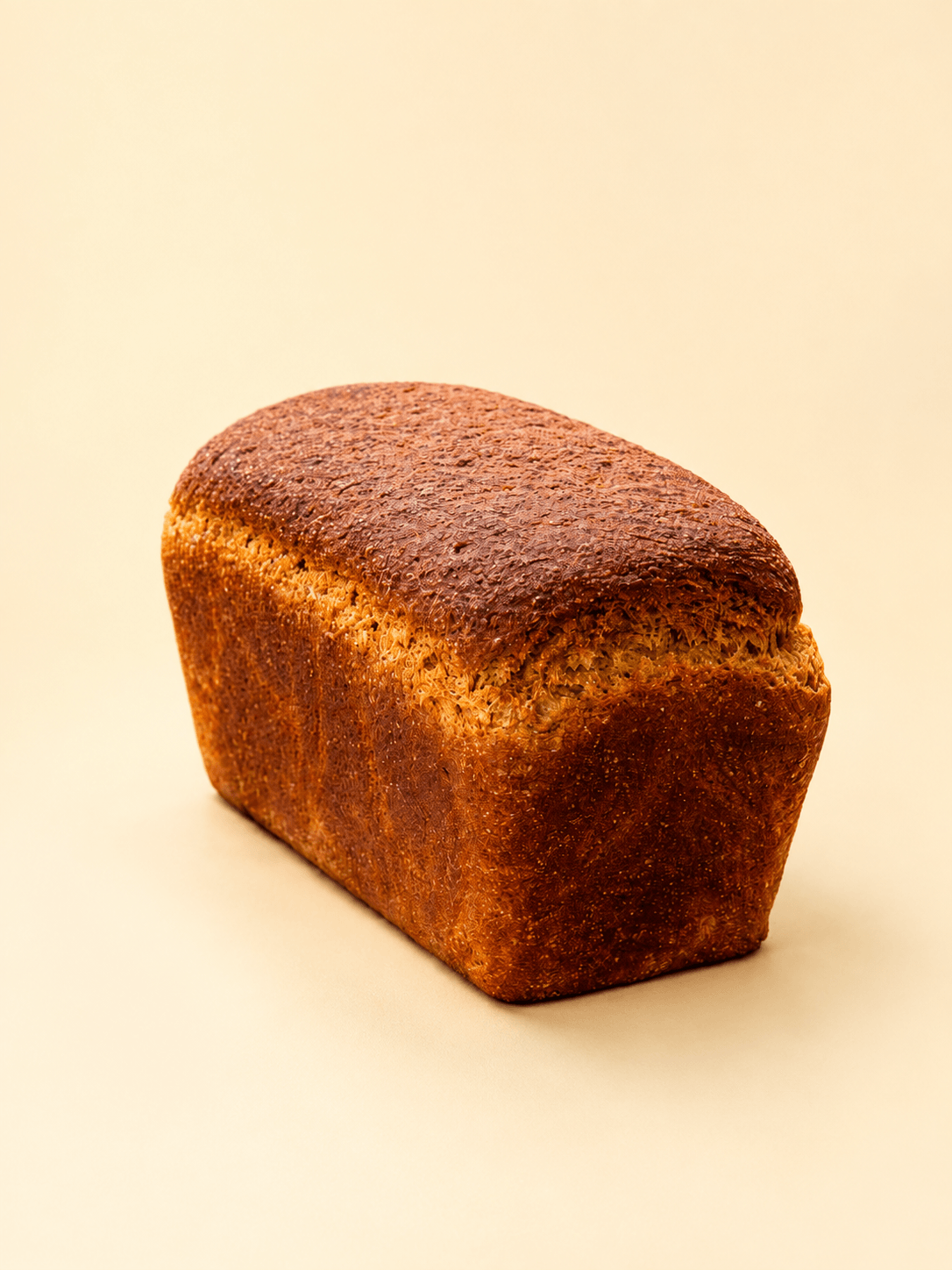
Rye. Nothing like a wheat loaf, and people expecting one are always briefly startled.
Rye is the everyday bread across Russia, Ukraine, Poland and the Baltics. It is dense, dark and close textured, with a sour depth that comes from the grain itself as much as from the starter. It does not rise like wheat bread and it is not supposed to.
Eat it in thin slices with butter rather than in thick ones as a sandwich. It is the bread for soup, for salted fish, for anything cured, and for the kind of open sandwich that is normal across the region and slightly baffling here.
It also keeps better than the other two. Three or four days is normal for a rye loaf, where a sourdough is past its best after two.
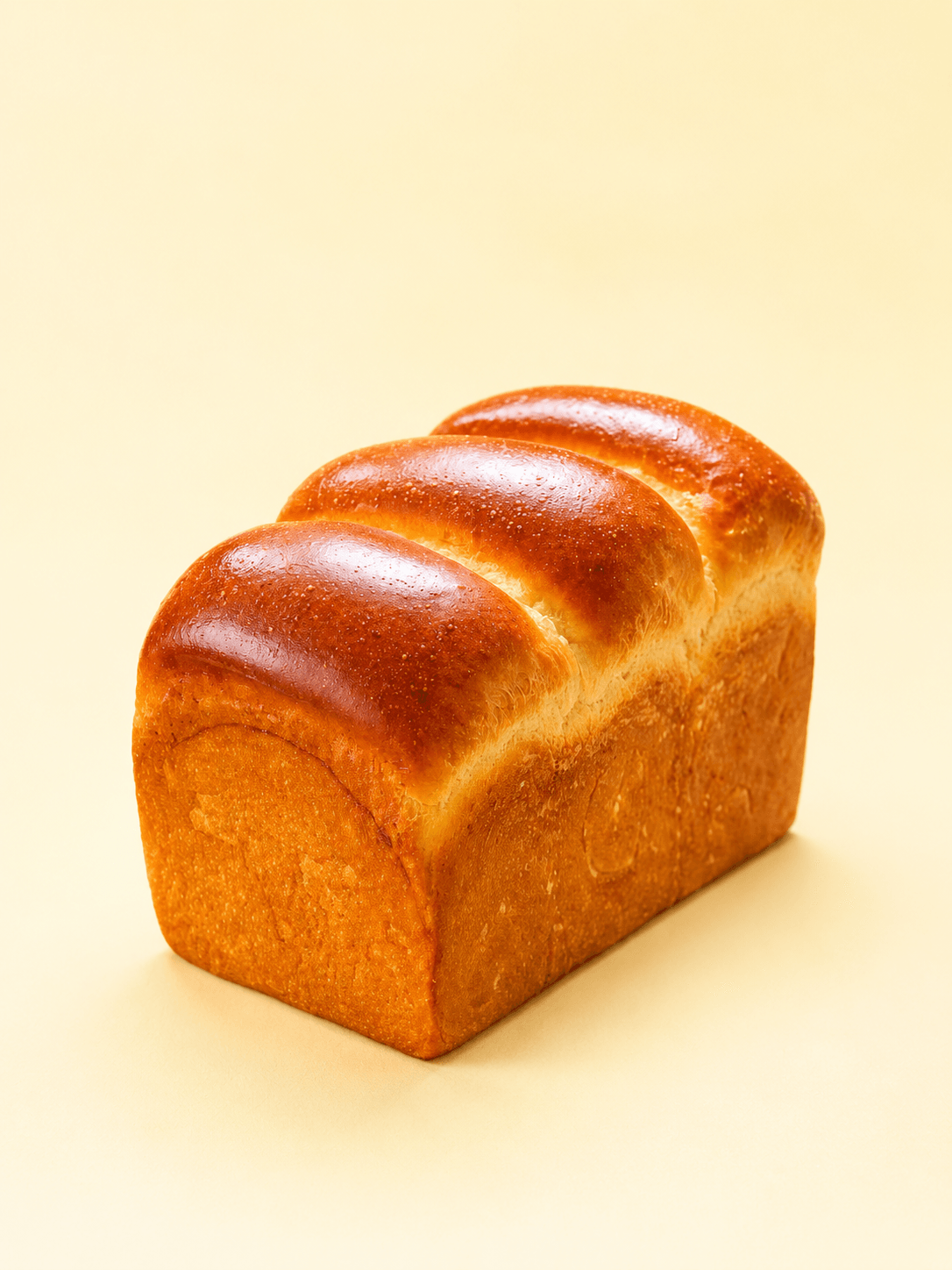
Japanese milk loaf. Shokupan, the soft white bread sold everywhere in Japan.
It is made using a cooked flour and water paste worked into the dough, which holds moisture through the bake. That is why the crumb comes out cottony and pulls apart in strands rather than tearing, and why it stays soft for days longer than a normal white loaf.
It makes far and away the best toast of the three and it is the one to buy if there are children in the house. It contains gluten, milk and eggs.
Which to choose
If you are buying one and you want a general loaf, the sourdough.
If you are eating soup, borscht, or anything smoked or cured, the rye. It is not a substitute for sourdough and it is much better at that particular job.
If it is for children, sandwiches or toast, the Japanese loaf.
If you are buying two, sourdough and rye covers the widest ground, because they do genuinely different things.
Keeping bread properly
Most bread is ruined at home rather than in a bakery, and almost always in the same two ways.
Not the fridge. A fridge is the worst place for bread. The temperature range in a domestic fridge is close to ideal for starch retrogradation, which is the process that makes bread go stale, and it happens several times faster in there than on a counter. Bread in a fridge is stale within a day.
Not a plastic bag, at least not for the sourdough. Plastic traps moisture against the crust and softens it, and a softened crust on a sourdough loses most of what made it worth buying. Keep it cut side down on a board, or in a paper bag, or in a bread bin.
The Japanese loaf is the exception and does want to be in a bag, because its whole character is softness and there is no crust worth protecting.
Freeze on the day, not on day three. This is the single most useful thing to know about bread. A loaf frozen the day it is baked comes back almost perfect. A loaf frozen once it has started to go stale comes back stale.
Slice it first, freeze the slices, and toast straight from frozen. It works far better than people expect.
Reviving a slightly stale loaf. Run it briefly under a tap so the crust is damp, then ten minutes in a hot oven. It comes back for one meal, not for two, so plan to eat it all.
The minimum order problem
Three loaves at £15 is £45, which is under our £50 minimum, and that catches people out.
Bread is not really a standalone order for us, and pretending otherwise would mean either raising the price or delivering at a loss. Most bread orders travel alongside something else, which usually means pirozhki, since bread and pirozhki are the two savoury parts of what we do and they suit the same kind of week.
Ordering
Choose a Wednesday delivery date at least 72 hours ahead. Delivery is £12 within SW3 and £15 across the rest of London and Surrey.
If Wednesdays never work for you, we understand, and we would rather tell you that plainly than start baking bread on a Thursday and send you something worse.
Order it for the date you need
Everything here is baked to order for your date.
48 hours notice, 72 for bread. Delivered across London and Surrey.