
· 6 min read
The History of the Jagodzianka
The jagodzianka has no founding date and no named inventor. What it has is a dough with a long history in Central Europe, a berry that was gathered rather than bought, and a season of about eight weeks.
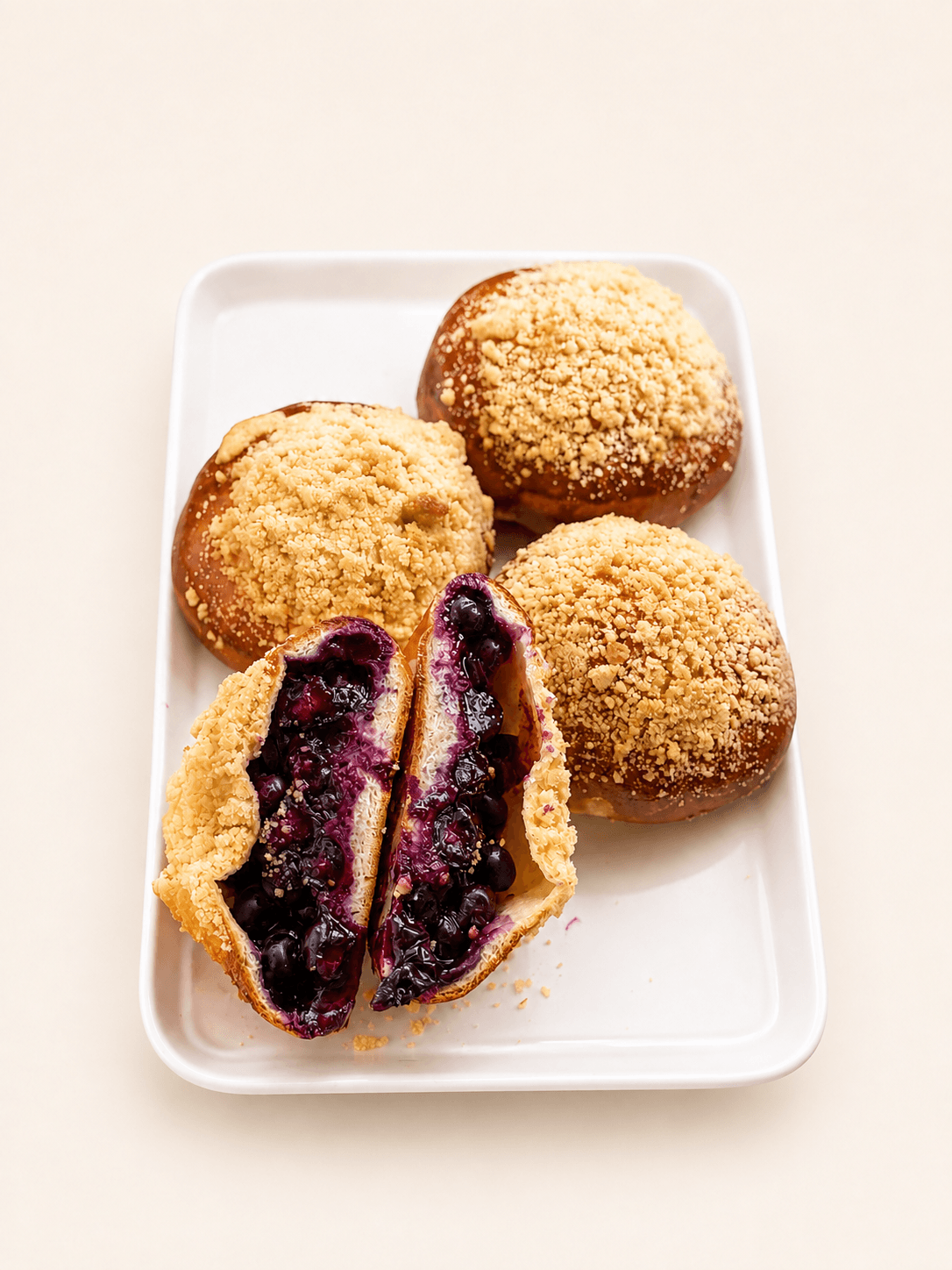
The jagodzianka has no founding date, no named inventor and no first bakery. Nobody wrote it down, because for most of its life it was not a product. It was what you did with a dough you already made every week and a berry that cost nothing but a morning in the woods. Anyone who tells you it was invented in a particular Kraków bakery in a particular year is repeating a story, not a record. What can be traced is the dough, the berry and the season, and those three things explain the bun better than any origin legend.
If the definition is what you came for, the fruit, the crumble and the Polish calendar are set out in full in what a jagodzianka actually is. This piece is about where it came from.
The drożdżówka, the everyday sweet bread of Polish towns
Start with the dough, because the dough came first by a long way. Across Central Europe there is a single family of enriched yeast breads: wheat flour, milk, eggs, sugar, butter or oil, and yeast. In Poland that family is the drożdżówka, from drożdże, yeast. In German speaking regions it is Hefeteig and the buns made from it run from Streuselkuchen to Buchteln. In Ukraine and Russia the same idea produces the sweet bulochka. The Czech buchta and the Hungarian kalács belong to the same line. These are not separate inventions. They are one technique moving across a region with grain, dairy and a bread oven in every town.
Enriched dough was a treat for a simple reason. Wheat, eggs, butter and sugar were the expensive parts of a household's larder, and putting all four into one loaf marked the day out. Sunday bread, wedding bread, name day bread. Sugar only became cheap enough for casual baking in Europe during the nineteenth century, once beet sugar was produced at scale, and that is the period in which sweet yeast buns stop being ceremonial and start being ordinary. A drożdżówka after that point is a weekday item: bought on the way to work, eaten warm, filled with whatever the season offered. Tvorog in spring, plums in September, poppy seed at Christmas, apple whenever apples were about.
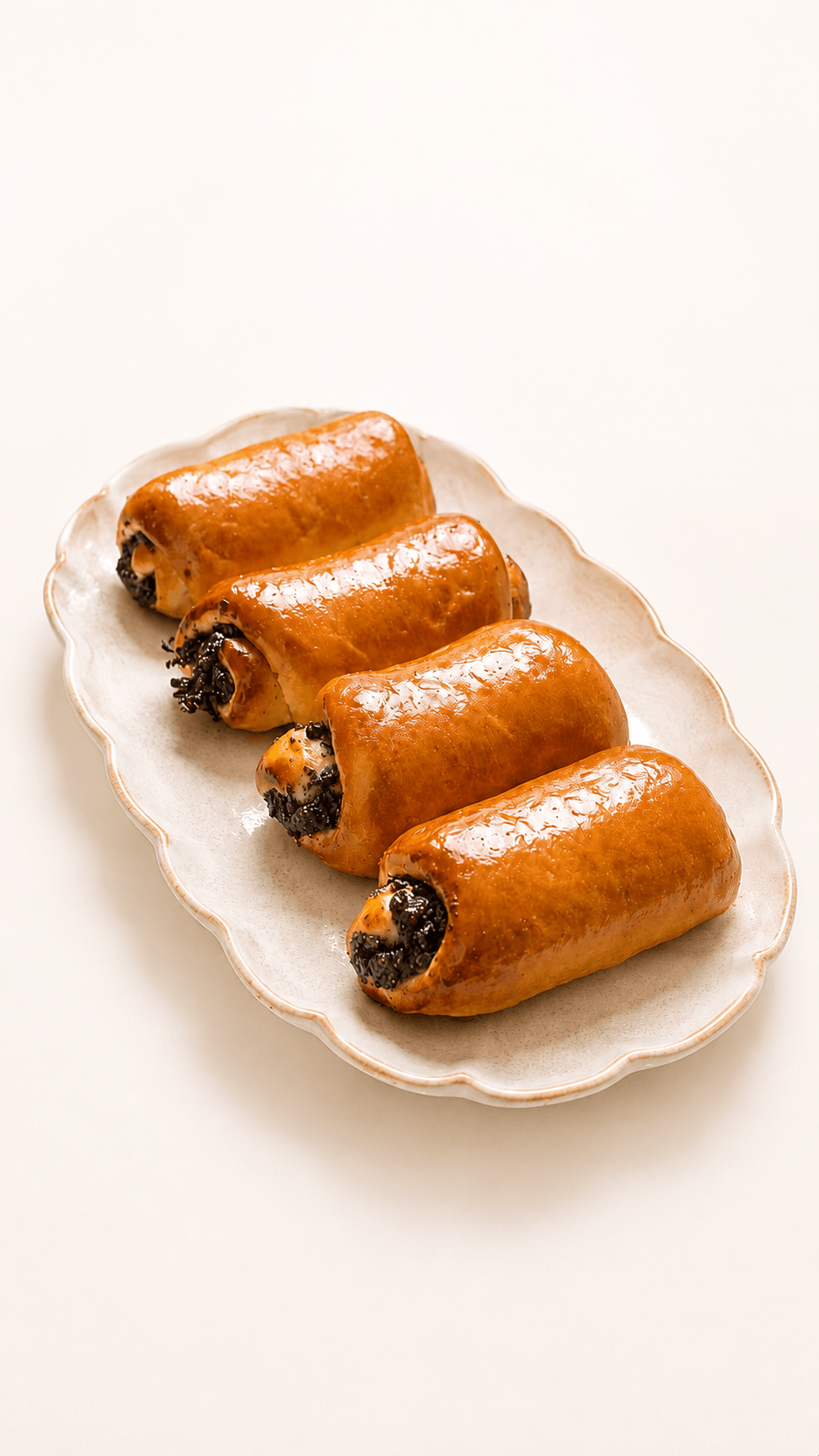
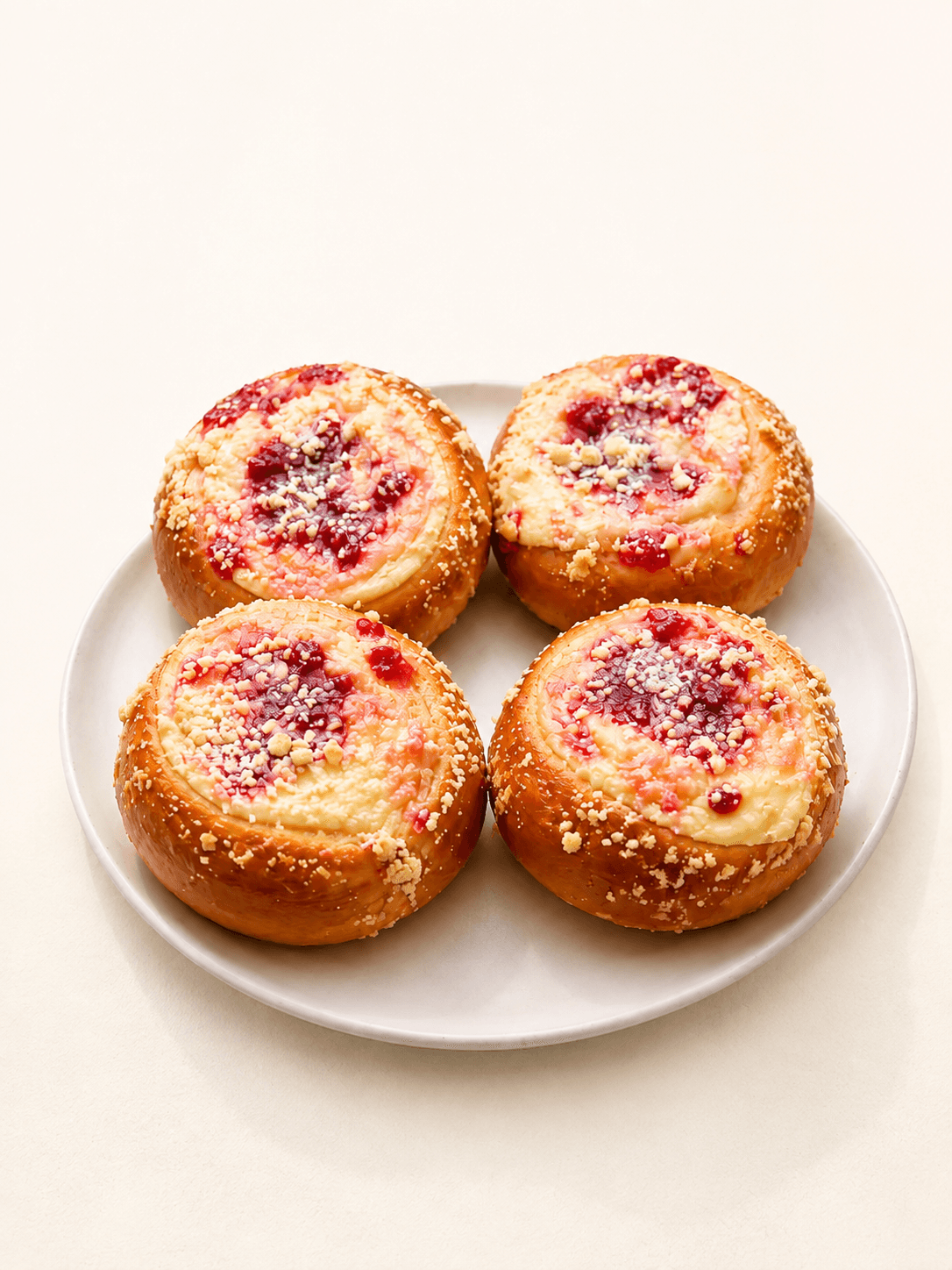
The jagodzianka is a drożdżówka with a filling and a date. It is not a separate invention with its own history. It is the July and August page of a calendar that runs all year, which is why the same bakery that sells it in summer sells a cheese one in April and a poppy seed one in December. We bake from the same family: poppy seed buns at £30 for four, strawberry vatrushki at £32, cinnamon rolls at £48 for six. Different fillings, one lineage of dough.
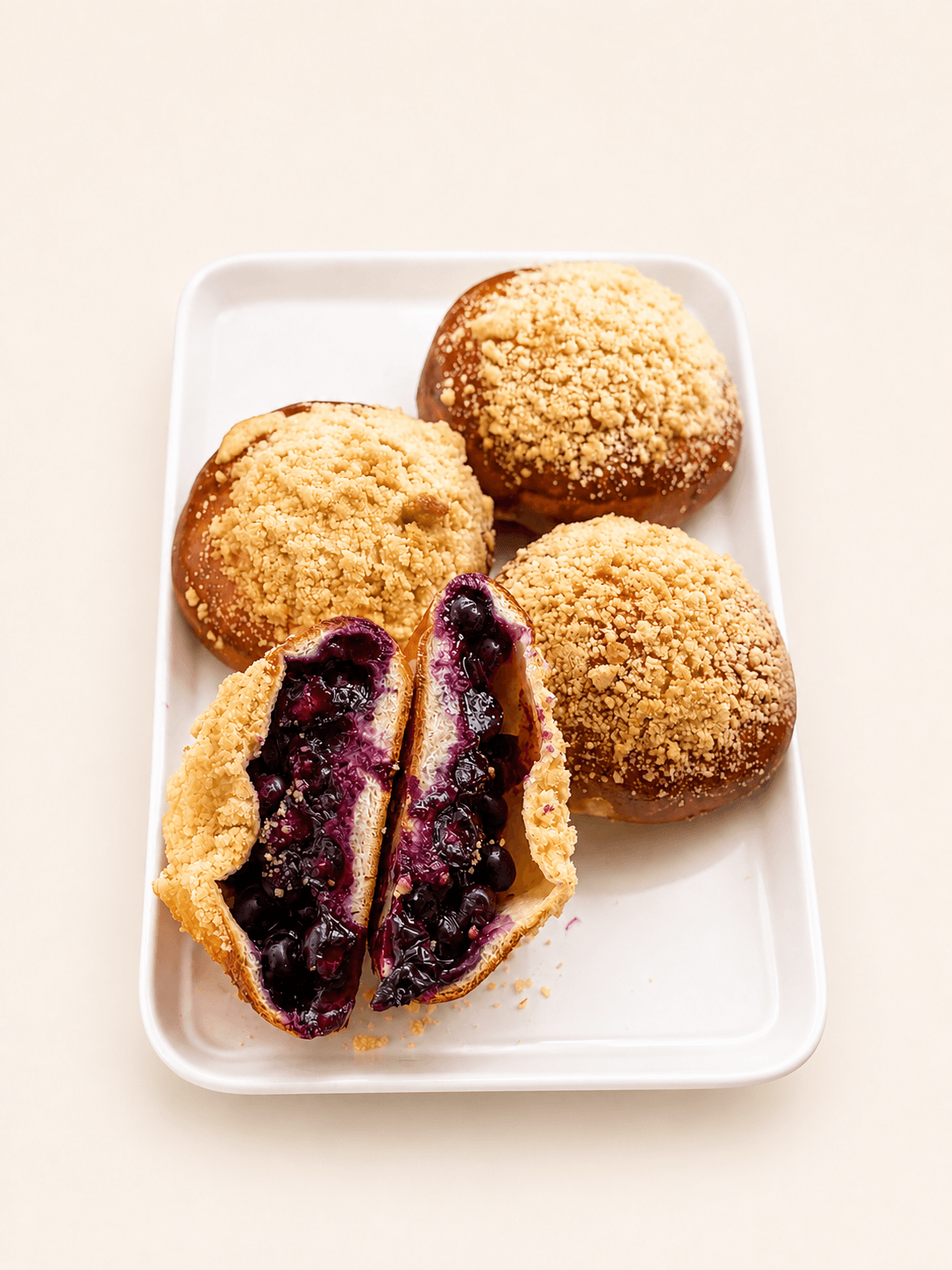 Blueberry Streusel Buns (Jagodzianki)Jagodzianki, Polish blueberry buns, four to a box. Soft enriched dough, blueberry filling, buttery streusel.£42Order this
A berry that was gathered, not bought
The other half of the bun is the fruit, and the fruit explains everything about the season. Jagody, in ordinary Polish speech, means the forest berry: czarna jagoda, the bilberry, Vaccinium myrtillus. It has never been farmed at any scale anywhere. The bushes sit low to the ground, the berries are small, and a picker bends for hours to fill a container. That is the entire reason the plant stayed wild while the American highbush blueberry became a global crop with punnets in every supermarket.
So bilberries entered the kitchen through gathering, not buying. In Poland, and in the forested belt that runs east and north from it, picking was a household activity with its own customs: families going out in July, children sent with a jug, the fruit eaten fresh, made into kompot, cooked down with sugar, dried, or baked the same day because it does not keep. Access to the forest for gathering is long established in Polish practice and is written into the country's forest law today, which is why picking remains a genuinely popular summer activity rather than a folk memory.
That gives the bun a structure nothing else in the bakery has. The dough is available every day of the year. The fruit is available for roughly eight weeks. Combine them and you get a food that is unavoidably seasonal, and seasonality is what makes people queue. The berry also stains, and the purple through the crumb of a real jagodzianka is the fruit itself, not colouring. That mark is the proof of the season.
How a summer bun became something people rank
Somewhere in the last few decades, the jagodzianka stopped being a domestic item and became an event. This part is recent enough to observe rather than reconstruct. In July, Polish bakeries compete openly over them. Food magazines and city listings publish yearly rankings of the best in Warsaw, Kraków and elsewhere. People queue, sometimes early, and argue about ratios: how much fruit, how thick the crumble, whether the dough should be light or rich, whether a wetter filling is generosity or a fault.
Why this bun and not one of the others? Partly scarcity, which does to bread what it does to everything else. Partly that the fruit is hard to fake. You can pad an apple filling and nobody notices. Bilberries either fill the bun or they do not, and the person eating it grew up with the correct amount. And partly because it is judged in public: everyone has a position, and the standard is set by grandmothers rather than by chefs.
The accompaniment is fixed by habit and worth keeping: a glass of kefir or maślanka, cold, against the sweetness of the crumble. Poles will also tell you, correctly, that anything sold as a jagodzianka in February is something else wearing the name.
What we bake in Belgravia, and what we call it
Our Blueberry Streusel Buns are £36 for a box of four, baked to order with 24 hours' notice. Soft enriched dough, juicy blueberry filling, buttery golden streusel on top. They are made with cultivated blueberries, which are larger, sweeter and milder than the forest bilberry a Polish jagodzianka is built on, and we would rather say that plainly than borrow the name and hope nobody asks. Eggs and milk are in them. The kitchen also handles sulphites, lupin and molluscs.
The same berry does grow wild here, incidentally: bilberry in England, whinberry or wimberry in Wales, blaeberry in Scotland, ripe on the moors in July and August and baked into British pies and tarts for centuries. Britain never turned it into a crop either, and for the same reason: low bushes, slow picking.
Everything at Mike Bakes London is made by hand and baked for the date chosen, with nothing sitting on a shelf. Cakes need 48 hours, most buns and pastries 24, and delivery runs across London and Surrey. If you want to taste the drożdżówka family properly rather than one bun in isolation, order the blueberry buns alongside the poppy seed ones and eat them side by side on the same morning. The dough is the constant. The filling is the argument. The full collection is the place to start.
Email info@mikebakes.uk or call +44 7922 122149 to book a date. Monday to Saturday, by appointment.
Order it for the date you need
Everything here is baked to order for your date.
48 hours notice, 72 for bread. Delivered across London and Surrey.