
· 6 min read
Oreshki in London: the Walnut Cookies Filled with Dulce de Leche
Oreshki are the thing people ask us for by name more often than any other pastry, usually with a story attached about a grandmother and a particular iron mould.
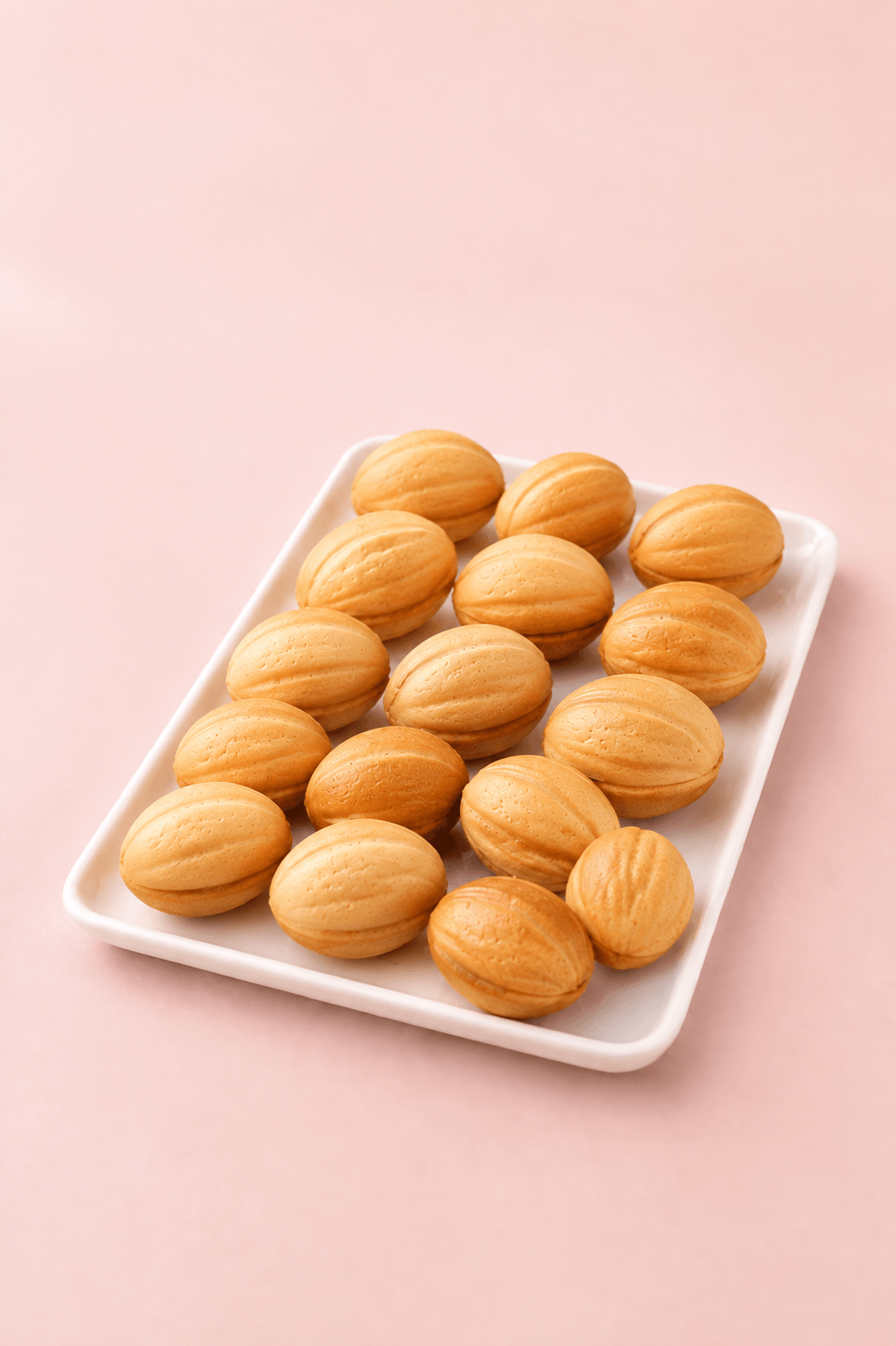
Of everything we make, oreshki generate the most messages. Not the cakes. These.
They arrive in a particular form. Somebody has found the site, seen the photograph, and written to check that they are the real ones, and then explained, without being asked, that their grandmother had the mould, that it lived in a specific drawer, and that they have not eaten one in eleven years.
There is a reason for this, and it is not sentiment alone. Oreshki are genuinely hard to buy in Britain, because the only way to make them requires a specific piece of equipment that has never been sold here.
The mould
Oreshnitsa. A hinged cast iron press, rather like a small waffle iron, with hemispherical hollows cut into both faces. In the Soviet era they were made in factories that also made other iron things, they were heavy, they lasted decades, and almost every household had one.
You put a small ball of dough into each hollow, close the two halves, clamp them, and set the whole thing over a gas flame. Not in an oven. Directly on the ring, turned once, for a couple of minutes a side. What comes out is a tray of hollow shortcrust half shells with a seam of excess dough squeezed out around the edge, which is trimmed off while still warm.
There is no substitute. A muffin tin does not do it. Silicone does not do it. The reason it has to be iron and direct heat is that the shell needs to cook from the outside against hot metal, setting a thin crisp wall while staying hollow inside, and a tin in an oven simply bakes a solid biscuit.
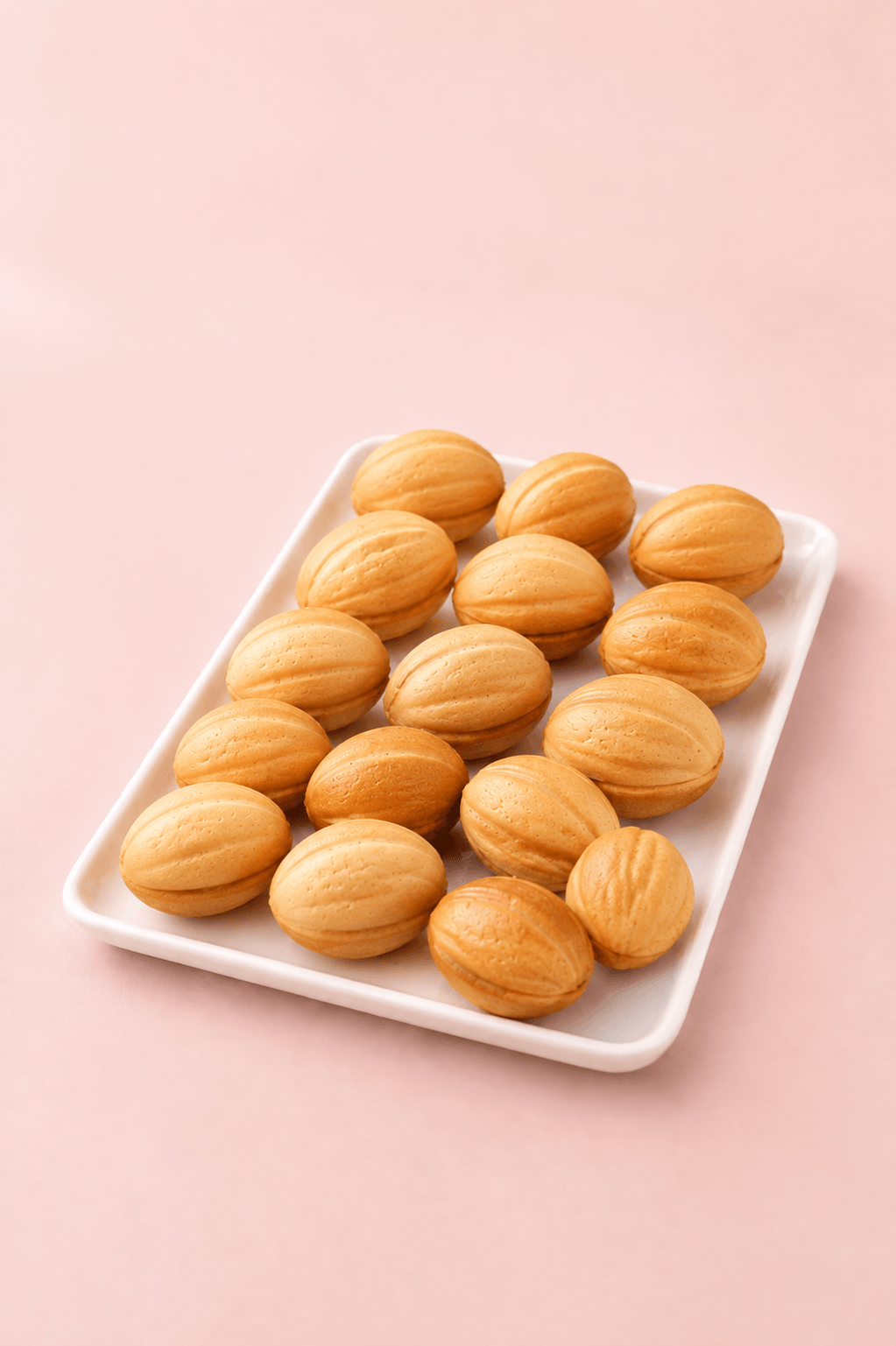
Why they look like walnuts
They do not contain walnuts and they never did. The name is oreshki, little nuts, and the shape is a reference rather than an ingredient.
The hollows in the mould are ridged on the inside, so the baked shell comes out with the crinkled surface of a walnut half. Two shells stuck together with filling make what looks convincingly like a whole walnut, and a plate of them looks like a bowl of nuts until somebody picks one up and finds it weighs nothing.
It is one of those pieces of design that is completely unnecessary and makes the whole thing.
The filling
Boiled condensed milk, which in Russian is varyonaya sgushchyonka and in Britain is closest to dulce de leche.
A tin of sweetened condensed milk simmered for two to three hours turns tan, thickens to a soft fudge, and tastes of toffee and milk rather than of burnt sugar. Butter is usually beaten into it to lighten it slightly and make it spreadable, and sometimes a few chopped nuts go in.
The filling is sweet, and the shell is not. The dough is short, buttery and barely sweetened at all, which is the balance that makes it possible to eat four of these rather than one.
Classic Oreshki with Dulce de LecheOreshki, the walnut shaped cookies filled with dulce de leche. A Soviet classic, made by hand.£46Order thisThe chocolate version
We also make a Ferrero style oreshki, which takes the same shells and fills them with a soft chocolate cream instead. Twenty pieces to a box rather than the classic ones.
They are not traditional and we do not pretend otherwise. They are, however, the version that wins over people who did not grow up with these and find plain dulce de leche too sweet on its own, and they disappear off a table at a party faster than the originals do.
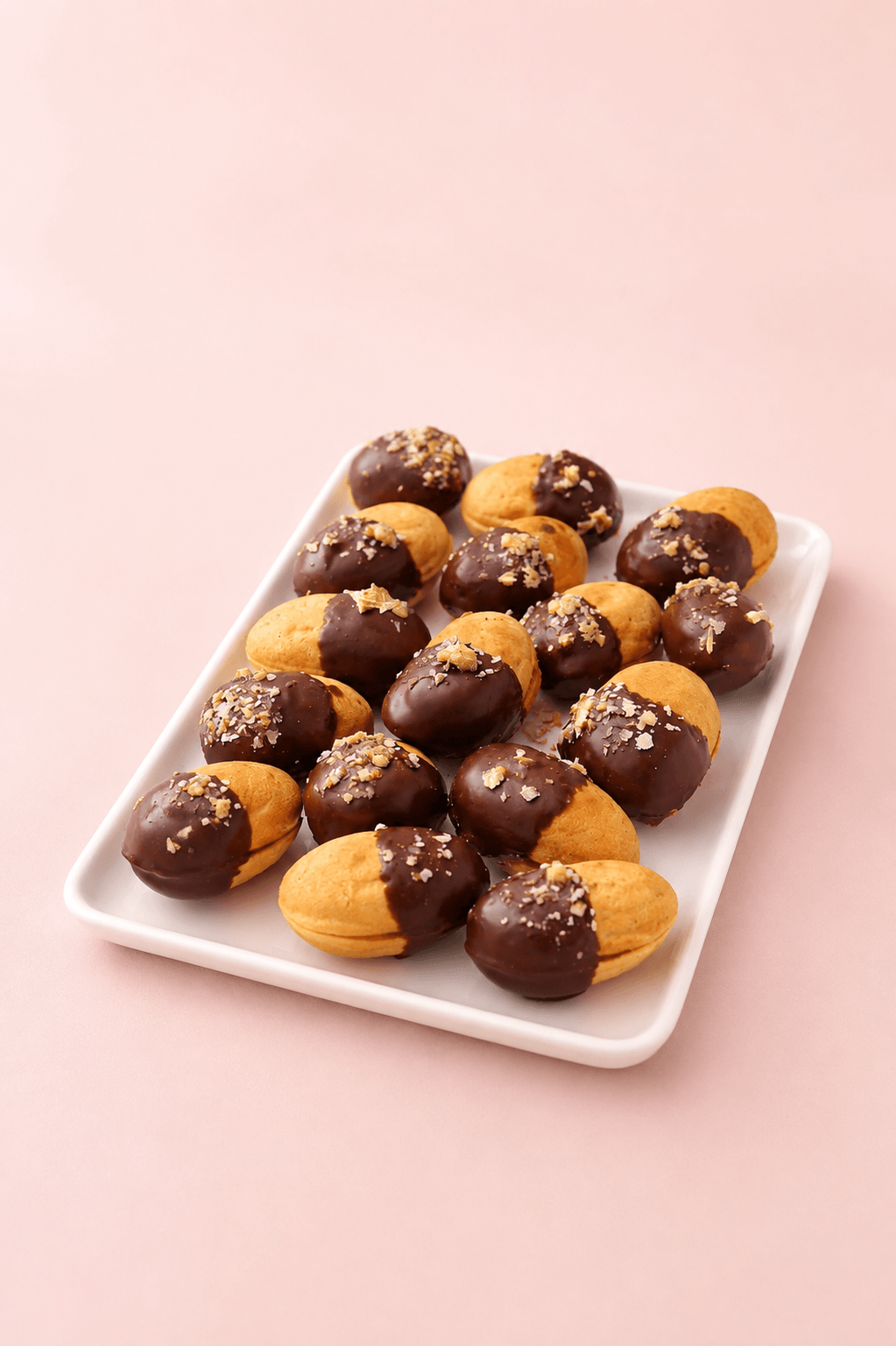 Ferrero-style Oreshki (20 pcs)Ferrero style oreshki, twenty pieces. Hazelnut shaped shells with a soft chocolate cream filling.£48Order this
Assembling them is the slow part
Each shell is filled by hand and pressed onto its partner, and the two have to be aligned or the seam shows. There is no machine step anywhere in the process.
A box of oreshki is therefore a surprisingly large amount of work for something that looks like a biscuit, which is why they cost what they cost and why almost nobody in London makes them. It is not a difficult recipe. It is a slow one, and it does not scale.
How to eat and keep them
Room temperature, with black tea. Not coffee, which flattens the milk flavour of the filling.
They keep several days in an airtight box and they do not want to be in the fridge, where the shells soften and the filling goes hard, which is exactly the wrong way round.
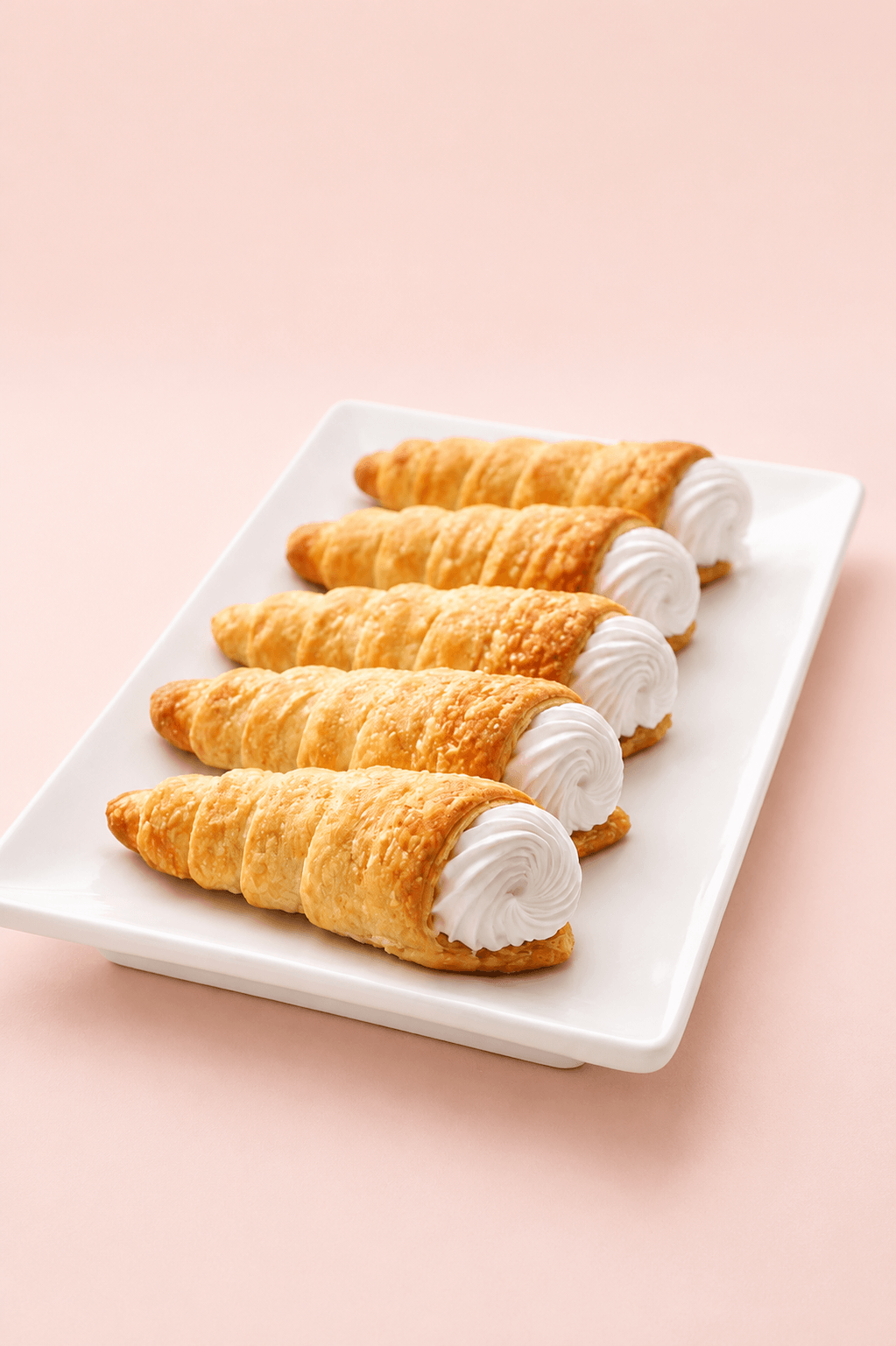
If you are putting out a spread, they belong beside the other dry pastries rather than beside cream cakes: trubochki, kurabye, peanut rings, kartoshka. That group together is the nostalgia table, and it is what most of our Russian speaking customers order for a gathering rather than one large cake.
The imported packet version
You can buy oreshki in London, in Polish, Russian and Lithuanian grocers, in a sealed packet with a long date on it. They are worth trying once and they are not the same thing.
The shells in a packet have to survive months, which means they are baked drier and harder than a fresh one, and the give that a fresh shell has is gone. Bite one and it cracks rather than yielding.
The filling is usually a commercial toffee cream rather than boiled condensed milk, for the same shelf life reason, and it is sweeter and smoother with none of the milky note underneath.
And they are assembled by machine, which means a uniform amount of filling and a visible seam where the two halves meet.
The packet version costs a fraction of a fresh box and it fills a gap. But the reason people write to us about these specifically is not that they cannot find oreshki in London. It is that they cannot find the ones they remember, and what they remember is a shell that gives and a filling that tastes of milk.
Common questions
Do oreshki contain walnuts?
No. The name and the shape refer to walnuts, but the shells are plain shortcrust and the filling is boiled condensed milk. Ours do carry a nut allergen declaration because of the kitchen and because some batches include chopped nuts in the filling, so if there is an allergy at the table, ask us first.
What is the filling made of?
Sweetened condensed milk boiled until it caramelises, beaten with butter. In Britain the nearest equivalent is dulce de leche.
Why can I not find these anywhere in London?
Because they need a Soviet era hinged iron mould used over a gas flame, and there is no oven based method that produces the same shell. Very few kitchens here have the equipment or the patience.
How many are in a box?
The classic dulce de leche oreshki come as a box, and the Ferrero style version comes as twenty pieces. Both are on the product pages with the current price.
How long do they keep?
Several days at room temperature in a sealed box. Do not refrigerate them.
Can I order them alone?
There is a £50 minimum order across the site, so a single small box may need something alongside it. The other nostalgia pastries are the natural companions.
Ordering in London
Oreshki are made to order in Belgravia and delivered across London and Surrey. Forty eight hours notice, £12 delivery in central London and £15 elsewhere, £50 minimum order. Choose your date at checkout and they are made for it.
Order it for the date you need
Everything here is baked to order for your date.
48 hours notice, 72 for bread. Delivered across London and Surrey.