
· 5 min read
Traditional Pastries to Order in London
These are the things that get ordered with a note attached saying somebody’s grandmother used to make them. Here is what they actually are.
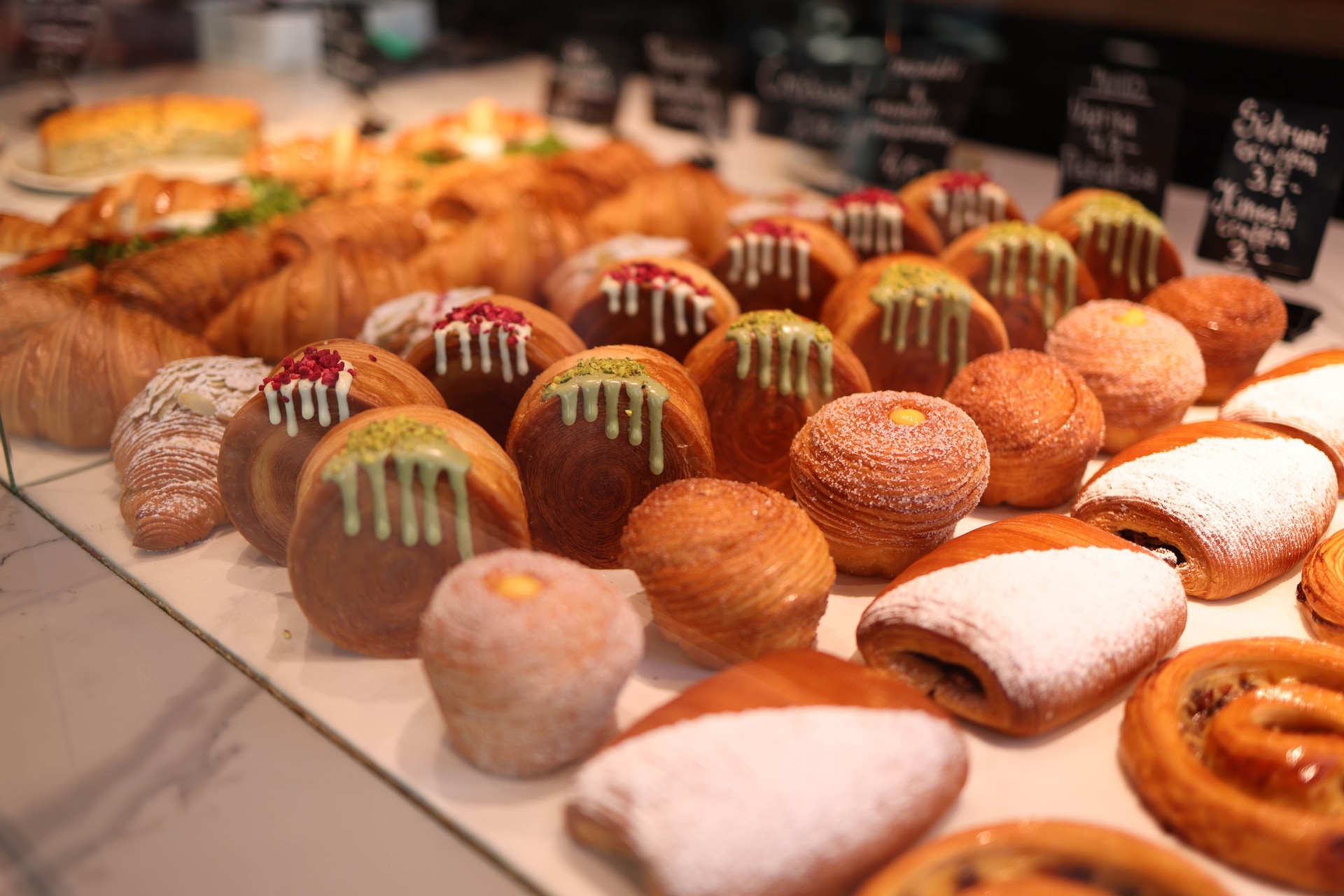
The cakes get the attention. The pastries get the messages.
Almost every order for oreshki or sochniki arrives with something written in the notes field. My grandmother made these. I have not seen one of these since I was nine. My mother is going to cry. Nobody sends us a message like that about a cheesecake.
These are the things that are genuinely hard to find in London, and this is what they are.
Oreshki
Little nuts. Shortbread shells shaped like walnut halves, filled with dulce de leche and joined into whole walnuts.
They are made in a hinged iron press, a heavy thing with two hollowed halves that closes over the dough and goes on a hob or into an oven. Almost every household across the Soviet Union had one in a drawer. Each press makes two shells, which means twenty finished oreshki takes forty pressings, done one pair at a time. There is no way to speed this up and no machine that does it.
The filling is traditionally varenaya sgushchyonka, condensed milk boiled in the tin for a couple of hours until it caramelises into something close to dulce de leche. Doing this properly and safely takes most of an afternoon.
We make them at £40 for twenty. There is also a chocolate version, filled with a soft chocolate cream, at the same price. The classic wins with people who grew up with them and the chocolate wins with everybody else, particularly children.
Trubochki
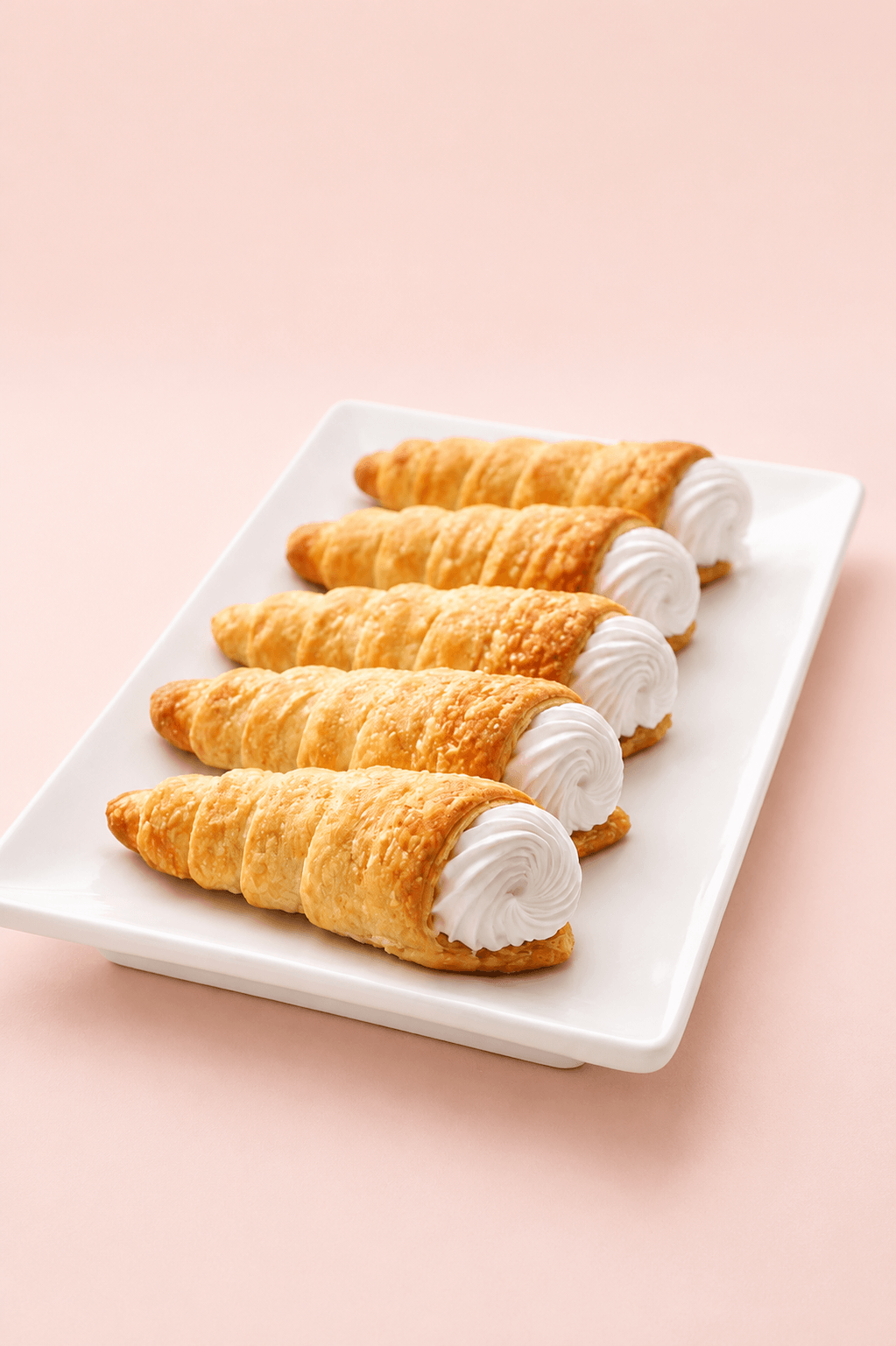
Pastry tubes filled with cream. Ours are called Trubochki 22 Kopeyki, after what they cost in Soviet bakeries, and that number does a lot of work for the people who recognise it.
The pastry is cut in strips and wound around a metal cone, baked until crisp and golden, then slid off and filled from both ends. The filling is a light cream rather than a heavy custard, which is deliberate, because a wet filling turns the tube soft within an hour.
They are messy. Cream comes out of the far end when you bite the near one, and that is not a flaw in the design, it is the memory everybody has of them. Five pieces, £31, and they should be eaten the day they arrive.
Sochniki
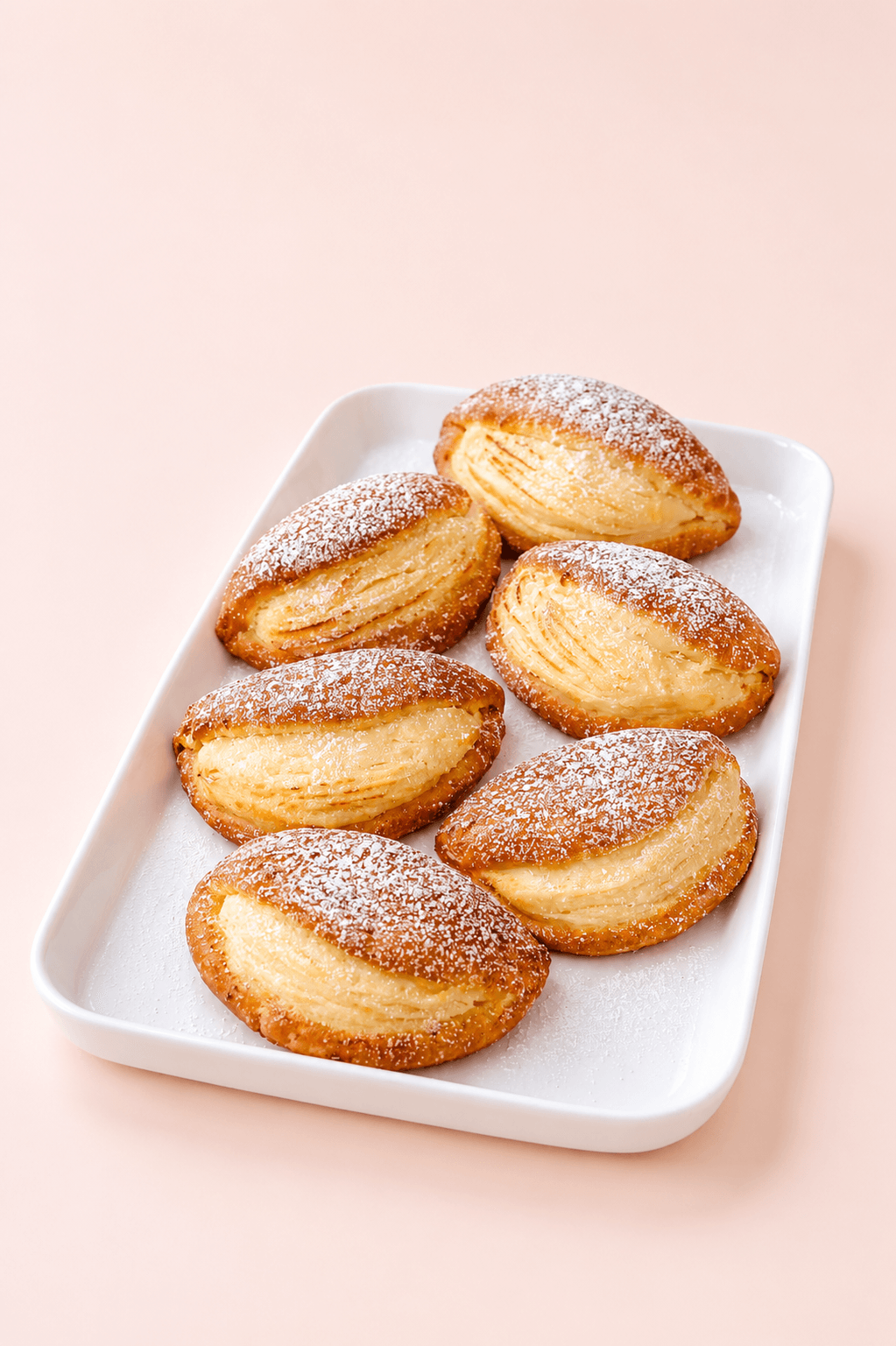
A folded pastry with sweet tvorog inside, and the fold is what identifies it. A sochnik is not sealed. The pastry is folded over so the filling sits half exposed, and it bakes to a light crust on top while staying soft underneath.
Tvorog is the fresh curd cheese that Eastern European baking runs on. It is drier and tangier than cream cheese, so the filling is much less sweet than the equivalent Western pastry, and the short sweet pastry does the sweetening instead.
These were a staple of Soviet school canteens and corner shops, which is why they carry the association they do. Six pieces, £25, which makes them one of the cheapest things we make. Good with tea and, according to most of the people who order them, better cold from the fridge the following day.
Kartoshka
Potato. Not made of potato, shaped and dusted to look like one.
There is no baking involved at all. Cake crumb, butter, cocoa and condensed milk are worked together into a paste, rolled into small ovals, and rolled again in cocoa powder. Some versions have a little rum or coffee in them.
It began as a way of using yesterday's sponge, which is why every Soviet bakery made them and why they carry a faint air of thrift. They are dense, very sweet and very rich, and one is usually plenty.
They also keep better than anything else here, several days in the fridge without deteriorating. Six pieces, £24.
Goose feet
Gusinye lapki. Buttery cookies made from a dough of tvorog and butter with almost no sugar in it.
The sweetness is applied from outside. Each round of dough is dipped in sugar, folded, dipped again, folded again, which produces the layered triangular shape the name refers to. In the oven the sugar on the outside caramelises and turns crisp while the inside stays short and crumbly.
That contrast between a crisp sugared exterior and an unsweetened crumbly interior is the whole cookie. It is why the folding is done in that fussy way instead of simply putting sugar in the dough. 300 g, about twenty cookies, for £25, and they keep for a week in a tin.
The others
Choux rings with tvorog cream, four for £30. Choux pastry baked as rings and filled with a cream made from tvorog rather than whipped cream, so it is tangier and less sweet than a standard cream bun.
Sirniki, six for £15. Tvorog pancakes, fried until golden outside and soft inside. These are breakfast rather than pudding, eaten with soured cream, jam or honey.
Blini, ten for £25. Thin pancakes that go either way, sweet with honey and jam or savoury with soured cream and fish.
Vatrushki, four for £32. A round of soft enriched dough with a well pressed into the middle, filled here with vanilla cream and strawberries.
Plyushki, from £32. Sweet buns rolled, folded, cut and twisted open by hand into a shape you cannot get any other way.
Why they are hard to find
Every one of these is slow, none of them keeps well enough for a shop counter, and most of them look modest next to a decorated cake. A bakery working out what to put in a window will not choose oreshki.
They also sell to a narrower group of people. Nobody walks past and buys sochniki on impulse. People search for them, having thought about them first.
Because we bake to order rather than to a display case, we can carry things that sell steadily to a small number of people. That is the whole reason this part of the range exists.
All of it needs 48 hours notice. Delivery is £12 within SW3 and £15 across London and Surrey, with a £50 minimum, which usually means combining a few of these into one box. Most people do exactly that.
Order it for the date you need
Everything here is baked to order for your date.
48 hours notice, 72 for bread. Delivered across London and Surrey.