
· 6 min read
Trubochki in London: the Soviet Cream Horns
A crisp spiral of pastry filled with white cream, sold at a fixed price across a country for decades. Here is what was actually in it.
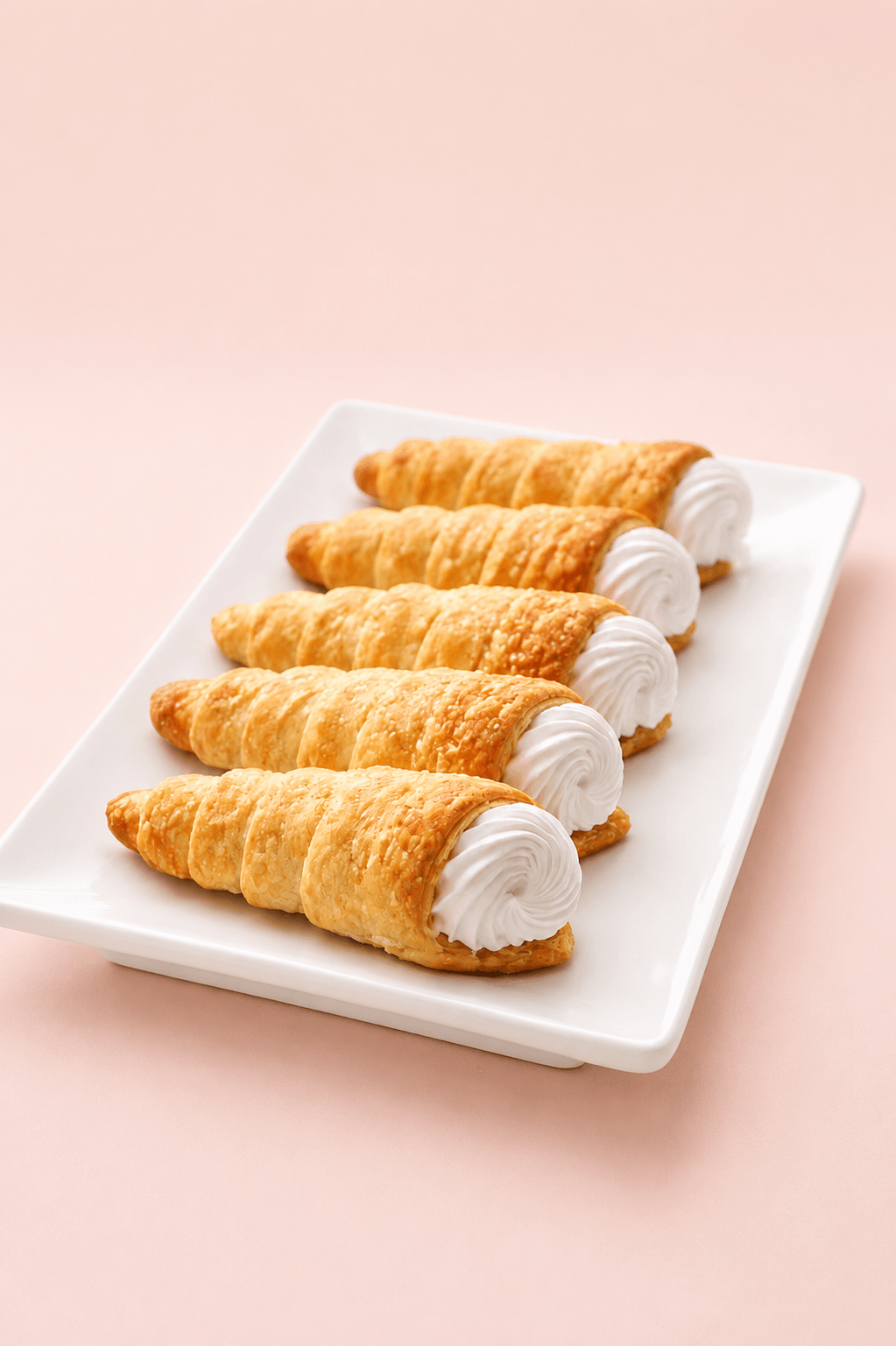
Ours are called Trubochki 22 Kopeyki, and the number is the point. For most of the Soviet period a cream horn cost twenty two kopeks in a state bakery, the same twenty two kopeks in Leningrad as in Tashkent, and the price did not move for years at a time.
People who grew up with that remember the number the way people here remember what a Freddo used to cost. It is a small fixed point in a system that had very few of them, and naming the pastry after its price is a joke that lands instantly with anybody who was there.
What a trubochka is
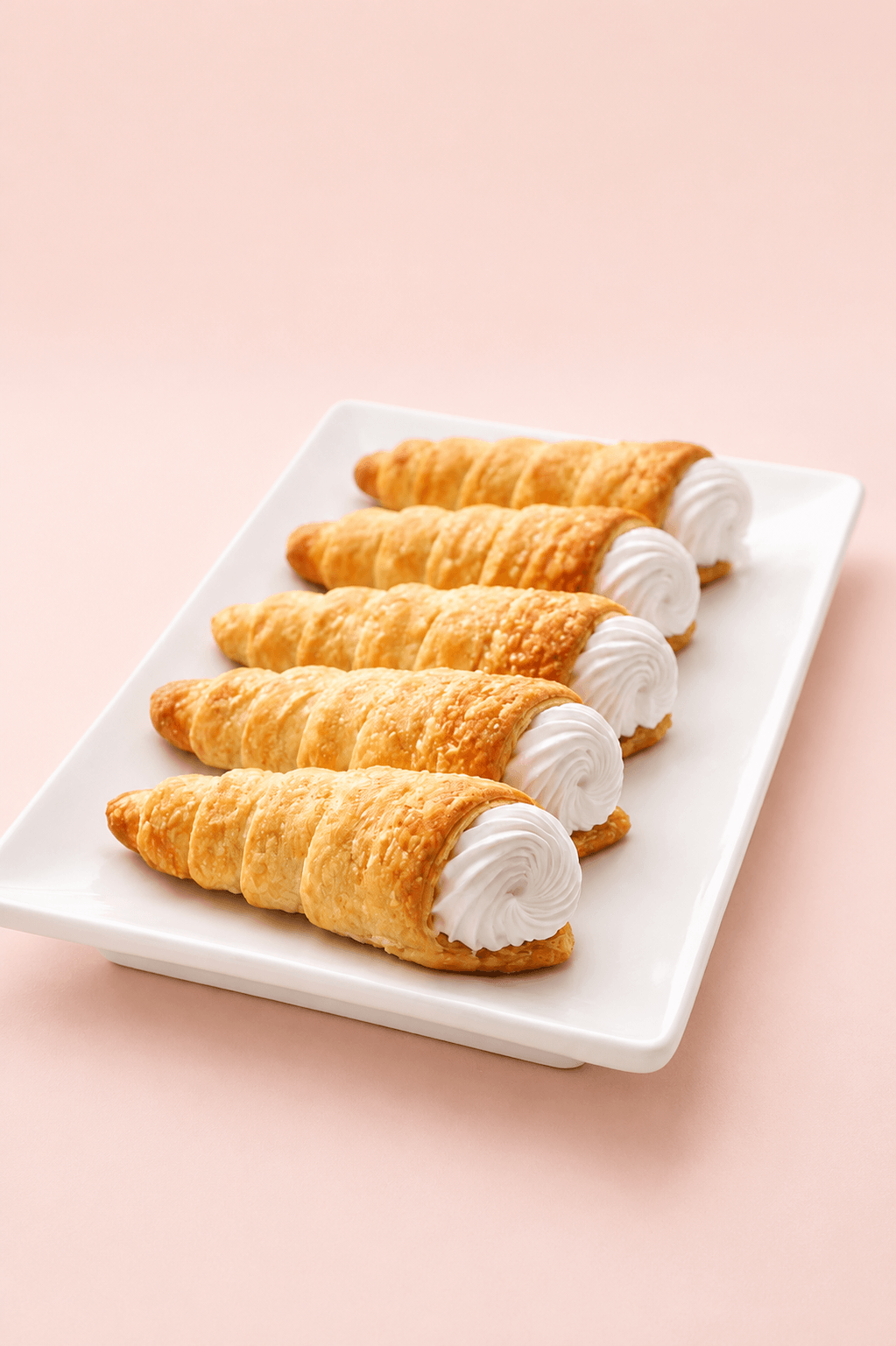
A strip of puff pastry wound in a spiral around a metal cone, baked until it is crisp and golden, slid off the cone, and filled with cream from the wide end.
The pastry is the easy part to describe and the hard part to do. It has to be rolled thin, wound with each turn overlapping the last by about half, and baked hot enough to puff and dry without the spiral unwinding. A horn that unwinds in the oven is fit for nothing. A horn baked too gently is pale and leathery instead of shattering.
The cream, and the argument about it
The traditional filling is belkovy krem, protein cream, which is Italian meringue by another name: egg whites whipped with hot sugar syrup until stiff, glossy and stable.
It is very white, very light, and it holds its shape for a long time without refrigeration, which is exactly why a state bakery used it. It is also, to a modern palate, extremely sweet, because sugar syrup is most of what it is.
The other traditional filling is a custard buttercream, softer and richer and less sweet, and every family has a view about which one is correct. Bakeries in Russia today mostly use a lighter cream than either, and that is the direction ours goes: light rather than aggressively sweet, because a whole box of Italian meringue is a lot to ask of anybody in 2026.
Trubochki “22 Kopeyki” - 5 PiecesTrubochki, crisp pastry horns filled with light cream. Five pieces, the Soviet classic.£31Order thisWhy they are filled at the last moment
Pastry and cream are enemies. The moment cream goes into a horn, moisture starts moving into the pastry wall, and a horn filled yesterday is soft today.
This is the single reason you cannot buy a decent trubochka from a shelf. A packaged one has been sitting filled for days, and what you get is a limp tube. They have to be filled close to when they are eaten, which means they have to be made to order, which means somebody has to be baking them for you specifically.
Ours are filled the same day they go out and they are at their best on the day they arrive. The second day they are still good. By the third, the crispness is going.
What to serve them with
Tea, and other dry pastries. They are the centrepiece of a Soviet style spread rather than a dessert course on their own.
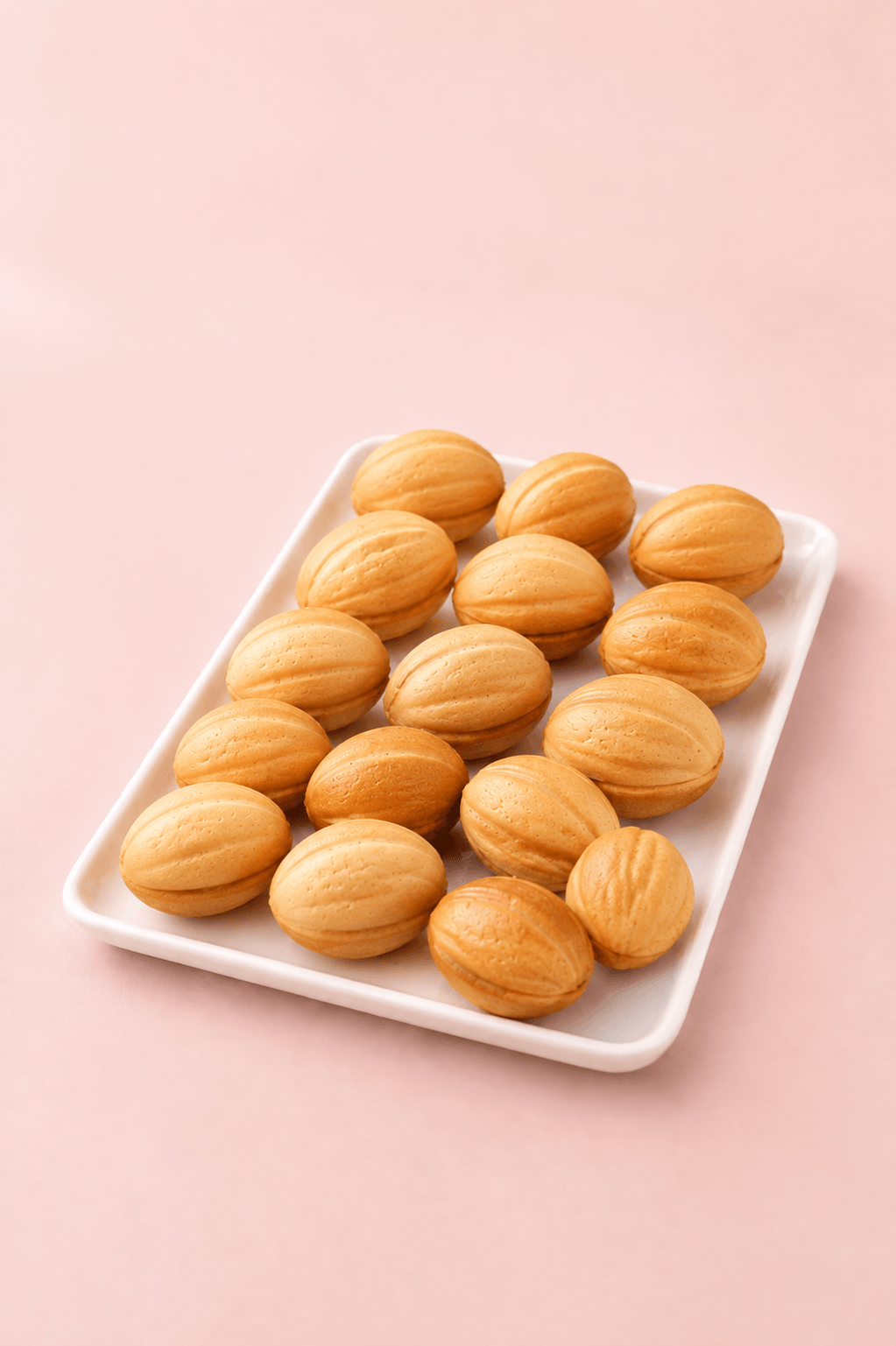
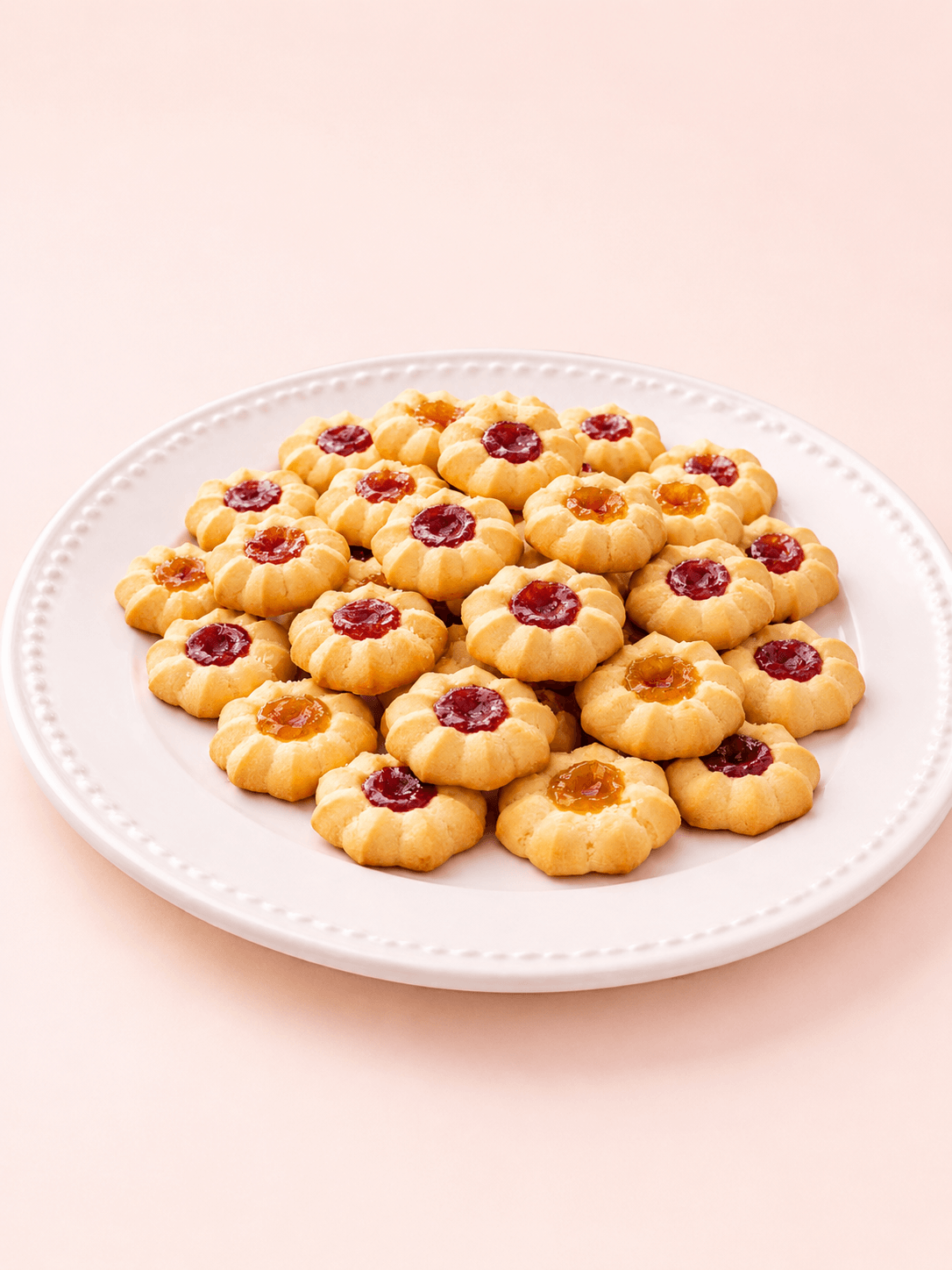
The natural companions are oreshki, kurabye cookies, peanut rings and kartoshka. Together those make the table that a Russian or Ukrainian household would actually put out for guests, and it looks far more generous than one large cake for roughly the same money.
Making them at home
People ask, so here is the honest version.
You need cone shaped metal moulds, which are cheap and easy to find online, unlike the oreshki press. You need puff pastry, and bought all butter puff is perfectly respectable for this. And you need to accept that the first tray will unwind, because judging the overlap takes a few attempts.
The cream is where home attempts usually go wrong. Italian meringue requires a thermometer and a steady hand pouring syrup into a running mixer, and improvising it produces either sweet soup or something grainy. If you want to skip that, a stabilised whipped cream is not traditional but it is pleasant and it will not fail.
And fill them at the table, not in the kitchen an hour before.
Buying them from a Polish or Russian shop
Most Eastern European grocers in London carry something in this shape, and it is worth knowing what you are looking at.
The commonest version is a packaged horn with a long life filling, sold in a box of several. The pastry in those is baked hard so it survives the filling sitting against it, and the filling is a stabilised cream rather than a meringue or a custard. They are sweet, they are consistent, and they do not shatter.
The second version, in shops with their own bakery counter, is filled that morning and is genuinely good. If you find one of these, buy it, and eat it the same day.
The test is simple and it is the sound. Press a horn gently near the open end. A fresh one gives a faint crackle as the layers move against each other. A packaged one is silent and slightly flexible.
What we are offering is the second kind, made for a date you choose, which is the only way to get a crisp horn delivered rather than collected.
Common questions
What does the 22 Kopeyki in the name mean?
It was the fixed state price of a cream horn in Soviet bakeries. The name is a reference to that, and it is what a lot of our customers call them.
What is the cream made of?
Ours is a light cream rather than the very sweet traditional protein cream. It contains milk and eggs, along with gluten in the pastry.
How many come in a box?
Five pieces.
How long do they keep?
Eat them on the day they arrive or the day after. The pastry softens against the cream over time and by the third day they are noticeably less crisp. Keep them in the fridge and take them out twenty minutes before.
Are they the same as a British cream horn?
The shape is the same idea. A British cream horn is usually filled with jam and whipped cream and is softer and sweeter. The Soviet version is drier, crisper and filled with a meringue based or custard based cream.
Can I order these for a party?
Yes, and they are one of the better things to order for one, because they are eaten with one hand and need no plates or forks. Count two per person if there are other pastries on the table.
Ordering in London
Made to order in Belgravia and delivered across London and Surrey. Forty eight hours notice, £12 delivery in central London and £15 elsewhere, £50 minimum order.
Order it for the date you need
Everything here is baked to order for your date.
48 hours notice, 72 for bread. Delivered across London and Surrey.