
· 5 min read
An Order for Twenty People, Worked Out in Full
Rather than advice about ordering, here are three actual orders for twenty people, itemised, so you can copy one or argue with it.

Most guidance about ordering for a group stops at principles. This is the opposite. Three complete orders for twenty people, listed item by item, with what each one is for and what it deliberately leaves out.
Numbers are not printed here, because prices change and an article quoting an old one is worse than no article. Every item links to its page, where the current price is the one you will pay.
Order one: the afternoon tea
For a birthday in the afternoon, a christening, a family gathering where people arrive over two hours and graze.
One 18 cm cake as the centrepiece. Honey cake if you want the reliable choice, Napoleon if the guests are Russian or Ukrainian.
Three boxes of dry pastries. Oreshki, trubochki and kurabye covers three different textures and looks like considerably more than three boxes on a table.
One box of choux or cinnamon rolls, for the people who want something soft.
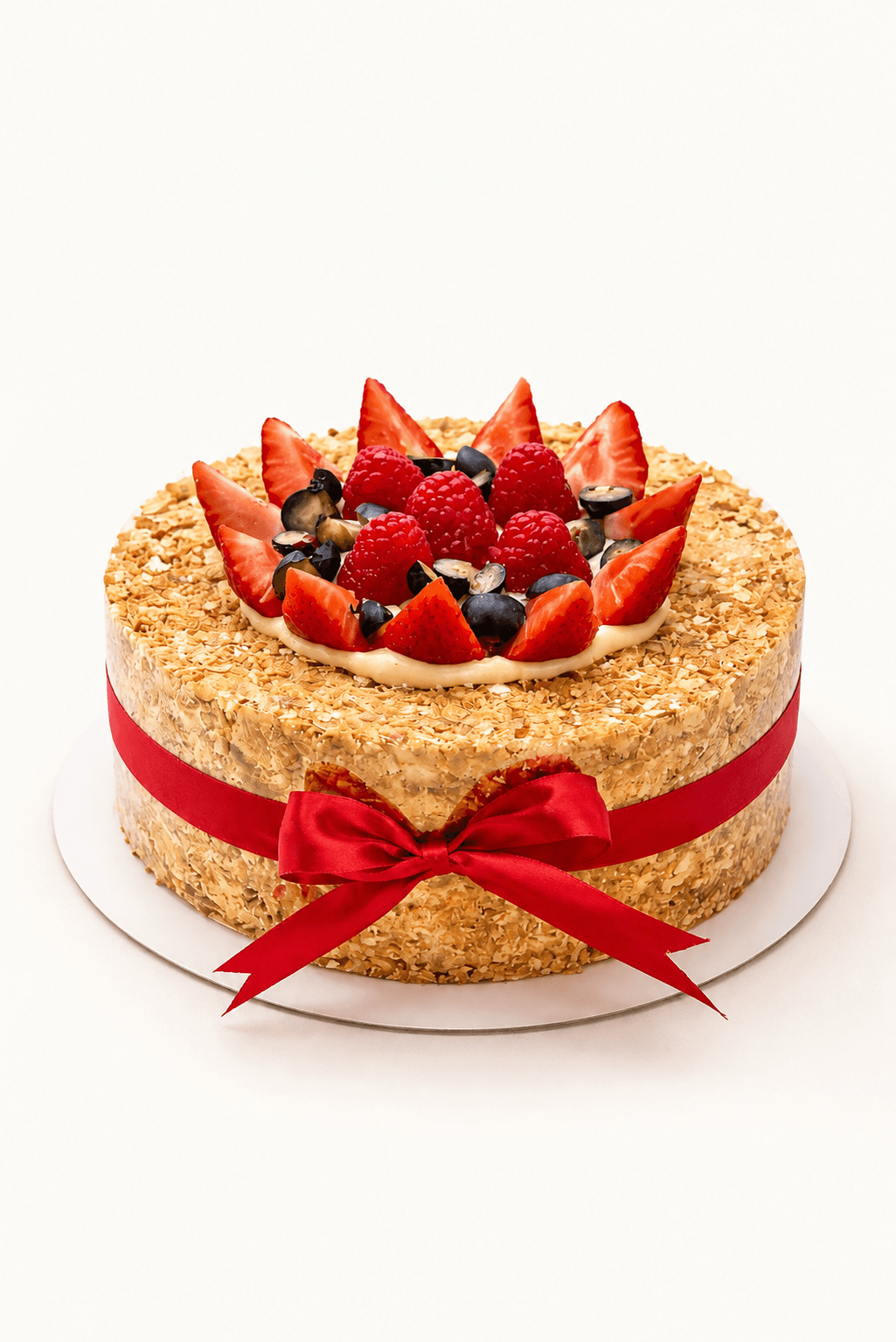
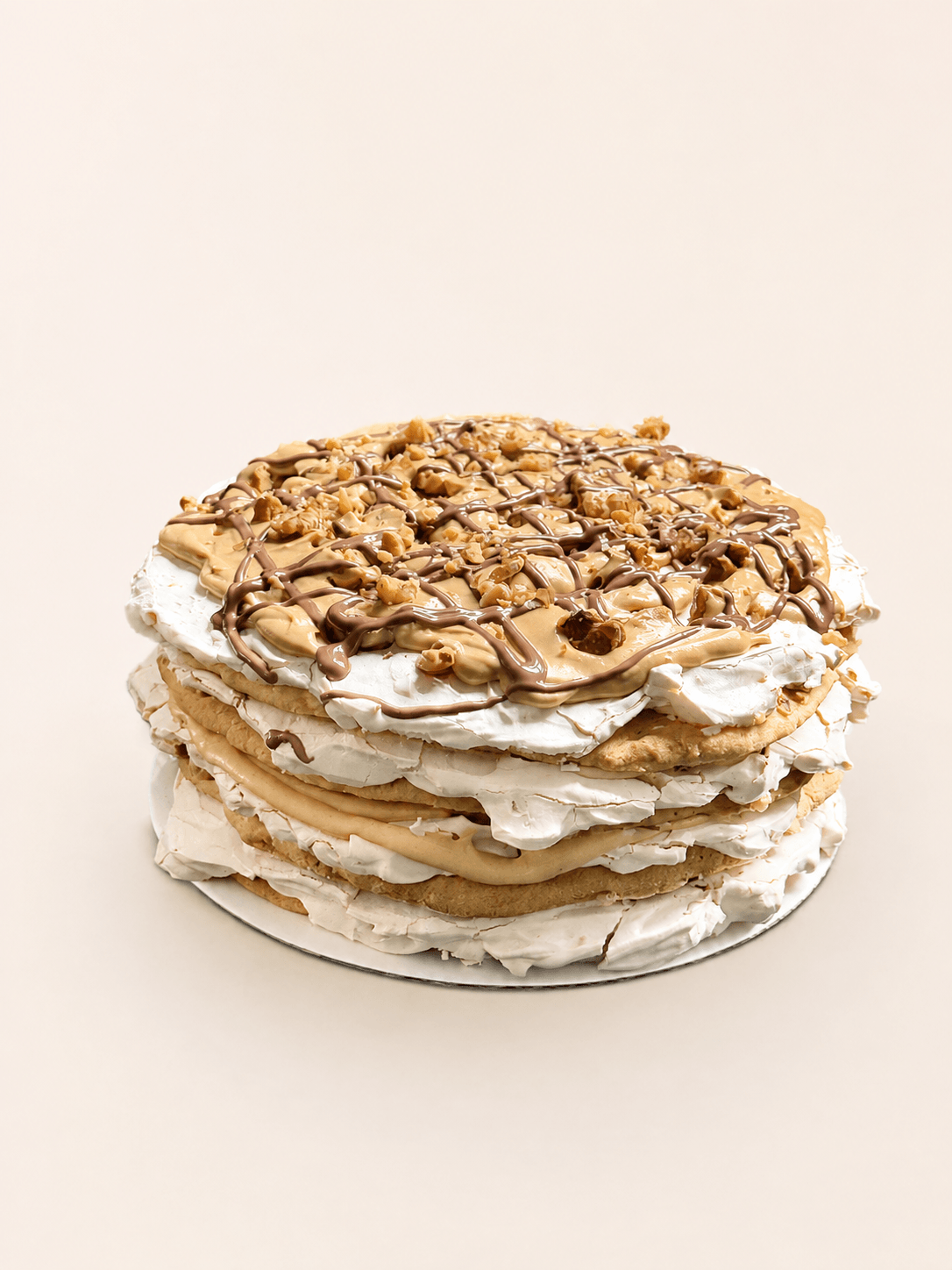
That is one cake and four boxes for twenty people, and it works because nobody eats a full slice of cake at a grazing table. What it leaves out is anything savoury, which is the right call for a two hour afternoon and the wrong call for anything longer.
Order two: the savoury and sweet table
For an evening gathering, a housewarming, a wake, anything where people are there for three hours or more and have not eaten.
Four boxes of pirozhki, mixed. Cabbage and egg, potato and onion, meat and cabbage, and mushroom. That is twenty four pieces, which is a little over one each, and they will go first.
One box of apple hand pies, which bridges the savoury and sweet ends of the table.
One 18 cm cake. Bird’s Milk if the evening is late and the food has been heavy, Prague cake if it has not.
Two boxes of dry pastries to sit out all evening.
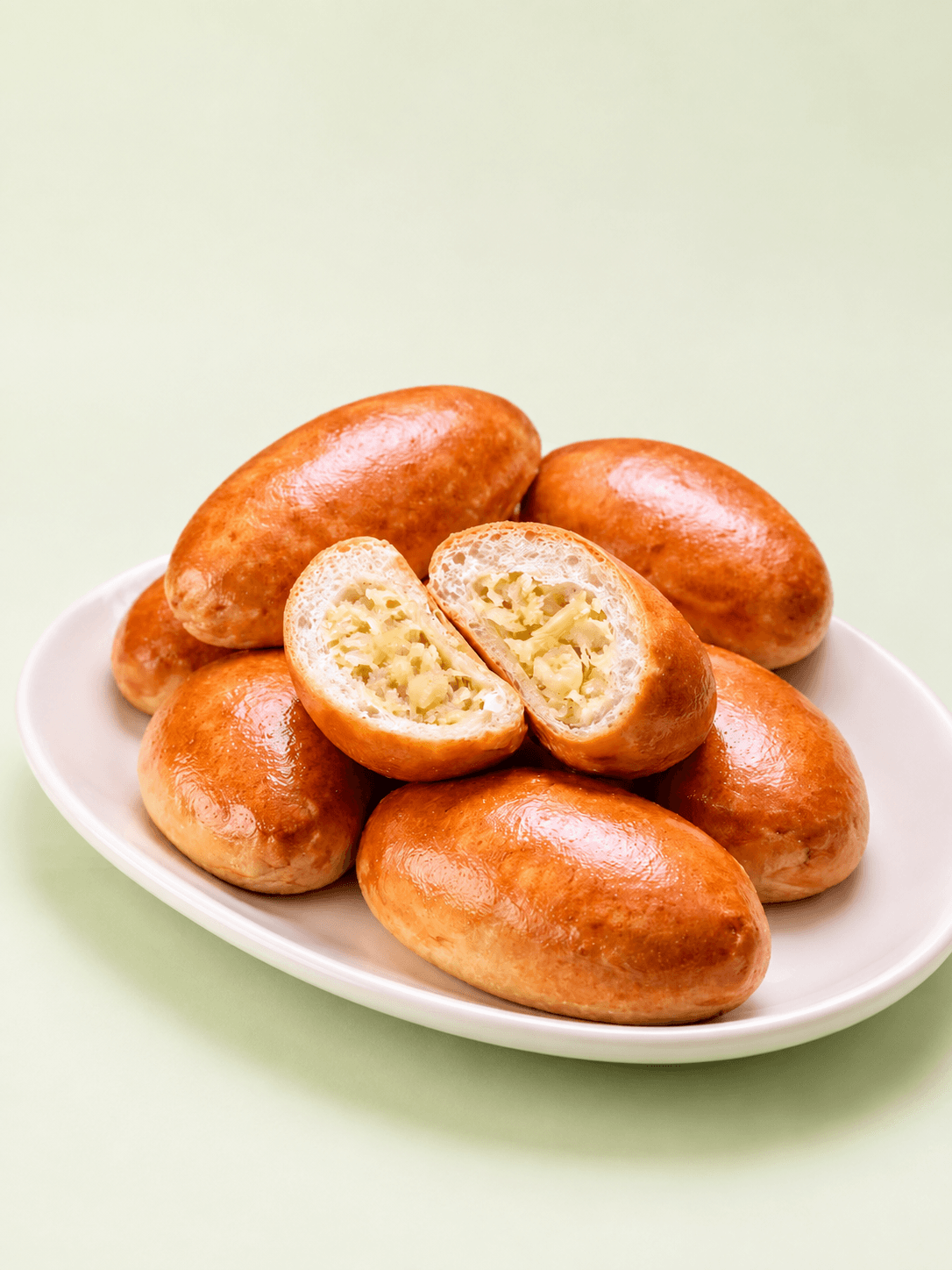
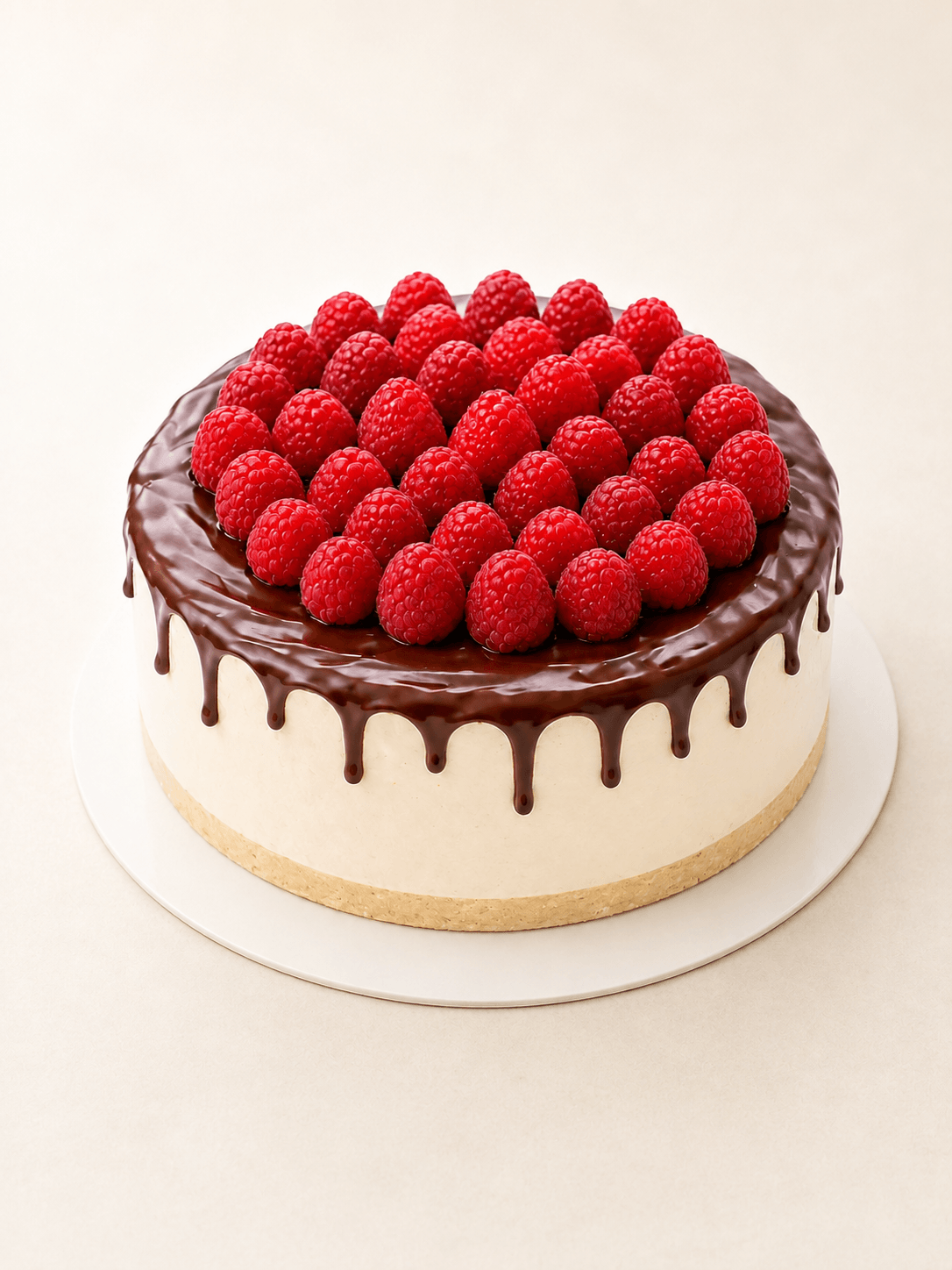
This is a bigger order and it is a meal rather than a dessert. The savoury element is what makes it one, and it is the part people under order most often.

Order three: the office
For twenty people who will eat standing up, in fifteen minutes, without plates.
Nothing that needs cutting. This is the whole principle and it is why the office order looks nothing like the other two.
Four boxes of pirozhki, warmed on arrival if there is an oven and eaten cold if there is not.
Two boxes of cinnamon rolls or blueberry streusel buns.
Two boxes of oreshki or kartoshka, which sit on a desk all day and get eaten by people who missed the first wave.
One box of chocolates, which is what the people who do not eat pastry will take.

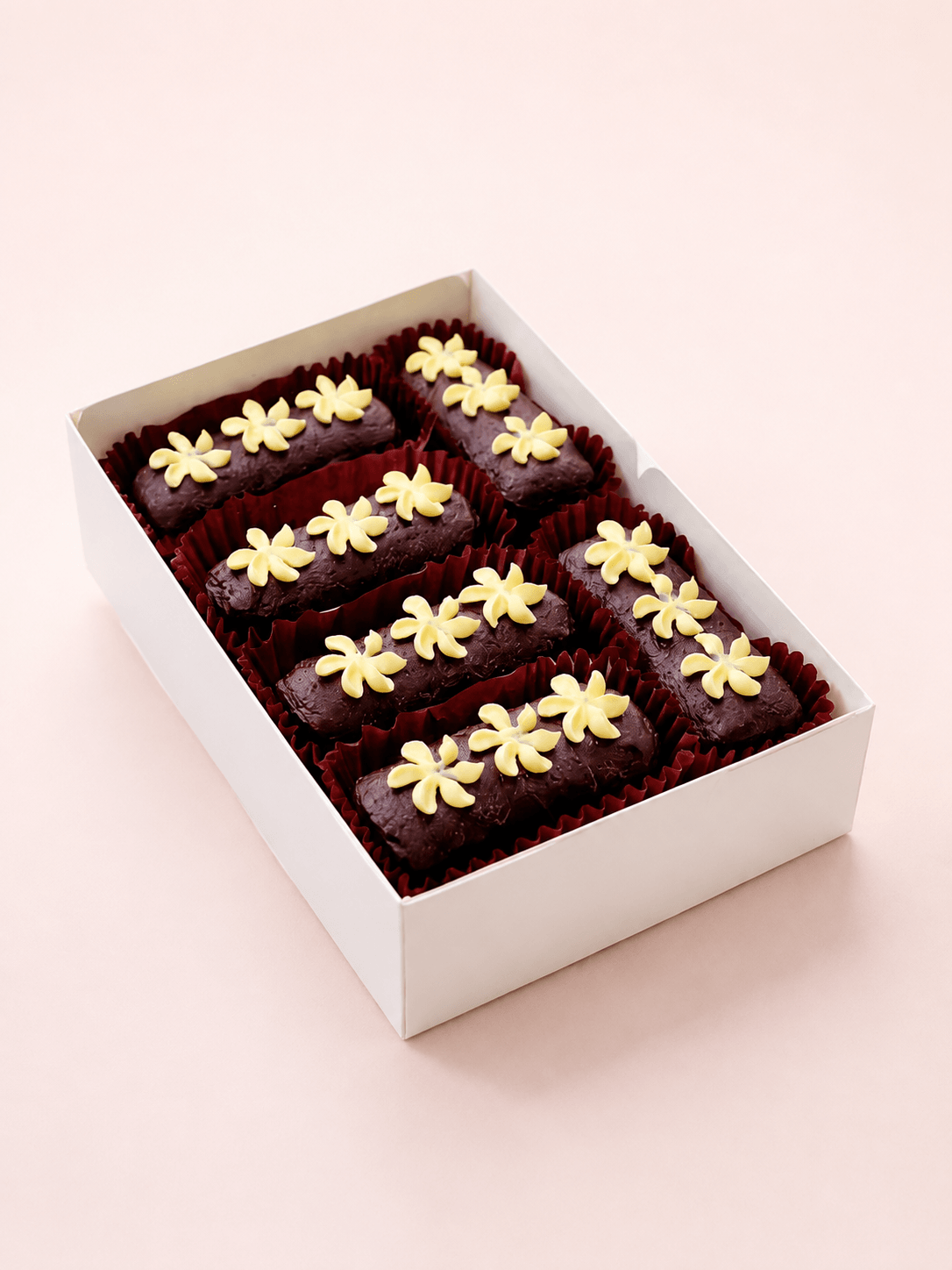
No cake. A cake in an office needs a knife, a surface, plates and somebody willing to be the person who cuts it, and in practice half of it goes in the bin. If there must be a cake because it is somebody's birthday, order the smallest one and treat it as a prop rather than as catering.
What all three have in common
They are built around one substantial thing and several small ones, rather than two substantial things.
They assume people eat less of any single item than you think and more in total than you think.
And they all leave the room with something still on the table, which is the correct outcome. An order where the last item goes twenty minutes before the end is an order that was too small, and everybody noticed.
The practical constraints
Forty eight hours notice on everything, 72 on bread. A £50 minimum order, which none of the above comes close to troubling.
Delivery is £12 to central London postcodes and £15 across the rest of London and Surrey, charged once for the whole order rather than per item.
Deliveries arrive within a time window rather than at an exact time. For an event, choose a window that ends before people arrive rather than one that ends as they do.
What the same table costs from a caterer
Worth setting out, because people often assume ordering from a bakery is the expensive option.
A caterer pricing a dessert table for twenty is pricing labour, delivery, service, equipment hire, and usually a margin on top of buying in most of the food. Per head, a dessert and pastry table from a London event caterer sits well above what the orders in this article come to, and a good deal of what arrives will have been bought in from somewhere not unlike us.
What the caterer gives you that we do not is people. Somebody sets it up, keeps it stocked, and clears it. For a wedding or a corporate event of any size, that is worth paying for and we would tell you so.
What we give you is that everything on the table was made for that date, by one kitchen, and costs what the food costs rather than what the service around it costs.
For twenty people in somebody's home, the orders above are the better value. For two hundred people in a venue, talk to a caterer and ask them to source the desserts properly.
Common questions
Should I order a cake for an office?
Usually not. Cake needs a knife, plates and somebody to serve it. Boxes of pastries feed an office far better.
How many pirozhki for twenty people?
Four boxes as part of a spread, six if they are the main food.
Is delivery charged per box?
No. One delivery charge for the whole order.
Can I split the delivery across two dates?
Those are two orders, each with its own delivery charge and its own 48 hours.
Can you help me plan a larger event?
Yes. For anything much beyond twenty people, or for a wedding, message us rather than working it out from the site, and we do consultations in Belgravia by appointment.
Ordering
Choose your date at the checkout at least two days ahead, pick a window, and the whole order is baked for that date.
Order it for the date you need
Everything here is baked to order for your date.
48 hours notice, 72 for bread. Delivered across London and Surrey.