
· 5 min read
Cake, Tart or Pastries: Which to Order
Most people choose between a cake, a tart and a box of pastries on flavour. The better question is who is going to serve it and how.
People agonise over which flavour and barely think about which format, when the format is what actually determines whether dessert goes well.
The question that decides it is not what people like. It is who is going to serve it, and to how many people, standing or sitting.
A cake, when there is a moment
A cake is an event. It gets carried in, everybody looks at it, somebody cuts it, and there is a small ceremony in that. Nothing else does this.
Choose a cake when there is a host willing to serve. Somebody has to cut it, put slices on plates and hand them out. At a sit down gathering this is natural. At a standing party it is a job nobody volunteers for.
Choose a cake when there is a reason for a centrepiece. Birthdays, anniversaries, anything with candles. A box of pastries at a birthday is a slightly deflating thing.
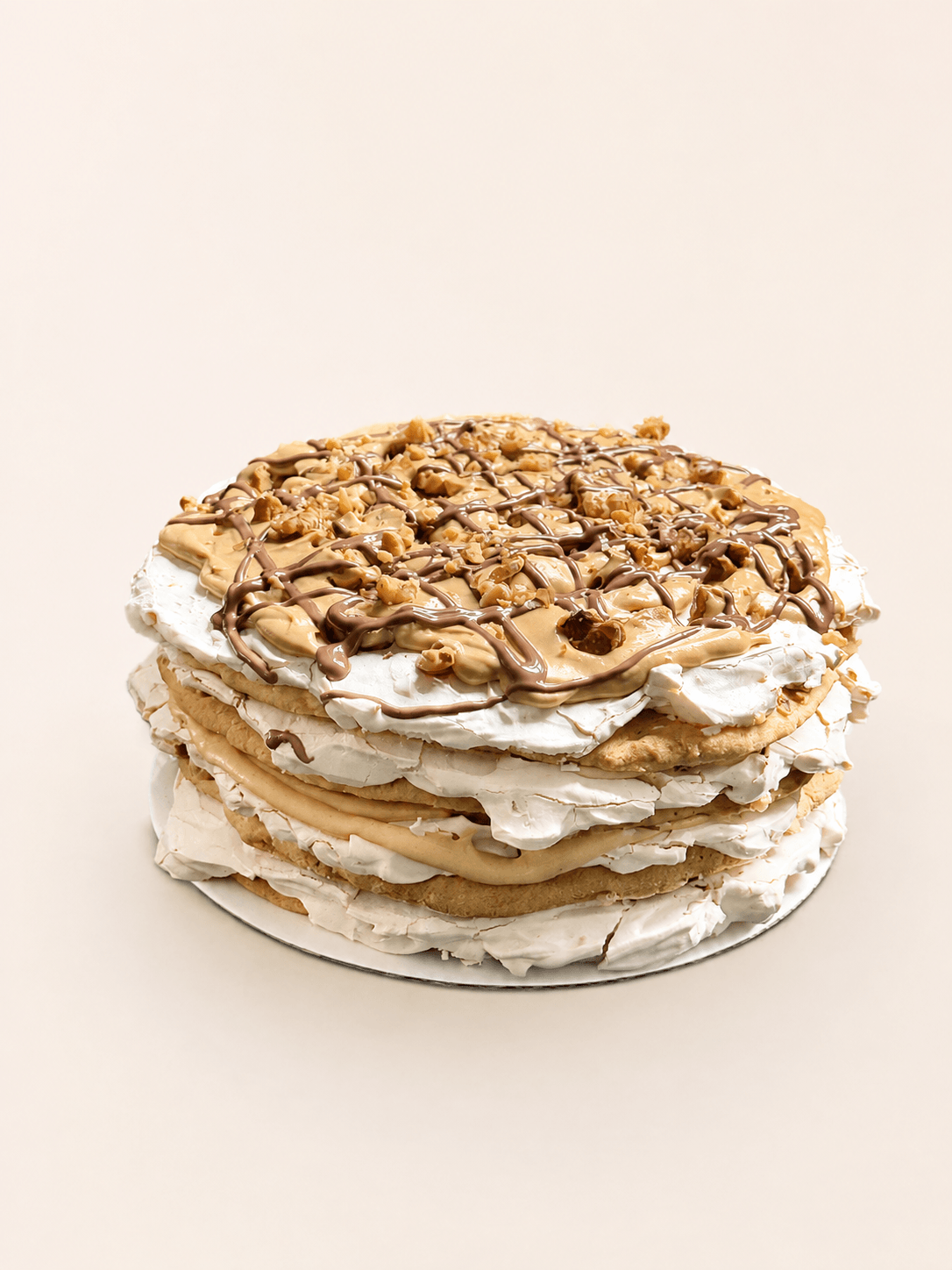
Choose a cake when you want it to last. A Napoleon or a Prague holds three days in a fridge and is still good. Nothing in the other two categories does that.
Choose a cake for eight to twelve people. That is what an 18 cm cake covers as dessert, or up to about twenty in smaller pieces at a party.
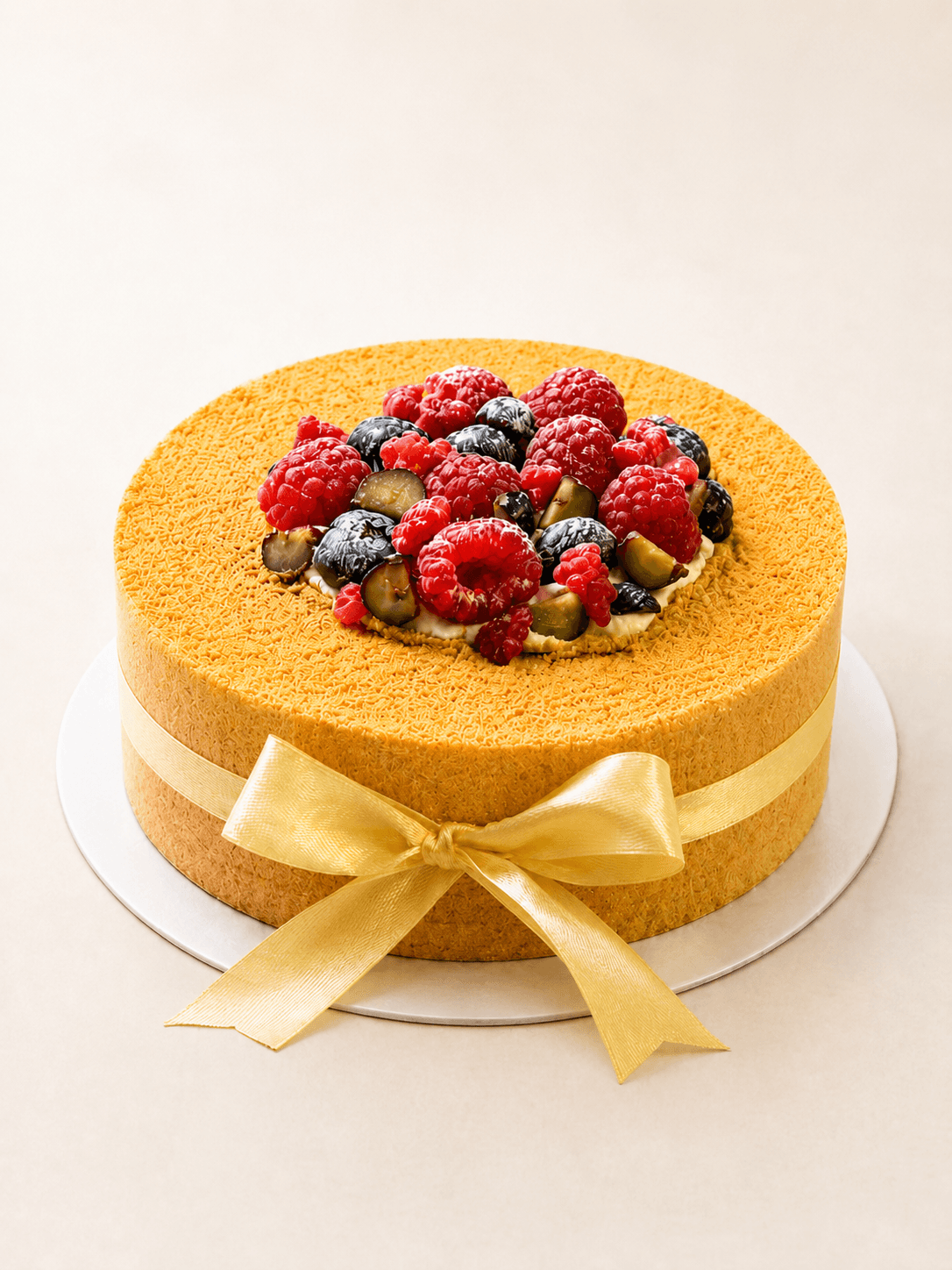
The cakes are £50 for the Charodeyka up to £98 for the Cipriani, and all of them are 18 cm.
A tart, when it comes after a meal
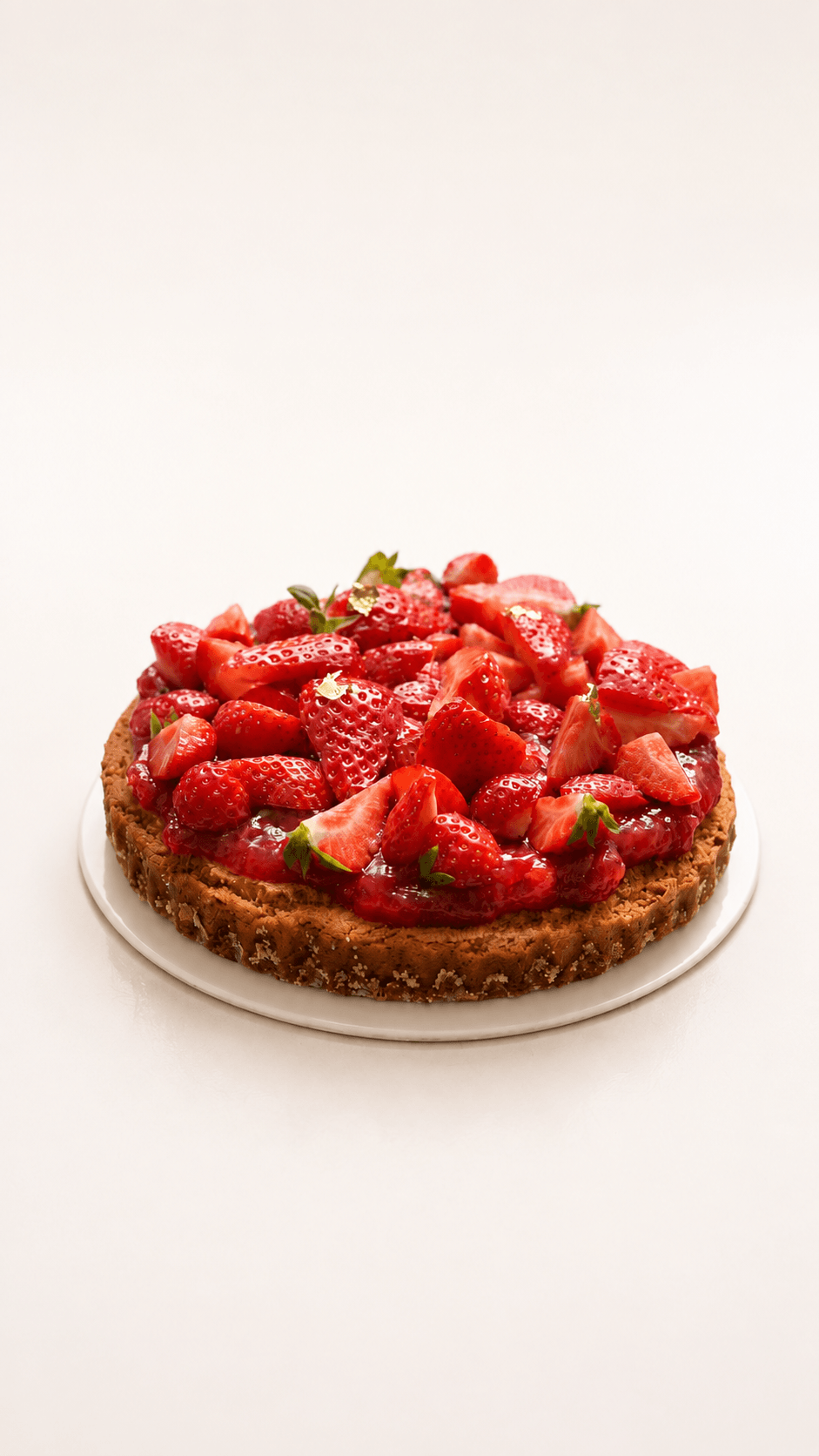
A tart is shallower, so a portion is smaller, and it is usually sharper, which is what a palate wants at the end of a large dinner.
Choose a tart after three courses. The lemon meringue at £40 is the best thing we make for this. The curd is deliberately sour and after a rich meal that sharpness does something no amount of chocolate achieves.
Choose a tart when a full slice of cake would be too much. People will eat a slice of tart at the end of a dinner and leave most of a slice of layer cake, and they will be politer about it than that sounds.
Choose a tart when it needs to look finished on arrival. A cake is finished by whoever cuts it. A tart arrives looking exactly as it will look on the table.
Do not choose a tart if it has to keep. A crisp base under a wet filling is losing a race from the moment it is assembled, and it is a day, not three.
Pastries, when nobody is serving
This is the category people underuse, and it is the right answer more often than they think.
Choose individual pastries when there is no host with a knife. Office tables, drinks parties, buffets, dessert tables, anything where people eat standing up. A whole cake in that setting needs a volunteer, gets cut badly by one person, and sits there looking damaged for the rest of the evening.
Choose pastries when portions should be equal. Six lemon tartlets at £30 give everybody the same amount with the same meringue on top, and nobody has to judge how much to take.
Choose pastries for variety. Three different things in small quantities go further than one large thing, because each new item resets the decision and people take a second of something different.
Choose pastries for a mixed room. The oreshki at £40 will move the grandparents, the cookies at £18 will go to the teenagers, and the pirozhki at £22 will feed the people who have had enough sugar.
Choose pastries when it has to travel or wait. Cookies, Florentines and truffles are the only things we make that are as good at four in the afternoon as at nine in the morning.
The range runs from £15 for kurabye up to £48 for truffles, with most things between £20 and £40.
The one that covers everything
If you cannot decide, the answer is usually one cake plus one box of small things, and it is not a compromise.
The cake gives you the moment and the centrepiece. The small things cover the people who do not want to queue for a slice, the ones who want something in their hand rather than on a plate, and the second half of the afternoon once the cake has been cut and dealt with.
A medovik at £68 and a box of goose feet at £25 is £93, it clears the minimum comfortably, and it covers a room of twelve for an entire afternoon with no awkward gaps.
A quick way to decide
Ask yourself where dessert will be eaten.
On a plate, sitting down, at a table. Cake, or a tart if it follows a big meal.
Standing up, holding a glass. Pastries, and nothing else.
Off a table people walk past over several hours. Pastries that keep, plus one firm cake cut in advance.
In a household, over several days. A cake that lasts, or biscuits.
By two people. Not a cake, unless they will genuinely eat it. Something small and good instead.
Two formats that fail more often than people expect
A whole cake at a standing drinks party. It looks generous when it arrives and it needs a knife, a board, plates and forks, none of which anybody has a spare hand for. By the end of the evening it has been half cut by three different people and it is going in the bin.
And a box of small pastries at a birthday. There is nothing to put candles in, no moment, and the person whose birthday it is quietly registers that nobody made an occasion of it. Even a cheap cake beats an expensive box of pastries here, which is why the Charodeyka at £50 exists.
If you want both effects at once, order a small cake for the moment and pastries for the actual feeding. It costs less than a large cake and it works considerably better.
Ordering
Everything needs 48 hours notice, and 72 for bread. Cakes are 18 cm and serve ten to twelve as dessert.
Delivery is £12 within SW3 and £15 across the rest of London and Surrey, with a £50 minimum on orders.
If you describe the occasion to us, we will tell you what we would send. That is often a smaller order than people were planning, and it is usually the right one.
Order it for the date you need
Everything here is baked to order for your date.
48 hours notice, 72 for bread. Delivered across London and Surrey.