· 6 min read
Russian, Ukrainian or Polish Bakery: Where the Cakes Really Come From
Somebody searching for a Russian bakery in London may be looking for a Ukrainian cake, a Polish bun or a Hungarian torte. Here is where each one is from.
People find us by searching for a Russian bakery, a Ukrainian bakery, a Polish bakery, an Eastern European bakery and sometimes a Soviet bakery. Usually they are looking for the same handful of cakes, and usually they know exactly what those cakes taste like. What they are less sure about, quite reasonably, is where each one actually comes from.
This is a plain sorting of our range by origin. It is not an argument about whose cake is whose. Most of these have been baked across the whole region for generations and belong to everybody who grew up with them. But origins are facts, and getting them right matters to the people who read this.
Ukrainian
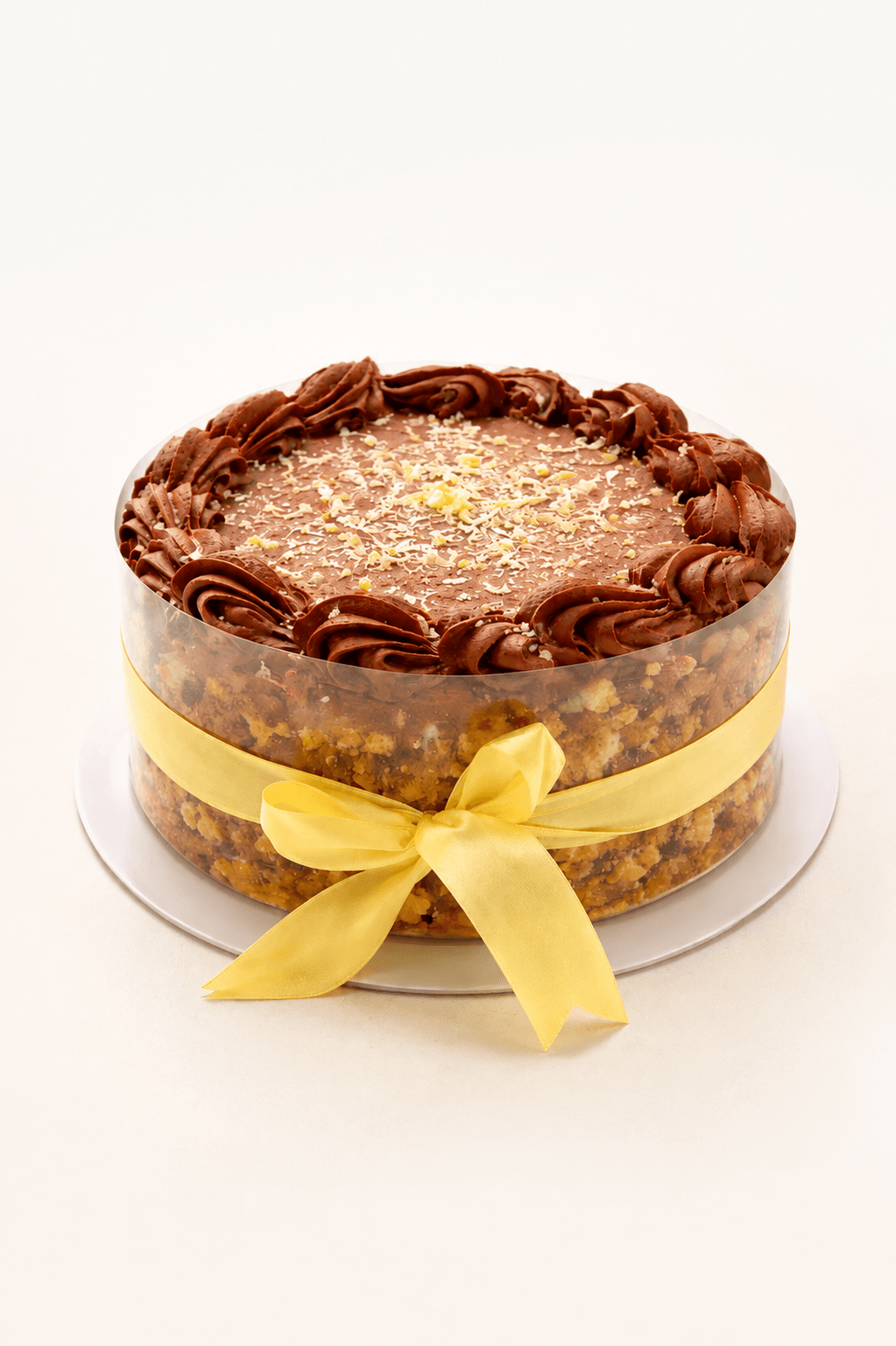
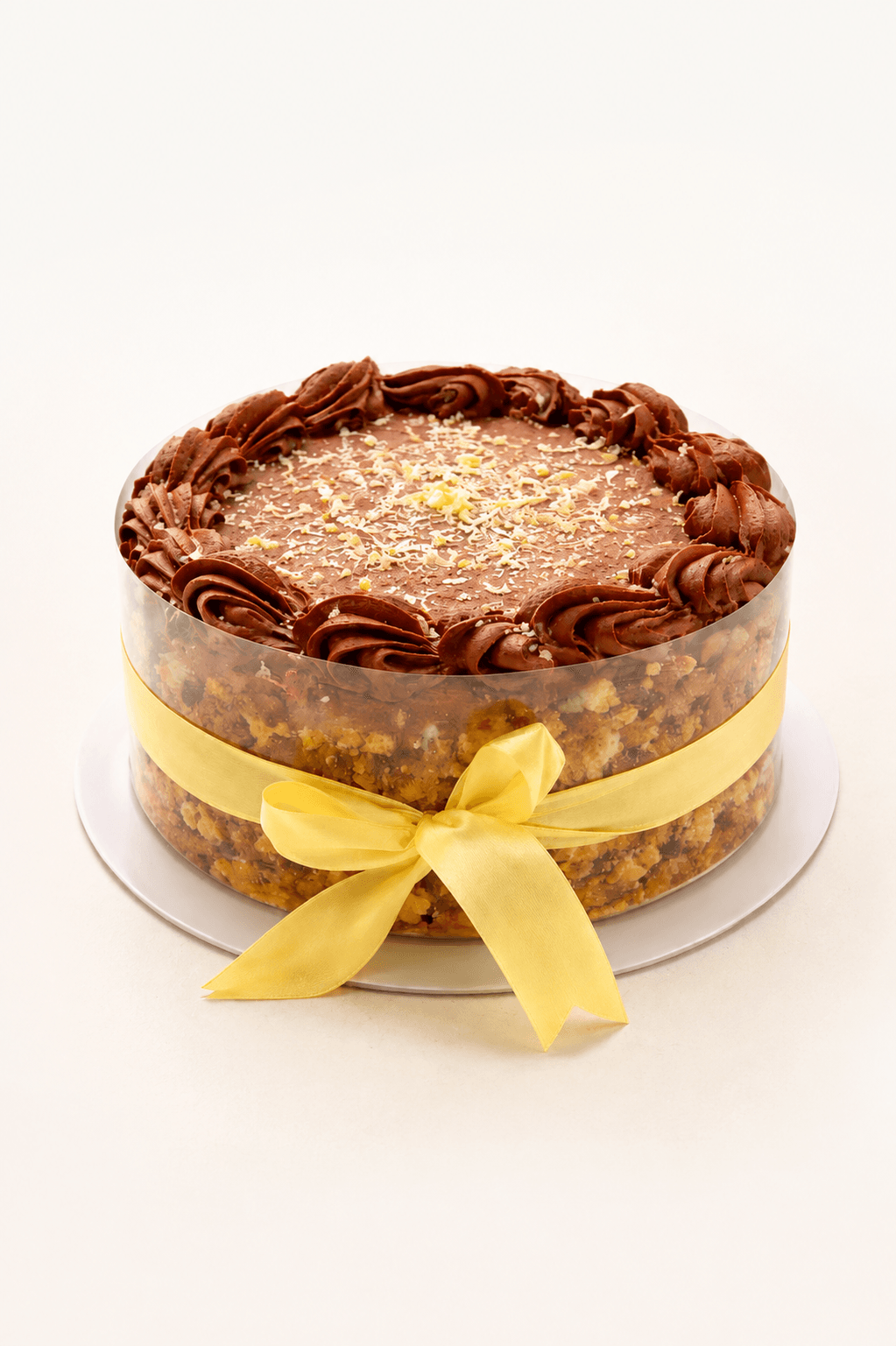
The Kyiv cake is Ukrainian by any measure. It was created in Kyiv in the 1950s, it is named after the city, and for decades a box of it was what visitors brought home from Kyiv. Hazelnut meringue layers, buttercream and chocolate. It needs sixty hours notice, because the meringue has to be dried properly.
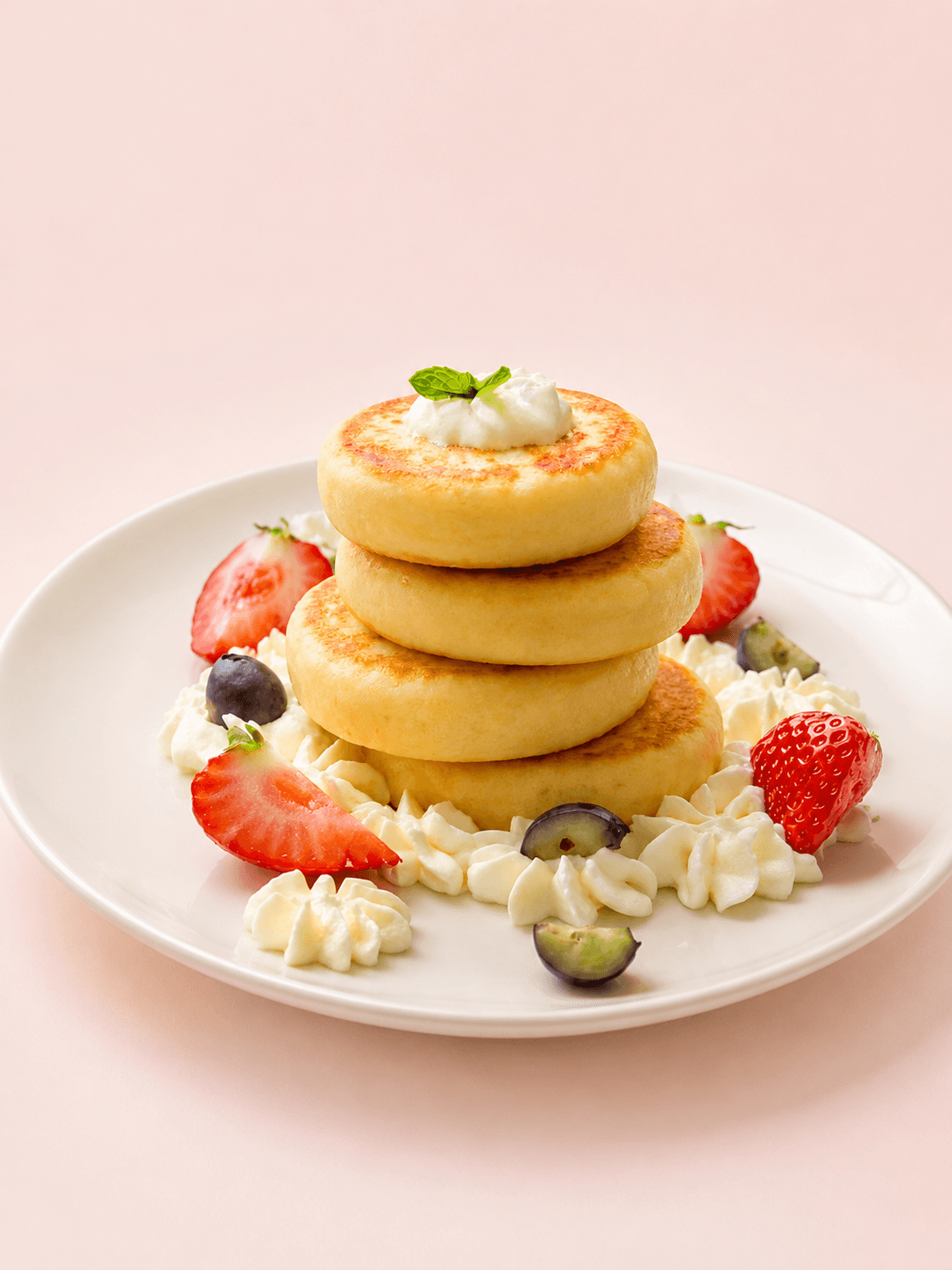
Syrnyky, the small tvorog pancakes, are eaten in Ukraine, Russia and Belarus alike, and Ukrainian kitchens have as strong a claim to them as anybody. We list ours as syrniki, which is the spelling most people search for.
Poppy seed baking, the makivnyk and the poppy seed roll, is central to Ukrainian festive baking, though it is shared with Poland and the rest of Central Europe.
Russian
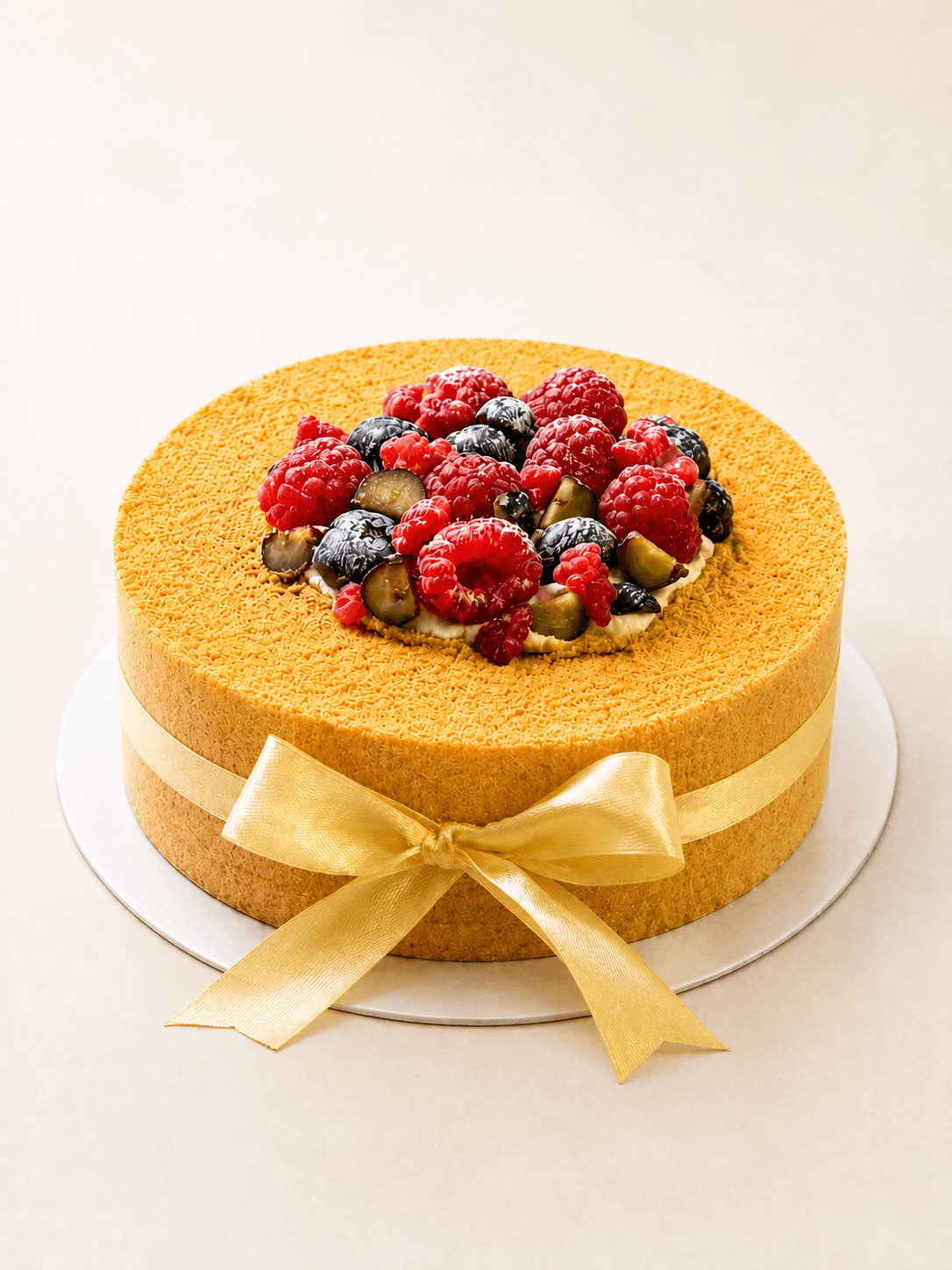
The medovik, the layered honey cake, is usually traced to nineteenth century Russia, with a well known and poorly documented story about an imperial chef. It spread everywhere in Soviet times and is now baked across Ukraine, Belarus and beyond.
Pirozhki are shared by Russia, Ukraine and Belarus. In Ukrainian they are pyrizhky. Vatrushki and sochniki, the tvorog buns and pastries, are Russian in origin and Soviet in their familiar form. Blini, the thin pancakes, are Russian, and Ukraine has its own mlyntsi.
Soviet, which is a category of its own
A large part of what people mean by a Russian bakery is really Soviet baking: cakes and pastries made to standard recipes in state bakeries and factories, and then copied at home, across all fifteen republics at once. These belong to a period rather than a nation.
The Bird's Milk cake was created in Moscow, at the Praga restaurant, though its name comes from a Polish sweet called ptasie mleczko. The Prague cake, despite the name, is also usually credited to the same Moscow restaurant and has nothing to do with Czech baking. Charodeyka, the Enchantress, Muraveynik, the Anthill, and Kartoshka, the potato cake made of crumbs, are Soviet cakes. Oreshki, pressed in a hinged iron mould, and trubochki, the cream horns, are Soviet bakery classics. So are the choux rings filled with tvorog cream.
Kurabye, the piped butter cookies with a jam centre, are the Soviet form of a shortbread found across the Ottoman and Persian world, and the Soviet version is particularly associated with Baku.
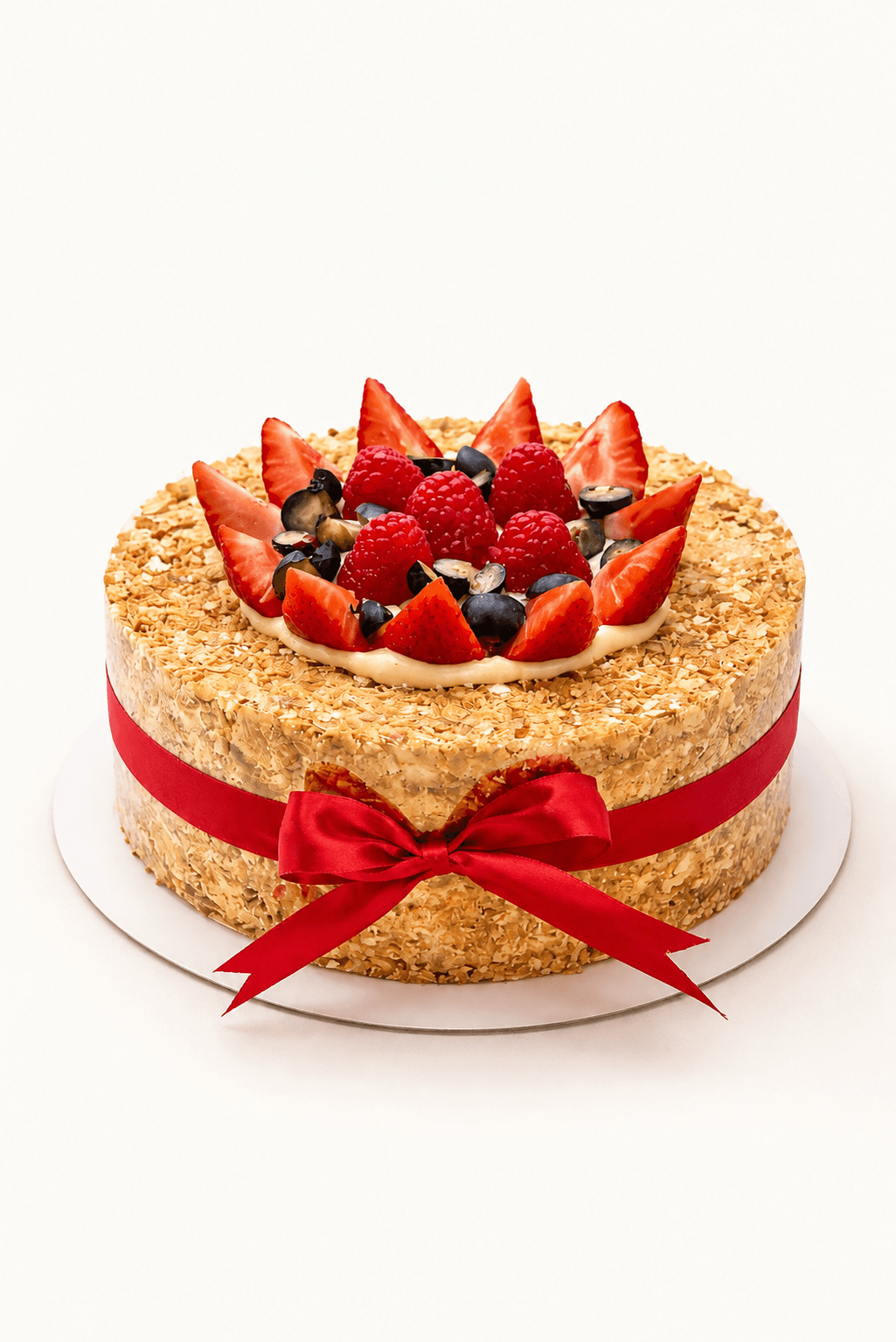
The Napoleon is French in ancestry and Russian in its rested, softened form, and it was made in Soviet kitchens everywhere.
Polish
Jagodzianki, the blueberry buns under a crumble topping, are Polish, and Poles are clear that the real ones are a July and August thing, made with forest bilberries. Ours are made with cultivated blueberries, and we say so. The Polish poppy seed roll, makowiec, sits at the centre of Polish Christmas, though we do not make it.
Hungarian and Central European
The Esterházy cake is Hungarian, named after the Esterházy family, and it was a fixture of Budapest and Vienna coffee houses before it became a favourite further east. Ours is gluten free, which is how the almond meringue layers have always been made.
The rest of the menu
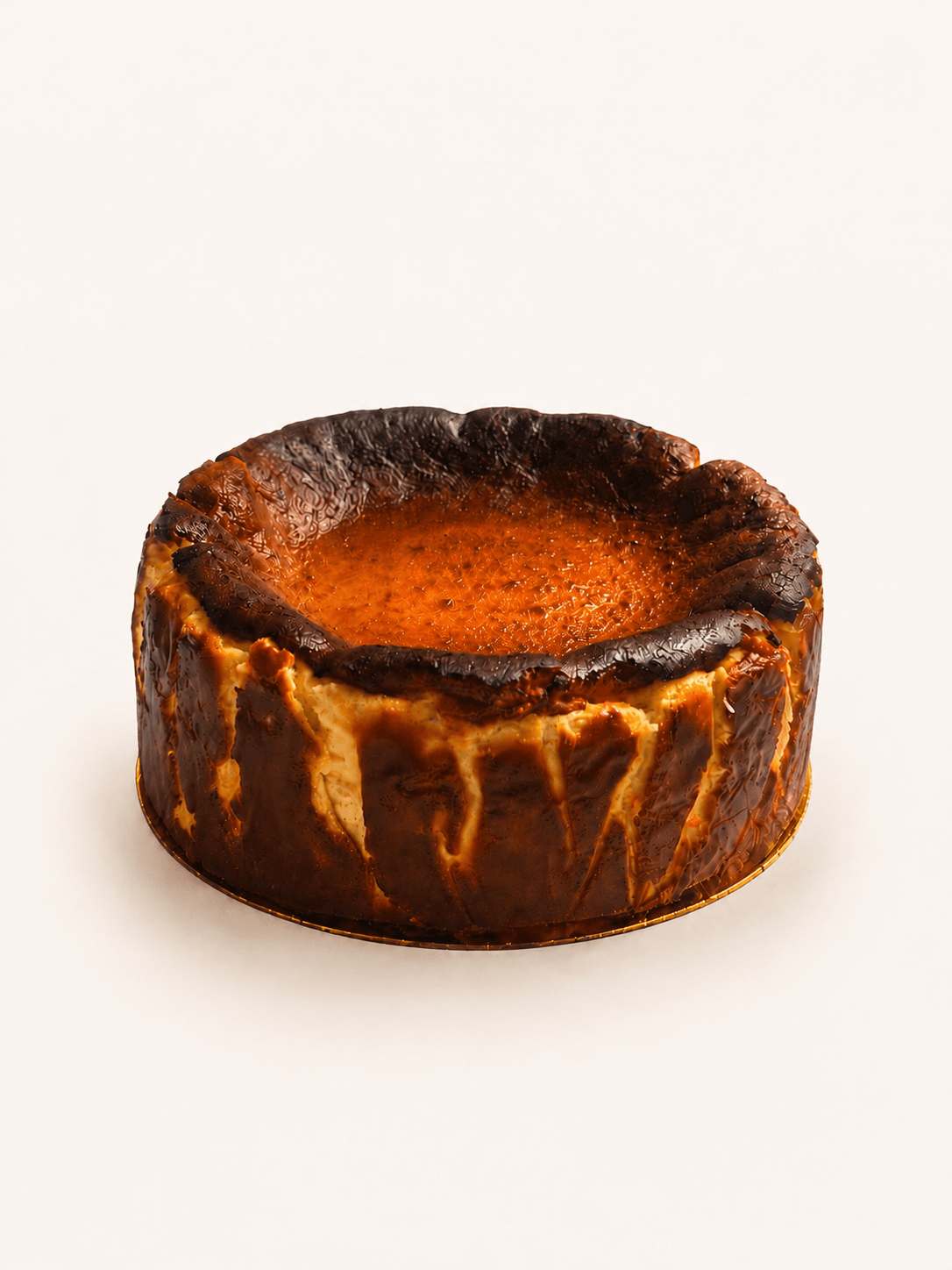
Some of what we bake has no connection to the region at all, and we would rather say so than let it borrow an accent. The Basque burnt cheesecake comes from San Sebastián in Spain. The carrot cake is British and American. The choux buns with their craquelin lid are French. The Japanese milk loaf is Japanese.
They are on the menu because they are good and because they are what a London table often wants alongside a honey cake, not because they are Eastern European.
Belarusian, Baltic and further afield
Belarusian kitchens share most of the Russian and Ukrainian repertoire, from pirozhki to syrniki, and the Baltic states have their own layered cakes and rye breads. Our rye loaf is in the Eastern European tradition rather than any one country's. We would rather describe it that way than attach it to a particular nation.
Why the labels get blurred
Two reasons, mostly. The first is the Soviet period, when the same recipes were made from Tallinn to Tashkent and the same cake might be remembered as Russian by one family and Ukrainian by another, both with good reason. The second is that in London, the shop that sells these things has often been called a Russian shop regardless of who runs it or where the food comes from.
Since 2022 a great many Ukrainian customers have, understandably, preferred not to have their own cakes described as Russian. We name things by where they come from, and where something is shared, we say it is shared.
Common questions
Is the Kyiv cake Russian or Ukrainian?
Ukrainian. It was created in Kyiv in the 1950s and is named after the city.
Is Prague cake Czech?
No. Despite the name it is a Soviet cake, usually credited to the Praga restaurant in Moscow.
Is honey cake Russian or Ukrainian?
The layered medovik is usually traced to Russia, but it has been baked in Ukraine and across the region for generations.
Are pirozhki Russian?
They are shared by Russia, Ukraine and Belarus. In Ukrainian they are called pyrizhky.
Do you sell Polish cakes?
We make jagodzianki, the Polish blueberry buns, with cultivated blueberries rather than forest bilberries. We do not make makowiec.
Ordering in London
Everything is made to order in our Belgravia kitchen and delivered across London and Surrey. Most cakes need forty eight hours notice, the Kyiv and the Napoleon sixty. There is a £50 minimum order, and delivery is £12 in central London, with other postcodes priced on the delivery page.
Order it for the date you need
Everything here is baked to order for your date.
48 hours notice, 72 for bread. Delivered across London and Surrey.