
· 7 min read
Jagodzianki and the Polish Baking Year in London
Pączki in February, mazurek at Easter, jagodzianki when the berries come, makowiec at Christmas. A guide to the Polish baking calendar, and an honest account of where our own range meets it.
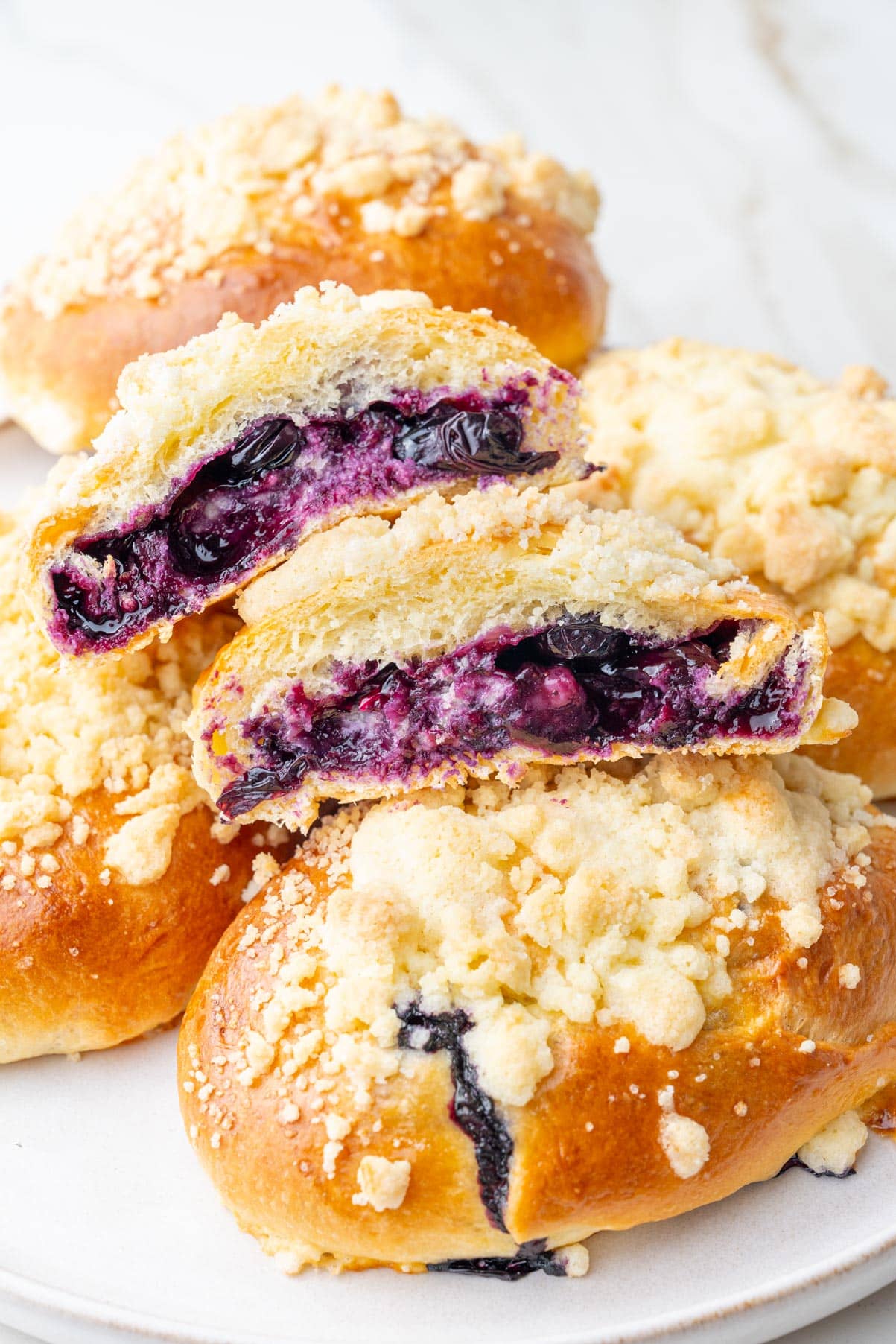
There are about a million Polish speakers in Britain, and a good number of them can tell you what week of the year it is by looking at a bakery window. Rose jam doughnuts stacked three deep means late February. Flat decorated shortcrust tarts mean the week before Easter. Purple stained buns under crumble mean July. Poppy seed logs mean Advent. The calendar is not marketing. It is older than any of the shops that follow it, and it survives here in London in the freezers of Polish delis, in church halls after Sunday mass, and in the ovens of people who bake at home because nobody nearby bakes it properly.
We are a small kitchen in Belgravia, and we are not a Polish bakery. What follows is the calendar as Poles keep it, and then a plain account of where our own baking overlaps with it and where it does not.
February: Tłusty Czwartek, when the country eats doughnuts
The first fixed point of the year is Fat Thursday, Tłusty Czwartek, the last Thursday before Lent. Its date moves with Easter, so it lands in February most years and sometimes in early March. On that day Poles eat pączki, and they eat several. The classic filling is konfitura z dzikiej róży, wild rose hip jam, which is sharp and floral and does not taste like anything else in a doughnut. Plum jam, budyń and advocaat versions are everywhere now, but the rose hip one is the one older customers ask for first. Alongside them come faworki, also called chrusty or angel wings: strips of stiff dough twisted, fried and buried in icing sugar.
The superstition attached to the day is that anyone who eats no pączek will have bad luck for the rest of the year. Warsaw bakeries sell them by the thousand and the queues form before seven in the morning. If you are Polish in London, this is the one week when it is worth going out of your way to a proper deli counter rather than ordering anything. We do not make pączki. Frying at that volume needs a fryer and a shop front, and we have neither.
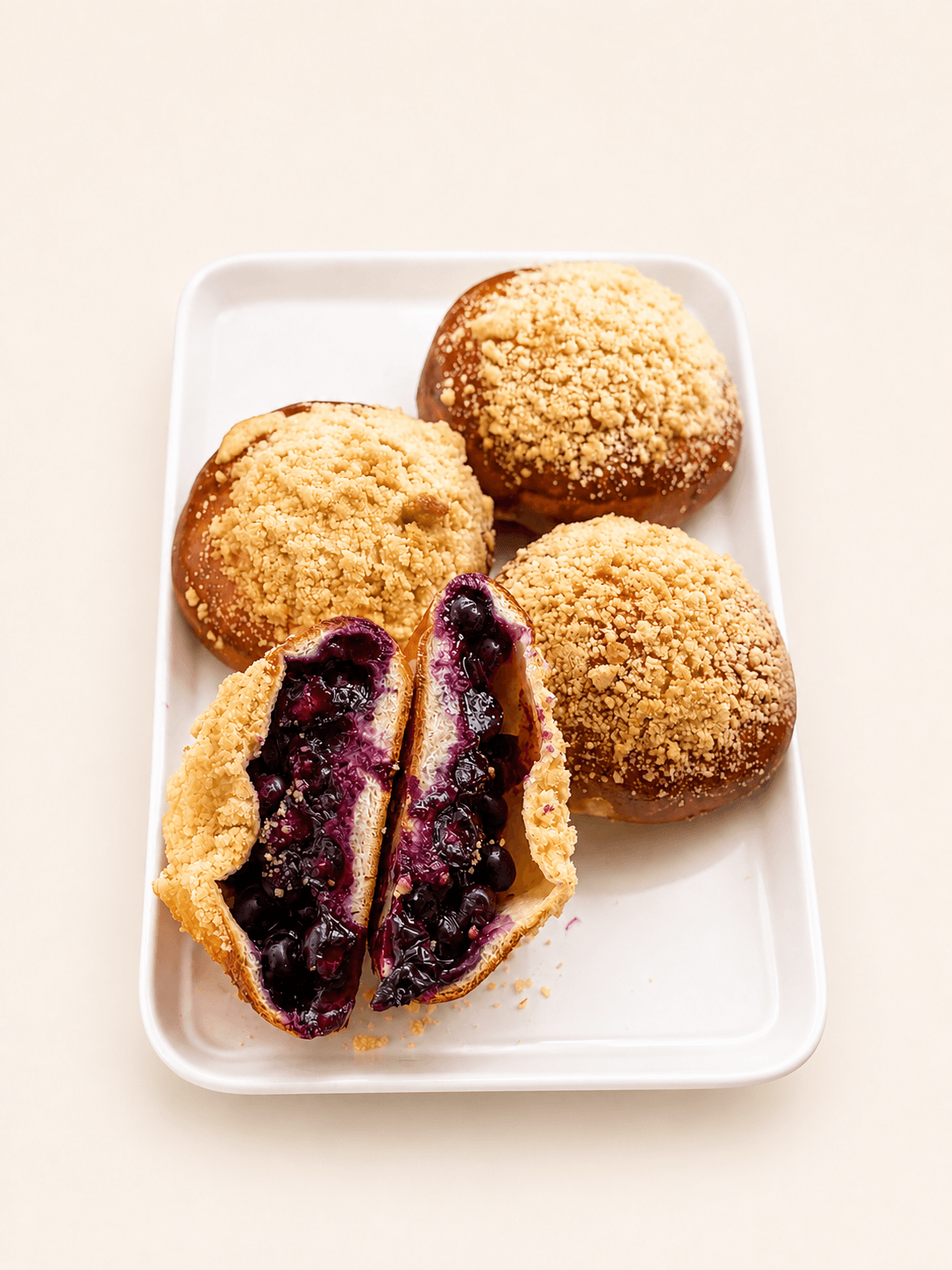 Blueberry Streusel Buns (Jagodzianki)Jagodzianki, Polish blueberry buns, four to a box. Soft enriched dough, blueberry filling, buttery streusel.£42Order this
Easter: mazurek, babka and a table that is mostly baking
Easter is the largest baking event of the Polish year, larger than Christmas in terms of sheer sweetness on the table. Three things carry it.
Mazurek is a flat tart, shortcrust or sometimes a nut base, spread with dulce de leche, chocolate or jam and decorated across the top with dried fruit, almonds and icing patterns. Some are decorated with the words Alleluja written in chocolate. It is the most decorative Polish bake, and the reason is simple: it is meant to look like the end of Lent.
Babka wielkanocna is the tall cake raised with yeast, baked in a fluted tin, often with raisins and a lemon or rum glaze. It is a cousin of the enriched doughs used all year, taken taller and richer. Sernik, the baked curd cheesecake made with twaróg, sits on the same table, and so does a walnut or poppy seed roll left over from the winter repertoire.
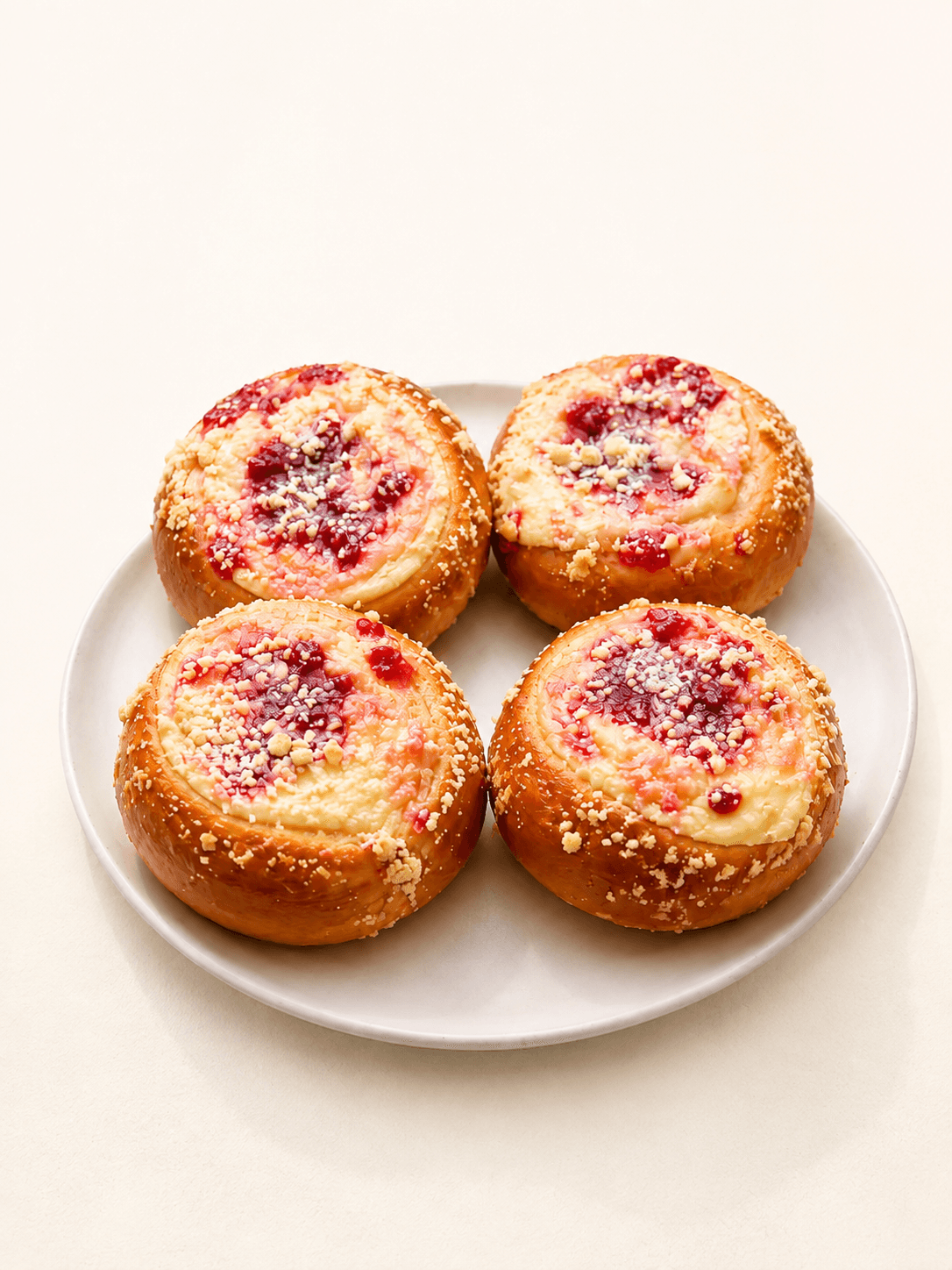
Our Easter overlap is partial and I would rather say so. We bake curd based things all year: Pie with Curd Vanilla and Apricot Filling at £40, Sochniki, Goose Feet Cookies made with tvorog, which is the same fresh cheese Poles call twaróg. We do not bake mazurek and we do not bake babka wielkanocna in the Polish shape. Anyone who wants either should buy from someone who makes it every spring.
Drożdżówki, the bun that runs through every other week
Between the festivals sits the everyday category: drożdżówki, buns raised with yeast, soft, enriched, sold cheap and eaten the same day. A drożdżówka can be filled with sweetened twaróg, with plum or cherry jam, with poppy seed paste, or topped with kruszonka, the butter and sugar and flour crumble that Poles put on almost everything. There is no season for them. They exist so that there is something warm at eleven in the morning.
This is where our range genuinely meets Polish baking, because the dough is the same idea: flour, milk, eggs, sugar, salt, yeast, worked until it is soft, proved slowly, baked light. Our buns and babka section carries Airy Cinnamon Buns at £32 with 48 hours' notice, Plyushka at £32, Strawberry Vatrushki filled with vanilla cream and fresh strawberries at £32, Poppy Seed Buns at £30, and Cinnamon Rolls, six to a box, at £44. A Pole who grew up on drożdżówki will recognise the crumb of all of them immediately. Our Poppy Seed Buns are topped with poppy seeds rather than filled with a thick poppy paste, so they are not a substitute for a proper makowiec or a poppy filled drożdżówka, and I would not pretend otherwise.
Chałka, the braided sweet loaf, belongs here too. We do not bake chałka. The closest thing that comes out of our oven is the Japanese milk loaf at £15, baked on the weekly bread round each Wednesday with sourdough and rye, and delivered the same afternoon to Virginia Water, Weybridge, Ascot, Sunningdale, Sunninghill, Egham and Englefield Green. Different bread, similar pillowy crumb, and useful for French toast in the same way.
July and August: the jagodzianki weeks
Then the berries come. Jagodzianki are the summer bun, enriched dough around wild bilberries under kruszonka, and the season is July and August when the fruit is picked in the forests. Polish food magazines publish rankings of the best in the country every summer, and the rule most Poles state flatly is that anything sold as a jagodzianka in November is not one. The full account of the bun, the berry and the crumble is at what jagodzianki are, so I will not repeat it here.
What we bake in that window is Blueberry Streusel Buns, four to a box, £36, with 24 hours' notice. Soft enriched dough, blueberries inside, buttery streusel crust on top. Made with eggs, sugar, salt, yeast, flour and milk, so they contain eggs and milk, and the kitchen also handles sulphites, lupin and molluscs. They are made with cultivated blueberries, not forest bilberries, which means less staining and a rounder, sweeter fruit flavour. If your reference point is a bun bought in Kraków in the third week of July, ours is a good bun and an honest one, and it is not that. Bilberries have never been picked commercially in Britain because the bushes are low and the work is slow, even though the same berry ripens on English moorland in July under the names whinberry, wimberry and blaeberry.
Autumn plums, All Saints, and the Christmas poppy seed
September belongs to the śliwka węgierka, the Hungarian plum, which goes into placek ze śliwkami, into drożdżówki, and into powidła, the thick plum butter cooked down for hours without sugar. Anyone who has stirred powidła knows why it is a once a year job. Our nearest equivalents are the fruit pies: Apple Pie at £40 for 20 cm, or Apple Pies, six pieces, at £22.
On 1 November, All Saints, the baking pauses and the sweets change. In Warsaw, stalls outside the cemeteries sell pańska skórka, a chewy pink and white sweet eaten on the walk between graves. It is not a bake, but it is part of the year.
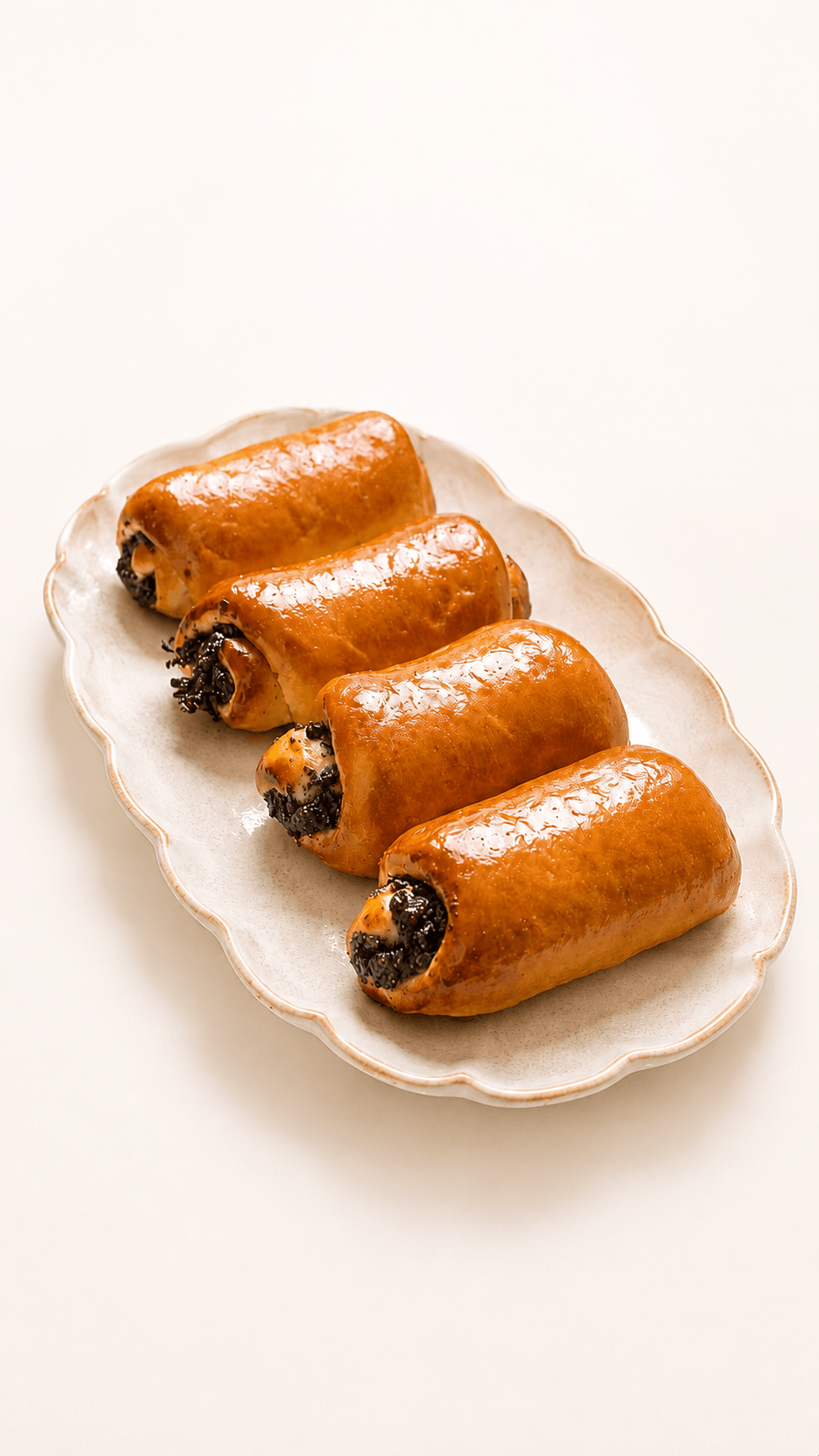
Advent brings makowiec, the poppy seed roll, ground poppy seeds cooked with honey, milk and dried fruit, rolled in yeast dough and glazed. It sits on the Wigilia table on Christmas Eve, alongside piernik, the honey gingerbread whose dough is traditionally made weeks ahead and left to mature, and kutia in the eastern regions. We do not bake makowiec or piernik. Our winter work runs to layered cakes: Honey Cake at £68, which shares the honey and spice register of piernik without being it, Napoleon at £85, Kyiv Cake at £80.
Ordering against the calendar
The practical point of knowing the year is knowing when to order. Cakes need 48 hours' notice, most pastries and buns 24, and everything is baked for the date chosen rather than taken off a shelf. Two things follow. First, if you want blueberry buns for a Sunday in July, place the order by Friday. Second, if you want them in February, we will bake them, and they will taste of cultivated blueberries, which is the honest limit of what a London kitchen can do out of season.
The full range, including the sections that have nothing to do with Poland, is at our cakes collection. If you are Polish and looking for pączki on Tłusty Czwartek, mazurek at Easter or makowiec at Christmas, go to a Polish bakery or deli for those and come to us for the buns and the layered cakes. Email info@mikebakes.uk or call +44 7922 122149, Monday to Saturday, and say which date you need.
Order it for the date you need
Everything here is baked to order for your date.
48 hours notice, 72 for bread. Delivered across London and Surrey.