
· 5 min read
A Small Bakery in Belgravia
We are not a shop and you cannot walk in and buy a cake. Here is why it works that way, and what you get in exchange for the inconvenience.
There is no counter. You cannot walk past, see something in a window and take it home. For a bakery this is an odd way to operate, and it is worth explaining, because the reasons behind it shape everything else about how we work.
The problem with a counter
A bakery with a shopfront has to guess. Every morning it decides how many of each thing to make, and by evening it has either run out of the popular things or thrown away the unpopular ones. Usually both. The industry figure for waste in retail bakery runs somewhere between ten and twenty per cent of everything made, and that has to be priced into what sells.
There is a second cost that matters more to us. To make guessing viable, you push towards things that keep. Cakes that hold their appearance for three days under lights. Fillings stabilised so they do not weep. Pastry that stays presentable rather than pastry that tastes best two hours out of the oven.
None of that is dishonest. It is simply what a display case requires. But it rules out a great deal, and most of what it rules out is what we want to make.
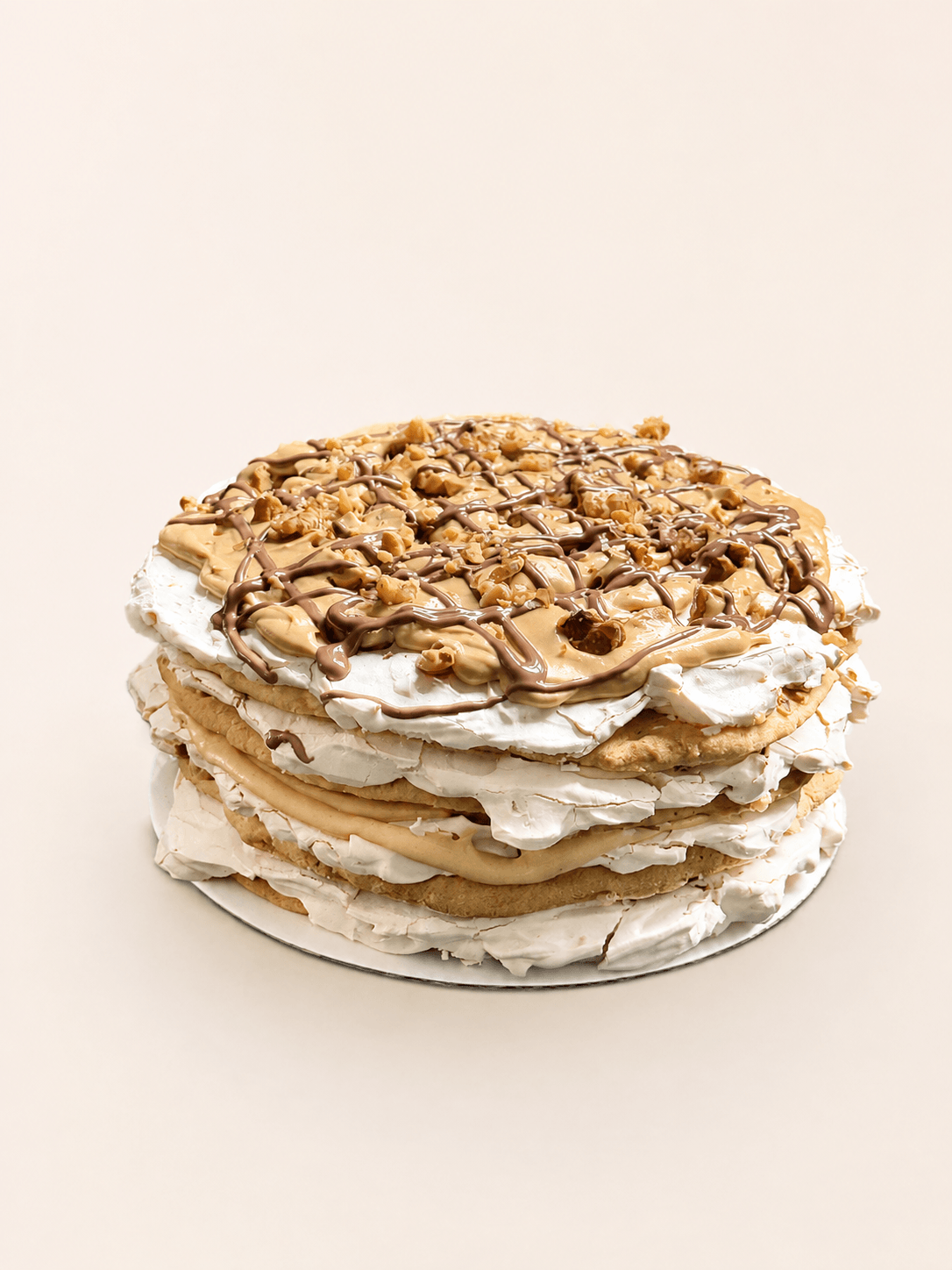
Medovik has to rest overnight and is at its best on days two and three, which a shop cannot plan around. Choux collapses within hours of being filled. Pavlova starts dissolving the moment cream touches meringue. A strawberry tart is worth eating on the day it is made and is a sad object by the following afternoon.
Baking to order removes the guess. We know on Monday what Wednesday looks like, we make that and nothing else, and everything leaves the kitchen at the point it is meant to be eaten.
What it costs you
Time, mostly. We need 48 hours on cakes and pastries and 72 on bread, and bread is baked on Wednesdays only, which means a loaf takes planning rather than a decision.
There is a £50 minimum order. That is not a way of pushing the average order up. Below that figure the delivery costs more than the margin on what is in the box, and we would rather set an honest floor than quietly raise every price to cover the small orders.
And you have to decide in advance, which is the real inconvenience. Spontaneity is the one thing a shop does better than we ever will. If you want a cake this afternoon, we cannot help you and there is no point pretending otherwise.
What you get instead
Everything arrives at its best point rather than at whatever point the schedule left it.
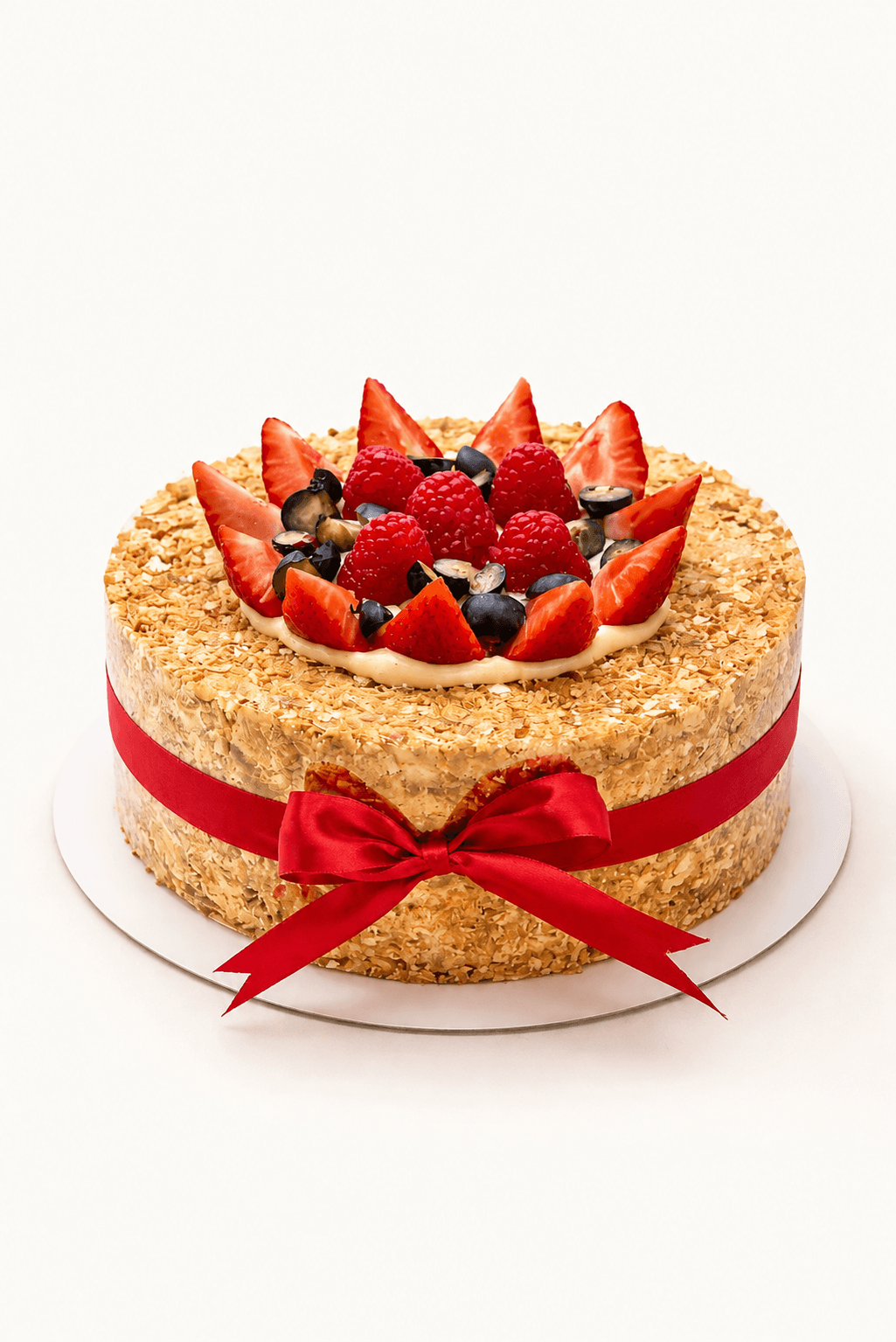
Nothing is stabilised to survive display. The cream in the strawberry cake is whipped cream, not something that has been engineered to hold for three days. The pavlova is assembled as late as we can manage. The choux are filled the morning they go out.
The range can include things a shop could not justify. Liver pirozhki sell steadily to a small number of people who really want them, and would sit unsold on a counter until they were thrown away. The gluten free peach pie, made without sugar or lactose either, exists because people kept asking and because we do not have to make twelve of them and hope.
And nothing is ever old. There is no yesterday's stock, because there is no stock.
Belgravia, and why it is not a shopfront
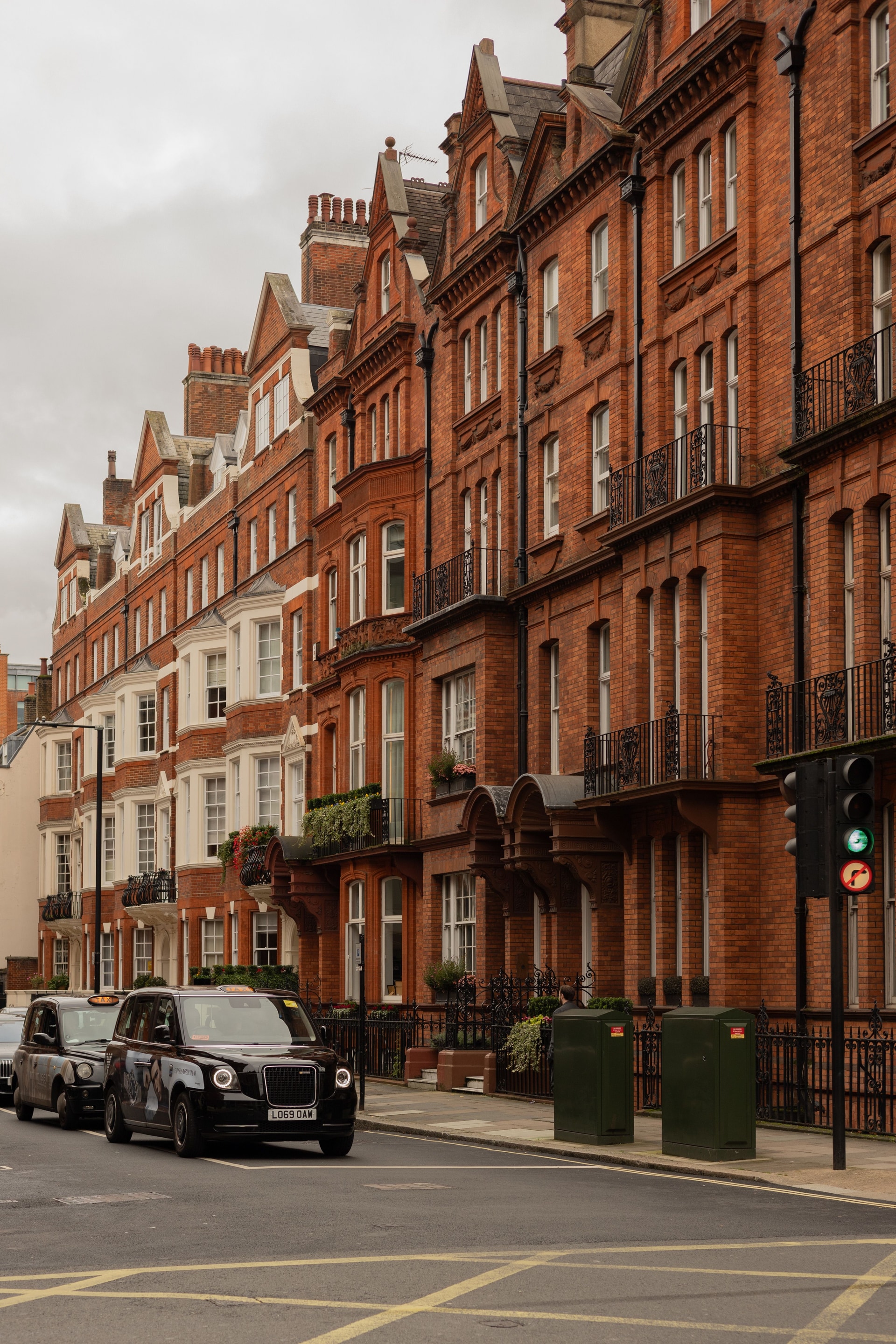
We are in Belgravia, in the SW1 postcodes, which puts us within a few minutes of Chelsea, Knightsbridge, Victoria and Mayfair. That is useful for delivery and it is where most of our early orders came from.
It is not a place to run a bakery shop. Retail rent in SW1 would have to be recovered somewhere, and it would be recovered from the price of a cake. A £68 medovik would be a £95 medovik, and it would be the same cake.
What we do use the space for is consultations. For a wedding, a large party or a corporate order, you can come in by appointment, taste things, and work out what you actually want rather than choosing from photographs. That conversation is worth far more than a window display, and it is the part of a traditional bakery relationship we did want to keep.
What we make
The cakes run from £50 for the Charodeyka to £98 for the Cipriani, all 18 cm, all serving ten to twelve.
Alongside them there are tarts and pies, a range of Eastern European pastries that includes oreshki, trubochki, sochniki and kartoshka, savoury pirozhki with six fillings, cinnamon rolls, choux, cookies, truffles, and on Wednesdays sourdough, rye and a Japanese milk loaf at £15 each.
Some things move with the seasons. The strawberry cake and the strawberry tart come off the site when the fruit stops being good, which is a taste decision rather than a date in a calendar.
Who bakes it
Mike does, which is the other half of why the range looks the way it does.
The Eastern European things are not a market position arrived at by looking for a gap. They are what he grew up eating and what he knows how to make properly, and the reason there are six pirozhki fillings rather than two is that leaving any of them out would have felt like an omission. The oreshki are pressed in the same kind of hinged iron mould that sat in a drawer in most households across the Soviet Union, two shells at a time, which is a slow and slightly ridiculous way to make forty of anything.
A larger operation would look at that and take it off the list. We keep it because the people who order oreshki are not really ordering a biscuit.
Ordering
Everything goes through the website. Choose what you want, choose a delivery date at least 48 hours ahead, and pay. Delivery is £12 within SW3 and £15 to everywhere else, which covers all London postcodes and a good deal of Surrey, Kent and the Home Counties.
For weddings, large celebration cakes and corporate orders, get in touch rather than using the checkout. Those need a conversation about numbers, timing and setup, and they need it earlier than most people expect.
We are small, we bake what has been ordered, and we are closed to passing trade. It is an inconvenient way to buy a cake and a very good way to eat one.
Order it for the date you need
Everything here is baked to order for your date.
48 hours notice, 72 for bread. Delivered across London and Surrey.